
Some links on this page are affiliate links: if you buy through them we may earn a commission, at no extra cost to you.
Before paying a deposit for a Pomchi (Pomeranian–Chihuahua cross), ask for evidence about both parents, not merely a statement that they are “health tested.” Verify each parent’s identity, request the actual reports, check public records where available, and ask detailed questions about family history. For the Pomeranian parent, focus on patellar, cardiac, and eye evaluations. For the Chihuahua parent, ask about documented screening and any heart, eye, or patellar problems in the family. Then review the puppy’s veterinary records and arrange an independent examination promptly after bringing the puppy home.
These are sensible parent-breed questions, not an official, universally accepted Pomchi testing protocol. No test list can guarantee a healthy puppy, and an old or limited examination cannot rule out every future disease.

As an Amazon Associate I earn from qualifying purchases.
Recommended Free Tools
What health tests should a Pomchi breeder do?
There is no authoritative Pomchi-specific screening standard identified by the major sources used for this checklist. A responsible approach is therefore to combine the parent-breed guidance for Pomeranians and Chihuahuas with your veterinarian’s advice about the individual dogs. Ask the breeder to show verifiable results for the sire and dam, including the test date, examiner, and the dog’s registered name or other permanent identifying details.
The American Kennel Club (AKC) lists patella evaluation, a cardiac examination, and an ophthalmologist evaluation among recommended tests for Pomeranians. AKC guidance for Chihuahuas highlights possible heart, eye, and patellar concerns and advises choosing breeders who routinely screen their breeding stock. The American Pomeranian Club describes luxating patellas—kneecaps that slip out of place—as the breed’s most common problem and tells buyers to check Orthopedic Foundation for Animals (OFA) records and ask the breeder for copies.
Popular on Amazon

- "COMPLETE MEDICAL RECORDS FOR DOGS & PUPPIES: Comprehensive health record booklets designed to track vaccinations, deworming, exams, and treatments. Ideal for maintaining organized, accurate medical histories for individual dogs or entire litters."
- 25 INDIVIDUAL BOOKLETS PER PACK: Includes 25 separate health records, making it easy for breeders, shelters, rescues, or clinics to document care for multiple pets. A convenient, cost-effective option for professional use."
- CLEAR, CUSTOMIZABLE FORMAT FOR EASY RECORDING: Each booklet includes clearly labeled sections for vaccines, dates, and notes. Simple, organized design allows pet owners and professionals to record information quickly and legibly at home or during vet visits."
- PORTABLE & DURABLE DESIGN: Compact size fits easily into travel folders, puppy packets, or veterinary files. Sturdy paper stock ensures each record withstands handling over time, ideal for breeders and adopters."
- IDEAL FOR PET OWNERS, BREEDERS & CLINICS: A must-have tool for dog owners, shelters, veterinarians, and groomers to track a pet’s complete health history. Simplifies communication between caregivers, adopters, and clinics."
Use those recommendations to structure a conversation, not to treat them as a pass-or-fail certificate for a crossbred puppy. Ask your own veterinarian whether additional examinations make sense based on the parents’ ages, medical histories, and the puppy’s physical findings.
Checklist before you send a deposit
Work through these items while you can still walk away without financial or emotional pressure:
Do these 3 things before closing this tab:
1Fix the driver behind crashes, sound loss and screen glitches2Clear out junk files and repair common Windows errors3Scan for outdated or missing drivers - takes under a minute- Obtain the sire’s and dam’s registered names, registration numbers if applicable, microchip numbers, or other details that distinguish them from similarly named dogs.
- Request complete copies of screening reports, not a summary such as “both parents are clear.”
- Ask when and by whom each examination was performed, and whether any follow-up was recommended.
- Look for the parents in OFA’s public database when the breeder says a result is published there.
- Ask specifically about Pomeranian patella, cardiac, and eye evaluations.
- Ask what screening was performed on the Chihuahua parent and whether either side of the family has had heart, eye, or patellar disease.
- Request the puppy’s veterinary examination notes, vaccination record, parasite-treatment dates, and any test results.
- Ask about significant problems in previous litters and how the breeder handled them.
- Read the written contract, health provisions, return terms, and rehoming requirements before paying.
- Arrange to meet the puppy with its mother and inspect where the dogs are raised.
Identify both parents before evaluating their records
A report is useful only if you can connect it to the actual dog producing your puppy. Ask to see the sire and dam, or receive a credible explanation for why one is unavailable. Compare names, markings, registration information, and microchip details on the reports with the breeder’s dogs. If a stud dog belongs to someone else, ask for the owner’s contact details or original documentation rather than relying on a screenshot with no identifying information.
Search the OFA database using the exact registered name or number supplied by the breeder. Check that the record describes the same breed, sex, and dog you were shown. A missing public record does not prove that an examination never occurred: some legitimate records are not published. However, database absence means you should request the original report and ask the breeder to explain why it is not listed. An unsupported verbal claim is not proof.
Pomeranian parent: the three core questions
Patellar evaluation
Ask for the patellar grade, the examination date, the examiner’s credentials, and the dog’s age at testing. Luxating patellas can allow the kneecap to move out of its normal groove and may range from an incidental finding to a condition requiring treatment. Because the American Pomeranian Club calls luxating patellas the breed’s most common problem, this should be a specific question, not a vague inquiry about “orthopedic health.” Ask whether the dog has ever limped, skipped, undergone imaging, or needed surgery, and whether close relatives have had knee problems.
Also popular on Amazon
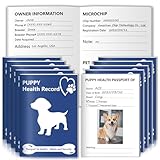
- Sufficient Quantity:When you choose our dog vaccines records, you'll receive 10 notebook.Whether you're a breeder, veterinary practice, or multi pet household, this will ensure you have enough documentation on hand for managing each pet's health history。Every puppy vaccination record book has 12-page puppy health journal has 8 dedicated pages for tracking your pup’s health, vet visits, and key details, with 4 blank pages at the end for jotting down extra notes, pet-related info, or anything else you want to record.
- .Ideal Size for Record Keeping:Each dog vaccine record book measures 5x3.5 inches folded; 5x7 inches unfolded, allowing for easy portability and storage.These handy health records notebook for dogs with double sided printing, featuring enough space and columns for all your pets important information,plus, it has dedicated spots for sticking on vaccine stickers and adding cute puppy photos.They offer a stylish and organized approach to pet health documentation, a must have addition to your pet supplies.
- Premium Quality: The puppy health record tracker’s cover features 300gsm coated paper with vibrant full-color printing and a protective laminate finish. Inside, 100gsm high-quality offset paper pages are durable and ink-resistant, ensuring no bleeding from pens or markers—so your records stay neat and easy to read.
- .Effortlessly Track Vaccinations and More:The canine health record booklets pages include:owner and puppy information,medical history and hospitalizations,vaccination record and sticker,dog service providers,fecal examinations and de-worming,heartworm screening, prevention and treatment etc.This record keeping tool will ensure every important detail is accounted for and make this task easy, organized, and straightforward.Add this essential tool to your pet supplies for a happier, healthier pet.
- Essential for Pet Owners:Designed for veterinary clinics and pet owners, these puppy vaccination record books make tracking key health details—like shots, checkups, and treatments—simple and organized. When you’re away and leave your pup with a sitter or family, the dog medical record and vaccine book serves as a quick reference for their medical history, ensuring care stays on track even in your absence. Plus, dedicated sections for photos, physical markings, and ID info prepare you for emergencies, helping you recover your friend quickly if they ever get lost.
Cardiac examination
Request the written cardiac result and ask what type of examination was performed. OFA explains that its basic cardiac database addresses congenital disease, while advanced examinations include a separate assessment for adult-onset disease. Adult-onset clearances are time-limited. A puppy-age or old examination therefore cannot be treated as a permanent guarantee that the parent will never develop heart disease. Ask whether the veterinarian or veterinary cardiologist recommended a repeat examination and whether any murmur, medication, or follow-up appears in the dog’s records.
Eye examination
Ask whether a qualified veterinary ophthalmologist examined the Pomeranian parent, what conditions were assessed, and when. Obtain the signed report rather than accepting “eyes clear” in a text message. Ask about recurring eye irritation, vision changes, surgery, or diagnosed eye disease in parents, siblings, and previous offspring. Your veterinarian can explain what a particular finding means for a Pomchi, since a parent-breed clearance does not predict every condition in a crossbred puppy.
Chihuahua parent: ask about screening and family history
Chihuahua guidance emphasizes possible heart, eye, and patellar problems and recommends breeders who routinely screen their breeding stock. Ask the breeder to identify each examination performed on the Chihuahua parent, provide the report, and state the date and examiner. If no formal test was completed, ask why and what veterinary monitoring the dog has received instead.
Family history matters when a result is unavailable or inconclusive. Ask whether the Chihuahua parent, its parents, littermates, or previous puppies have had heart murmurs, diagnosed heart disease, eye disease, kneecap luxation, orthopedic surgery, fainting, exercise intolerance, or unexplained early deaths. Ask for ages at diagnosis and copies of relevant veterinary records when possible. A candid account of an affected relative is more useful than an absolute statement that “there are no problems.”
How to read OFA and other health records
What a CHIC number does—and does not—mean
A Canine Health Information Center (CHIC) number indicates that the recommended screenings for that breed were performed and the results were made public. It does not mean every result was normal. Open the individual entries, read the actual outcome, and note the date and examiner. A CHIC number is an index to records, not a health guarantee for the dog or its descendants.
Also popular on Amazon
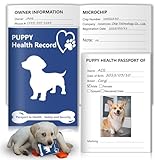
- Product Include:When you choose our dog vaccines records tracker, you'll receive one notebook.This 12-page puppy health journal has 8 dedicated pages for tracking your pup’s health, vet visits, and key details, with 4 blank pages at the end for jotting down extra notes, pet-related info, or anything else you want to record.
- Ideal Size for Record Keeping:Each dog vaccine record book measures 5x3.5 inches folded; 5x7 inches unfolded, allowing for easy portability and storage.These handy health records notebook for dogs with double sided printing, featuring enough space for all your pets important information,plus, it has dedicated spots for sticking on vaccine stickers and adding cute puppy photos.They offer a stylish and organized approach to pet health documentation, a must have addition to your pet supplies.
- Premium Quality: The puppy health record tracker’s cover features 300gsm coated paper with vibrant full-color printing and a protective laminate finish. Inside, 100gsm high-quality offset paper pages are durable and ink-resistant, ensuring no bleeding from pens or markers—so your records stay neat and easy to read.
- Effortlessly Track Vaccinations and More:The canine health record booklets pages include:owner and puppy information,medical history and hospitalizations,vaccination record and sticker,dog service providers,fecal examinations and de-worming,heartworm screening, prevention and treatment etc.This record keeping tool will ensure every important detail is accounted for and make this task easy, organized, and straightforward.Add this essential tool to your pet supplies for a happier, healthier pet.
- Essential for Pet Owners:Designed for veterinary clinics and pet owners, these puppy vaccination record books make tracking key health details—like shots, checkups—simple and organized. When you’re away and leave your pup with a sitter or family, the dog medical record and vaccine book serves as a quick reference for their medical history. Plus, dedicated sections for photos, physical markings, and ID info prepare you for emergencies, helping you recover your friend quickly if they get lost.
Recognizing an official report
OFA publishes sample certifications so buyers can compare documents. Its guidance warns: “Any form presented as an ‘OFA Report’ which is not on an official OFA form (as represented below) should be held as suspect.” Check the dog’s name, identification, examination type, result, and issuing organization. If a breeder supplies a cropped image, ask for the complete page or a direct way to verify it.
Dates, examiners, and follow-up
Record who performed each test: a general-practice veterinarian, a veterinary cardiologist, or a veterinary ophthalmologist may provide different levels of examination. Ask whether the result is preliminary, permanent, or time-limited. OFA’s explanation of cardiac evaluations is especially important: congenital and adult-onset assessments are not interchangeable, and an adult-onset clearance can expire. Ask what repeat testing is due and whether the breeder has scheduled it.
When records are not in the database
Request original certificates, laboratory reports, or letters from the examining veterinarian. Ask the breeder to explain any missing page, altered name, or mismatch in identification. You can contact the issuing practice to confirm a report when the practice’s privacy rules allow it. Do not reject a breeder solely because a record is unpublished, but do not accept an undocumented claim as equivalent to independently verifiable evidence.
Questions about the puppy’s own care
Parent screening does not replace an examination of the puppy. Ask for a dated veterinary record that lists the physical examination findings, weight, administered vaccines, deworming or other parasite treatments, and any recommended follow-up. Clarify which vaccines were given, the product and date, and when the next dose is due. Ask whether the puppy has had coughing, diarrhea, vomiting, poor appetite, limping, skin problems, eye discharge, or a heart murmur.
Free tools Windows power users keep installed
One-click scans. No signup required.
Request copies before collection day so your veterinarian can review them. Confirm the puppy’s microchip number, registration instructions, and the name of the practice that provided care. If the breeder says a test was “normal,” ask to see the result and ask what was actually tested; a routine puppy examination is not the same as specialist screening of both parents.
Also popular on Amazon
Ask about previous litters and the breeder’s response to problems
Ask whether any puppy from an earlier litter developed a significant medical condition, at what age, and how the breeder responded. A responsible answer may include veterinary records, communication with owners, changes to the breeding plan, or a referral to a specialist. Ask whether the breeder has produced puppies with recurring knee, heart, eye, breathing, dental, or growth problems, while recognizing that the reviewed breed guidance does not establish a complete Pomchi disease list.
Notice whether the breeder answers directly, provides documentation, and distinguishes known facts from uncertainty. Evasive replies, pressure to pay immediately, or claims that a crossbred puppy “cannot inherit” parent-breed conditions are reasons to pause. A breeder who acknowledges an affected relative and explains the decision-making process is giving you information you can discuss with your veterinarian.
Visit the breeder and observe the dogs
OFA advises prospective owners to visit breeders and observe the dogs and facilities. Meet the puppy with its mother when possible, and ask to see the area where the litter is raised. Look for clean, safe housing, access to fresh water, and dogs that appear alert and appropriately socialized. The visit is not a substitute for records: a tidy room and friendly puppy cannot establish a normal heart, eye, or patella examination.
Quick wins for a faster PC:
Fix the driver behind crashes, sound loss and screen glitchesFind Drivers →Repair Windows errors before they cause bigger problemsFix Now →Ask why the sire is not present if only the dam is on site, and verify the relationship through the paperwork. Be cautious if the breeder insists on an isolated handoff, refuses to show the mother, or will not let you review records before payment. If illness is suspected among the puppies, postpone the visit and ask for veterinary guidance rather than exposing your household or other dogs.
Independent reader supportYour contribution helps us test, update, and keep practical guides available for everyone.Review the contract and follow-up plan
Ask for the complete written agreement before sending money. Look for the exact puppy identification, deposit and refund terms, required veterinary examination period, procedures for reporting illness, and any return or replacement provisions. Ask what happens if your veterinarian finds a serious concern, and whether the breeder requires the dog to be returned rather than transferred to another home. Ask who pays for evaluations, what documentation is required, and whether time limits apply.
Also popular on Amazon

- 10-Pack Pet Health Logs: Includes 10 puppy health record booklets, ideal for dog breeders, pet care centers, and multi-pet households. Whether for daily use, travel, or boarding, each 12-page booklet features 8 dedicated pages for tracking health and 4 blank pages for extra notes and pet details.
- Compact Size & Flat Lay: Each book measures 5"×3.5" folded and 5"×7" open flat, fitting easily into purses, glove boxes, or pet bags. Perfect for on-the-go use at the dog park, daycare, or training sessions. Opens 180 degrees for comfortable writing with dedicated spaces for vaccination stickers and pet photos.
- Premium Quality & No Bleed-Through: The cover features sturdy coated paper with a protective laminate finish. Inside, 80gsm high-quality offset paper is durable and ink-resistant, resisting bleed-through from pens or markers to keep your entries neat, organized, and easy to read.
- Complete Puppy Health Record Booklet: Thoughtfully organized sections cover owner/puppy info, health history, vaccination logs with sticker space, wellness visits, care schedules, and care & service contacts. An essential tool for first-time owners, experienced breeders, and pet caregivers alike.
- Pet Passport & Gift Ready: Works as a pet companion passport for tracking health schedules and checkups during travel, boarding, or vacation. Includes dedicated sections for photos, markings, and ID info. Makes a thoughtful holiday gift, birthday present, or stocking stuffer for new puppy parents and dog lovers.
There is no universal legal standard established by the sources reviewed here, so treat the breeder’s policy as a contract to understand—not as a guarantee that every clause is fair or enforceable in your location. Have a local attorney review unusual terms, especially clauses that restrict veterinary care or make you waive rights you do not understand.
Compare two breeders or litters systematically
Use the same questions for every breeder so an appealing personality or lower deposit does not overshadow missing evidence. The following is a practical comparison framework, not a formal score:
| Comparison point | What strong documentation looks like | Questions when evidence is weak |
|---|---|---|
| Parent identity | Registered names or numbers match the dogs and reports; microchip details are consistent. | Why is a parent unavailable? How can identity be independently confirmed? |
| Relevant screening | Pomeranian patella, cardiac, and eye results; Chihuahua screening and documented family history. | Which tests were omitted, and why? What veterinary monitoring was done instead? |
| Verification | Results are searchable in OFA or supported by complete original reports. | Why is a result unpublished? Can the issuing practice confirm it? |
| Timing and examiner | Dates, specialist or veterinarian names, result type, and follow-up recommendations are clear. | Is the examination old, preliminary, puppy-age, or time-limited? |
| Family and litter history | Specific ages, diagnoses, records, and an explanation of breeding decisions. | Have previous puppies had serious problems, and how were owners helped? |
| Puppy care | Dated examination, vaccine and parasite records, microchip information, and next-care instructions. | What exactly was examined, and can I receive the complete record? |
| After-sale policy | Written, understandable health, return, reporting, and rehoming terms. | What are the deadlines, required proof, and financial responsibilities? |
Arrange an independent veterinary examination
Book an appointment before the puppy arrives or immediately afterward, within any contract deadline. Bring every parent and puppy record, the purchase agreement, and a list of observations from the first days. Tell the veterinarian the parents’ screening results and any family history so the examination can be interpreted in context.
Your veterinarian may listen for a murmur, assess the patellas and gait, examine the eyes, check teeth and growth, review parasite prevention, and plan vaccinations. A normal visit is valuable but limited: some disorders develop later, and a routine examination cannot recreate every specialist test. Ask what signs should prompt an earlier visit and when repeat checks are appropriate.
If the puppy is acutely ill, seek veterinary care rather than waiting for a contractual examination window. Notify the breeder in writing, keep copies of invoices and reports, and follow the contract’s reporting procedure. Prompt documentation protects the puppy’s health and gives both parties a clear record.
A copy-and-paste question list for the breeder
- What are the registered names, identification numbers, and microchip numbers of the sire and dam?
- May I see the complete patella, cardiac, and eye reports for the Pomeranian parent?
- What screening was performed on the Chihuahua parent for heart, eye, and patellar concerns?
- Who performed each examination, on what date, and was follow-up or repeat testing recommended?
- Can I verify any results in OFA’s public database, and why are other results unpublished?
- Have either parent, their parents, littermates, or previous puppies had heart, eye, patellar, or other significant health problems?
- Has a puppy from an earlier litter developed a serious condition? What records and support can you provide?
- What veterinary examination, vaccines, parasite treatments, and microchip work has this puppy received?
- Can I meet the puppy with its mother and see where the dogs are raised?
- What does the written contract require if my veterinarian finds a serious health concern?
- What is your return or rehoming policy if I can no longer keep the dog?
What the evidence can—and cannot—tell you
Documented screening improves the information available to a buyer, but it cannot predict every outcome. Parent-breed recommendations are useful prompts because the Pomeranian and Chihuahua sources identify patellar, cardiac, and eye concerns. They do not establish a complete Pomchi protocol, and they do not guarantee that a puppy will remain healthy. Interpret each result in context, verify the dog’s identity and dates, and involve an independent veterinarian.
The Tool Desk
Outbyte PC Repair FREEClear out junk files and repair common Windows errorsFree Scan →Outbyte Driver Updater FREEScan for outdated or missing drivers - takes under a minuteDriver Scan →The safest buying decision is the one supported by transparent records, specific answers, an opportunity to observe the family, and a written plan for veterinary care and unexpected problems. If a breeder will not provide that foundation before taking your deposit, wait for documentation—or choose a different litter.





Leave a Reply