
For a newborn puppy that cannot nurse from its mother or a suitable foster dog, use a commercial milk replacer made specifically for puppies. Cow’s milk is not a nutritionally adequate sole replacement for canine milk. It does not provide the same balance of protein, energy and carbohydrate that a growing puppy needs.
Choose a product labeled for puppies, prepare it exactly as directed, and have a veterinarian demonstrate feeding if the puppy is weak, will not suck effectively, or needs tube feeding. Incorrect mixing, poor nipple flow or unsafe positioning can cause serious illness, choking or aspiration.
As an Amazon Associate I earn from qualifying purchases.
At a glance: puppy milk replacer versus cow’s milk
The choice is not simply about which liquid a puppy will drink. A newborn needs a complete, species-appropriate source of nutrition, prepared and delivered safely. Veterinary guidance from the FDA’s Center for Veterinary Medicine, VCA and the American Kennel Club consistently points to puppy-specific milk replacer when maternal or foster nursing is unavailable.
What’s actually slowing this PC down?
Pick the symptom - the matching free tool is one click away.
| Factor | Puppy milk replacer | Cow’s milk |
|---|---|---|
| Species fit | Formulated for canine nutritional requirements when the label identifies it as a puppy or canine milk replacer. | Produced for calves, not for the nutritional requirements of newborn dogs. |
| Protein and energy | Designed to provide the nutrient balance described on the product label. | VCA explains that mother’s milk has more than twice as much protein as cow’s milk and is higher in energy. |
| Carbohydrate balance | Set by the manufacturer for puppies when used as directed. | Contains a different balance, including more carbohydrate relative to canine milk. |
| Complete replacement | Some products are intended to serve as sole nutrition before weaning; confirm the label and your veterinarian’s advice. | Not an equivalent sole replacement for a newborn puppy. |
| Preparation | Requires the product’s exact mixing, storage and handling instructions. | There is no safe home conversion that makes ordinary cow’s milk a complete canine formula. |
| Feeding safety | Still requires an appropriate nipple, flow rate, position and technique. | Even if a puppy accepts it, acceptance does not make it nutritionally adequate or remove aspiration risks. |
The FDA summarizes the underlying principle this way: “Milk replacers are formulated for specific species of animals according to their nutritional requirements and physiology.” That is why a puppy product is the appropriate replacement category, while cow’s milk is not.
#1 Best Overall
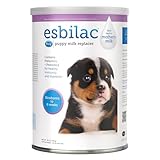
- PUPPY MILK REPLACEMENT — When mom can’t nourish them, Esbilac can. Scientifically the next best to mother’s milk, Esbilac provides all the nutritional elements necessary for puppies, newborn to six weeks old.
- COMPLETE, BALANCED NUTRITION — Our formula is closest to mother's milk in protein, fat, and carbohydrates. We’ve also added vitamins, minerals, and trace nutrients; plus prebiotics and probiotics to support healthy immunity and digestion.
- EASY TO DIGEST — Esbilac is highly palatable and formulated with a special fiber blend for easy digestion and improved gut health.
- EASY-TO-MIX FORMULA — Whisk or shake 1 part powdered Esbilac into 2 parts warm water. Do not mix more Esbilac than can be consumed in 24 hours. Do not use a blender. Must be kept refrigerated after reconstituting.
- ABOUT US — PetAg is a trusted leader in pet wellness, with science-backed formulas in our milk replacers, health supplements, and grooming products helping pet owners to proactively enhance the lives of their pets, for more healthy years together.
Why cow’s milk is not enough for a newborn puppy
A mother dog’s milk is a concentrated food designed for rapid growth during the first weeks of life. Cow’s milk serves a different species with different growth demands. According to VCA’s veterinary nutrition guidance, canine milk is higher in protein and energy and lower in carbohydrate than cow’s milk. VCA states that mother’s milk contains more than twice as much protein as cow’s milk; treat that as the veterinary page’s comparison, not as a universal laboratory value for every cow or every dog.
That mismatch matters most when milk is the puppy’s only food. A newborn cannot compensate for a dilute or unbalanced diet by eating solid food. Replacing all feeds with cow’s milk can therefore leave the puppy short of nutrients needed for growth, even if the puppy appears willing to drink it.
Adding other kitchen ingredients does not reliably correct the problem. The nutrient content of a homemade mixture varies, and an incorrect ratio can be as harmful as the original substitution. The FDA warns that milk replacers are species-specific and that incorrect mixing, use or handling can lead to serious illness or death. Unless a veterinarian gives you a precise, individualized recipe, do not add eggs, oils, supplements, infant formula or other ingredients to a commercial product.
Quick wins for a faster PC:
Repair Windows errors before they cause bigger problemsFix Now →Fix the driver behind crashes, sound loss and screen glitchesFind Drivers →When a puppy needs milk replacer
The first choice for a newborn is usually nursing from its healthy mother. If the mother is absent, ill, rejecting the litter or unable to produce enough milk, a healthy foster dog may be possible. VCA recommends looking for a foster when one can be found, and the Vetlearn neonatal-care guidance advises involving a veterinarian or animal-welfare group to assess whether fostering is appropriate.
When maternal or foster nursing is not available, a commercial puppy milk replacer is the standard replacement option identified by VCA and the American Kennel Club. Use a product whose label specifically says it is for puppies or dogs. A replacer made for another species is not an acceptable substitute merely because it is also sold as “milk replacer.”
What to check before opening the container
- Read the species statement and confirm that the product is intended for puppies.
- Check the expiry date and follow any instructions about opening, mixing, refrigeration and discard times.
- Do not use a product with an unusual smell or texture.
- Make sure you have a clean puppy bottle and an appropriate nipple if bottle feeding is suitable for this puppy.
- Have a veterinarian’s phone number available, especially if the puppy is orphaned, weak or not gaining weight.
How to prepare puppy milk replacer safely
Preparation is part of the treatment, not a minor housekeeping detail. A product can be appropriate in theory but unsafe if it is mixed too concentrated, too dilute, contaminated or stored incorrectly. The label is the controlling instruction because formulas differ.
- Read the entire label first. Identify the required powder-to-water ratio, water instructions, mixing method, storage limits and discard guidance. Do not rely on a recipe remembered from another product.
- Use only the stated species and product. Do not combine different replacers or substitute a kitten, calf, human-infant or generic livestock formula.
- Measure accurately. Use the scoop or measuring method supplied by the manufacturer. Guessing by eye can change the calorie and nutrient concentration.
- Add no unapproved ingredients. Extra powder, sugar, oil, vitamins or supplements can upset the nutrient balance or create a dangerous concentration.
- Mix as directed. Follow the label’s order and mixing method so the powder disperses evenly. If the product calls for a particular temperature or settling period, follow that instruction rather than improvising.
- Inspect before feeding. Do not use a prepared mixture that smells abnormal, has an unusual texture or has been held beyond the label’s safe-use window.
- Store and discard exactly as directed. FDA guidance emphasizes that handling and preparation affect safety. When in doubt about a stored batch, discard it and prepare a fresh one according to the label.
If you are unsure whether a batch was mixed correctly, do not “fix” it by adding water or more powder without veterinary or manufacturer guidance. Start over with a correctly measured preparation.
Recommended Free Tools
Feeding technique can be as important as the formula
A puppy can aspirate milk into the lungs if liquid flows too quickly or the puppy is positioned incorrectly. VCA and Vetlearn both stress the need for proper technique, and VCA advises veterinary instruction when a puppy is weak or not suckling effectively.
Rank #2

- NUTRITIONAL SUPPLEMENT - Esbilac Healthy Development supports healthy growth and development with high-quality protein for dogs weaning to 6 years.
- SUPPORTS COGNITIVE DEVELOPMENT – With DHA (Omega 3 fatty acids) and Vitamin E, our formula supports visual & cognitive development.
- CONTAINS OMEGA 6 FATTY ACIDS - Our powder contains Omega 6 fatty acids to support a healthy skin and coat.
- GREAT TASTE - Esbilac Healthy Development is formulated with a great taste dogs love. Supports transition to solid foods for weaning puppies.
- ABOUT US − PetAg is a trusted leader in pet wellness, with science-backed formulas in our milk replacers, health supplements, and grooming products helping pet owners to proactively enhance the lives of their pets, for more healthy years together.
Bottle feeding
A puppy bottle and nipple can be useful when the puppy has a strong, coordinated suck. The nipple must release milk at an appropriate rate. A hole that is too large can flood the mouth; one that is too small may frustrate a weak puppy and encourage unsafe force. Never squeeze the bottle to push milk into the mouth unless a veterinarian has specifically instructed you to do so.
Ask a veterinarian to demonstrate the puppy’s position and latch. Do not feed by holding the puppy on its back like a human infant. Keep the puppy in a natural nursing posture and stop if milk comes from the nose, breathing becomes noisy, the puppy coughs, or the puppy suddenly weakens. Those signs can indicate aspiration or another emergency.
Tube feeding
Tube feeding is not a technique to learn from a short written description. It requires correct tube selection, measurement, placement and timing. An incorrectly placed tube can deliver milk into the airway. Vetlearn and VCA recommend veterinary instruction, particularly for puppies that cannot suck effectively. Have a professional demonstrate the method and confirm that you can identify the correct placement before attempting it at home.
The Tool Desk
Outbyte PC Repair FREERepair Windows errors before they cause bigger problemsFix Now →Outbyte Driver Updater FREEScan for outdated or missing drivers - takes under a minuteDriver Scan →When to stop a feeding and call
- The puppy cannot coordinate sucking or repeatedly falls asleep before taking meaningful nutrition.
- Milk appears at the nostrils, the puppy coughs, gags, chokes or develops noisy breathing.
- The abdomen becomes markedly distended, or the puppy vomits repeatedly.
- The puppy is cold, limp, unusually quiet or difficult to wake.
- You are uncertain about the nipple flow, position, tube placement or preparation.
These are reasons to contact a veterinarian promptly rather than switching liquids or forcing another feeding.
How much should a newborn puppy receive?
There is no single online amount that is safe for every puppy. The correct volume depends on the puppy’s body weight, age, health, ability to suck and the calorie concentration of the selected product. The label’s feeding chart is a starting point, but VCA recommends using veterinary guidance to individualize a plan.
Weigh the puppy regularly with a small digital scale and record the results. Weight trends help your veterinarian determine whether intake is adequate and whether the plan needs adjustment. A puppy that is not gaining weight, is losing weight or cannot stay hydrated needs prompt veterinary evaluation; simply increasing the volume can cause vomiting, abdominal distension or aspiration.
Use the product’s directions without overgeneralizing them
- Follow the product’s stated amount and frequency for the puppy’s current weight and age.
- Do not copy a feeding chart from a different brand or formula.
- Do not assume that a larger puppy can safely take proportionally more at every feed.
- Ask the veterinarian how to adjust feeds if the puppy is premature, chilled, ill, dehydrated or recovering from surgery.
- Keep a written log of weight, preparation, approximate intake, urination and stool so changes are visible.
General developmental guidance from VCA describes milk replacer as sole nutrition until about three to four weeks of age, when weaning may begin. That is a broad milestone, not a command to stop milk on a particular day. Your veterinarian should decide when the puppy is ready for a gradual transition based on development and health.
Crashes, No Sound, or Screen Glitches?
Random freezes, missing sound and display glitches usually trace back to one bad driver. Find and replace yours safely.Free scan · under a minutePC Slower Than It Used to Be?
A free scan shows the junk files, broken settings and background clutter dragging Windows down - then fixes them in one click.Free scan · Windows 10 & 11Foster nursing, orphan care and professional help
A foster dog may provide benefits that a bottle cannot, including nursing behavior and species-appropriate milk. However, a foster arrangement must be safe for both litters. A veterinarian or qualified animal-welfare group can help assess the foster dog’s health, the puppies’ ages and whether disease-control precautions are needed.
Rank #3

- MILK REPLACER WITH PROBIOTICS: Suitable for up to 9 young animal species including puppies, kittens, calves, lambs, goats, foals, piglets, llamas, and crias; providing probiotics and balanced nutrition to support healthy growth and development.
- MADE WITH PROTEIN AND FAT: Contains 24% protein and 24% fat; supporting fast, healthy growth, strong muscle development, and overall vitality for young animals during critical early stages of life.
- ALL MILK FORMULA WITH PROBIOTICS: Made with high-quality all-milk protein; supporting healthy growth, proper development, and overall performance for young animals during critical early stages of life.
- SUPPORTS HEALTHY DIGESTION FOR YOUNG ANIMALS: Powered by Opti-Gut probiotics; promoting gut health, nutrient absorption, and digestive balance to support overall growth, vitality, and wellbeing for young animals.
- EASY TO MIX FORMULA: Designed for quick and convenient preparation; ensuring fast mixing, effortless feeding, and optimal consumption so young animals receive balanced nutrition efficiently for healthy growth and development.
If no foster is available, assemble supplies before the puppy becomes frantic: puppy-specific replacer, a suitable bottle and nipple, a scale, clean measuring equipment and a plan for veterinary support. Supplies do not replace instruction. Ask the veterinarian to watch a feeding, especially if the puppy is weak, has a poor suck reflex or may require tube feeding.
Newborn puppies can deteriorate quickly. A puppy that is cold or severely weak may not be able to digest a normal feeding safely; warming and medical assessment may be needed before feeding. Because the supplied veterinary sources do not establish a universal home protocol for every emergency, call a veterinarian rather than attempting a generalized internet remedy.
Independent reader supportYour contribution helps us test, update, and keep practical guides available for everyone.Warning signs that need prompt veterinary attention
Milk choice is only one part of neonatal care. Contact a veterinarian promptly if the puppy shows any of the following:
- Weakness, collapse, inability to wake normally or a poor suck reflex.
- Failure to gain weight or any continuing weight loss.
- Repeated vomiting, severe diarrhea or a swollen, painful abdomen.
- Coughing, choking, milk from the nose or breathing difficulty during or after a feed.
- Signs of dehydration or illness, including marked lethargy or unusual body temperature.
- Refusal of several feeds or inability to keep the replacer down.
Do not wait for a newborn to “catch up” after several missed feeds. The veterinarian may need to investigate infection, congenital problems, hypoglycemia, dehydration, inadequate warmth or a feeding complication.
Common mistakes and the safer alternative
| Common mistake | Why it is risky | Safer alternative |
|---|---|---|
| Using cow’s milk as the only food | It does not match canine milk’s protein, energy and carbohydrate balance. | Use a puppy-labeled milk replacer when nursing from the mother or foster dog is unavailable. |
| Using another species’ replacer | Species-specific formulas are built around different nutritional requirements and physiology. | Verify the label says it is for puppies or dogs. |
| Adding ingredients to “boost” calories | Uncontrolled changes can create an unbalanced or overly concentrated mixture. | Follow the label exactly and ask the veterinarian about any needed adjustment. |
| Mixing by guesswork | Too much or too little powder changes nutrient concentration and may cause illness. | Measure with the manufacturer’s method and restart a batch if the ratio is uncertain. |
| Using a fast-flowing nipple | Milk can enter the airway and cause choking or aspiration. | Use an appropriate nipple and have a veterinarian demonstrate flow and positioning. |
| Feeding a weak puppy without instruction | A poor suck or incorrect technique can make bottle feeding unsafe. | Obtain veterinary instruction; tube feeding should be demonstrated and supervised initially. |
| Continuing a questionable stored batch | Improper storage or an abnormal smell or texture can compromise safety. | Follow storage and discard directions and throw out anything suspicious. |
| Increasing volume because weight gain is slow | The problem may be illness, dehydration, poor technique or another cause; overfeeding can worsen complications. | Record weights and have a veterinarian adjust the plan. |
A practical decision path
- Can the puppy nurse safely from its mother? If yes, support the mother and litter with veterinary guidance rather than replacing milk unnecessarily.
- If not, is a healthy, suitable foster dog available? Ask a veterinarian or animal-welfare group to assess the arrangement.
- If there is no foster, do you have a puppy-specific replacer? Obtain one labeled for puppies and check its expiry date and condition.
- Can the puppy suck and swallow normally? If yes, ask the veterinarian to confirm bottle and nipple technique. If no, obtain instruction before attempting tube feeding.
- Is the puppy gaining weight and remaining comfortable after feeds? Track weight and symptoms. Lack of gain, weakness, vomiting or respiratory signs require prompt veterinary attention.
- Is the puppy approaching weaning age? Around three to four weeks, discuss a gradual transition with the veterinarian; do not stop replacer abruptly based only on a calendar.
What to ask your veterinarian
Bring the replacer container, your feeding notes and the puppy’s recent weights. Useful questions include:
- Is this product appropriate as sole nutrition for this puppy?
- What amount and frequency fit this puppy’s weight, age and health?
- Can you watch me prepare a batch and demonstrate the nipple flow?
- Should this puppy be bottle fed, or does it need supervised tube feeding?
- What weight gain should we expect, and how often should I weigh the puppy?
- What signs mean I should seek emergency care rather than wait for the next feed?
- When and how should we begin weaning?
These questions turn a generic feeding instruction into an individualized plan, which is especially important because newborn puppies vary widely in size, vigor and medical needs.
Bottom line for caregivers
Use puppy milk replacer—not cow’s milk—as the sole replacement when a newborn cannot nurse from its mother or an appropriate foster dog. The product must be labeled for puppies, mixed and stored exactly as directed, and delivered with a safe technique. Weigh the puppy, watch for feeding or breathing problems, and involve a veterinarian early whenever the puppy is weak, not gaining weight or unable to suck effectively.
Quick Recap
Product prices and availability are accurate as of the date/time indicated and are subject to change. Any price and availability information displayed on Amazon at the time of purchase will apply.





Leave a Reply