
Short answer: Raising goats for cashmere can be viable, but it is a specialized, quality-dependent livestock enterprise—not a guaranteed high-margin homestead project. Profit depends on evaluated animals, sound goat care, clean fiber harvesting, dehairing and testing, reliable markets, and a budget that includes labor and infrastructure.
Is raising goats for cashmere a realistic business?
Yes—but only as a specialized, quality-dependent livestock enterprise. Raising goats that grow some soft undercoat is not the same as producing commercially valuable cashmere, and selling raw fleece alone is rarely a complete business plan. The enterprise becomes more realistic when you combine carefully evaluated animals with sound goat management, reliable harvesting and processing, documented fiber quality, and more than one source of income.
As an Amazon Associate I earn from qualifying purchases.
The North American Cashmere Goat standard makes the point clearly: the animal is evaluated as a dual-purpose goat, with fiber and conformation each receiving 50 percent of the grading emphasis. A goat may produce down but lack the structure, health, reproduction, or overall quality needed for a strong breeding or commercial animal. Conversely, an attractive goat may not produce enough fine, uniform, usable fiber to justify its cost.
Before buying goats, work backward from the saleable product. Decide who will buy the fiber, what quality they require, where it will be tested and dehaired, how much labor you can provide, and whether income will also come from breeding stock, kids, meat, brush management, educational experiences, or finished textiles.
#1 Best Overall

- ✅ Heavy-Duty 12 Gauge Galvanized Steel Construction Crafted from premium 12-gauge high-tensile galvanized steel wire, this cattle fence delivers exceptional strength and flexibility. The heavy zinc coating provides superior rust and corrosion resistance, ensuring long-lasting durability for reliable farm fencing in all weather conditions – perfect for cattle panels, livestock fencing, and pasture enclosure.
- ✅ Smart Graduated Mesh Design for Maximum Security Features a strategically designed gradient mesh that gradually shrinks from top to bottom, preventing small animals from escaping through the bottom gaps. This graduated field fencing effectively contains goats, sheep, hogs, and poultry while maintaining structural integrity – an ideal goat fence and hog wire fence solution for secure livestock containment.
- ✅ Superior Twisted Weaving Technology for Lasting Strength Utilizes advanced twisted weaving process rather than standard welding, ensuring a tight, secure structure that won't loosen over time. This woven wire fence design provides superior flexibility and impact resistance, maintaining integrity under heavy animal pressure – ideal for cattle fencing, deer fencing, and farm perimeter protection.
- ✅ Large Coverage with Easy Installation This cattle fencing allowing quick setup for farm, garden, orchard, or yard enclosure. The low-maintenance construction requires minimal upkeep, functioning perfectly as deer fence for gardens, pasture fencing for rotational grazing, or perimeter fence for homesteads.
- ✅ Versatile Multi-Animal Containment Solution Ideal for containing cattle, goats, sheep, hogs, pigs, and poultry with reliable security. Works as predator-proof barrier protecting livestock from coyotes and predators. Perfect for pasture fencing, field fencing, garden protection, orchard enclosure, and farm perimeter – a complete livestock fencing solution for diverse agricultural needs.
What cashmere goats actually produce
Cashmere is the fine winter undercoat that grows beneath a goat’s coarser guard hair. The entire fleece is not cashmere. The saleable down must be separated from guard hair, vegetable matter, dirt, and other contamination.
| Material | What it means for the producer |
|---|---|
| Fine cashmere down | The soft undercoat used for high-value textile production. Fineness, length, uniformity, style, coverage, and clean weight all matter. |
| Guard hair | The longer, coarser outer fiber. It is normally removed during processing and should not be counted as saleable cashmere down. |
| Cashgora or other coarser down | Soft goat fiber that may be useful for some products but does not automatically meet a cashmere standard. |
| Contaminated fleece | Fiber containing dirt, burrs, straw, manure, or mixed lots. Contamination reduces processing efficiency and can lower the value of the finished material. |
Under the North American standard, useful benchmark traits include:
- mean fiber diameter of no more than 19 microns;
- relaxed fiber length of at least 32 millimeters;
- a coefficient of variation of no more than 24 percent, indicating greater uniformity; and
- total down weight of at least 60 grams after cleaning and processing.
These figures describe an evaluation standard, not a guarantee of what every goat will produce or what every buyer will pay. A producer should also examine crimp or style, guard-hair differentiation, and down coverage over the neck, shoulder, side, and hip. Objective testing is more dependable than judging softness by touch or relying on a seller’s description.
How to select animals for a cashmere enterprise
Buy documented performance and sound livestock—not color, novelty, or an unsupported claim that a goat is a cashmere goat. Ask the seller exactly what has been measured, by which laboratory or evaluator, and against which standard.
Fiber records to request
- Mean fiber diameter and, ideally, the distribution of fiber diameters.
- Relaxed fiber length in the natural, crimpy state.
- Coefficient of variation or another measure of uniformity.
- Crimp, style, and guard-hair differentiation.
- Down coverage on the neck, shoulder, side, and hip.
- Total down weight after cleaning or processing.
- Age and the date or season of each fleece record.
One test from one favorable year is useful, but a production record over time is more informative. Ask whether results came from recognized laboratory testing or a qualified fleece-show evaluation. The Cashmere Goat Association’s registration process requires an accepted evaluation, and animals qualify on their own merits; a parent’s status does not automatically make every offspring registered or commercially superior.
The North American Cashmere Goat is best understood as a standard-and-registry population rather than a claim that every cashmere-bearing goat belongs to one conventional pure breed. If registration matters to your business, review the current requirements and verify the individual animal’s records. The North American Cashmere Goat registry can be a useful starting point, but registry status should never replace your own review of health, structure, fiber data, and breeding history.
Inspect the animal as livestock
Fiber is only half of the selection equation. Also review:
Quick wins for a faster PC:
Scan for outdated or missing drivers - takes under a minuteDriver Scan →Clear out junk files and repair common Windows errorsFree Scan →Fix the driver behind crashes, sound loss and screen glitchesFind Drivers →- age, sex, body condition, teeth, and general soundness;
- feet, legs, and evidence of recurring lameness;
- reproductive history, kidding history, and kid survival where applicable;
- udder quality in does and testicular development in bucks;
- parasite history and the seller’s health records; and
- temperament and whether the animal can be safely caught and handled.
For a commercial breeding program, a slightly less glamorous goat with repeatable fiber data, good feet, sound reproduction, and manageable behavior may be a better investment than an unusually colored or heavily coated animal with no records.
Land, fencing, shelter, and handling infrastructure
Set up the property before the goats arrive. Goats browse, climb, test weak spots, and escape through openings that appear secure for larger livestock. You need a secure perimeter, usable paddocks, weather protection, dependable water, feed storage, predator planning, and a small handling area.
Rank #2
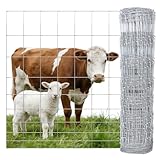
- Heavy Duty Galvanized Woven Construction: cattle panel built with 14 gauge galvanized steel wire and a 12 gauge reinforced border, this woven wire fence delivers exceptional strength and impact resistance. The hot-dip galvanized surface ensures superior rust and weather protection, making it a reliable choice for agricultural fencing and livestock fencing that withstands harsh outdoor conditions and heavy animal pressure.
- Tapered Mesh Design 8in to 3.5in: Wire mesh openings taper from 8 inches at the top down to 3.5 inches at the bottom. The wider top maintains visibility, while the tighter bottom prevents small animals from escaping—ideal for goat fence, hog wire fence panels, and field fence applications. No more chasing runaways or patching gaps.
- All-in-One Livestock & Property Fencing: One roll does it all. Whether used as cattle panel, hog panels, horse fence, or deer fence, this versatile solution adapts to farms, ranches, pastures, gardens, and yards. Perfect as a garden fence, fencing for yard, or yard fencing, it meets the needs of both livestock containment and property protection.
- Quick Setup & Portable Design: Rolls out easily and sets up fast with no special tools required. Lightweight enough for one person to handle, yet strong enough to serve as reliable agricultural fencing or portable cattle panel sections. Ideal for rotational grazing or reconfiguring property lines as needs change.
- Built to Last & Backed by Quality: Designed for years of reliable service in all weather conditions—15–20 years in normal environments, 10–15 years in extreme conditions. The combination of reinforced border wires and heavy galvanized coating means no rusting, no sagging, no constant repairs. Trusted by farmers and ranchers as a durable wire mesh solution for livestock fencing, field fence, and beyond.
Extension guidance describes goat-specific woven wire and electric systems as practical options. One Kentucky production guide describes 48-inch sheep-and-goat fencing with small openings; high-tensile and electric fencing may also work. The correct design depends on terrain, predator pressure, goat size, the presence of kids, and whether the fence is intended as a permanent boundary or temporary paddock division. No single fence specification is safe for every property.
Plan for:
- Containment: A perimeter that resists climbing, pushing, and squeezing through openings, with gates that close reliably.
- Paddock management: Enough divisions to move goats when forage is depleted or parasite pressure rises.
- Shelter: A dry, well-ventilated refuge from wind, rain, snow, heat, and cold stress.
- Water and feed storage: Clean water access and protection for hay, minerals, and feed from weather and contamination.
- Predator control: A plan for vulnerable kids and adults, appropriate to the local predator population.
- Handling: A catch pen, chute, small corral, or similar area for weighing, inspecting, trimming hooves, breeding, kidding assistance, and veterinary treatment.
- Sanitation and manure: A routine for keeping high-traffic areas manageable and disposing of bedding and manure.
- Mortality planning: A lawful, practical plan for animal loss before an emergency occurs.
Infrastructure costs are easy to underestimate because a cashmere fleece is small compared with the cost of fencing, gates, shelter, and handling equipment. Include those costs in the business plan instead of treating them as free homestead improvements.
The Tool Desk
Outbyte PC Repair FREEClear out junk files and repair common Windows errorsFree Scan →Outbyte Driver Updater FREEScan for outdated or missing drivers - takes under a minuteDriver Scan →Feeding and mineral management
The foundation of the diet is good-quality forage or browse, clean water, and goat-appropriate vitamins and minerals. Goats are intermediate browsers, and their nutritional needs are not identical to those of sheep.
Copper deserves particular caution. Goats can become copper deficient, but excessive copper can also cause toxicity, especially when supplements are poorly matched to local forage, soil, or water. Do not automatically substitute a sheep mineral product for a goat mineral product. Have a veterinarian or qualified livestock nutritionist assess local conditions and the complete diet before adding concentrated minerals.
Nutrition needs increase during growth, late pregnancy, lactation, illness, recovery, and periods of poor body condition. Monitor body-condition scores and adjust forage, protein, energy, and minerals rather than feeding by guesswork. Late-pregnancy nutrition is especially important because inadequate intake can contribute to pregnancy toxemia and other metabolic problems.
Fiber production should not be pursued at the expense of welfare or reproduction. A thin doe, a growing kid, a heavily pregnant animal, and a mature buck do not necessarily need the same ration. Record what animals receive, monitor their condition, and make changes with local professional advice.
Outdated Drivers Are Slowing You Down
One free scan finds every outdated or missing driver and matches the right update for your exact hardware.Free scan · exact hardware matchWindows Errors? Fix Them Before They Spread
Repair common Windows errors and clear accumulated junk for a smoother, more stable PC - no reinstall needed.Free scan · no reinstallParasites, hoof care, breeding, and kidding
Routine observation is one of the most valuable management tools. Check appetite, behavior, body condition, gait, coat and fleece condition, fecal consistency, and signs of illness. Keep records for each animal rather than treating the herd as an interchangeable group.
Internal parasites
Internal parasites are a major threat in sheep and goats. A sound program uses clinical observations and, where appropriate, fecal-egg monitoring or other veterinary indicators to identify animals that need treatment. Indiscriminate routine dosing can promote drug resistance and may expose animals to unnecessary medication. Treatment choices, timing, and withdrawal requirements should come from your veterinarian and local conditions.
Hooves and lameness
Hoof trimming is a recurring task, not a one-time setup job. Inspect feet regularly and trim as needed without cutting into sensitive tissue. Persistent abnormal gait, foot odor, swelling, or reluctance to move calls for veterinary assessment rather than repeated trimming alone. Because the task is routine, a suitable pair of goat hoof trimmers belongs on the starter-equipment list, although tool design and user technique still matter.
Rank #3

- Comprehensive Size Design: The electric fence netting measures 50 in x 164 ft/1.27 x 49.98 m, with scientifically spaced grids and double-spiked stakes, ensuring a secure and stable enclosure for animals of all sizes.
- Sturdy and Durable: Built to endure the elements, this electric netting includes windproof kits and fiberglass posts for long-lasting durability. A warning sign and repair kit simplify maintenance, keeping your fence in top condition.
- Wide Applicability: This electric netting fence is ideal for sheep, deer, hogs, dogs, and other large livestock, providing reliable protection for your farm or pasture.
- Effective Electric Current: Designed to regulate electric current intensity, this electric livestock net fence offers effective protection without causing harm to animals, ensuring safety for poultry and livestock.
- Multiple Power Supply Options: Compatible with AC110-240V, solar panels, and DC power sources (not included), this electric fence offers eco-friendly and efficient energy options for your farm.
Breeding and kidding
Veterinary planning should cover vaccination strategy, parasites, mineral risks, lameness, abortions, kidding emergencies, and biosecurity. Goats are seasonal breeders in many production systems, so breeding dates, expected kidding dates, replacement decisions, and winter feed availability should be planned together.
Do not select breeding stock solely for fiber. A doe that produces attractive down but has poor feet, repeated kidding problems, inadequate milk, or poor kid survival may weaken the enterprise. Maintain records on both fiber and productive performance so that replacement decisions improve the herd instead of merely increasing its cashmere label.
Combing versus shearing: choosing a harvest method
Cashmere harvest is tied to seasonal growth and shedding of the winter undercoat. The two main approaches are combing and shearing. Neither is universally best.
| Method | Potential advantages | Trade-offs and questions |
|---|---|---|
| Combing | Can selectively remove the shedding undercoat and may produce a cleaner, higher-yielding lot in some systems. | Usually requires more labor, suitable combs, patient handling, and a coat that is ready to release. |
| Shearing | Can be faster and practical for larger groups or systems already equipped for shearing. | May collect more guard hair or contamination, and the timing and technique must suit the animal and the buyer’s processing system. |
Before harvest, goats should be dry and rested. Separate animals by relevant groups such as age, sex, color, and fiber characteristics. Keep lots traceable and prevent hay, straw, manure, and other debris from being worked into the fleece. Clean harvest surfaces and equipment between groups as needed.
Ask the intended processor which methods it accepts before choosing a technique. Buyer requirements, climate, animal type, labor availability, equipment, and the desired balance between harvesting speed and clean yield all matter. Guidance describing combing as efficient in some traditional systems should not be turned into a blanket recommendation for every farm.
What’s actually slowing this PC down?
Pick the symptom - the matching free tool is one click away.
Testing, dehairing, spinning, and selling the fiber
Raw fleece is an intermediate product, not a finished cashmere product. It may contain guard hair, vegetable matter, dirt, and other contaminants. A typical value chain includes:
- sorting by color, quality, age, sex, and other relevant lot characteristics;
- cleaning and grading;
- dehairing to separate fine down from guard hair;
- carding and preparation;
- spinning into yarn; and
- manufacturing or selling yarn and finished goods.
Manufacturers need predictable lots. Grading should account for fineness, uniformity, length, style, coverage, and yield—not just the total weight collected from the goat. If you plan to market breeding stock, objective fiber records can also make your claims more credible.
Arrange processing before you accumulate multiple seasons of fleece. Ask every prospective processor:
- What is the minimum lot size?
- Which harvest methods and packaging materials are accepted?
- Are fiber tests required, and which tests are recognized?
- How are dirty, mixed, or heavily guarded lots handled?
- What is the expected dehairing yield?
- Will guard hair be returned to you or discarded?
- What are the turnaround time, shipping requirements, and shipping costs?
- Can the processor return yarn, or does it only provide cleaning and dehairing?
Independent cashmere fiber testing can help establish whether an animal or lot meets your target standard. It is an evaluation service, not proof that the resulting fleece will command a particular price. Confirm the laboratory’s methods, reporting format, fees, and current availability before sending samples.
Recommended Free Tools
Rank #4
- ✅ Heavy-Duty 12 Gauge Galvanized Steel ConstructionCrafted from premium 12-gauge high-tensile galvanized steel wire, this cattle fence delivers exceptional strength and flexibility. The heavy zinc coating provides superior rust and corrosion resistance, ensuring long-lasting durability for reliable farm fencing in all weather conditions – perfect for cattle panels, livestock fencing, and pasture enclosure.
- ✅ Smart Graduated Mesh Design for Maximum SecurityFeatures a strategically designed gradient mesh that gradually shrinks from top to bottom, preventing small animals from escaping through the bottom gaps. This graduated field fencing effectively contains goats, sheep, hogs, and poultry while maintaining structural integrity – an ideal goat fence and hog wire fence solution for secure livestock containment.
- ✅ Superior Twisted Weaving Technology for Lasting StrengthUtilizes advanced twisted weaving process rather than standard welding, ensuring a tight, secure structure that won't loosen over time. This woven wire fence design provides superior flexibility and impact resistance, maintaining integrity under heavy animal pressure – ideal for cattle fencing, deer fencing, and farm perimeter protection.
- ✅ Large Coverage with Easy InstallationThis cattle fencing allowing quick setup for farm, garden, orchard, or yard enclosure. The low-maintenance construction requires minimal upkeep, functioning perfectly as deer fence for gardens, pasture fencing for rotational grazing, or perimeter fence for homesteads.
- ✅ Versatile Multi-Animal Containment SolutionIdeal for containing cattle, goats, sheep, hogs, pigs, and poultry with reliable security. Works as predator-proof barrier protecting livestock from coyotes and predators. Perfect for pasture fencing, field fencing, garden protection, orchard enclosure, and farm perimeter – a complete livestock fencing solution for diverse agricultural needs.
How to build a conservative cashmere-goat budget
Do not base the plan on a headline price for cashmere or on an old production study. Historical literature and Australian benchmarking can identify important cost and productivity variables, but they are not current U.S. price forecasts.
Build a local budget with separate one-time, annual, and per-lot costs.
| Budget area | What to include |
|---|---|
| Animal acquisition | Purchase price, health testing, registration or evaluation costs, transport, and any required identification. |
| Infrastructure | Perimeter fencing, electric equipment, gates, shelter, paddocks, water systems, feed storage, and handling facilities. |
| Annual care | Hay and forage, minerals, veterinary work, medications prescribed for the herd, bedding, repairs, and mortality losses. |
| Reproduction | Buck ownership or breeding fees, pregnancy and kidding costs, replacement animals, and losses from poor conception or kid survival. |
| Fiber production | Labor, combing or shearing, sorting, testing, cleaning, dehairing, carding, spinning, packaging, and shipping. |
| Sales | Market fees, photography and labeling, website or storefront costs, customer service, returns, and unsold inventory. |
A useful planning model is:
Net enterprise result = fiber revenue + breeding-stock revenue + other product revenue − livestock, infrastructure, labor, processing, shipping, and sales costs.
Estimate usable down after processing rather than raw fleece weight. Then test the plan under at least three conditions:
Free tools Windows power users keep installed
One-click scans. No signup required.
- Low case: lower clean yield, weaker fiber results, normal animal losses, and no premium for finished goods.
- Expected case: realistic local production, processing, labor, and sales assumptions.
- Strong case: repeatable quality, good kid survival, efficient processing, and successful value-added sales.
Change one assumption at a time—clean yield, processing charge, labor hours, breeding success, or selling price—and see whether the result remains acceptable. If the enterprise only works when every goat passes the fiber standard, every kid survives, labor is free, and finished goods sell immediately, it is not a conservative business case.
For many small farms, diversification is the more credible model. Fiber may be combined with evaluated breeding stock, meat, brush management, farm visits, classes, or yarn and garments. Value-added products can increase revenue per unit, but they also add design, processing, inventory, labeling, sales, and customer-service work. Higher gross revenue is not automatically higher profit.
Independent reader supportYour contribution helps us test, update, and keep practical guides available for everyone.U.S. identification and interstate movement
USDA APHIS provides federal guidance for sheep-and-goat identification and interstate movement, including official identification and documentation requirements. Those requirements can depend on the animal, owner, movement purpose, and destination.
State import rules and movement conditions can differ. Before buying or transporting goats, check both current APHIS guidance and the destination state’s requirements. Confirm details with the state veterinarian or an accredited veterinarian rather than assuming that a federal exemption or identification pathway applies to your situation.
Do these 3 things before closing this tab:
1Fix the driver behind crashes, sound loss and screen glitches2Repair Windows errors before they cause bigger problems3Scan for outdated or missing drivers - takes under a minuteInclude identification, health records, transport documents, and biosecurity procedures in the purchase plan. Regulatory requirements are date-sensitive, so verify them again before each interstate movement.
Best Value

- Reliable Poultry Fence:The electric netting fence is 47.2in high and 164ft long. Poultry netting electric fence can confine chickens, ducks, turkeys, geese and other poultry, protect them from predators, allow them to be more free in a safe area, promote their natural behavior and overall health
- Stability:The electric poultry netting has 14 fiberglass galvanized double-pointed stakes, with pre-fixed fiberglass posts placed every 12ft, which can reduce sagging between posts and provide the strongest stability
- Conductivity:The electric fence netting has 14 horizontal wires (12 conductive wires. The bottom 2 wires are non-conductive) with a graded spacing design to ensure strong conductivity and provide reliable protection for poultry
- Easy to Install: No tools required, just unfold the fence, insert the pre-assembled 14 fiberglass posts into the ground, and connect both ends to a power source (not included). It is lightweight and can be installed and moved quickly and easily
- Protect Your Poultry: Our electric fence netting protects your chickens, ducks, turkeys, geese, sheep, goats, lambs, pigs and other poultry from animals such as coyotes, dogs, skunks, raccoons, foxes, deer, bears, etc. Our electric fence forms a strong barrier to deter predators and provide complete protection for your farm
Equipment and services worth researching
Start with equipment that solves recurring management problems, not specialized gear that will sit unused while the basic system is incomplete.
- Fencing: Goat-specific woven wire, suitable gates, high-tensile systems, or electric livestock netting, selected for your terrain, predator pressure, and kids.
- Handling equipment: A secure catch area, weighing method, tags or records, and safe access for hoof and health checks.
- Hoof-care tools: A properly sized pair of goat hoof trimmers and a safe way to restrain animals.
- Harvest tools: Combs or shearing equipment only after you know which method your animals and processor can support.
- Fiber services: Testing, fleece evaluation, cleaning, dehairing, carding, spinning, and finished-goods manufacturing.
- Professional support: Veterinary care, nutrition advice, breeding assistance, livestock identification, and regulatory guidance.
A cashmere comb is relevant but deserves more caution than ordinary goat-care equipment. Design, tooth spacing, animal coat, shedding stage, labor, and processor requirements vary. Establish the harvest method first, then buy the tool that fits it.
Final checklist before buying the first goats
- Have you identified a buyer or processor and confirmed its minimum lot, packaging, testing, and harvest requirements?
- Can you explain what your target standard considers acceptable cashmere?
- Have you seen individual fiber records rather than relying on a breed or parentage claim?
- Have you inspected feet, teeth, reproductive history, body condition, udder or testicles, and general health?
- Are the perimeter fence, paddocks, shelter, water, feed storage, and handling area ready?
- Do you have a locally appropriate forage, mineral, parasite, vaccination, and veterinary plan?
- Can you perform or obtain recurring hoof care and safely handle every animal?
- Have breeding, kidding, winter feed, replacement, and mortality plans been combined into one calendar?
- Will you keep fleece lots separate and traceable from harvest through processing?
- Does the budget still work after clean yield, processing, labor, shipping, infrastructure, and animal losses are included?
- Have you checked current federal and state identification and movement rules?
Raising goats for cashmere can be a worthwhile niche, but the product is made by the entire system: evaluated animals, healthy and well-fed goats, secure infrastructure, careful harvest, professional processing, and disciplined marketing. If the plan depends only on selling an appealing raw fleece, start smaller—or reconsider the enterprise—before committing to a herd.
Frequently Asked Questions
Is every soft goat fleece cashmere?
No. Cashmere is the fine winter undercoat beneath the goat’s coarser guard hair. A goat can have soft fiber without producing down that meets a cashmere standard. Coarser fiber may be classified as cashgora or another product, and only testing can establish traits such as fineness, length, uniformity, and usable yield.
How much cashmere does one goat produce?
There is no universal amount that every goat will produce. The North American Cashmere Goat standard identifies at least 60 grams of total down after cleaning and processing as a useful benchmark, but age, sex, genetics, nutrition, season, contamination, and dehairing yield all affect the amount you can sell.
Should cashmere goats be combed or sheared?
It depends on the coat, climate, labor, equipment, and processor requirements. Combing can selectively remove a shedding undercoat and may produce a cleaner lot in some systems. Shearing can be faster and more practical in others. Discuss the method with your processor before harvest.
Can goats use sheep mineral?
Not automatically. Goats can become copper deficient, but excessive copper can also be toxic. Sheep mineral products should not be substituted for goat minerals without considering local forage, water, and the complete diet. Ask a veterinarian or qualified nutritionist for a locally appropriate plan.
Does a registered cashmere goat automatically make good breeding stock?
No. Registration or parentage does not guarantee that an individual animal has adequate fiber or conformation. The Cashmere Goat Association’s process evaluates animals on their own merits, so request the individual’s test or qualified fleece-evaluation records and inspect its health and structure.
The Bottom Line
Bottom line: Cashmere goats are not a guaranteed high-margin homestead project. The strongest plan treats fiber as one part of a diversified livestock business, buys animals with independently documented traits, budgets from clean processed yield, and confirms health, processing, market, and movement requirements before purchase.
Quick Recap
Product prices and availability are accurate as of the date/time indicated and are subject to change. Any price and availability information displayed on Amazon at the time of purchase will apply.





Leave a Reply