
Some links on this page are affiliate links: if you buy through them we may earn a commission, at no extra cost to you.
Rarity does not tell you whether a dog will be healthy, inexpensive to keep, easy to groom or easy to exercise. A sound comparison uses the individual dog and its breed’s current evidence: parent-club health tests, known veterinary concerns, coat-care requirements, activity needs, age, temperament and living situation.
Common breeds are not automatically healthier, and rare breeds are not automatically more fragile. Use registration popularity only to understand how often a breed is seen—not as a proxy for disease risk or workload.
As an Amazon Associate I earn from qualifying purchases.
What “rare” and “common” can—and cannot—tell you
In this context, a common breed is one frequently encountered in a region or represented in registration records; a rare breed is encountered less often. Those labels describe prevalence, not biology. The American Kennel Club (AKC) describes its breed rankings as registration statistics. The ranking measure does not establish that a less-registered breed has better health, longer life, lower veterinary costs or easier care.
Popularity can affect practical ownership in indirect ways. A common breed may have more veterinarians, groomers, trainers and breed-specific rescue groups familiar with it. A rare breed may have a smaller pool of experienced professionals, fewer local playmates and longer waits for a specialist. Those are access considerations, not evidence that the dogs themselves are healthier or less healthy.
Popular on Amazon

- 【Premium Dog Grooming Kit】Owning a professional dog slicker brush and a comb, you can effectively remove tangles, knots, and mats, significantly reducing brushing and drying time. Let you, as the groomer, give your furry companion a shiny, healthy coat , Goldendoodle Must Haves - The Best Dog Gifts - Merry Christmas
- 【Professional Slicker Brush for Dogs】Designed for medium-length and curly-haired pets with thick, difficult-to-manage coats, our slicker brush features extra-long angled pins that penetrate deeply to remove dead hair and loose undercoat. It is the best choice for deep combing undercoat for Goldendoodles, Poodles, Labradoodles, etc.Ergonomic handle minimizes hand and arm fatigue during grooming sessions, making it an essential tool for shedding season
- 【High Quality Dog Comb】Made of high quality stainless steel, this comb is durable, corrosion resistant and will not fade, good for avoiding static electricity.Rounded pin ends are gentle to the skin.it’s perfect to promote blood circulation and massage skin
- 【Optimize Combing Function】Pin Length ≈ 1in,Tilt Angle ≈ 45° Extra-long pins effortlessly reach through dense coats, while the angled design protects sensitive skin. This innovative structure simplifies detangling by effectively accessing the undercoat.Ideal for Poodles, Bichons, Labradoodles, Goldendoodles, and Other Doodle Breeds
- 【2-Year Warranty & Support】As a professional pet care brand, we are committed to providing safe, practical, and affordable solutions. Enjoy peace of mind with our 7*24 customer support and 2-year quality guarantee covering any manufacturing defects
Breed labels also conceal substantial variation. Two dogs of the same breed can differ in inherited risk, body condition, behavior, coat quality, age and previous care. A comparison is therefore most useful when it asks, “What does this particular dog need, and what evidence supports that conclusion?” rather than, “Which popularity category is safer?”
The five evidence categories to compare for any breed
Use the same categories for every candidate, whether the breed is frequently seen or seldom encountered. This prevents an attractive story about rarity from replacing practical due diligence.
Quick wins for a faster PC:
Repair Windows errors before they cause bigger problemsFix Now →Fix the driver behind crashes, sound loss and screen glitchesFind Drivers →| Category | Questions to answer | Evidence to use |
|---|---|---|
| Health screening | Which tests are currently recommended for breeding dogs, and what conditions do they address? | The breed’s current AKC-recognized parent-club guidance, test results for the individual dog’s parents, and your veterinarian’s interpretation. |
| Breed-specific concerns | What signs, examinations or monitoring may be relevant throughout the dog’s life? | Current veterinary references, the parent-club health statement where one exists, and a physical examination. |
| Coat and grooming | What is the coat type, how often must it be brushed or trimmed, and what skin or ear checks are needed? | The breed standard or profile, an experienced groomer, and the dog’s actual coat. |
| Exercise and behavior | How much physical activity, training and mental work does this dog typically need? | Breed history, an honest assessment of the individual’s drive and age, and your household’s schedule. |
| Individual and context | Does this dog’s health, temperament and life stage fit your home? | Medical records, direct observation, the seller or rescue’s disclosures, and a veterinary visit. |
How breed-specific health screening works
Recommendations come from the breed’s parent club
There is no single health panel that applies to every dog. AKC explains that testing recommendations originate with each AKC-recognized breed parent club. Its group listings show why a generic checklist is misleading: recommendations can include hip, elbow, cardiac, ophthalmologist, thyroid and DNA evaluations, in different combinations. A breed may list no recommended tests, and some breeds do not have a formal health statement or a parent club.
“No recommended test” does not mean “no health problems.” It may reflect limited evidence, the absence of a formal parent-club program, or a condition that is not well addressed by a standardized screening test. Ask which risks are recognized for the specific breed and how a veterinarian would monitor them.
What screening is intended to do
Health testing evaluates prospective breeding dogs to reduce the chance of passing heritable disorders to puppies. Greg Burns, DVM, assistant professor of small-animal theriogenology at Colorado State University, describes the purpose this way: “This proactive measure significantly decreases the likelihood, albeit not eliminating the occurrence, of heritable (i.e., passed from parents to offspring) health issues in the offspring commonly associated with their respective breeds.”
The qualification matters. A tested parent can still produce an affected puppy, a test may not detect every relevant variant, and a dog can develop a non-inherited illness. Screening changes risk; it does not provide a disease-free guarantee.
Also popular on Amazon

- 【Easy Desheding】: Swihauk self cleaning dog brush for long haired dogs with release bottom helps effortlessly reduce shedding. A must have dog brush for short haired dogs, cat brush for indoor cats, cat brush for shedding, slicker brush for dogs.
- 【Safe Design】: Soft and protective plastic round head bristles creating a comfortable feeling while deshedding without hurting your pet. Ideal puppy brush for small dogs, dog brush for shedding and grooming.
- 【Sturdy & Durable】: Premium stainless steel metal and compact design make our product sturdy and durable for long term use.
- 【Ergonomic Design】: Press bottom for easy cleaning, high-quality & lightweight TPR handle make your grooming effortlessly.
- 【Effective to Remove Loose Fur】: Swihauk pet grooming brush is effective to remove loose fur, suitable for dogs, cat with long and short hair, perfect for your lovely pet like puppies, golden retriever, rabbit, kitten, bunny, yokie and more.
How to interpret a DNA result
Consumer genetic tests may have been developed for pre-breeding evaluation, but Burns notes that interpretation depends on breed-specific context and accurate reading of the result. A “carrier” finding, for example, does not automatically mean the dog is sick; its breeding significance depends on the condition, inheritance pattern and the mate’s result. Conversely, a clear result for one variant does not rule out every other disease.
Before relying on a certificate or online report, ask your veterinarian or the breed parent club:
- Which laboratory and test are recognized for this breed?
- Does the result identify disease, carrier status or only a genetic risk?
- Was the dog tested at an appropriate age, and is repeat evaluation required?
- Are physical examinations—such as an eye, heart, hip or elbow assessment—needed in addition to DNA testing?
- How should the result affect breeding, purchase or long-term monitoring?
A practical health-check process before choosing a dog
- Identify the exact breed or cross. Do not apply a screening list from a visually similar breed. Confirm the registered breed, suspected mix and any known family history.
- Find current parent-club guidance. Look for the latest health statement and recommended tests. Note the date and whether the guidance applies to breeding animals, puppies or adult dogs.
- Request records, not assurances. Ask for permanent identification, laboratory reports and examination results for the parents when buying from a breeder. “Vet checked” is not equivalent to every breed-relevant screening test.
- Book an independent veterinary examination. Bring all records. The veterinarian can check eyes, heart, joints, skin, teeth, body condition and neurologic function, then recommend follow-up based on age and history.
- Plan monitoring. Ask which symptoms warrant prompt attention, how often examinations should occur and whether a specialist may be needed. A healthy puppy still needs preventive care and reassessment as it matures.
Known concerns: compare the follow-up, not a scary list
A useful comparison does not simply count conditions mentioned for each breed. It asks what action a condition creates for an owner. One breed may have a recognized screening examination; another may require careful observation because no validated screen is listed. A third may have a test that is useful only at a particular age.
For each candidate, record the condition, the way it is detected, the age at which it matters, the likely follow-up and the source of the recommendation. Separate established breed associations from isolated reports. A parent-club statement and a veterinarian’s advice are more useful than an unsourced internet list.
PC Slower Than It Used to Be?
A free scan shows the junk files, broken settings and background clutter dragging Windows down - then fixes them in one click.Free scan · Windows 10 & 11Crashes, No Sound, or Screen Glitches?
Random freezes, missing sound and display glitches usually trace back to one bad driver. Find and replace yours safely.Free scan · under a minute| Record for each concern | Why it matters to a decision |
|---|---|
| Condition or risk | Prevents vague claims such as “prone to health issues.” |
| Screening or detection method | Shows whether risk can be assessed before purchase or only monitored over time. |
| Recommended timing | Clarifies whether a puppy, young adult or senior needs different attention. |
| Possible follow-up | Reveals appointments, medication, activity changes or specialist care that may be needed. |
| Evidence source and date | Lets you verify that advice is current and breed-specific. |
The available evidence does not establish a population-level difference in health, lifespan, veterinary spending or insurance cost between rare and common breeds. Do not turn the absence of a listed test into a claim that a breed is low-risk, and do not treat a long list of tests as proof that a breed is unhealthy.
Coat care can be a bigger daily difference than rarity
Start with coat type
Grooming workload follows coat structure, length, density, shedding pattern and the individual dog’s skin—not registration popularity. A short, smooth coat may need only periodic brushing, while a dense, long or textured coat can require regular section-by-section work, professional trimming or both. Ears, nails, teeth and skin checks also belong in the routine.
Also popular on Amazon
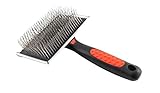
- EXTRA LONG PINS - Crafted from high-quality materials, this professional-grade "Tuffer Than Tangles" brush features extra-long stainless steel pins that easily penetrate deep into your pet's coat, removing dirt and debris from the undercoat.
- COMFORTABLE - The flat slicker design allows for gentle yet effective grooming, while the ergonomic handle ensures maximum comfort and control during use.
- ALL COAT TYPES - The Paw Brothers Extra Long Pin Flat Slicker Brush is suitable for all coat types and can be used on both dogs and cats. It's perfect for pet owners, as well as professional groomers.
- SIZE - Head 4.5in x 3in, Handle length 4.75in, Pins 1in length
- WHY RYAN'S PET SUPPLIES - Established in 1959, we have grown from humble beginnings as a family-operated four-page catalog to an international business featuring top quality products and services for pet professionals and pet lovers alike.
Ask a groomer to demonstrate the correct tool and technique for the dog in front of you. A dog slicker brush can be appropriate for some coat types, especially when used gently to work through loose hair, but it is not a universal requirement. The wrong brush, excessive pressure or brushing only the surface can irritate skin or leave mats close to the body.
Illustrative example: the Collie
AKC’s Collie profile distinguishes smooth and rough coats. For a rough-coated Collie, weekly brushing down to the skin helps prevent matting and remove the loose undercoat. The schedule is a breed-specific example, not a rule for all uncommon breeds or all popular breeds. A smooth-coated Collie has different grooming demands, and an individual dog’s shedding and coat density can change the amount of work.
When comparing two breeds, turn the description into a routine: how many minutes can your household brush, whether the dog tolerates handling, how often a professional groomer is available, and what happens when a session is missed. A coat that looks manageable in a photograph may be difficult if the dog is anxious, heavily coated or already matted.
Exercise, training and mental work
Exercise needs are not measured by breed rarity. They reflect the dog’s original working purpose, age, health, temperament and training. “Needs exercise” is too vague for a household decision. Specify the activities you can provide: brisk walks, running, scent games, retrieving, structured training, safe off-leash time or canine sports.
AKC describes Collies as generally active and in need of regular exercise, while also noting individual and family variation. That means a Collie profile can guide questions, but it cannot predict the exact schedule for every Collie. A young, healthy dog with high drive may need more activity and problem-solving than an older companion; a dog with joint disease may need controlled, low-impact exercise instead.
Match the dog to your real week
- Count the time available on workdays, not only weekends.
- Include training and sniffing as mental work, rather than assuming a longer walk solves every behavior problem.
- Ask how the dog behaves after appropriate activity: settled and content, or still frantic and destructive?
- Plan alternatives for heat, illness, injury and bad weather.
- Confirm that your housing, fencing and local rules support the activities the dog needs.
Under-exercising an active dog can produce frustration, vocalization, destructive behavior or weight gain. Over-exercising a puppy or a dog with a medical limitation can also cause harm. Your veterinarian can help set safe limits when age, body condition or disease changes the plan.
Do these 3 things before closing this tab:
1Fix the driver behind crashes, sound loss and screen glitches2Clear out junk files and repair common Windows errors3Scan for outdated or missing drivers - takes under a minuteAlso popular on Amazon
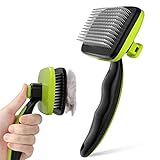
- 1-CLICK SELF-CLEANING GAME-CHANGER: Features an instant hair-ejection button. One swipe after brushing and the loose fur falls off effortlessly. This professional slicker brush is perfect for pet owners seeking a low-effort grooming solution with minimal cleanup—no more tedious manual hair pulling from your traditional pet brushes!
- IDEAL FOR DOUBLE COATS & WHITE FUR: Specially engineered as an essential cat brush and heavy-shedding dog tool. It works wonders for short to medium-haired cats and double-coated dogs (Labs, Goldens, Huskies). Extremely effective on white-coated pets, easily capturing undercoat, dander, and dirt during peak shedding season.
- GENTLE ON SKIN, LOVED BY RESISTANT PETS: The ultimate cat brush for indoor cats and sensitive pups who dread grooming. Designed with fine 135° stainless steel bristles capped with protective massage particles, it stimulates skin circulation without pulling. Even pets that usually resist will love the soothing massage experience!
- ERGONOMIC & COMFORTABLE FOR FREQUENT USE: Weighing only 89g (3.1 oz), this lightweight dog brush with a non-slip TPR handle eliminates wrist fatigue. As a dedicated dog brush for shedding, it's perfect for frequent sessions (2-3 times per week) to eliminate loose undercoat before it ends up on your furniture and floors.
- PREMIUM VALUE & DURABLE DESIGN: Professional-grade grooming results without the salon expense! Built with high-quality TPR, this heavy-duty slicker brush offers exceptional value and long-lasting performance. It is perfectly optimized for standard small to medium pets, removing trapped fur with ease. (Note: Not ideal for tightly curly coats like Poodles).
The individual dog changes the comparison
Age and life stage
Puppies need vaccination, socialization, sleep, house training and carefully increased activity. Adults may arrive with established habits, training and medical history. Seniors often need shorter, more frequent outings, weight control, dental attention and closer monitoring. Compare dogs at the same life stage before judging one breed as easier.
Temperament and handling tolerance
A dog that dislikes brushing, nail trims or veterinary handling can make an otherwise moderate-care coat demanding. Observe recovery from startling events, response to strangers, interest in food or toys, and ability to settle. Ask the breeder or rescue how the dog behaves during grooming, transport, confinement and routine examinations.
Body condition and existing history
Weight, fitness, dental disease, previous injuries and chronic medication can matter more to your first year of care than the breed label. Obtain vaccination and parasite-prevention records, surgical history and current medications. Have a veterinarian establish a baseline rather than assuming a young or rare dog needs no evaluation.
Where rarity affects ownership logistics
Rarity can influence access. Before committing, identify a veterinarian comfortable with the breed or with the relevant body type, a groomer who has handled its coat, emergency coverage, and a trainer who understands its behavior. If a specialist is several hours away, include travel and time off work in your plan.
Free tools Windows power users keep installed
One-click scans. No signup required.
Supplies may also be less standardized. You may need to learn the correct brush, harness, muzzle or crate dimensions from someone experienced with the breed. Buy for the dog’s measurements and coat, not for a marketing label. A common breed can still need specialized equipment, while a rare breed may use ordinary supplies.
Independent reader supportYour contribution helps us test, update, and keep practical guides available for everyone.A side-by-side decision worksheet
Complete this worksheet for each candidate using current records and professional advice. “Not stated” is preferable to guessing when a source does not establish a value.
Also popular on Amazon

- 【Professional Pet Grooming Kit 】3 Pet grooming tools selected by pet lovers, which can meet daily all the grooming needs of pets. Let you, as the groomer, personally give your furry friend a shiny and healthy coat. This is a must-have beauty product set for pet lovers! The Best Dog Gifts - Merry Christmas
- 【Why Choose Augwind 3PCS ?】 Augwind Pet Grooming Rake makes it easy to remove stubborn, tangled hair. Augwind Self-Cleaning Slicker Brush quickly removes loose hair, dander, and residual dirt. Augwind Flea Comb effectively remove small objects and Dandruff Flakes. Our 3-in-1 Pet Grooming Kit handles all your needs: detangling, hair removal and removes fleas and ticks – The Ultimate Pet Essentials
- 【Dematting and Deshedding Tools】 Augwind Pet Grooming Rake features a double-sided design: The 9-tooth bristle side detangles stubborn knots and mats. The 17-tooth bristle side trims excess pet hair. Augwind self-cleaning dog brush includes a push-button retractable mechanism – simply retract the bristles after use to remove loose hair quickly and effortlessly
- 【Flea Comb】Use this fine-toothed lice comb regularly to effectively remove small debris and dandruff, help keep away fleas and ticks, and maintain your pet’s coat tidy and healthy
- 【2-Year Warranty】We are a professional pet products company, committed to bringing the safest, practical and affordable pet products to pets and owners. We promise to solve it for you at any time if there is any quality within 2 years. We provide 7*24 hours after-sales service, if you have any questions, please feel free to contact us
| Question | Candidate A | Candidate B |
|---|---|---|
| Current parent-club screening recommendations | List tests and date of guidance | List tests and date of guidance |
| Parent results available? | Documented, partial or unavailable | Documented, partial or unavailable |
| Veterinary follow-up likely | Appointments, monitoring or specialist access | Appointments, monitoring or specialist access |
| Coat type and home grooming | Frequency, tools and handling tolerance | Frequency, tools and handling tolerance |
| Professional grooming | How often and where | How often and where |
| Physical activity | Activities your schedule can provide | Activities your schedule can provide |
| Mental work and training | Drive, trainability and daily plan | Drive, trainability and daily plan |
| Fit with household | Children, pets, housing, travel and time | Children, pets, housing, travel and time |
Questions to ask a breeder, rescue or seller
- What breed-specific tests are recommended now, and can I see the original results?
- Which health conditions have appeared in the parents, siblings or earlier generations?
- What veterinary care has this dog received, and what follow-up is due?
- How does the dog respond to brushing, bathing, nail care and veterinary handling?
- What exercise and training routine is the dog currently managing?
- How does the dog behave when left alone, around other dogs and in a new place?
- What support is available if a health or behavior problem appears after adoption or purchase?
Answers should be specific and documented. A confident claim that a breed is “healthy because it is rare” is not a substitute for records or an examination.
Common comparison mistakes—and better alternatives
Mistake: treating popularity as a health ranking
Better approach: use registration data only to describe prevalence, then evaluate current breed-specific screening and the individual dog.
The Tool Desk
Outbyte Driver Updater FREEScan for outdated or missing drivers - takes under a minuteDriver Scan →Outbyte PC Repair FREERepair Windows errors before they cause bigger problemsFix Now →Mistake: using one universal test panel
Better approach: start with the parent club’s recommendations and confirm relevance with a veterinarian. Hip, elbow, cardiac, eye, thyroid and DNA evaluations are examples found across breed guidance, not a checklist for every dog.
Mistake: assuming “no listed test” means “no risk”
Better approach: ask what is known, what cannot be screened reliably and what signs should be monitored.
Mistake: buying a grooming tool before assessing the coat
Better approach: identify coat type, have a groomer demonstrate technique and choose tools that reach the coat without scraping the skin.
Mistake: comparing idealized breed descriptions
Better approach: compare the actual dog’s age, health, temperament, handling tolerance and daily routine with your household’s capacity.
What’s actually slowing this PC down?
Pick the symptom - the matching free tool is one click away.
Bottom line: choose evidence and fit, not rarity
A rare dog is not inherently healthier, and a common dog is not inherently easier to care for. The defensible choice is the candidate whose current health evidence you can verify, whose likely veterinary follow-up you can provide, whose coat you can maintain and whose exercise and temperament fit your life. Recheck breed guidance as it changes, and use your veterinarian and the relevant parent club to interpret tests rather than treating any screening result as a guarantee.





Leave a Reply