
Outdated Drivers Are Slowing You Down
One free scan finds every outdated or missing driver and matches the right update for your exact hardware.Free scan · exact hardware matchWindows Errors? Fix Them Before They Spread
Repair common Windows errors and clear accumulated junk for a smoother, more stable PC - no reinstall needed.Free scan · no reinstallSome links on this page are affiliate links: if you buy through them we may earn a commission, at no extra cost to you.
A cat may act distressed after a feline or human companion dies, but behavior alone cannot prove that the cat is experiencing grief. Searching, calling, hiding, appetite changes, altered sleep, anxiety, or unusual clinginess can also result from a disrupted routine, changes in the household, or an unrelated illness. Treat the change as real, support your cat calmly, and involve a veterinarian when the change is persistent, severe, or affects eating, drinking, urination, or defecation.
Do not wait through a presumed “grief period” if your cat stops eating, strains to urinate, or appears acutely ill. Those signs can become dangerous quickly and need medical assessment.

As an Amazon Associate I earn from qualifying purchases.
Is my cat grieving the other cat?
People cannot directly establish a cat’s subjective emotional state from its behavior. After a companion dies, however, some cats show changes consistent with distress or adjustment. The loss may remove a familiar source of interaction, alter feeding and sleeping patterns, or change the way people in the home behave. A cat may also react to the practical disruption around the death rather than to an understood concept of death itself.
Cornell University College of Veterinary Medicine cautions that routine changes, the owner’s behavior, and medical problems can look similar to grief. Its guidance is especially important when a change continues: “Be aware that any persistent change in your pet’s behavior warrants a physical exam by a veterinarian.”
Popular on Amazon
Some cats show no obvious change at all. Others respond to the same loss in different ways, and a cat does not need another cat in order to be content. There is no reliable checklist that confirms grief and no evidence-based schedule in which every cat should “move on.” Look at the whole pattern, the direction it is moving, and whether normal body functions continue.
Behavior changes owners commonly notice
These signs have been described by Cornell, VCA Animal Hospitals, and Cats Protection in cats whose household or animal companion has been lost. None proves grief by itself.
Free tools Windows power users keep installed
One-click scans. No signup required.
| What you may see | What it can indicate | What to do |
|---|---|---|
| Searching rooms, waiting in familiar places, pacing, or looking toward doors | The cat may be responding to the missing companion, a changed routine, or general stress. | Keep the environment predictable and record when the behavior occurs. |
| Calling, increased meowing, or a change in vocal pattern | Some cats vocalize more; others become unusually quiet. Pain, anxiety, and illness can also alter vocalization. | Check appetite, movement, breathing, and litter-box use rather than interpreting the sound alone. |
| Eating less, refusing food, or drinking differently | Stress is possible, but dental disease, pain, nausea, organ disease, and other medical causes must be considered. | Contact a veterinarian promptly for appetite loss; do not wait for grief to pass. |
| Sleeping more, sleeping less, or changing favorite resting places | Adjustment, anxiety, discomfort, or illness can all disrupt sleep. | Note the change and whether the cat can settle, move normally, and engage when awake. |
| Hiding, withdrawing, or seeming less confident | A quieter household or loss of a familiar social cue may be stressful; pain and sickness can look the same. | Provide a safe retreat and arrange an examination if the withdrawal persists or worsens. |
| Less play, grooming, or exercise | Reduced activity may reflect stress, but also injury, arthritis, fever, or systemic disease. | Offer gentle opportunities without forcing interaction and monitor mobility and hygiene. |
| Clinginess, seeking reassurance, irritability, or greater reactivity | The cat may be responding to changes in people, smells, schedules, or social contact. | Let the cat choose contact; seek help for aggression, panic, or a continuing personality change. |
Descriptions from Cornell’s animal-grief FAQs, VCA’s discussion of mourning in cats, and Cats Protection’s guidance for surviving pets emphasize individual variation. A cat may display several changes, one change, or none.
When to call a veterinarian
Use the cat’s physical condition and the trend over time—not a hoped-for grief timeline—to decide. The following situations have different levels of urgency.
Also popular on Amazon
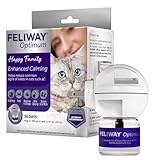
- HELPS REDUCE SIGNS OF STRESS USING A PATENTED PHEROMONE: FELIWAY Optimum is an advanced cat pheromone diffuser that helps reduce signs of stress in cats and helps ease tension between cats.*
- HELPS CATS FEEL CALM IN EVERYDAY SITUATIONS: FELIWAY Optimum is a cat calming diffuser that helps reduce stress‑related behaviors like urine spraying, scratching, hiding, and fearful reactions to change. Cat parents reported noticeable reductions in these behaviors, including a 77% reduction in urine spraying.
- SUPPORTS HARMONY IN MULTI‑CAT HOMES: Helps promote calmer interactions between cats. 72% of cat parents noticed reduced tension between their cats
- SAFE** AND NON-SEDATING: FELIWAY Optimum is not a sedative. It’s safe for use around cats, kittens, people and other pets.
- CONTINUOUS CALMING SUPPORT: This plug‑in cat pheromone diffuser provides 24/7 support when used as directed. To get started, plug into an open outlet with the vents pointed upward, allow at least 4 feet of clearance, and follow the label instructions.
| Situation | Action | Why it matters |
|---|---|---|
| Not eating or marked appetite loss | Contact a veterinarian promptly, especially if the cat has eaten little or nothing for a day. Ask how quickly your individual cat should be seen. | Cornell’s Feline Health Center says anorexia has medical and psychological causes and can seriously affect an adult cat if it persists for as little as 24 hours. Carolyn McDaniel, VMD, advises: “A cat that is not eating deserves to have a full veterinary workup—a thorough physical exam followed by any lab work and imaging that’s indicated by the exam.” |
| Straining to urinate, repeated litter-box trips, or little/no urine | Seek immediate veterinary care or an emergency veterinary service. | Cornell identifies suspected urethral obstruction as a true medical emergency. It can become fatal rapidly, particularly in male cats. |
| Persistent behavior change | Book a veterinary examination rather than assuming the cat is mourning. | A physical examination can uncover pain, dental disease, endocrine problems, infection, or another condition hidden by a behavior change. |
| Changes in drinking, urination, or defecation | Call your veterinarian and describe the exact change, frequency, and duration. | Altered elimination and thirst can signal urinary, kidney, gastrointestinal, metabolic, or other disease. |
| Sudden or severe illness | Use your veterinarian or an emergency service according to the severity: collapse, breathing difficulty, repeated vomiting, severe weakness, obvious pain, injury, or a cat that cannot remain responsive warrants urgent care. | These signs should be assessed on their own merits, regardless of a recent loss. |
Do not force-feed, start medication, or give human drugs without veterinary direction. A veterinarian can decide whether supportive feeding, fluids, tests, behavior treatment, or medication is appropriate and safe.
How to support a cat after a companion dies
Keep daily routines steady
Feed at the usual times, keep litter boxes in their familiar locations, and preserve normal lights-out and wake-up patterns as far as practical. Predictability reduces the number of changes the cat must process at once. If the surviving cat shared a routine with the deceased animal, maintain the parts that are still workable rather than abruptly replacing them.
Offer company without demanding it
Sit quietly nearby, speak in a familiar voice, and invite interaction with a favorite toy. Some cats seek more contact; others hide or become overwhelmed. Let the cat approach and end the interaction. Dragging a hiding cat out, crowding it, or repeatedly presenting it with a new animal can increase stress.
Use optional enrichment
If the cat is interested, try familiar play, a food-filled puzzle or foraging toy, a scratching surface, or a secure window perch. These are enrichment options, not treatments for grief, and no particular product or model has been shown to prevent or cure it. Start with brief, low-pressure opportunities and stop if the cat shows fear or frustration. VCA’s enrichment and routine guidance supports matching activities to the individual pet.
Also popular on Amazon

- SPECIFICALLY DESIGNED FOR MULTI-CAT HOMES: FELIWAY MultiCat is a cat calming diffuser that helps reduce tension between cats, including conflict, fighting, chasing, and blocking, supporting a calm home for cats living together
- HELPS CATS GET ALONG BETTER: This cat pheromone diffuser promotes calm interactions and helps ease ongoing tension, supporting more peaceful relationships in multi-cat households
- HELPS REDUCE TENSION BETWEEN CATS: 84% of cat parents noticed improvement in tension and conflict between their cats when using FELIWAY MultiCat
- SAFE* AND NON-SEDATING: FELIWAY MultiCat is not a sedative. It is safe for use around cats, kittens, people and other pets.
- CONTINUOUS CALMING SUPPORT FOR SHARED SPACES: Plug-in cat pheromone diffuser provides 24/7 calming support. To get started, plug into an open outlet with vents pointed upward and allow 4+ ft of clearance, and follow the label instructions.
Preserve safe spaces and resources
Make sure the cat can reach food, water, litter boxes, resting areas, and hiding places without confronting a stressful person or animal. Avoid major household rearrangements immediately after the loss when you can. If the deceased companion’s bedding or scent seems comforting, you can leave a familiar item temporarily, but remove it if the surviving cat avoids it or becomes more agitated.
What to record for the veterinarian
Write down the date the companion died and the first day you noticed each change. A short daily log is more useful than a general impression such as “seems sad.” Record:
- How much food was offered and eaten, including treats.
- Water intake when you can observe it, and any unusual thirst.
- Urination and defecation frequency, appearance, and straining.
- Sleep, hiding, vocalization, grooming, play, and movement.
- Vomiting, diarrhea, coughing, sneezing, discharge, or signs of pain.
- New household changes, such as a different schedule, visitors, construction, or altered feeding location.
Video of an unusual vocalization, gait, breathing pattern, or litter-box posture can help a clinician, provided recording it does not delay urgent care.
Independent reader supportYour contribution helps us test, update, and keep practical guides available for everyone.How long should I wait before calling a vet?
There is no universal waiting period for grief in cats. A mild change that is improving while eating, drinking, eliminating, and moving normally can be observed with close monitoring and supportive routine. A change that is stable but persistent deserves a veterinary appointment, even if the cat appears otherwise comfortable. A worsening trend, a new physical symptom, or any problem with food intake or urination shortens the timeframe substantially.
Also popular on Amazon

- HELPS REDUCE CAT STRESS: FELIWAY Classic is a cat calming diffuser that helps individual cats feel calm and reduce stress behaviors like scratching, urine spraying, and hiding
- CREATES A CALMING HOME ENVIRONMENT: FELIWAY Classic uses calming pheromone messages that cats naturally understand to help them feel comfortable and safe during everyday changes in routine or environment. 9 out of 10 cat parents noticed reduced urine spraying and 8 out of 10 saw reduced scratching
- SAFE* AND NON-SEDATING: FELIWAY Classic is not a sedative. It’s safe for use around cats, kittens, people and other pets.
- CONTINUOUS CALMING SUPPORT FOR SHARED SPACES: Plug‑in cat pheromone diffuser provides 24/7 calming support. To get started, plug into an open outlet with vents pointed upward and allow 4+ ft of clearance, and follow the label instructions.
- #1 VET RECOMMENDED BRAND**: FELIWAY is the #1 vet recommended brand, and is backed by 30 years of feline stress expertise
Do not use another cat as a guaranteed remedy. Cats Protection notes that cats do not need a feline replacement to be happy, and VCA advises against rushing to replace a lost pet. Introducing an animal is a separate household decision that should be based on temperament, space, health, and your ability to manage a gradual introduction—not on an assumption that it will resolve the surviving cat’s behavior.
What evidence exists about “grief” in cats?
One historical source often cited in veterinary discussions is the ASPCA Companion Animal Mourning Project from 1996, as reported by VCA. VCA says 46% of surveyed cats had decreased appetite after losing a feline companion, 65% showed four or more behavioral changes after a family pet’s loss, and about 70% changed their vocal patterns. These are old survey findings relayed by a secondary source; the original report and sampling details are not established here. They should not be treated as current prevalence estimates, population-wide rates, or proof of an internal emotional state.
No verified recent, representative statistic establishes how often cats grieve. The practical response therefore depends on the individual cat’s health, behavior, and trend rather than on a percentage or a prescribed sequence of grief stages.
A practical decision checklist
- Check immediate safety. If the cat is straining with little or no urine, struggling to breathe, collapsing, severely weak, or in obvious pain, contact emergency veterinary care.
- Check food intake. If appetite is reduced or absent, call a veterinarian promptly rather than waiting for an emotional adjustment.
- Check basic functions. Note drinking, urination, defecation, movement, and alertness.
- Reduce avoidable disruption. Restore predictable feeding, sleep, litter, and interaction routines.
- Follow the cat’s lead. Offer calm company and enrichment, but provide space when the cat withdraws.
- Track the trend. Share a dated log and useful videos with the veterinarian if the change persists, worsens, or is difficult to interpret.
The safest interpretation is compassionate but cautious: your cat may be reacting to a loss, yet a veterinarian is the person who can distinguish adjustment from pain or disease and decide whether treatment is needed.





Leave a Reply