Yes, tilapia can injure or kill other fish in some circumstances, but that does not mean every tilapia attacks every tank mate. Risk depends on the tilapia species and size, the other fish’s life stage and size, aggression or competition, breeding behavior, and the conditions and management of the tank.
There is no universally compatible tank-mate list for an unspecified tilapia and aquarium. Make any pairing decision around adult size, overlapping water and space needs, and a plan to separate fish if persistent aggression or injury occurs.
Key takeaways
- Tilapia are documented as aggressive and competitive in ecological settings; Nile tilapia may also prey on juvenile fish and consume fish eggs.
- These findings indicate potential risk, not a guarantee that an individual aquarium tilapia will attack a particular fish.
- Compatibility depends on species, adult size, breeding behavior, water needs, available space, and how the system is managed.
- Small fish, fry, and eggs may face greater risk than large fish; do not assume a pairing is safe based on a production-system example.
- Commercial polyculture examples are not home-aquarium compatibility recommendations.
- If a fish is persistently harassed or injured, separate it and reassess the setup rather than adding more fish to dilute aggression.
Can a tilapia kill other fish?
Yes. Tilapia can injure or kill other fish in some circumstances. USGS describes Nile tilapia as primarily herbivorous, while noting fish eggs in the remainder of its diet and predation on amphibians and juvenile fish. This makes the size and life stage of potential tank mates relevant, but it does not establish that every tilapia will prey on adult fish in an aquarium.
Biosecurity Queensland describes tilapia as competing for habitat and food, behaving aggressively, and disturbing plant beds while building nests. Those observations concern ecological settings; they are evidence that aggression and competition occur, not a prediction of how a particular aquarium fish will behave.
#1 Best Overall

- QUIET AQUARIUM FILTER: The Tetra Whisper IQ Power Filter with Stay Clean technology contains a sound shield for quiet filtration less than 40 dB.
- SELF PRIMING: Submerged motor starts up with no priming required.
- CAPACITY: The Tetra Whisper IQ 20 Power Filter works in filters up to 20 gallons (130 GPH).
- STAY CLEAN TECHNOLOGY: By maintaining healthy pH levels, creates easier maintenance for healthier fish.
- CARTRIDGE REFILLS: Change cartridges monthly; uses large-sized Tetra Whisper Bio-Bag Filter Cartridges (refills sold separately).
“Tilapia” refers to more than one species. The 2025 welfare review cited in the research focuses on Nile tilapia and discusses social structure and intraspecific aggression. Avoid applying species-specific findings to every fish sold as tilapia without confirming its identity.
Why do tilapia become aggressive?
Aggression and competition can be influenced by the social setting, breeding behavior, stocking conditions, and access to food or habitat. Mississippi State Extension notes that mixed-sex tilapia in ponds may reproduce without control, while high density in intensive tank or cage culture can disrupt normal courtship and spawning behavior. These aquaculture observations do not establish a universal aquarium rule about when aggression will begin.
The 2025 review of Nile tilapia welfare reports a study in which fingerlings kept at 35 or 45 fish in tanks measuring 30 × 40 × 100 cm showed aggressive behavior more often and for longer than fingerlings at lower densities. This is a study-specific finding, not a stocking recommendation for household aquariums.
| Factor | What the evidence indicates | Limit to keep in mind |
|---|---|---|
| Competition for habitat or food | Tilapia can compete with other species and behave aggressively | Ecological observations do not predict every aquarium interaction |
| Breeding and reproduction | Reproduction can affect population dynamics and behavior | The sources do not provide a reliable aquarium-specific season or sex-ratio rule |
| Stocking conditions | A study reported longer and more frequent aggression among fingerlings at higher densities | Those study conditions are not a household-tank stocking formula |
| Size and life stage | Nile tilapia may prey on juvenile fish and consume fish eggs | This does not establish a universal prey-size threshold or adult-fish compatibility |
| Food and oxygen competition | A high-density production trial reported reduced catfish growth and condition in tilapia polyculture, attributed to feed competition and sometimes lower dissolved oxygen | Production-trial results do not directly determine home-aquarium compatibility |
How much does size affect tilapia tank-mate compatibility?
Size and life stage matter: USGS reports that Nile tilapia may prey on juvenile fish and consume fish eggs. Do not assume that small fish, fry, or eggs face the same risk as larger fish.
The research reviewed for this article does not establish a dependable adult-size figure or aquarium stocking limit that applies to every tilapia species. Identify the species if possible, plan around its expected adult size, and do not base a long-term pairing on the size of a newly purchased fish.
Rank #2

- QUIET AQUARIUM FILTER: The Tetra Whisper IQ Power Filter with Stay Clean technology contains a sound shield for quiet filtration less than 40 dB.
- SELF PRIMING: Submerged motor starts up with no priming required.
- CAPACITY: The Tetra Whisper IQ 45 Power Filter works in tanks up to 45 gallons (215 GPH).
- STAY CLEAN TECHNOLOGY: By maintaining healthy pH levels, creates easier maintenance for healthier fish.
- CARTRIDGE REFILLS: Change cartridges monthly; uses large-sized Tetra Whisper Bio-Bag Filter Cartridges (refills sold separately).
USGS describes Nile tilapia as primarily herbivorous, but that description does not guarantee safety for other fish. Dietary tendencies, predation on vulnerable life stages, aggression, and competition are separate compatibility considerations.
What makes a tank mate a poor or reasonable candidate?
No single trait guarantees compatibility. Before attempting a pairing, compare the tilapia and prospective tank mate across the following factors, and plan for separation if the interaction becomes harmful.
| Compatibility factor | Questions to consider | Potential concern |
|---|---|---|
| Species and adult size | What tilapia species is it, and how large will both fish become? | Small fish, fry, or eggs may be vulnerable to predation |
| Aggression and breeding | Could reproductive behavior or competition affect interactions? | Behavior may change with social or breeding conditions |
| Water and space needs | Do both species have compatible temperature, oxygen, food, and space needs? | A temperament match is not enough if their care requirements conflict |
| System and management | Can feeding, water quality, and the needs of both fish be managed? | Competition for food or lower dissolved oxygen can affect co-cultured fish |
| Separation plan | Can you separate fish promptly if aggression or injury occurs? | Without a workable separation option, a risky pairing may leave a fish exposed |
These are decision factors, not a scientifically validated compatibility ranking. The available research does not establish a universal list of fish that are safe with every tilapia species or in every aquarium.
PC Slower Than It Used to Be?
A free scan shows the junk files, broken settings and background clutter dragging Windows down - then fixes them in one click.Free scan · Windows 10 & 11Outdated Drivers Are Slowing You Down
One free scan finds every outdated or missing driver and matches the right update for your exact hardware.Free scan · exact hardware matchWhich fish should you avoid keeping with tilapia?
The evidence does not support a universal avoid-list by species. As a cautious starting point, do not assume that small fish, fry, or eggs are safe: USGS reports predation by Nile tilapia on juvenile fish and consumption of fish eggs. Assess the particular tilapia, the other fish’s adult size and life stage, and the aquarium conditions before considering a pairing.
Do not assume that combining tilapia with another species will work simply because a commercial system does so. SRAC describes tilapia cultured with channel catfish and prawns under managed pond conditions. Those examples show that some production systems combine species; they are not guarantees for an unspecified home aquarium.
Rank #3
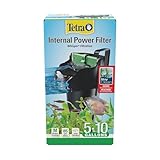
- INTERNAL POWER FILTER: Tetra Whisper Internal Power Filter for 5- to 10-gallon aquariums uses medium Whisper BioBag filter cartridges that are easy to change.
- QUIET 85 GPH MOTOR: The internal pump efficiently filters up to 85 gallons per hour.
- POWERFUL FILTRATION: Water flows through the cartridge floss, trapping debris and fish waste, while Ultra-activated carbon helps remove odor and discoloration.
- SPACE-SAVING DESIGN: Your aquarium can be 1” from the wall with the internal filter designed to clip directly on your aquarium wall and be hidden by décor.
- EASILY ADJUSTABLE: Adjustable clip allows for a variety of setups to easily adjust to high or low water levels.
Production systems involve management choices that may not transfer to an ornamental aquarium. Oklahoma State Extension notes that aquaponics fish differ in temperature range, food preference, size, and oxygen needs. Compare those needs and make a system-specific decision rather than copying a pond or aquaponics stocking arrangement.
How can you tell when tilapia aggression is dangerous?
If one fish is persistently harassed or injured, treat the interaction as a reason to separate the fish and reassess the setup. The research dossier does not establish a household-aquarium threshold for normal versus dangerous chasing, so monitor the actual fish rather than relying on a universal timetable.
Quick wins for a faster PC:
Fix the driver behind crashes, sound loss and screen glitchesFind Drivers →Clear out junk files and repair common Windows errorsFree Scan →Scan for outdated or missing drivers - takes under a minuteDriver Scan →- Look for repeated harassment or a fish that cannot get away.
- Check for visible injury or signs that a fish is being kept from food.
- Reassess the pairing, space, feeding, water conditions, and system management.
- Do not add more fish as a way to dilute aggression; the evidence reviewed does not establish that as a safe aquarium strategy.
The 2025 welfare review describes social structure and intraspecific aggression in Nile tilapia. Its findings support taking persistent aggression seriously, but do not provide a universal home-aquarium compatibility rule.
What should you do after a tilapia attack?
- Separate fish when harassment persists or injury occurs. Use a suitable separate system or a physical barrier appropriate to the aquarium and fish.
- Reassess the setup. Review species and size, available space, breeding behavior, food access, water needs, and management conditions.
- Check that a barrier is suitable. A cage or subdivided tank can be used in some systems to prevent negative species interactions, but the research does not evaluate a particular commercial aquarium divider.
- Monitor both sides of any separation. Ensure the arrangement continues to meet the needs of both fish and does not leave one fish exposed to continued harassment.
- Choose a lasting plan. If the fish cannot coexist safely under the available conditions, keep them separately rather than relying on an unproven pairing.
Aquaculture guidance discusses physical barriers, including cages and subdivided tanks, as ways to prevent negative species interactions in some systems. This is general management guidance, not a product test or endorsement of a specific aquarium divider.
Can water quality or a net solve tilapia aggression?
Water and oxygen needs are part of compatibility, and production-system evidence shows that food competition and sometimes lower dissolved oxygen can affect co-cultured fish. Checking conditions can help you assess the system, but it does not establish that two fish are compatible or resolve persistent aggression by itself.
Rank #4

- Powerful Pump: 300 GPH water pump effectively filters 55-150 gallons; ideal for large aquariums, turtle tanks, and ponds.
- Enhanced Aeration: Equipped with an adjustable valve to increase oxygen levels, promoting healthier, more active fish and turtles.
- Double Deep Filtration: Dual-stage black biochemical sponge removes odors and impurities; keeps water clear and fresh.
- Dynamic Water Flow: Boosts wave size and surface movement; improves circulation for a healthier aquatic environment.
- Adjustable Body: The aquarium filter features a detachable design. For tanks under 15 inches tall, you can lay the filter flat or remove the lower half of the filter sponge for a better fit.
The research reviewed does not establish a net as a solution for aggression. If fish are persistently harassed or injured, prioritize appropriate separation and reassessment of the setup.
What is the safest overall housing decision?
There is no universal tank-mate list for tilapia. Before attempting a mixed-species setup, identify the fish as closely as possible, compare adult size and water and space needs, account for breeding and competition, and make sure you can separate fish if needed.
Commercial polyculture examples, including tilapia with channel catfish or prawns, come from managed production settings. They do not guarantee a safe pairing in a home aquarium. The safest decision depends on the particular fish and system; do not add fish to dilute aggression.
FAQ
Can a tilapia kill other fish?
Yes, it can happen in some circumstances. USGS reports Nile tilapia predation on juvenile fish and consumption of fish eggs, and ecological sources describe aggression and competition. These findings do not mean every tilapia will attack every tank mate.
What tank mates are compatible with tilapia?
The research reviewed does not justify naming a universally compatible tank mate. Compatibility depends on the tilapia species, adult size, behavior, water and space needs, and system management. Production-system pairings are not home-aquarium guarantees.
Do these 3 things before closing this tab:
1Scan for outdated or missing drivers - takes under a minute2Repair Windows errors before they cause bigger problems3Fix the driver behind crashes, sound loss and screen glitchesBest Value

- WITH ROTATING BIO-WHEEL: Patented Bio-Wheel technology provides excellent wet/dry biological filtration.
- MULTI-STAGE FILTRATION: Delivers mechanical, chemical and biological aquarium filtration to maintain a clean aquatic environment.
- MARINELAND FILTRATION PRODUCTS: Count on Marineland brand for the most reliable, technically advanced aquariums and accessories on the market.
- COMPATIBILITY: Use with Marineland Rite-Size Filter Cartridges (see individual filter for sizing recommendations).
- FIVE SIZES: Available in 75 GPH, 100 GPH, 150 GPH, 200 GPH and 350 GPH sizes.
Are tilapia compatible with channel catfish or prawns?
SRAC describes tilapia cultured with channel catfish and prawns in managed pond systems. Those examples do not establish that either pairing is suitable for an unspecified home aquarium.
What should I do if my tilapia attacks another fish?
If harassment persists or a fish is injured, separate the fish using a suitable arrangement and reassess the pairing and system. A barrier may be an option in some setups, but it must be appropriate for the fish and aquarium.
Does adding more fish reduce tilapia aggression?
The evidence reviewed does not establish adding more fish as a safe way to dilute aggression. Reassess the setup and separate fish if persistent harassment or injury occurs.
The Bottom Line
Yes, tilapia can injure or kill other fish in some circumstances, including through predation on vulnerable life stages, aggression, or competition. No universal safe tank-mate list is supported by the research reviewed. Base any pairing on the fish and system in front of you, and separate fish if persistent harassment or injury occurs.
Quick Recap
Product prices and availability are accurate as of the date/time indicated and are subject to change. Any price and availability information displayed on Amazon at the time of purchase will apply.




