
Recommended Free Tools
Some links on this page are affiliate links: if you buy through them we may earn a commission, at no extra cost to you.
Walking is the safer starting point for most large dogs, while running is appropriate only for an individual dog that is mature, healthy, conditioned and comfortable at that pace. A large frame does not prove that a dog is ready for repetitive impact. Puppies, seniors, overweight dogs, dogs with joint or breathing problems and dogs new to exercise need a slower plan, usually confirmed with a veterinarian.
Neither activity is universally “more effective.” The best choice is the one your dog can perform consistently without pain, overheating, fear or exhaustion. Use the comparison and progression below to decide whether to keep walking, add short jogs or stop and seek professional advice.
As an Amazon Associate I earn from qualifying purchases.
Do these 3 things before closing this tab:
1Scan for outdated or missing drivers - takes under a minute2Repair Windows errors before they cause bigger problems3Fix the driver behind crashes, sound loss and screen glitchesWalking and running are different demands
Walking lets you keep intensity low, change pace quickly and inspect how your dog is moving. It is therefore the practical default when you do not yet know the dog’s exercise tolerance. A brisk walk can still provide aerobic work, opportunities to sniff and mental stimulation, and a repeatable routine.
Running adds sustained effort, faster loading of the limbs and less time to react to traffic, loose dogs, uneven ground or a dog that begins to tire. It can be enjoyable for a suitable adult dog, but it should be treated as a trained activity rather than an automatic extension of a walk.
Popular on Amazon

- COLLAPSIBLE DESIGN: These collapsible dog bowls are designed for space saving,easy to expand and fold away,portable and handy,foldable dog travel water bowls are great for traveling,hiking,walking,parking and camping with your dogs/cats.Let them grab a quick bite and drink while on the go.
- PORTABLE & CONVENIENT: The collapsible pet feeding and watering bowls are lightweight and easy to carry,can be folded down to a compact size,making them easy to store in bags or cars.Come with 2 carabiners, the compact travel bowls can be attached to belt loop,backpack,dog leash,dog collars,dog carrier,bags,luggage and more.Suitable for outdoor/indoor acitivies,outings and trips.
- DURABLE & SAFE PET FEEDER : These dog bowls are made of high quality soft plastic,odorless,durable and friendly.Absolutely essential for any one who has a dog/cat or travels with their pets. Collapsible & lightweight,easy to fold flat into a bag, the car.Feeding your pet water/food quickly whenever you want,perfect dog water& food feeder dishes for pet travels.
- DOG BOWL SIZE: 5.1 X 3.5 X 2.1 inch (expanded), 0.5inch height(folded), each bowl holds up to 12 fluid ounces of water or 1.5 cups of pet food. The portable and handy dog bowls can be folded to 2 different height.Collapse nicely but are big enough for food and water.The Small Size suitable for small to medium dogs,puppies and cats,the Large Size for medium to large breeds.
- EASY TO CLEAN: these compact dog food bowls are dishwasher safe,hand wash also available.Please rinse or wipe clean the bowl after each use.One set come with 2 different colors,so easy to consistently designate one bowl for food and one bowl for water.Great pet travel bowls for on the go.
| Decision axis | Walking | Running |
|---|---|---|
| Effort and impact | Easier to keep at low intensity and adjust immediately; a practical starting activity. | Higher sustained effort and impact; the dog must be ready for the pace and distance. |
| Maturity and health | Still requires adjustment for puppies, seniors, joint pain or other conditions; discuss a new program with a veterinarian. | Needs particular caution in growing dogs and dogs with joint, breathing, weight or fitness concerns. |
| Conditioning | Build duration gradually in line with comfort and recovery. | Begin with short walk-jog intervals; do not jump directly to long distances or speed. |
| Control | Leash control helps manage traffic, other dogs and terrain. | Consistent loose-leash position is essential to prevent pulling, tangling and falls. |
| Weather and surfaces | Choose cooler conditions, shade and paw-safe ground; carry water for longer outings. | Use the same precautions, with extra attention to exertion, fatigue, hydration and cooling. |
This is a practical synthesis of veterinary and kennel-club guidance, not a controlled trial proving that one activity is safer for every large dog.
Decide whether your dog is a running candidate
Size is not a clearance
Large and giant breeds can mature later than smaller dogs. The American Kennel Club (AKC) notes that growth plates in large and giant breeds may fuse as late as 16–18 months, compared with 6–9 months in toy dogs. That range describes typical timing, not a universal permission slip. Ask your veterinarian when your specific dog’s growth and musculoskeletal development make running or jumping reasonable.
AKC Chief Veterinary Officer Dr. Jerry Klein warns that “excessive, constant, percussive trauma, such as would occur in regimented running or jogging on hard surfaces such as concrete or asphalt, could affect the growth plates and are thought to cause harm to the developing joints of large dogs.” Until a veterinarian is comfortable with the plan, use controlled walks and low-impact play instead of regimented runs.
Health factors that change the plan
Exercise should be matched to age, body condition, health, breed and conformation, current fitness and the dog’s enjoyment. A veterinary assessment is especially important before a new or strenuous routine if your dog:
- Is still growing, elderly or returning to activity after illness or surgery.
- Has limping, stiffness, a history of orthopedic disease or suspected joint pain.
- Carries extra weight or becomes tired quickly.
- Has noisy, restricted or otherwise difficult breathing.
- Has a heart, metabolic or neurologic condition, or takes medication that may affect exercise tolerance.
- Has had little regular exercise and would be starting from an unconditioned state.
A veterinarian can identify problems that are not obvious during a short walk and help choose an appropriate intensity. Do not use a breed label, a dog’s enthusiasm or a previous athletic history as a substitute for that assessment.
Observe movement and recovery
Before considering jogging, watch your dog walk on level ground. Look for an even stride, willingness to turn, normal posture and no reluctance to rise, climb a gentle slope or continue at an easy pace. After activity, the dog should settle and recover rather than remain distressed. Delayed stiffness later that day or the next morning is also a reason to reduce the workload and consult your veterinarian.
Establish the skills needed for safe running
Master loose-leash walking first
Running is safer when the dog can stay beside you without forging ahead, crossing in front, lunging or stopping suddenly. Practice in a quiet area. Reward a loose leash and a consistent position, change direction before the dog pulls and add distractions gradually. AKC training guidance recommends mastering loose-leash walking before running.
Use a fixed-length leash rather than a retractable line for a running session. VCA guidance recommends roughly a 4–6-foot leash so you can keep control without giving the dog a long line to cross your path or wrap around a person, bicycle or signpost.
Also popular on Amazon

- ✅【PORTABLE & COLLAPSIBLE BOWLS】Our Kytely large collapsible dog bowls only 0.7 inch when folded, simply Pop-Up and then fold away, which are perfect for traveling, hiking, camping and outdoor
- ✅【LARGE CAPACITY】Size of the dog bowl is 7 inch wide, 2.75 inch height. Each bowl can hold up to 34 fluid ounces of water or 4.2 cups of dog food, suitable for all kind of dogs, cats or other pets
- ✅【PREMIUM QUALITY】Made of environmentally friendly TPE materials, BPA free and Lead-free, odorless, durable and friendly. Very safe for your lovely pet to use
- ✅【EASY TO CLEAN】Easy to clean with wet cloth or just place in the dishwasher machine or run through water. Clean up could not be any easier
- ✅【OUR WARRANTY】Friendly customer services and we are extremely confident of Kytely collapsible dog bowls quality. If you are not completely satisfied with your purchase, just drop us an email and we will refund or send a new set
Teach a reliable start, stop and attention cue
Your dog should be able to slow, stop and look toward you on request. Practice these cues while walking, then during a few steps of faster movement. If the dog cannot respond when the environment is calm, do not increase speed or add busy routes.
Choose legal off-leash exercise only when recall is dependable
Off-leash running belongs only in a legal, secure area and only when recall remains reliable around dogs, wildlife, roads and other distractions. Otherwise, keep the leash attached. A dog that is physically fit but not under control can still cause a collision or become lost.
Outdated Drivers Are Slowing You Down
One free scan finds every outdated or missing driver and matches the right update for your exact hardware.Free scan · exact hardware matchWindows Errors? Fix Them Before They Spread
Repair common Windows errors and clear accumulated junk for a smoother, more stable PC - no reinstall needed.Free scan · no reinstallA gradual walk-to-run progression
Use this progression only after veterinary clearance when the dog is immature, overweight, medically complex or new to strenuous exercise. The exact distance, speed and schedule must be individualized; veterinary sources do not establish one universally safe number for every large dog.
- Start with an easy walk. Spend several minutes at a comfortable pace. This is a warm-up, not a race to the first interval.
- Check the dog before increasing effort. Look for a normal stride, responsive behavior and relaxed breathing. Postpone the session if the dog is stiff, unwell or unusually tired.
- Add brief jogging intervals. Alternate a short, easy jog with walking. Keep the dog at your side and choose a surface that is even and cool enough for the paws.
- Increase one variable at a time. Add a little more total jogging or a little more duration, not a simultaneous jump in speed and distance. Repeat a comfortable level before progressing.
- Walk to cool down. Finish with easy walking and allow the dog to drink. Observe recovery during the rest of the day and the following morning.
- Repeat only when the previous level was comfortable. If the dog lags, pants excessively, limps or becomes unwilling, return to the last easy level or stop and seek veterinary guidance.
Never use another dog’s mileage or your own running plan as the target. A consistent, comfortable routine is more useful than a demanding schedule the dog cannot sustain.
Weather, heat and surface safety
Plan for cooler conditions
Choose cooler hours and shaded routes, avoid the hottest part of the day and take breaks. Carry enough water for both of you. A collapsible bowl or pet drinking bottle makes it easier to offer water during a long walk or run, but equipment cannot make an unsafe outing safe.
Check the ground before leaving
Asphalt, concrete and sand can burn paw pads. VCA suggests placing a bare hand or bare foot on the surface for 10 seconds; if it is too hot for you, choose another route or time. Avoid icy or salted surfaces that can injure or irritate paws. Check pads after the outing for redness, cracks, blisters, cuts or lodged debris.
Quick wins for a faster PC:
Clear out junk files and repair common Windows errorsFree Scan →Scan for outdated or missing drivers - takes under a minuteDriver Scan →Repair Windows errors before they cause bigger problemsFix Now →Recognize heat stress
Stop activity and move to a cool area if your dog shows distress. The American Veterinary Medical Association lists excessive panting, restlessness, drooling, unsteadiness, abnormal gum or tongue color and collapse as heat-stress signs. Weakness, vomiting or diarrhea after overheating require immediate veterinary attention; collapse or severe signs are an emergency.
When to stop for pain, fatigue or poor tolerance
End the outing if your dog limps, falls behind, changes gait, repeatedly sits or lies down, refuses to continue, appears painful or cannot keep a comfortable breathing pattern. Do not encourage the dog to “push through.” A dog may be eager to follow you while still exceeding its safe workload.
Also popular on Amazon
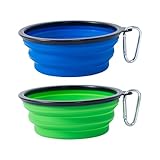
- COLLAPSIBLE DESIGN: These collapsible dog bowls are designed for space saving,easy to expand and fold away,portable and handy,foldable dog travel water bowls are great for traveling,hiking,walking,parking and camping with your dogs/cats.Let them grab a quick bite and drink while on the go.
- PORTABLE & CONVENIENT: The collapsible pet feeding and watering bowls are lightweight and easy to carry,can be folded down to a compact size,making them easy to store in bags or cars.Come with 2 carabiners, the compact travel bowls can be attached to belt loop,backpack,dog leash,dog collars,dog carrier,bags,luggage and more.Suitable for outdoor/indoor acitivies,outings and trips.
- DURABLE & SAFE PET FEEDER : These dog bowls are made of high quality soft plastic,odorless,durable and friendly.Absolutely essential for any one who has a dog/cat or travels with their pets. Collapsible & lightweight,easy to fold flat into a bag, the car.Feeding your pet water/food quickly whenever you want,perfect dog water& food feeder dishes for pet travels.
- DOG BOWL SIZE: Medium Sized,6.3 X 4.3 X 2.4 inch (expanded), 0.7inch height(folded), each bowl holds up to 22 fluid ounces of water or 2.8 cups of pet food. The portable and handy dog bowls can be folded to 2 different height.Collapse nicely but are big enough for food and water.The Medium Size bowl suitable for small,medium and large dogs,puppies and cats,the Large Size for medium to large breeds.
- EASY TO CLEAN: these compact dog food bowls are dishwasher safe,hand wash also available.Please rinse or wipe clean the bowl after each use.One set come with 2 different colors,so easy to consistently designate one bowl for food and one bowl for water.Great pet travel bowls for on the go.
If signs resolve quickly after rest, contact your veterinarian before resuming and describe the route, weather, duration and symptoms. Persistent lameness, weakness, breathing difficulty, collapse, abnormal gum color, vomiting or diarrhea warrants prompt or emergency care rather than another exercise trial.
Make walking more effective without running
A walk does not have to be a slow, unchanging loop. Once your veterinarian approves regular activity, you can improve conditioning while preserving control:
What’s actually slowing this PC down?
Pick the symptom - the matching free tool is one click away.
- Extend the outing gradually while keeping the dog’s gait and breathing comfortable.
- Use varied, safe terrain and gentle inclines only when footing is secure and the dog shows no joint pain.
- Include sniffing opportunities and simple training cues for mental work.
- Use several moderate outings instead of one exhausting session when that suits the dog better.
- Keep rest days or easy days when the dog is recovering, aging or managing a medical condition.
VCA guidance emphasizes choosing an activity that fits both dog and owner and can be maintained consistently. If walking is the activity your dog enjoys and tolerates, there is no requirement to convert it into running to make it worthwhile.
Match the activity to your actual goal
If your goal is routine movement, exposure to the outdoors or time together, walking usually offers more control and easier adjustments. You can shorten the route, pause for water, turn around or let the dog sniff without abruptly changing the physical demand. Those options are useful when the dog’s fitness varies from day to day.
If your goal is to share a running hobby, the dog still needs an individual plan. Your pace, distance and preferred surface are not automatically appropriate for the dog. Plan a route with places to slow down, turn back and take a break, and be willing to finish on foot. A run that becomes a forced effort is not a successful workout.
Behavioral enthusiasm is helpful but not decisive. Some dogs pull toward the start because they are excited, then show fatigue once the pace is sustained. Conversely, a calm dog may enjoy a steady jog after careful conditioning. Judge the whole outing and the recovery afterward, not only the first few minutes.
Route, equipment and handling details
Prepare the route before increasing speed. Favor even, stable ground with room for you and the dog to remain together. Avoid paths where sudden traffic, cyclists, loose dogs or narrow obstacles leave no safe way to slow down. At crossings and crowded areas, return to a walk and use your stop and attention cues.
A fixed 4–6-foot leash, identification and water are practical essentials. A collapsible bowl or pet drinking bottle lets you offer water without searching for a suitable container. Carry enough for both of you on longer outings, and refill or turn back rather than rationing water. These items support preparation; they cannot compensate for heat, poor footing, inadequate conditioning or a medical problem.
Also popular on Amazon

- 【Unique and Different】Aonkey dog bowl set is in a league of its own, addressing issues from feedback on other bowls. The upgraded carabiner boasts a larger, sturdier opening, reducing the risk of breakage. Plus, enjoy the added convenience of bottle carriers, compatible with most cola-shaped water bottles in the market.
- 【Revolutionary Structure】Say goodbye to the hassle of assembled plastic rings. Aonkey's foldable dog bowl boasts an upgraded structure, integrating soft silicone with a hard rim. No more worries about the ring coming off or cracking, and the clip hole remains intact.
- 【Unmatched Stability】Thanks to the integrated hard rim, our dog bowl stays sturdy when unfolded. No more spills or losing structure. Carry it confidently with one hand, even when it's full of water.
- 【Perfect for On-the-Go】These travel bowls are a breeze to pack since they collapse effortlessly. Clip them to a backpack or water bottle – ideal for outgoing to the park, hiking, driving, or any social activities with your furry friend.
- 【Safety First】Crafted from high-quality, food-grade silicone with a tempting beef flavor, our dog foldable bowl eliminates the typical silicone smell that dogs dislike. BPA-free, dishwasher safe, it's not just convenient but also healthy for your pet.
Do not rely on a retractable leash for running. The extra line can cross your feet, catch on objects or allow the dog to move into traffic before you can respond. Off-leash exercise is an option only where it is legal and secure and your dog’s recall is dependable in that setting.
Use recovery as part of the decision
Record simple observations after a new session: whether the dog finished willingly, how breathing looked, whether the gait stayed even and whether stiffness appeared later or the next morning. This is not a substitute for veterinary examination, but it helps you notice patterns and describe them accurately to your veterinarian.
Free tools Windows power users keep installed
One-click scans. No signup required.
If a particular duration, surface or weather condition repeatedly produces reluctance, limping, excessive panting or prolonged recovery, return to an easier level. Do not increase intensity to compensate for a missed day, and do not assume that a dog who tolerated one outing is ready for a longer or faster one. Progress is appropriate only when the previous level remains comfortable.
When running may be the better choice
Running can be a reasonable option for a mature dog that has veterinary clearance, a healthy body condition, sound movement, reliable leash skills and a gradual conditioning base. Some dogs enjoy the pace and may receive useful aerobic exercise from it. Even then, keep sessions adaptable: slow to a walk for water, heat, distractions or signs of fatigue, and avoid hard repetitive surfaces when a softer, stable route is available.
Running is not automatically better for weight control, behavior or fitness. A dog that struggles to recover, pulls continuously or dislikes the pace will benefit more from a comfortable walking plan than from being forced to run.
Independent reader supportYour contribution helps us test, update, and keep practical guides available for everyone.Common scenarios and the safer response
| Situation | Practical choice | Why |
|---|---|---|
| Growing large- or giant-breed puppy | Controlled walking and veterinarian-approved play; defer regimented running. | Growth plates may not be fused, and repetitive impact can stress developing joints. |
| Healthy adult with no running history | Build loose-leash walking first, then use short walk-jog intervals. | Fitness and handling skills need to develop before sustained effort. |
| Overweight dog | Ask a veterinarian for a weight and exercise plan; begin with manageable walking. | Extra body weight increases the cost of each step and may expose hidden joint or breathing problems. |
| Senior or stiff dog | Favor easy, shorter walks and obtain an assessment for pain or arthritis. | Recovery and joint comfort may matter more than speed. |
| Dog with breathing limitation | Do not start running without veterinary direction. | Heat and sustained exertion can worsen respiratory distress. |
| Hot day or hot pavement | Postpone, choose a cool shaded route or keep activity very brief. | Both walking and running can cause paw burns or heat illness. |
| Dog that pulls or crosses in front | Return to loose-leash training before adding speed. | Loss of control creates a tripping and traffic hazard. |
A simple pre-outing checklist
- Has a veterinarian cleared a new or strenuous routine when your dog’s age or health makes that relevant?
- Is the dog moving normally today, with no limp, stiffness or reluctance?
- Are the weather and surface suitable, with a cooler alternative if conditions change?
- Do you have a 4–6-foot fixed leash, identification, water and a collapsible bowl or drinking bottle?
- Can your dog walk beside you, stop and respond to attention cues?
- Do you know where you will pause, turn back and access veterinary help if needed?
Bottom line for choosing today’s activity
Choose walking when your dog’s maturity, health, conditioning or tolerance is uncertain. Consider running only after those questions have been answered for the individual dog and you have built the necessary leash skills and fitness gradually. Whichever activity you select, cooler conditions, paw-safe footing, water, close observation and an immediate response to distress are more important than covering a particular distance.
Frequently Asked Questions
Is it safer to walk or run with a large dog?
Walking is the safer default when maturity, health, conditioning or tolerance is uncertain because you can lower the pace, pause and turn back quickly. Running can be suitable for a mature, healthy, conditioned individual, but size alone does not establish that it is ready.
Would my large dog be a good running buddy?
Look for veterinary clearance when appropriate, normal movement, a healthy body condition, reliable loose-leash skills and comfortable recovery after regular walks. Puppies, seniors, overweight dogs and dogs with joint or breathing concerns need individualized advice before running.
Also popular on Amazon

- The collapsible dog bowls are great pet travel bowls, they can be used as dog food bowl, travel dog water bowl, cat food bowl, and both for outdoor or indoor use.
- Made with high quality flexible material, 100% Lead-free, BPA free, the collapsible bowls are safe to put in food or water. Easy to clean.
- Durable, Reusable and Eco-friendly, easy for storage and transportation. The travel dog bowls include silver carabiner clips that can attach to belt loop, backpack, leash or other locations, very handy for walking, traveling, camping and hiking.
- Size: 7*5*2.75 inch, each bowl holds up to 34 ounces of water or 4.2 cups of pet food or water, suitable for all kind of dogs, cats or other pets.The dog bowls can be collapsible to different sizes, suitable for all small to medium dogs, cats and other animals to store water and food when going outside.
- Package includes 2 pieces of portable travel dog / cat bowls. 30 days warranty, please feel free to contact us in case there is any problem.
How old should a large dog be before running?
There is no universal age cutoff. AKC notes that growth plates in large and giant breeds may fuse as late as 16–18 months, but timing varies by individual. Ask your veterinarian when your dog’s growth and musculoskeletal development make running reasonable.
How should I train my dog to run with me?
First teach loose-leash walking, a consistent position beside you, reliable attention and stop cues. Then warm up by walking and alternate brief, easy jogging intervals with walking. Increase either jogging time or duration gradually, not speed and distance together.
The Tool Desk
Outbyte Driver Updater FREEScan for outdated or missing drivers - takes under a minuteDriver Scan →Outbyte PC Repair FREEClear out junk files and repair common Windows errorsFree Scan →What leash is best for running with a large dog?
Use a fixed-length leash, roughly 4–6 feet, so you can keep the dog beside you and avoid loops crossing your feet or wrapping around objects. A retractable leash is harder to control during faster movement.
How do I know when to stop a walk or run?
Stop for limping, a changed gait, falling behind, repeated sitting or lying down, reluctance, pain, excessive panting or an inability to breathe comfortably. Weakness, vomiting, diarrhea, unsteadiness, abnormal gum or tongue color or collapse require prompt or emergency veterinary attention.
Can walking provide enough exercise without running?
Yes. A comfortable, consistent walk can provide aerobic activity, sniffing and mental stimulation. Duration, safe terrain, gentle inclines and training opportunities can be adjusted gradually when your veterinarian approves. There is no requirement to convert a successful walking routine into running.
What should I bring on a long outing?
Carry water for both of you and use a collapsible bowl or pet drinking bottle. A fixed leash and identification are practical essentials. Check the route, shade and footing in advance, and have a plan to pause or turn back if conditions or your dog’s tolerance change.
The Bottom Line
Walking is the safer starting point for most large dogs. Running is an option only for an individual dog that is mature, healthy, conditioned, well controlled and comfortable at that effort. Build slowly, protect paws, avoid heat, carry water and stop at the first sign of distress.





Leave a Reply