There is no single best cat food for a “sensitive stomach”: vomiting, diarrhea, appetite changes, and weight loss can have different causes, and food allergy is only one possibility. A food labeled “sensitive” is not a diagnosis or a treatment guarantee. First use your cat’s symptoms and veterinary history to decide whether you need an everyday complete-and-balanced food or a veterinarian-directed therapeutic diet.
This guide is a shortlist of ten products to evaluate, not a tested ranking. The available evidence does not establish current formulations, comparative results, prices, or a basis for assigning ratings. For a suspected allergy, the right choice is a veterinary-selected diet used in a strict elimination trial—not an arbitrary limited-ingredient food.
As an Amazon Associate I earn from qualifying purchases.
When should you ask a veterinarian before changing food?
Arrange a veterinary assessment for recurring vomiting or diarrhea, appetite loss, or weight loss rather than assuming the cause is dietary. Cornell notes that signs of inflammatory bowel disease overlap with other illnesses and diagnosis can require extensive testing. A food change may be part of a treatment plan, but it should not replace finding out what is causing persistent symptoms. Cornell’s IBD guidance
Recommended Free Tools
Food allergy is possible, but it accounts for only some cases. Cornell estimates that 10% to 15% of cats affected by food allergy also show gastrointestinal signs such as vomiting or diarrhea; that figure is not the share of all cats with digestive symptoms who have an allergy. Cornell lecturer Carolyn McDaniel, VMD, also notes that a cat can develop an allergy at any age, including after eating the same diet for years. Cornell’s food allergy overview
#1 Best Overall
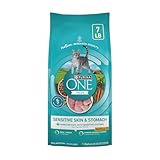
- Real turkey is the first ingredient in our high protein cat food to help support strong muscles, including a healthy heart in adult cats
- Made for cats with sensitive systems, this Purina ONE sensitive stomach cat food features an easily digestible formula with added prebiotic fiber
- Crunchy cat food with calcium supports strong teeth and healthy gums, and four antioxidant sources help support a healthy immune system
- With deliciously crunchy bites, this turkey cat food delivers a great taste and is made with no artificial flavors or preservatives
- Purina sensitive skin and stomach cat food is crafted in Purina-owned, U.S. facilities
How to choose among the ten foods
Start by separating two different decisions: selecting a complete everyday food, and conducting a diagnostic or therapeutic diet trial. The ten products below are grouped by use so a prescription diet is not mistaken for a universally superior everyday option. Product examples identify options to discuss; they are not endorsements, current-formula verification, or claims that the food relieves symptoms.
Everyday retail foods to assess
- Current food your cat reliably eats. If the cat is otherwise well and your veterinarian has no reason to change the diet, consistency may be more useful than switching foods repeatedly. Confirm that its label says it is complete and balanced for the cat’s life stage.
- A retail food marketed for sensitive digestion. Treat that wording as a product feature, not proof of a diagnosis or of effectiveness for your cat. Check the nutritional adequacy statement, life-stage claim, and ingredients against your cat’s history.
- A retail limited-ingredient food. It may help you compare ingredient lists, but retail limited-ingredient claims do not offer the same cross-contamination controls as veterinary diets. It is not a substitute for a prescribed elimination trial.
- A complete-and-balanced canned food your cat accepts. Canned versus dry format is a practical preference decision once nutritional adequacy is established; format alone does not identify the cause of GI symptoms.
- A complete-and-balanced dry food your cat accepts. Apply the same label and life-stage checks as for canned food. Do not assume that dry or canned is inherently better for a sensitive stomach.
- A familiar food with a different protein source. A novel protein is useful only in context: the veterinarian needs a food history to determine whether that ingredient is genuinely novel for this cat.
Veterinary diets to discuss for specific clinical questions
- Hill’s Prescription Diet z/d. VCA lists it as an example of a veterinary hydrolyzed diet used in food-allergy trials. It is a veterinarian-directed option, not a general retail recommendation.
- Royal Canin Hypoallergenic Hydrolyzed Protein. VCA also names this as a veterinary hydrolyzed diet example for an elimination trial. The veterinarian selects the diet and determines whether it suits the cat.
- Purina Pro Plan Veterinary Diets HA Hydrolyzed. This is another VCA-listed veterinary hydrolyzed-diet example for allergy evaluation, not an independently tested “best” product.
- A veterinarian-selected highly digestible, high-fiber, or low-fat diet. Cornell discusses dietary trials for chronic GI signs, while VCA describes different therapeutic diet features for different needs. This category is not one specific product: the appropriate formulation depends on the suspected condition and veterinary assessment.
Veterinary diets serve a different purpose from everyday retail foods. A hydrolyzed diet may be selected to evaluate a suspected allergy; a highly digestible, high-fiber, low-fat, or energy-dense option may be considered for another GI concern. No single feature suits every cause. VCA’s GI diet guidance
Rank #2

- Real turkey is the first ingredient in our high protein cat food to help support strong muscles, including a healthy heart in adult cats
- Made for cats with sensitive systems, this Purina ONE sensitive stomach cat food features an easily digestible formula with added prebiotic fiber
- Crunchy cat food with calcium supports strong teeth and healthy gums, and four antioxidant sources help support a healthy immune system
- With deliciously crunchy bites, this turkey cat food delivers a great taste and is made with no artificial flavors or preservatives
- Purina sensitive skin and stomach cat food is crafted in Purina-owned, U.S. facilities
What should the food label tell you?
For an everyday food, Cornell recommends checking the nutritional adequacy statement: it is the best way to verify that a food is complete and balanced. Check that the life-stage claim fits your cat, because a food intended for one stage is not automatically appropriate for another. Ingredient lists are ordered by decreasing proportional weight, but ingredient order alone does not establish that a food will resolve symptoms. Once adequacy is established, choose a format the cat will eat and that fits your household. Cornell’s cat-feeding guide
Record the foods, treats, supplements, and edible medications your cat currently receives before discussing a change. A detailed food history can help a veterinarian consider allergy versus intolerance and identify possible triggers. An immune-mediated food allergy is not the same as a non-immune intolerance; lactose intolerance is one example of a digestive reaction. VCA’s explanation of food intolerance
Rank #3

- Real turkey is the first ingredient in our high protein cat food to help support strong muscles, including a healthy heart in adult cats
- Made for cats with sensitive systems, this Purina ONE sensitive stomach cat food features an easily digestible formula with added prebiotic fiber
- Crunchy cat food with calcium supports strong teeth and healthy gums, and four antioxidant sources help support a healthy immune system
- With deliciously crunchy bites, this turkey cat food delivers a great taste and is made with no artificial flavors or preservatives
- Purina sensitive skin and stomach cat food is crafted in Purina-owned, U.S. facilities
What does a proper food-allergy trial involve?
VCA describes a controlled elimination diet trial as the reliable way to diagnose food allergy. The veterinarian selects a hydrolyzed or genuinely novel-protein diet, and the trial lasts at least eight weeks. During the trial, feed only the prescribed diet, water, and unflavored prescribed medication. Treats, supplements, table food, and other edible products can undermine the diagnostic value of the trial. VCA’s food-allergy guidance
Do not substitute a retail “sensitive” or limited-ingredient product for the prescribed diet. VCA notes that retail products do not provide the same cross-contamination controls as veterinary diets. Ask the veterinarian how to handle treats, flavored medication, and food transitions before beginning.
Rank #4
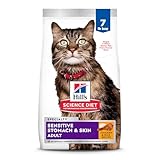
- UPDATED FORMULA: Triple support for stomach, skin and immune system health
- Highly digestible formula with prebiotic fiber that is gentle on the stomach for optimal nutrient absorption
- Enriched with Vitamin E and Omega-3 & 6 fatty acids, for healthy skin and lustrous fur
- Clinically proven antioxidants, Vitamin C+E, for a healthy immune system
- 29 key nutrients, including essential vitamins, minerals, and omega 3 & 6 fatty acids. Complete and balanced nutrition for adult cats’ health
What if symptoms persist or IBD is suspected?
Chronic vomiting or diarrhea can have causes other than allergy, so persistent symptoms call for veterinary follow-up rather than another unstructured food switch. Cornell explains that IBD can require extensive diagnostic assessment because its signs resemble those of other conditions. A veterinarian may try a hypoallergenic diet; if it does not help, a highly digestible diet with high fiber and low fat may be considered. Improvement can take several weeks or longer, so follow the veterinarian’s plan for monitoring and reassessment.
Free tools Windows power users keep installed
One-click scans. No signup required.
Why not feed chicken and rice?
Do not put a cat on an unsupervised homemade “bland” diet as a long-term food or allergy test. VCA says chicken breast and rice is not complete and balanced and lacks more than 10 essential nutrients for dogs and cats. If your veterinarian recommends a bland diet, confirm the exact recipe and how long to feed it. VCA’s bland-diet instructions
Quick Recap
Best Value
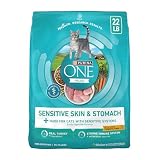
- Real turkey is the first ingredient in our high protein cat food to help support strong muscles, including a healthy heart in adult cats
- Made for cats with sensitive systems, this Purina ONE sensitive stomach cat food features an easily digestible formula with added prebiotic fiber
- Crunchy cat food with calcium supports strong teeth and healthy gums, and four antioxidant sources help support a healthy immune system
- With deliciously crunchy bites, this turkey cat food delivers a great taste and is made with no artificial flavors or preservatives
- Purina sensitive skin and stomach cat food is crafted in Purina-owned, U.S. facilities
Product prices and availability are accurate as of the date/time indicated and are subject to change. Any price and availability information displayed on Amazon at the time of purchase will apply.




