
Cloudy eye in a marine fish is a visible sign, not a diagnosis. The haze may involve the cornea, the lens, or tissues around the eye, and possible causes include injury, water or environmental problems, parasites or infection, nutritional imbalance, and broader disease. Several causes can look alike, so appearance alone cannot identify the cause or point to a safe treatment.
What does “cloudy eye” mean?
The clear outer surface of the eye is the cornea; the lens sits inside the eye. Haze on the cornea is not the same as a cataract, which is opacity of the lens. Merck Veterinary Manual describes cataracts in fish as common and notes possible associations with eye flukes, nutritional deficiencies, or unknown factors. A cloudy appearance may also involve surrounding tissues, so an owner’s visual impression cannot reliably locate the problem.
As an Amazon Associate I earn from qualifying purchases.
The Victorian Fisheries Authority describes keratitis—corneal injury or inflammation—as potentially causing dullness, cloudiness or discoloration, inflammation, and/or ulceration. Trauma can also trigger a localized inflammatory response in the cornea, according to fish veterinarian Jessie Sanders, DVM, DABVP (Fish Practice). These descriptions apply broadly to fish; they do not establish that trauma is the most common cause in every marine species.
What can cause cloudy eye in marine fish?
Injury or corneal inflammation
Handling, aggression, or another injury may damage the eye or irritate the cornea. A localized surface haze can be consistent with injury, but it does not prove one; inflammation and other causes may have a similar appearance.
#1 Best Overall

- Contains one (1) API LIQUID SUPER ICK CURE Freshwater and Saltwater Fish Medication 4-Ounce Bottle
- Treats "ich" white spot disease in fish and secondary bacterial fish infections
- Quickly kills ich parasite, typically within 24 hours of first dose
- Use only in freshwater and saltwater aquariums not with reef aquariums
- Dose every day for five days when symptoms first start occurring
Cataract or other lens opacity
A cataract is cloudiness of the lens rather than the cornea. Merck lists eye flukes, nutritional deficiencies, and unknown factors among possible associations. The appearance alone does not establish that a fish has a cataract or reveal its cause.
Parasites, infection, or disease elsewhere in the body
Merck notes that parasitized eyes may appear enlarged and possibly cloudy, and that fish eye disorders can have infectious causes. Cloudiness can also occur alongside systemic disease. For example, a peer-reviewed report described bilateral eye protrusion, corneal cloudiness, and bleeding within the eye in juvenile farmed cobia with severe mycobacteriosis. That case shows a possibility in a marine species; it does not establish how common mycobacteriosis is in ornamental marine aquariums or make it the default explanation for a cloudy eye.
Rank #2
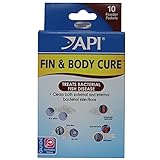
- Contains one (1) API FIN and BODY CURE Freshwater Fish Powder Medication 10-Count Box
- Treats body slime, eye cloud, fin and tail rot, open red sores, gill disease, and hemorrhagic septicemia
- Causes slight discoloration of water that can be fixed by adding activated charcoal
- Use only in freshwater aquariums
- Use daily for four days when symptoms of bacterial diseases appear
Water quality and other environmental conditions
The Victorian Fisheries Authority lists poor water quality, gas supersaturation, toxicants, osmotic imbalance, and stress among possible contributors to fish eye disorders. Merck notes that tiny bubbles in the cornea may indicate gas bubble disease. These possibilities make it important to consider the aquarium and recent changes, rather than assume that cloudiness means infection.
Nutrition
Nutritional deficiency or imbalance is included among the possibilities discussed by Merck and the Victorian Fisheries Authority. Those sources do not identify a particular deficiency as the cause of cloudy eye in a generic marine aquarium fish, so cloudiness alone is not a basis for adding a supplement.
Rank #3
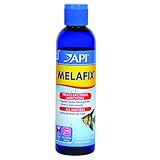
- Contains one (1) API MELAFIX Freshwater Fish Bacterial Infection Remedy 4-Ounce Bottle
- Heals bacterial infections and repairs damaged fins, ulcers and open wounds
- Contains natural, botanical tea tree extract to quickly and rapidly help fish
- Helps treat newly-introduced fish to reduce risk of disease outbreak in freshwater aquariums
- Use daily for a week when treating infections and for 3 days as a preventive when adding new fish
What observations can help narrow the possibilities?
Record what you see and when it changed. These details can help a fish-health professional assess the problem, but none is a diagnosis by itself.
- Whether one eye or both are affected, and whether one or several fish show signs.
- Whether the eye appears protruding, bloody, ulcerated, or to have tiny bubbles, in addition to being cloudy.
- How quickly the cloudiness appeared or progressed.
- Changes in behavior or appetite.
- Recent handling, aggression, water-system changes, or new livestock.
- Whether the haze seems to be on the surface or deeper within the eye—describe this as an observation, not a confirmed location.
Patterns such as one affected fish versus several, or cloudiness accompanied by other signs, can help organize the history. They do not establish whether the cause is injury, infection, water conditions, or another problem.
Rank #4

- For use in freshwater or marine aquaria.
- Easily absorbed through both skin and gills; ingestion not required.
- Does not adversely affect the filter bed and is easily removed with carbon.
- Safely and effectively treats several fungal, and bacterial fish diseases (dropsy, popeye, fin/tail rot, septicemia).
- When used in a medicated food mix, it is excellent for treating bacterial infections in tanks that contain invertebrates.
What should you do?
- Check the fish and its surroundings. Note the signs above and review recent husbandry, handling, and aquarium changes.
- Assess water conditions. Use appropriate aquarium tests to check water quality. A test kit can help assess the system, but it cannot identify the cause of an eye lesion or cure it.
- Seek fish-health advice when the problem persists or worsens. Consult a veterinarian experienced with fish if the cause is unclear, the eye is deteriorating, or the fish has other abnormal signs. The Fish Vet’s guidance recommends evaluating water and environment and consulting an aquatic veterinarian when the cause remains unknown.
There is no universal cloudy-eye medication supported for all marine fish. Because possible causes differ, an antibiotic or salt treatment chosen from appearance alone may address the wrong problem. A qualified fish veterinarian can assess the fish and its conditions before recommending treatment.
Recommended Free Tools
Cloudy-eyed wild snapper is a separate issue
New Zealand’s Ministry for Primary Industries investigated reports of cloudy-eyed snapper at several locations. In its 2024 investigation, testing of 12 affected samples did not identify a cause in the described testing; that sample count is not a prevalence survey and does not explain cloudy eye in aquarium fish. The agency’s advice was: “While testing to date has not found any food safety concerns, our advice is that if any animal you catch or hunt looks unhealthy, including snapper showing the cloudy eye symptoms, you should not eat it.”
Quick Recap
Best Value
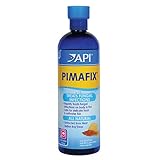
- Contains one (1) API PIMAFIX Antifungal Freshwater and Saltwater Fish Remedy 16-Ounce Bottle
- Rapidly and safely treats fungal infections on body and fins of fish
- Contains all-natural extract from West Indian Bay Trees to help with fungus and cottony growth
- Helps heal internal and external bacterial infections in freshwater, saltwater and reef aquariums
- Use daily for a week when treating infections
Product prices and availability are accurate as of the date/time indicated and are subject to change. Any price and availability information displayed on Amazon at the time of purchase will apply.





Leave a Reply