Large predatory reef fish that can eat clownfish include lionfish, snappers, groupers, triggerfish, and larger eels. They are potential predators rather than guaranteed predators: the actual risk depends on the predator’s species and adult size, the clownfish’s size, behavior, and whether it can retreat into a suitable host anemone.
If you meant “What do clownfish eat?” clownfish are omnivores. They feed on zooplankton, algae, worms, small crustaceans, and other small invertebrates.
As an Amazon Associate I earn from qualifying purchases.
Which fish prey on clownfish?
The clearest aquarium and zoological references identify five broad predator groups that may eat clownfish:
| Predator group | Why clownfish may be at risk |
|---|---|
| Lionfish | Large, ambush-oriented reef predators with mouths capable of swallowing appropriately sized small fish. |
| Snappers | Many larger snappers eat smaller reef fish, particularly when the prey is exposed or substantially smaller. |
| Groupers | Large groupers can consume a wide range of smaller reef fish, including clownfish that cannot reach shelter. |
| Triggerfish | Species differ considerably, but larger or aggressive triggerfish may attack and eat small clownfish. |
| Eels | Large reef-associated eels can attack fish at close range and may reach into crevices or areas that do not provide complete protection. |
This is a list of documented potential predator categories, not an exhaustive list of every fish that could eat every clownfish species. In general, a predatory reef fish may treat a clownfish as prey if the clownfish is small enough to fit in its mouth and is encountered away from effective shelter.
#1 Best Overall

- QUIET AQUARIUM FILTER: The Tetra Whisper IQ Power Filter with Stay Clean technology contains a sound shield for quiet filtration less than 40 dB.
- SELF PRIMING: Submerged motor starts up with no priming required.
- CAPACITY: The Tetra Whisper IQ 20 Power Filter works in filters up to 20 gallons (130 GPH).
- STAY CLEAN TECHNOLOGY: By maintaining healthy pH levels, creates easier maintenance for healthier fish.
- CARTRIDGE REFILLS: Change cartridges monthly; uses large-sized Tetra Whisper Bio-Bag Filter Cartridges (refills sold separately).
Why do clownfish often avoid being eaten?
Most adult clownfish, also called anemonefish, live closely with sea anemones. Their relationship with an anemone gives them access to shelter that many open-water predators avoid.
A clownfish has a specialized mucus layer that helps protect it from the anemone’s stinging cells. The anemone, in turn, provides a defended refuge among its tentacles. A pursuing fish may be deterred or injured by the stings before it can reach the clownfish.
This protection is important but not absolute. A clownfish is more vulnerable when it:
- leaves the anemone to feed or investigate its surroundings;
- has no suitable host anemone;
- has been displaced by territorial conflict;
- is newly settled, juvenile, or otherwise too small to defend itself; or
- encounters a predator large enough, determined enough, or adapted to hunt around reef shelter.
The anemone is therefore best understood as a major defensive advantage, not an impenetrable shield. Even an adult clownfish can be eaten if it is exposed to a sufficiently large predator.
Rank #2

- QUIET AQUARIUM FILTER: The Tetra Whisper IQ Power Filter with Stay Clean technology contains a sound shield for quiet filtration less than 40 dB.
- SELF PRIMING: Submerged motor starts up with no priming required.
- CAPACITY: The Tetra Whisper IQ 45 Power Filter works in tanks up to 45 gallons (215 GPH).
- STAY CLEAN TECHNOLOGY: By maintaining healthy pH levels, creates easier maintenance for healthier fish.
- CARTRIDGE REFILLS: Change cartridges monthly; uses large-sized Tetra Whisper Bio-Bag Filter Cartridges (refills sold separately).
Clownfish eggs and larvae face different dangers
Predation risk changes dramatically during a clownfish’s life cycle. A breeding pair guards its eggs, but newly hatched larvae leave the immediate protection of the nest and enter open water. At that stage they are tiny, drifting prey and do not yet have the same refuge-based protection as an adult living among anemone tentacles.
Larvae of species such as Amphiprion ocellaris also have a different feeding ecology from adults. They feed on very small planktonic food, including copepods, while developing in the water column. Their small size and pelagic lifestyle make them vulnerable to many appropriately sized plankton-eating and predatory animals, not only the large reef fish listed above.
Can a lionfish, grouper, or eel live with clownfish?
In a home aquarium, the predator list should not be read as a list of recommended tank mates. A lionfish, snapper, grouper, large triggerfish, or eel may attack or swallow a clownfish, especially when there is a large difference in body or mouth size.
What’s actually slowing this PC down?
Pick the symptom - the matching free tool is one click away.
Compatibility depends on the exact species and individual, including:
Rank #3

- WITH ROTATING BIO-WHEEL: Patented Bio-Wheel technology provides excellent wet/dry biological filtration.
- MULTI-STAGE FILTRATION: Delivers mechanical, chemical and biological aquarium filtration to maintain a clean aquatic environment.
- MARINELAND FILTRATION PRODUCTS: Count on Marineland brand for the most reliable, technically advanced aquariums and accessories on the market.
- COMPATIBILITY: Use with Marineland Rite-Size Filter Cartridges (see individual filter for sizing recommendations).
- FIVE SIZES: Available in 75 GPH, 100 GPH, 150 GPH, 200 GPH and 350 GPH sizes.
- the predator’s adult size and mouth size;
- its normal feeding behavior and temperament;
- the clownfish species and size;
- aquarium dimensions and swimming space;
- the layout of rockwork and other hiding places;
- whether the clownfish has a secure host or refuge; and
- whether feeding competition or territorial disputes increase stress.
A fish that ignores a clownfish when young may become dangerous as it grows. Likewise, a predator that appears calm during introduction may still eat a smaller tank mate later. “It has not eaten the clownfish yet” is not a reliable compatibility test.
A host anemone may provide natural shelter, but it does not guarantee safety in an aquarium. Anemones also have demanding lighting, water-quality, flow, feeding, and placement requirements. Adding one solely to protect clownfish is not a substitute for choosing compatible tank mates.
A practical aquarium rule
If a fish is a known predator and the clownfish could reasonably fit inside its mouth, treat the combination as high risk. Research the exact species and its adult size before purchase, rather than relying only on the fish’s current juvenile size or a general label such as “reef fish.” If there is doubt, use separate systems or select a demonstrably peaceful tank mate.
The Tool Desk
Outbyte PC Repair FREERepair Windows errors before they cause bigger problemsFix Now →Outbyte Driver Updater FREEFix the driver behind crashes, sound loss and screen glitchesFind Drivers →For readers who want a deeper reference on host anemones, clownfish behavior, predators, and aquarium care, a clownfish aquarium book can be a useful further-reading option. It should supplement, not replace, species-specific compatibility research.
Rank #4
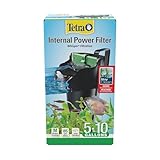
- INTERNAL POWER FILTER: Tetra Whisper Internal Power Filter for 5- to 10-gallon aquariums uses medium Whisper BioBag filter cartridges that are easy to change.
- QUIET 85 GPH MOTOR: The internal pump efficiently filters up to 85 gallons per hour.
- POWERFUL FILTRATION: Water flows through the cartridge floss, trapping debris and fish waste, while Ultra-activated carbon helps remove odor and discoloration.
- SPACE-SAVING DESIGN: Your aquarium can be 1” from the wall with the internal filter designed to clip directly on your aquarium wall and be hidden by décor.
- EASILY ADJUSTABLE: Adjustable clip allows for a variety of setups to easily adjust to high or low water levels.
What do clownfish eat?
The wording of this question is easy to reverse. Clownfish themselves are omnivores, not predators of large reef fish.
Their diet can include:
- zooplankton;
- algae;
- small worms;
- small crustaceans;
- other tiny invertebrates; and
- small pieces of food available around their host anemone.
Field research on Amphiprion ocellaris has found stomach contents dominated by zooplankton and algae, while aquarium references commonly describe a broader omnivorous diet. In an aquarium, food should be appropriately sized and varied rather than based on a single ingredient.
Do clownfish eat the anemone?
Clownfish do not normally treat their host anemone as ordinary prey. They may feed on small food particles, algae, or invertebrates around it, and their activity can provide the anemone with nutrients or help circulate water. The clownfish–anemone relationship is a partnership involving shelter and food opportunities, although the details vary among species and circumstances.
Quick wins for a faster PC:
Repair Windows errors before they cause bigger problemsFix Now →Fix the driver behind crashes, sound loss and screen glitchesFind Drivers →Clear out junk files and repair common Windows errorsFree Scan →Are clownfish endangered because of these predators?
Natural predators are only one part of clownfish survival. Eggs and larvae are particularly vulnerable because they are small and exposed, while adults gain substantial protection from their host anemone. In an aquarium, poor tank-mate selection can create a much more immediate and avoidable danger than normal predation on a reef.
Best Value

- UNASSEMBLED REPLACEMENT CARBON FILTER Keeps aquarium water crystal clear – removes odors and discoloration
- CATCHES DEBRIS Dense dual-sided mesh filters debris and fish waste
- FITS TETRA WHISPER WATER FILTERS Color coded to make it simple to remember which replacement cartridge size to purchase
- CONVENIENT Easy to assemble and easy to replace
- USAGE Change monthly or sooner if needed
When buying a clownfish for a home aquarium, choosing a captive-raised fish is a sensible conservation-minded option when available. It can reduce pressure on wild collection and gives the buyer access to a fish already accustomed to aquarium conditions. Availability varies by region and species.
How to assess a possible tank mate
- Identify the exact species. “Grouper,” “eel,” and “triggerfish” each describe many species with different adult sizes and behaviors.
- Check adult dimensions, not purchase size. A small juvenile predator may eventually become capable of swallowing a clownfish.
- Compare mouth size with clownfish size. If the clownfish can fit in the predator’s mouth, assume there is a meaningful predation risk.
- Research feeding behavior. Ambush predators and aggressive fish deserve extra caution even when they are not constantly hunting.
- Plan for refuge. Rockwork and a host anemone can help, but neither makes an incompatible pairing safe.
- Have a removal plan. A divider, spare aquarium, or other safe relocation option may be necessary if aggression begins.
Frequently Asked Questions
Will every lionfish, snapper, grouper, triggerfish, or eel eat a clownfish?
No. These are potential predator groups. Whether an individual eats a clownfish depends on species, size, temperament, opportunity, and the clownfish’s access to shelter.
Can clownfish defend themselves against predators?
Their main defense is retreating into a suitable host anemone, whose stinging tentacles deter many fish. That protection is conditional and does not guarantee safety from a large or persistent predator.
Do these 3 things before closing this tab:
1Fix the driver behind crashes, sound loss and screen glitches2Repair Windows errors before they cause bigger problems3Scan for outdated or missing drivers - takes under a minuteAre clownfish carnivores?
No. Clownfish are omnivores that eat zooplankton, algae, small crustaceans, worms, and other small invertebrates.
Is a host anemone required to keep clownfish safe in an aquarium?
A host anemone can provide natural shelter, but it is not a guaranteed anti-predator device and has demanding care requirements. Choosing compatible tank mates remains essential.
The Bottom Line
Large lionfish, snappers, groupers, triggerfish, and eels can eat clownfish, especially when the clownfish is small or away from shelter. Clownfish reduce that risk by living among protective anemone tentacles, but no anemone or aquarium setup makes an incompatible predator a safe tank mate. If you meant what clownfish eat, the answer is mainly zooplankton, algae, and other small food items.
Quick Recap
Product prices and availability are accurate as of the date/time indicated and are subject to change. Any price and availability information displayed on Amazon at the time of purchase will apply.




