Outdated Drivers Are Slowing You Down
One free scan finds every outdated or missing driver and matches the right update for your exact hardware.Free scan · exact hardware matchPC Slower Than It Used to Be?
A free scan shows the junk files, broken settings and background clutter dragging Windows down - then fixes them in one click.Free scan · Windows 10 & 11A reactive dog has an unusually fast, intense, or difficult-to-interrupt response to a particular trigger. That response might look like barking, lunging, pulling, freezing, hiding, cowering, or trying to flee when the dog sees another dog, a stranger, a vehicle, or something else.
“Reactive” describes what the dog does in a situation; it does not, by itself, explain why the dog reacts or prove that the dog is aggressive. The underlying emotion may be fear, frustration, excitement, anxiety, or discomfort—and the right response depends on that distinction.
As an Amazon Associate I earn from qualifying purchases.
What does “reactive dog” mean?
Reactivity is a practical behavior term for a dog whose response to a stimulus is unusually rapid, intense, or hard to interrupt. A dog may be called reactive when it repeatedly has an outsized response to:
Recommended Free Tools
- other dogs or animals;
- unfamiliar people or visitors;
- vehicles, bicycles, joggers, or scooters;
- sounds such as doorbells, thunder, or construction;
- dogs or people on the other side of a fence or window;
- being restrained by a leash, gate, crate, or car.
The label is contextual. A dog may be calm at home but react on leash, or behave comfortably around familiar dogs while reacting to unfamiliar ones. Calling the dog “reactive” is a useful starting description, not a complete diagnosis.
#1 Best Overall

- 【Train Like a Pro】Heouvo dog treat pouch and clicker kit are designed to help you train your dog like professionals. With easy access to your pet's favorite treats and a training clicker to supercharge your training sessions, you'll see better results in no time
- 【Compact Body, Large Capacity】Compared to other bulky treat bags, our treat pouch is very compact (5*4*2inch), but can hold 1.67 cups of dry or wet food. While other silicone pouch has large openings that tend to result in snack spillage, we have designed a smaller mouth with stronger magnetic closure that effectively prevents food from falling out, thereby extending the food's freshness.
- 【Food-Grade Silicone Material】Heouvo training bag is made of safe and harmless food-grade silicone that is free from bisphenol. Unlike fabric waist pouches, ours is designed to store both dry and wet or freezing food. It features 2pcs strong built-in magnet that allows for convenient one-hand operation, enable quick reach of food to promptly reward obedient dogs. The flexible silicone material allows for easy bending and flipping for easy cleaning the inner compartments.
- 【Effective Dog Clicker】You can use the pet training clicker to train all your pets. Not only for dog but also for cat, bird, chicken and horse. You can use it to train your pet the basic obedience, small trick, and correct the bad behavior. Scientific method of training your pet safely and easily.
- 【Unique Waist Belt Design】Unlike other silicone dog training pouches, we have taken extensive time and effort to address the risk of plastic clips breaking or failing off. After careful consideration, we are proud to present our latest product that eliminates the worry of your pouch accidentally detaching during training sessions or walks. The waist belt is adjustable for waist sizes ranging from 25“ to 47”, ensuring a comfortable fit for users. Now, you can confidently focus on your training or outdoor activities without the concern of your pouch slipping off.
Reactivity is not the same as aggression
Reactivity and aggression can overlap, but they are not synonyms. Reactivity refers mainly to the intensity and arousal of a response. Aggression is a broader category of threatening or harmful behavior that may be used to create distance, avoid conflict, defend a resource, or injure another animal or person.
A dog can bark and lunge without ever biting. Some dogs lunge because they are frightened and want the trigger to move away; others are frustrated because they want to approach but cannot; others are highly excited. A dog may even appear aggressive while trying to greet.
That distinction should not be used to dismiss safety concerns. A highly aroused dog may react instinctively, redirect toward a nearby person or animal, or escalate if its earlier signals do not create distance. Treat any credible bite risk seriously and seek professional help.
Do these 3 things before closing this tab:
1Scan for outdated or missing drivers - takes under a minute2Clear out junk files and repair common Windows errors3Fix the driver behind crashes, sound loss and screen glitchesHow can you tell if a dog is reactive?
Common signs include:
- barking, growling, whining, or repeated vocalizing;
- lunging toward or away from a trigger;
- pulling hard on the leash or spinning at the end of it;
- stiffening, staring, freezing, or becoming unusually still;
- crouching, hiding, cowering, or attempting to flee;
- jumping, snapping at the leash, or redirecting toward the handler;
- being unable to take food, respond to familiar cues, or orient toward the handler;
- remaining agitated long after the trigger has disappeared.
Body language and context matter. A dog that lunges forward with a loose, wiggly body may be frustrated or excited. A dog that lunges while crouching, retreating, freezing, or showing other fear signals may be trying to make the trigger go away. One behavior, such as barking, cannot reliably reveal the dog’s motivation by itself.
Why do dogs become reactive?
There is rarely one universal explanation. Several contributors can produce similar-looking behavior.
Fear and anxiety
Fear is a frequent contributor. A person, dog, sound, or environment may feel threatening to the dog even when it seems harmless to a human. Previous attacks or frightening encounters, inadequate early socialization, chronic stress, and repeated exposure at an unmanageable distance can all contribute to a learned fear response.
Fear-based reactions often aim to increase distance. Barking, growling, lunging, hiding, or fleeing may be the dog’s attempt to make an uncomfortable situation end.
What’s actually slowing this PC down?
Pick the symptom - the matching free tool is one click away.
Frustration and barrier effects
Some dogs want to reach a person, dog, toy, or activity but are prevented by a leash, fence, gate, crate, window, or car. This barrier frustration can produce pulling, barking, and aggressive-looking behavior even when the dog is not generally hostile toward the target.
For example, a dog may bark intensely at another dog while behind a fence, then play appropriately when introduced under controlled conditions. That possibility cannot be assumed in advance, however; greetings still need to be managed safely.
Rank #2

- 【No More Stinky Pouches!】Say goodbye to smelly, stained fabric forever! Our revolutionary pouch is crafted entirely from 100% food-grade silicone, creating a waterproof barrier that prevents treat oils and grease from soaking in. No more lingering odors, no more messy residue—just a fresh, clean pouch that wipes clean, rinses under water (The hinge is made of stainless steel, no need to worry about rust issue.), or goes right in the dishwasher.
- 【One-Handed Training】Stop fumbling with treats! Our innovative pull-tab and self-sealing top are engineered for real-world use. Deliver rewards seamlessly with one hand, keeping your focus and your other hand exactly where they need to be—on your pup. This is the ultimate hands-free advantage for flawless training or busy walks.
- 【Pocket-Sized, Packed With Potential】Don't let the compact size fool you! With a 1-cup capacity, this small-but-mighty pouch is perfectly sized for daily drills and walks. It reliably holds everything from dry kibble and moist treats to any high-value reward your dog loves.
- 【Never Forget a Reward Again】Clip it on and go! With an upgraded carabiner and wider 0.5-inch leash clip, it securely fastens to virtually any standard leash (except retractable one) or belt loop. Once attached, you're free to enjoy focused training and walks, with rewards always within reach.
- 【The Last Pouch You'll Ever Need】This superior design meets everyday use durability. We built it to last from rugged, easy-clean silicone and refined the profile to be both compact and capable. Choose from 6 stylish colors to match your gear—this isn't just another accessory, it's the final upgrade your walking essentials deserve.
Excitement and over-arousal
Excitement can also push a dog beyond its ability to cope. A dog may become so stimulated by the sight of a runner, another dog, or an outing that it cannot respond normally to the handler. Excitement and frustration can coexist with fear, which is one reason outward behavior alone is not enough to identify the cause.
Trigger stacking
Trigger stacking is a useful management concept: several stressful or exciting events occur close together, leaving the dog with less capacity to cope. A dog may handle one bicycle, visitor, or dog at a reasonable distance, then react strongly to a minor trigger after a difficult walk, loud noise, poor sleep, crowded environment, or earlier confrontation.
Trigger stacking is not a formal diagnosis. It is a way to understand why a dog’s threshold can vary from day to day. Keeping a simple record of preceding events can help reveal patterns.
Pain or another medical problem
A sudden behavior change, unusually irritable response, or new aggression-like behavior deserves veterinary attention. Pain and other medical conditions can contribute to or worsen behavior, and it is risky to assume that a new problem is purely a training issue.
What should you do first?
1. Prevent another rehearsal of the reaction
Start with management rather than trying to test the dog. Every intense episode can give the behavior more practice and may make future responses harder to change. Management is not “giving in” to the dog; it creates the safety and emotional space needed for behavior work.
Depending on the trigger, management may include:
- walking at quieter times or choosing less crowded routes;
- crossing the street, changing direction, or leaving before the dog reacts;
- increasing distance from people, dogs, vehicles, or other triggers;
- using parked cars, hedges, buildings, or other visual barriers;
- closing curtains or limiting access to trigger-filled windows;
- skipping dog parks and uncontrolled greetings;
- asking visitors to follow a planned arrival and separation routine;
- avoiding situations in which the dog cannot escape or be safely restrained.
Do not force a greeting or keep moving toward a trigger because the dog “needs to get used to it.” Uncontrolled exposure can intensify fear and arousal.
Quick wins for a faster PC:
Clear out junk files and repair common Windows errorsFree Scan →Scan for outdated or missing drivers - takes under a minuteDriver Scan →Repair Windows errors before they cause bigger problemsFix Now →2. Make a safety plan
If there is a credible risk of a bite, discuss a comprehensive safety plan with a veterinarian or qualified behavior professional. A properly introduced basket muzzle may be one part of that plan. It is a safety tool, not a cure, and it does not replace distance, supervision, training, or professional assessment.
A dog wearing a muzzle can still be vulnerable to another dog, so muzzle walks should take place only where encounters can be controlled. The dog should be introduced to the muzzle gradually and positively; putting it on for the first time immediately before a stressful encounter can make the equipment itself frightening.
If you are considering a properly fitted basket muzzle, do not choose a size without measuring the dog and considering comfort, breathing, panting, drinking, and escape resistance. A professional can help assess fit and introduction.
Rank #3
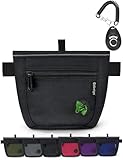
- 【Upgraded Stronger Magnet】 There are two pairs of strong magnets on opening of the bag, auto closing and no food spilling out at all. Open easily by one hand when food needed.
- 【Versatile wearing options】 Gobeigo dog treat bag offers two wearing modes: an adjustable waist belt (25-47 inches) catering to a wide audience, or the option to use the back metal clip independently. Simple and convenient, ensuring a comfortable fit for everyone.
- 【Compact but Large Capacity】 The dog treat bag looks exquisite and compact on waist, but it can hold 2 cups of food, large enough for daily walking with your furry friends.
- 【Effective Dog Clicker Included】You can use the pet training clicker to train all your pets. Not only for dog but also for cat, bird, chicken even horse. You can use it to train your pet the basic obedience, small trick, and correct the bad behavior. Scientific method of training your pet safely and easily.
- 【Convenient Design】There is a zipper pocket in front with poop bag outing, you can get poop bags easily anytime. Also lining material of the fanny pack is water resistant, can be inside out easily for cleaning.
3. Find the dog’s workable distance
Behavior work should begin at an intensity low enough for the dog to remain sufficiently calm to eat, orient toward the handler, and recover. This may mean starting much farther away than expected, using a visual barrier, choosing a quieter location, reducing the duration of exposure, or working with a less intense version of the trigger.
The workable distance is not fixed. It can change with the dog’s health, stress level, previous experiences, weather, surroundings, and what happened earlier that day.
If the dog is already lunging, panicking, or unable to respond, stop trying to train in that moment. Prioritize creating distance and getting to a safe, quiet place. Do not repeatedly say a cue the dog is not currently able to follow.
4. Use desensitization and counterconditioning
Desensitization means presenting a trigger at a reduced intensity—such as farther away, quieter, shorter, or partly hidden—and increasing the intensity gradually only while the dog remains able to cope.
Counterconditioning pairs the trigger with something the dog values, commonly high-value food. For example, the appearance of another dog at a safe distance may predict several small, desirable treats; when the other dog disappears, the treats stop. Repeated carefully managed pairings can help change the dog’s emotional association with the trigger.
The goal is not simply to make the dog obey while remaining distressed. The dog needs to stay below the point at which it loses the ability to eat, learn, and recover. Flooding—deliberately overwhelming the dog with an intense or prolonged exposure—is not an appropriate shortcut and can worsen fear.
For counterconditioning, high-value dog training treats can be useful if the dog is motivated by them and they fit its diet. Treats alone do not resolve severe reactivity, and a dog that will not eat may be too close to the trigger or too aroused for productive work.
5. Teach alternative skills away from triggers
Response substitution can help when the dog is calm enough to learn. First practice easy skills in quiet settings, then gradually use them around low-intensity versions of the trigger. Useful alternatives may include:
- orienting toward the handler;
- turning away and moving with the handler;
- walking behind the owner or going to a safe spot;
- settling on a mat;
- checking in voluntarily;
- moving away when shown a familiar signal.
These skills should give the dog a practical way to cope, not conceal fear while the dog is pushed beyond its threshold. If the dog cannot perform the behavior, make the situation easier rather than escalating corrections.
Rank #4
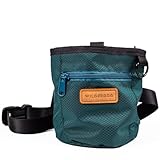
- Two pockets with zipper closures and additional magnetic closure on the big pouch. Adjustable strap fully extended measures up to 52 and 1" wide to fit perfectly through belt loops
- Approximate total capacity: 0.8 L
- Stitched webbing front loop and d-ring make it easy to attach items such as Poop Bag Holder, Crap Carrier, keys, etc.
- Measures 7" x 3" x 6" and weighs 5 oz
- Interior fabric is human food-grade fabric and outer is made of easy-to-clean ripstop
6. Use equipment as management—not treatment
A well-fitted harness, sturdy leash, visual barrier, or muzzle may make management safer and more effective. Equipment does not change the underlying emotion by itself, and no product makes uncontrolled encounters safe.
A front-clip dog harness may be a handling aid for some dogs, but fit, comfort, escape resistance, and the dog’s individual movement all matter. Introduce new equipment gradually and have a professional help if the dog panics, backs out, or becomes more distressed.
What training methods should you avoid?
Do not use punishment, intimidation, or physical confrontation to suppress a reactive response. Aversive methods include electronic collars, prong collars, choke chains, leash corrections, hitting, yelling, and dominance-based techniques.
These approaches may interrupt visible behavior temporarily without resolving the underlying fear, frustration, or arousal. They can also make the trigger more frightening, increase avoidance and aggression risk, damage the dog-handler relationship, and put the handler in danger during an active reaction. Physical confrontation can escalate an aggressive response and cause injury.
Reward-based behavior modification is the safer framework for changing emotional responses and teaching useful alternatives. If a trainer recommends pain, fear, flooding, “alpha” tactics, or deliberately provoking the dog, seek another opinion.
Independent reader supportYour contribution helps us test, update, and keep practical guides available for everyone.When should a veterinarian or behavior professional be involved?
Arrange a veterinary assessment for a sudden, severe, worsening, or unusually unpredictable behavior change—especially if the dog appears painful, irritable, unwell, or different in other ways. A veterinarian can look for medical contributors before the problem is treated as a training issue.
A board-certified veterinary behaviorist is especially appropriate when there is aggression, bite risk, serious anxiety, a complex history, or limited progress with basic management. Veterinary behaviorists can evaluate medical and behavioral causes and prescribe medication when indicated as part of an integrated plan. Medication should never be started, stopped, or adjusted without veterinary direction.
A qualified reward-based trainer or behavior consultant can help implement management, desensitization, counterconditioning, and safety procedures. Before booking, ask:
Free tools Windows power users keep installed
One-click scans. No signup required.
- What methods do you use for fear, frustration, and aggression?
- Do you use reward-based methods without electronic, prong, choke, or correction collars?
- What experience do you have with dogs that lunge, redirect, or have bitten?
- How do you manage safety during consultations?
- What credentials, education, and supervision do you have?
- When do you refer cases to a veterinarian or veterinary behaviorist?
You can investigate professional credentials and directories through organizations such as the American Veterinary Society of Animal Behavior, the American College of Veterinary Behaviorists, and the International Association of Animal Behavior Consultants. Directory membership alone is not a guarantee of an individual provider’s expertise, so verify methods and experience directly.
Best Value

- ONE-HAND TREAT ACCESS — TRAIN SMARTER, REWARD FASTER: The OllyDog Goodie Treat Bag’s powerful magnetic closure opens and snaps shut in one smooth motion — no zippers, no fumbling, no missed moments. Reach in and reward your dog’s good behavior the instant it happens, so every training session is sharper, faster, and more effective. Perfect for obedience work, recall training, agility, and everyday walks.
- ECO-FRIENDLY RECYCLED FABRIC: Made from vegan, non-toxic, water-resistant fabric repurposed from 3 recycled plastic bottles, the Goodie Treat Bag is a sustainable choice built to outlast the competition. Our soft recycled fabric is lightweight, flexible, and gentle against your side — whether you’re at the dog park, on a trail, or in a training class. Good for your dog. Better for the planet.
- 3 VERSATILE CARRY OPTIONS — MORE ADAPTABLE: Train hands-free your way: (1) Wear around your waist with the included adjustable quick-release buckle belt, (2) Clip directly onto any belt loop, or (3) Thread onto your own personal belt. Remove the belt entirely and hook the bag straight onto your leash or backpack for effortless on-the-go access. Three carry modes. One bag that adapts to every scenario.
- COMPACT SIZE, SIMPLE CLEANUP — READY FOR EVERY SESSION: At just 4¼” × 5¼” × 3” with a fully adjustable waist belt, the Goodie Treat Bag holds enough treats for a full training session without bulk, bounce, or added weight. When you’re done, simply hand wash in cold water with a pet-safe detergent and air dry — no dishwasher, no complicated disassembly, no lingering odors. Quick, clean, and back in action.
- BACKED BY OLLYDOG'S LIFETIME WARRANTY — BUY ONCE, TRAIN FOR LIFE: Every OllyDog product is backed by a lifetime warranty — if your Goodie Treat Bag ever develops a defect, contact us and we'll make it right, guaranteed. Available in solid colors and expressive prints; pairs perfectly with the OllyDog Scoop Pick Up Bag (sold separately). Note: chewing/biting not covered.
If you need help implementing a plan, look for a reward-based dog behavior consultant with relevant reactivity experience. Geography, availability, pricing, and credentials vary, so confirm those details before booking.
Further reading
What does improvement look like?
Improvement does not necessarily mean the dog will enjoy every person, dog, sound, or environment. More realistic measures include:
The Tool Desk
Outbyte PC Repair FREEClear out junk files and repair common Windows errorsFree Scan →Outbyte Driver Updater FREEScan for outdated or missing drivers - takes under a minuteDriver Scan →- fewer reactions;
- less intense barking, lunging, or fleeing;
- the ability to stay calm at a greater range of situations;
- faster recovery after a trigger appears;
- more reliable attention to the handler;
- safer, more predictable walks and household routines.
Progress is usually gradual and uneven. A dog may cope well for several sessions and then struggle after trigger stacking, illness, pain, or an unusually stressful event. Some dogs need long-term management, particularly when triggers are unavoidable or bite risk remains. The aim is a safer, more comfortable life—not a promise that every reaction will disappear.
Frequently Asked Questions
Can a reactive dog be cured?
There is no guaranteed cure, and “reactive” describes a behavior pattern rather than one disease. Many dogs improve substantially with management, gradual desensitization, counterconditioning, alternative skills, and veterinary or professional support. Long-term precautions may still be necessary.
Is every reactive dog aggressive?
No. Reactivity can arise from fear, frustration, excitement, anxiety, or other factors, and a reactive dog may never have bitten anyone. However, intense arousal can create safety risks, so barking or lunging should not be dismissed.
Why will my reactive dog not take treats?
The dog may be too close to the trigger or too aroused, frightened, stressed, or unwell to eat. Increase distance or reduce the intensity of the situation. Do not force food or continue the exposure while the dog is unable to cope.
The Tool Desk
Outbyte PC Repair FREERepair Windows errors before they cause bigger problemsFix Now →Outbyte Driver Updater FREEScan for outdated or missing drivers - takes under a minuteDriver Scan →Should I use a muzzle on a reactive dog?
A properly introduced basket muzzle may be appropriate when there is credible bite risk, but it is only one part of a safety plan. It does not treat the underlying emotion, replace supervision or distance, or make uncontrolled encounters safe. Ask a veterinarian or qualified behavior professional about fit and introduction.
The Bottom Line
A reactive dog is a dog that responds to a trigger with unusually rapid or intense behavior—not automatically a dangerous or aggressive dog. Treat the response as meaningful information: prevent rehearsals, create distance, avoid forced exposure and punishment, and use gradual reward-based behavior work. Sudden changes, bite risk, pain concerns, or serious aggression call for veterinary and qualified behavior-professional help.
Quick Recap
Product prices and availability are accurate as of the date/time indicated and are subject to change. Any price and availability information displayed on Amazon at the time of purchase will apply.




