PC Slower Than It Used to Be?
A free scan shows the junk files, broken settings and background clutter dragging Windows down - then fixes them in one click.Free scan · Windows 10 & 11Crashes, No Sound, or Screen Glitches?
Random freezes, missing sound and display glitches usually trace back to one bad driver. Find and replace yours safely.Free scan · under a minuteFish schooling is coordinated group swimming: fish generally face the same direction, match one another’s movement, and turn together. No leader is required. Each fish responds to nearby neighbors, and those local interactions produce an organized school.
How fish schooling works
Fish schooling is coordinated group swimming: the fish are generally facing the same direction, moving with some degree of synchronized speed and turning together. A school is not controlled by a commander or a “leader.” Instead, each fish responds to nearby fish, and those many local interactions produce an organized group movement.
As an Amazon Associate I earn from qualifying purchases.
Schooling is one form of collective behavior. It can help fish detect danger, reduce the chance that any one individual is attacked, exchange information, travel, find food, and sometimes reduce the effort needed to swim. But schooling is flexible rather than fixed: a group can spread out, tighten, split, reunite, or change from a coordinated school into a looser shoal as conditions change.
The Tool Desk
Outbyte PC Repair FREEClear out junk files and repair common Windows errorsFree Scan →Outbyte Driver Updater FREEScan for outdated or missing drivers - takes under a minuteDriver Scan →Schooling versus shoaling
The terms schooling and shoaling are related but do not mean exactly the same thing:
#1 Best Overall

- QUIET AQUARIUM FILTER: The Tetra Whisper IQ Power Filter with Stay Clean technology contains a sound shield for quiet filtration less than 40 dB.
- SELF PRIMING: Submerged motor starts up with no priming required.
- CAPACITY: The Tetra Whisper IQ 20 Power Filter works in filters up to 20 gallons (130 GPH).
- STAY CLEAN TECHNOLOGY: By maintaining healthy pH levels, creates easier maintenance for healthier fish.
- CARTRIDGE REFILLS: Change cartridges monthly; uses large-sized Tetra Whisper Bio-Bag Filter Cartridges (refills sold separately).
| Behavior | What the fish are doing |
|---|---|
| Shoaling | Remaining together for social, feeding, migration, or safety-related reasons, without necessarily facing or swimming in the same direction. |
| Schooling | Swimming together in a more polarized and synchronized formation, with fish broadly aligned in direction and speed. |
The boundary is not absolute. Fish can shift between shoaling and schooling, and the same species may use both behaviors at different times. Light levels, group size, perceived danger, feeding, water movement, habitat, and prior experience can all affect the pattern.
For example, an aquarium group may spend most of the day loosely circulating near one another. If a fish is startled or a larger tank mate approaches, the group may briefly align, accelerate, and turn together. It has shifted into a more school-like state rather than maintaining one permanent formation.
How does a fish school form?
Schooling is a self-organizing process. Each fish follows relatively simple responses to its neighbors; there is no central fish issuing instructions. Researchers commonly describe three interacting tendencies:
What’s actually slowing this PC down?
Pick the symptom - the matching free tool is one click away.
- Repulsion: a fish turns away when another fish is so close that a collision is likely.
- Alignment: it adjusts its direction and speed toward the movement of nearby fish.
- Attraction: it remains close enough to the group to avoid becoming isolated.
These rules operate at the same time. A fish that is too close to its neighbor may move away, but if it drifts too far from the group it turns back. It may also match the direction and speed of fish around it. When many individuals make these adjustments simultaneously, the group can develop a common heading, coordinated acceleration, and rapid synchronized turns.
The school is not rigid. Fish continually change places within it, and the group may compress or expand while still appearing coherent from a distance. Depending on the species and circumstances, a school may become elongated, compact, vertically staggered, diamond-shaped, circular or “milling,” or densely packed like a bait ball.
The precise balance between collision avoidance, alignment, and attraction differs among species. Body size, swimming ability, sensory systems, group density, speed, turbulence, and the immediate threat all influence how fish respond to one another.
How do fish coordinate their movements?
Vision
Vision is an important source of information for many schooling fish. By watching nearby fish, an individual can detect their position, direction, speed, and acceleration. A change in one fish’s posture or movement can therefore become a cue for its neighbors, allowing a response to pass through the group.
Recommended Free Tools
Vision is especially important in many experiments with young zebrafish, in which visual social information strongly influences coordination. That finding should not be treated as a rule for every fish: the importance of vision depends on species, age, lighting, water clarity, and the behavior being performed.
Rank #2

- QUIET AQUARIUM FILTER: The Tetra Whisper IQ Power Filter with Stay Clean technology contains a sound shield for quiet filtration less than 40 dB.
- SELF PRIMING: Submerged motor starts up with no priming required.
- CAPACITY: The Tetra Whisper IQ 45 Power Filter works in tanks up to 45 gallons (215 GPH).
- STAY CLEAN TECHNOLOGY: By maintaining healthy pH levels, creates easier maintenance for healthier fish.
- CARTRIDGE REFILLS: Change cartridges monthly; uses large-sized Tetra Whisper Bio-Bag Filter Cartridges (refills sold separately).
The lateral-line system
Fish also have a sensory system called the lateral line. It detects nearby water movement and pressure changes. A fish may therefore sense the motion of its neighbors and disturbances in the water even when visual information is limited.
Hydrodynamic information can be particularly relevant when fish are close together, swimming in darkness or murky water, or responding to water flow. However, schooling is not controlled exclusively by the lateral line. Research indicates that fish integrate multiple sources of information, including vision and local water movement, with the balance varying by species and situation.
Why do fish school?
1. Protection from predators
Predator avoidance is one of the major reasons scientists think schooling can be advantageous. A predator approaching a group faces many possible targets. The risk may be spread among the individuals—a possibility known as the dilution effect—so the chance of any one fish being selected can decrease as group membership increases.
Quick wins for a faster PC:
Repair Windows errors before they cause bigger problemsFix Now →Fix the driver behind crashes, sound loss and screen glitchesFind Drivers →A moving school may also make it harder for a predator to isolate, track, and capture one fish. This is often called predator confusion. Synchronized turns and rapid escape responses can add another layer of defense.
These benefits are not guaranteed. A school can be conspicuous, and some predators specialize in attacking groups. During an attack, fish may change from a relatively open formation to a denser, more three-dimensional structure. That change may improve collective monitoring or evasive movement, even if it alters the group’s normal swimming pattern.
2. Faster detection of danger
A school contains many potential observers. Individual fish do not all need to identify a predator independently if they can respond to the sudden movement of a nearby fish.
For instance, one fish may detect a threat and turn sharply. Neighboring fish detect that movement and turn, followed by others farther away. The result is a rapid behavioral cascade through the group. This local transfer of information does not require a leader to broadcast an alarm.
3. Possible swimming and hydrodynamic benefits
Every moving fish changes the water around it. Wakes, vortices, pressure zones, and channeling can affect the effort required by nearby fish. In some positions and formations, a fish may take advantage of surrounding flow and swim more efficiently.
Rank #3
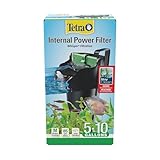
- INTERNAL POWER FILTER: Tetra Whisper Internal Power Filter for 5- to 10-gallon aquariums uses medium Whisper BioBag filter cartridges that are easy to change.
- QUIET 85 GPH MOTOR: The internal pump efficiently filters up to 85 gallons per hour.
- POWERFUL FILTRATION: Water flows through the cartridge floss, trapping debris and fish waste, while Ultra-activated carbon helps remove odor and discoloration.
- SPACE-SAVING DESIGN: Your aquarium can be 1” from the wall with the internal filter designed to clip directly on your aquarium wall and be hidden by décor.
- EASILY ADJUSTABLE: Adjustable clip allows for a variety of setups to easily adjust to high or low water levels.
Experimental, computational, and robotic research supports the possibility of meaningful energy savings in particular arrangements. Collective movement may also help fish cope with turbulent water by reducing exposure to disruptive eddies.
The qualification is important: schooling does not automatically save energy for every fish. The benefit depends on spacing, relative position, swimming speed, body movement, gait, school geometry, and water conditions. A position that helps a trailing fish may impose a cost on another fish, such as one at the front of the group. Hydrodynamic advantages are therefore conditional, not a universal property of every school.
4. Finding food and sharing information
Groups can improve the chance that at least one individual discovers food or a productive feeding area. Fish may also gain information from the direction in which other group members are moving. This can help a group travel toward resources or respond to changing conditions.
Grouping also creates competition. Many fish feeding in the same area may have to share or compete for the available food. Whether a school improves feeding success depends on the species, food distribution, group size, and the trade-off between information sharing and competition.
5. Navigation and migration
Coordinated movement can help fish maintain a common route during local travel or migration. Staying with a group may reduce the chance that an individual becomes separated and may allow fish to respond collectively to landmarks, currents, food locations, or habitat changes.
6. Mating and social benefits
Fish may also aggregate because proximity improves access to mates, spawning sites, or social information. These functions are not always visible in a synchronized formation, and they are not the single explanation for schooling. Schooling is polyfunctional: the same group behavior may provide different benefits at different times, life stages, and locations.
What does a fish school look like?
There is no single ideal school shape. A school may be:
Do these 3 things before closing this tab:
1Repair Windows errors before they cause bigger problems2Fix the driver behind crashes, sound loss and screen glitches3Clear out junk files and repair common Windows errors- elongated and relatively spread out while traveling;
- compact and dense during a predator attack;
- vertically staggered in three-dimensional water space;
- loosely aligned while feeding;
- circular or milling when the group is holding position; or
- constantly changing shape as fish accelerate, turn, split, and reunite.
These shapes reflect competing needs. A compact formation may improve monitoring and make individual targeting more difficult, while a more open arrangement may provide room to maneuver or reduce interference between swimmers. Feeding, migration, predator presence, current speed, visibility, and the need to turn quickly can all change the preferred arrangement.
Rank #4

- Powerful Pump: 300 GPH water pump effectively filters 55-150 gallons; ideal for large aquariums, turtle tanks, and ponds.
- Enhanced Aeration: Equipped with an adjustable valve to increase oxygen levels, promoting healthier, more active fish and turtles.
- Double Deep Filtration: Dual-stage black biochemical sponge removes odors and impurities; keeps water clear and fresh.
- Dynamic Water Flow: Boosts wave size and surface movement; improves circulation for a healthier aquatic environment.
- Adjustable Body: The aquarium filter features a detachable design. For tanks under 15 inches tall, you can lay the filter flat or remove the lower half of the filter sponge for a better fit.
Fish often associate with others of a similar size. Similar-sized fish may have more compatible swimming speeds and body movements, making coordination easier. This is a tendency rather than a universal rule.
What schooling means for aquarium fish
Seeing aquarium fish remain near one another does not necessarily mean they are schooling. If they are socially grouped but moving in different directions and at different speeds, the more precise term is shoaling.
Many aquarium fish move between the two states. They may shoal loosely under ordinary conditions, then become polarized and swim together when startled, exposed to a perceived predator, or affected by a change in light or water movement. Once the stimulus passes, they may relax into a less synchronized group.
Free tools Windows power users keep installed
One-click scans. No signup required.
Do not assume that every species sold as a “schooling fish” must maintain a tight, synchronized formation all day. What you observe depends on:
- species and individual temperament;
- the number of compatible fish in the group;
- tank length and three-dimensional swimming space;
- lighting and water clarity;
- cover, plants, and open areas;
- water flow and filtration patterns;
- stress and acclimation; and
- larger or predatory tank mates.
There is no single minimum group size that applies to every schooling or shoaling species. Aquarium requirements should be based on the particular species’ social behavior, adult size, swimming needs, and care guidance rather than on a universal number.
If you want broader scientific context beyond this explanation, a fish behavior book can provide background on cognition, sensory systems, social behavior, and collective movement. The relevant references are broader fish-behavior works rather than books devoted exclusively to schooling.
Independent reader supportYour contribution helps us test, update, and keep practical guides available for everyone.What scientists still do not know
Researchers do not have one quantitative definition of schooling that works equally well for every species and situation. Important open questions include:
- how fish combine visual, lateral-line, and hydrodynamic information;
- how individual personality, experience, age, and sensory differences affect group movement;
- which positions in a school actually reduce swimming costs;
- how turbulence changes the costs and benefits of formation; and
- how observations from laboratory groups scale to the much larger schools found in nature.
Modern studies increasingly measure fish positions and movement in three dimensions rather than treating a school as a flat pattern viewed from above. This matters because vertical spacing, depth, flow, and the movements of fish behind and beside one another can change both coordination and hydrodynamic effects.
Best Value

- WITH ROTATING BIO-WHEEL: Patented Bio-Wheel technology provides excellent wet/dry biological filtration.
- MULTI-STAGE FILTRATION: Delivers mechanical, chemical and biological aquarium filtration to maintain a clean aquatic environment.
- MARINELAND FILTRATION PRODUCTS: Count on Marineland brand for the most reliable, technically advanced aquariums and accessories on the market.
- COMPATIBILITY: Use with Marineland Rite-Size Filter Cartridges (see individual filter for sizing recommendations).
- FIVE SIZES: Available in 75 GPH, 100 GPH, 150 GPH, 200 GPH and 350 GPH sizes.
The simple answer
Fish school because coordinated group living can offer several possible advantages, including better predator detection, reduced individual targeting risk, faster escape responses, improved travel, information about food and habitat, and—under some conditions—more efficient swimming. A school forms without a leader: each fish avoids collisions, aligns with nearby fish, and stays connected to the group.
Schooling is not a permanent formation or a one-purpose behavior. Fish can move between loose shoaling and synchronized schooling as their environment and priorities change.
Frequently Asked Questions
Do fish schools have a leader?
No. A school usually has no central leader. Each fish responds to nearby individuals by avoiding collisions, matching direction and speed, and staying close enough to the group. These local responses produce coordinated turns and movement.
Are schooling and shoaling the same thing?
Not necessarily. Shoaling means fish remain together, while schooling usually means they are also aligned and moving in a more synchronized direction. Fish can shift between shoaling and schooling depending on light, danger, feeding, water movement, and other conditions.
Does schooling protect fish from predators?
Often, but not always. Grouping can dilute the chance that one fish is selected, confuse a predator, and spread escape information quickly. Some predators can still exploit schools, and a large group may also be conspicuous.
Do fish save energy by swimming in schools?
Some formations and positions can reduce swimming effort by taking advantage of nearby water flow. The benefit depends on spacing, position, speed, body movement, turbulence, and school shape, so schooling does not save energy equally for every fish.
How many fish are needed to make a school in an aquarium?
No universal number applies to all fish. Species, adult size, tank dimensions, cover, lighting, water movement, stress, and tank mates all affect whether aquarium fish shoal or school. Use care requirements for the specific species rather than a general group-size rule.
The Bottom Line
Bottom line: Fish schooling is synchronized, aligned group swimming produced by many fish responding to nearby neighbors. It can help with safety, information sharing, travel, feeding, social activity, and sometimes swimming efficiency—but the exact behavior and benefit depend on the species and circumstances.
Quick Recap
Product prices and availability are accurate as of the date/time indicated and are subject to change. Any price and availability information displayed on Amazon at the time of purchase will apply.




