Woods Hole Oceanographic Institution (WHOI) says researchers have identified what may be the earliest preserved whale recording: a humpback whale singing near Bermuda on March 7, 1949. Found on a fragile plastic dictation disc in WHOI’s archives, it preserves more than a whale’s voice—it also captures a rare sample of the ocean’s soundscape in the late 1940s. Scientists hope to compare it with later and modern recordings, but one recording cannot prove that whale song has changed or identify what caused any change.
What is the 1949 whale recording?
The recording is a humpback whale vocalization captured during acoustic experiments aboard the research vessel Atlantis near Bermuda on March 7, 1949. WHOI describes it cautiously as potentially the earliest preserved whale recording, not as a definitive record of the first time anyone ever recorded a whale.
| # | Preview | Product | Price | |
|---|---|---|---|---|
| 1 |

|
Whale Songs/Recordings From The Deep | $16.46 | Buy on Amazon |
| 2 |

|
Rapture of the Deep-Humpback Whale Singing | $16.75 | Buy on Amazon |
| 3 |
|
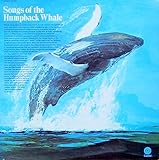
Songs Of The Humpback Whale | $59.95 | Buy on Amazon |
| 4 |
|
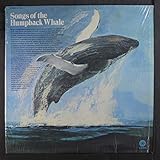
Songs of the Humpback Whale | $140.00 | Buy on Amazon |
| 5 |

|
Whale Sounds With Music: Sounds of Whales, Whale Songs, & Ocean Waves (For Deep Sleep, Meditation, &... | $9.49 | Buy on Amazon |
The scientists were working with the U.S. Office of Naval Research on acoustic experiments that included sonar tests. They preserved sounds they did not understand at the time. Decades later, the sound surfaced as WHOI digitized material from its archives. WHOI announced the discovery on February 10, 2026, and is working with Ocean Alliance to place the audio in historical and acoustic context. WHOI’s announcement
How was the sound recorded and preserved?
The audio was etched onto a thin plastic disc by a Gray Audograph, an office dictation device—not recorded on magnetic tape. WHOI says the underwater recording system was likely its early experimental “suitcase” system. Mass Productions digitized the disc as part of the archival work.
The Tool Desk
Outbyte PC Repair FREEClear out junk files and repair common Windows errorsFree Scan →Outbyte Driver Updater FREEScan for outdated or missing drivers - takes under a minuteDriver Scan →#1 Best Overall
The survival of the disc matters because recordings from this period are rare. WHOI archivist Ashley Jester said the discs survived because of their material and careful preservation. WHOI reports that the National Recording Preservation Foundation awarded its archives $10,000 in 2026 to digitize the Audograph collection and support long-term preservation.
Why could this recording matter to ocean science?
A historical comparison point
Researchers can compare the 1949 vocalization with later recordings and contemporary observations to investigate how humpback sounds may have changed over time. Marine bioacoustician Laela Sayigh of WHOI noted that data from this period “simply don’t exist in most cases.” That scarcity makes the recording a potentially valuable comparison point, although scientists will need more recordings and careful analysis to draw conclusions.
Rank #2
A snapshot of the ocean’s soundscape
The disc also captured sounds around the whale, giving researchers a rare sample of underwater acoustic conditions in the late 1940s. WHOI’s Sayigh has said the ocean is much louder now, with more kinds of sound sources. Comparisons could help scientists study how human activity, including shipping and other noise, has altered the acoustic environment in which whales live.
Peter Tyack, a WHOI marine bioacoustician and emeritus research scholar, has described underwater sound recordings as a way to detect whales that are difficult to see and to understand how human-made sound affects the environment. Modern monitoring may use passive acoustic buoys, Slocum gliders, and autonomous hydrophones. WHOI’s Robots4Whales program, for example, uses ocean robots fitted with Digital Acoustic Monitoring Instruments (DMON) to detect whale calls in near-real time. These ongoing observations can contribute to comparisons, but they are not equivalent to the single historical disc.
Rank #3
What the recording does—and does not—show
- It does: preserve a humpback vocalization identified by WHOI as recorded near Bermuda on March 7, 1949, alongside sounds from the surrounding ocean.
- It may: provide a baseline for future study of whale sounds and changes in ocean noise, when considered alongside other historical and modern recordings.
- It does not: by itself establish that humpback song has changed, show the direction or scale of any change, or prove that shipping noise caused a particular change in whale communication.
Those limits are important: a baseline is a starting point for comparison, not a conclusion. Scientists need comparable recordings and analysis before they can attribute changes to specific causes.
Independent reader supportYour contribution helps us test, update, and keep practical guides available for everyone.How does it fit into whale-song history?
Roger Payne’s album Songs of the Humpback Whale, released in 1970, helped bring whale song to public attention. It is a later milestone and should not be confused with the newly identified 1949 recording. The archival disc predates the album by more than two decades. The Associated Press report carried by ScienceAlert notes the album’s 1970 release.
Rank #4
- CAP ST 620
WHOI is working with Ocean Alliance, whose archive contains more than 2,400 whale and ocean sound recordings collected from the 1950s through the 1990s. That collection offers later historical material for context; it is distinct from the 1949 Audograph disc.
Quick Recap
Product prices and availability are accurate as of the date/time indicated and are subject to change. Any price and availability information displayed on Amazon at the time of purchase will apply.
Quick wins for a faster PC:
Clear out junk files and repair common Windows errorsFree Scan →Scan for outdated or missing drivers - takes under a minuteDriver Scan →Repair Windows errors before they cause bigger problemsFix Now →



