
Quick wins for a faster PC:
Clear out junk files and repair common Windows errorsFree Scan →Scan for outdated or missing drivers - takes under a minuteDriver Scan →Some links on this page are affiliate links: if you buy through them we may earn a commission, at no extra cost to you.
For a new cat, have food and water dishes, appropriate food, a litter box and litter, a carrier, a stable scratching post or pad, interactive toys, grooming tools, a safety collar with an ID tag, and a quiet place to sleep ready before arrival. Just as important, prepare a small, calm room and remove household hazards. The right choices depend on the cat’s age, size, coat, health, mobility and existing habits, so ask the shelter or previous caregiver what the cat already uses and confirm diet and medical care with a veterinarian.
The complete new-cat supply checklist
These are the basic categories named in the ASPCA’s General Cat Care guidance. Buy for the individual cat rather than assuming that the most expensive or elaborate option is best.
As an Amazon Associate I earn from qualifying purchases.
What’s actually slowing this PC down?
Pick the symptom - the matching free tool is one click away.
| Supply | What it is for | Selection and setup points |
|---|---|---|
| Cat food | Daily nutrition | Use a balanced food appropriate to the cat’s life stage. Diet and portion needs also depend on activity level and health. |
| Food dish | Clean, consistent feeding | Choose a stable dish that is easy to wash and suits the cat’s size. |
| Water bowl | Constant access to drinking water | Keep fresh, clean water available and wash and refill the bowl every day. |
| Litter box and litter | Toileting | Place the box somewhere quiet and easy to reach. The cat’s acceptance of a particular litter matters more than a fashionable design. |
| Cat carrier | Safe transport home and to veterinary appointments | Select a carrier that accommodates the cat’s size and can be handled securely. No single model is established as best by the ASPCA guidance. |
| Scratching post or pad | Scratching and stretching | A sturdy post at least three feet high, with a rough surface such as sisal, burlap or tree bark, is the ASPCA’s general recommendation. Some cats also use pads. |
| Interactive toys | Play and engagement | Start with a few toys that let you play with the cat and observe which types it accepts. |
| Brush and comb | Coat care and shedding control | Tool choice should follow the cat’s coat. Regular brushing or combing helps keep the coat clean and can reduce shedding and hairballs. |
| Safety collar and ID tag | Identification if the cat gets out | Use a safety cat collar with an ID tag. Fit it to the cat rather than buying a one-size assumption. |
| Bed, box, blanket or towel | A warm, quiet resting place | A dedicated bed is optional; a box with a warm blanket or towel is also an ASPCA-supported choice. |
Prepare a quiet, safe room before the cat arrives
A new home can be overwhelming. Set up one quiet room where the cat can decompress before exploring the rest of the house. Put the carrier, bed or blanket, food and water, litter box and a scratching option in the room, leaving enough distance between feeding and toileting areas for a comfortable routine.
Remove common household hazards
- Secure electrical cords and other items a cat might chew.
- Check windows and doors so they close securely and cannot be pushed open accidentally.
- Remove small, chewable objects from the floor and low surfaces.
- Research plants before bringing them into the cat’s space; some household plants can be poisonous.
- Use gates if you need to restrict access to stairs, rooms or other areas while the cat settles in.
Keep the room calm and allow the cat to choose when to leave its carrier or hiding place. A safe base is part of the preparation, not an optional extra to buy later.
Popular on Amazon

- Pet Carrier: 17.5” L x 11” W x 11” H, Recommended max load of 16 lbs cats small dogs. Please do not choose your carrier based on weight--please reference your pet's length and height in selecting a pet carrier size.
- Fits for under-seat dimensions of most airlines. Every airline has a specific set of rules and regulations, please contact with airline before flying with your cats small dogs.
- Mesh windows for ventilation, top and side entry with locking zippers for safety. Carrying handles, adjustable shoulder strap which can also be used as seatbelt, and back strap can fasten the pet carrier to your luggage.
- Pet carrier comes with a removable base insert, which creates a solid surface for your pet to stand on, along with a removable & hand washable cozy fleece pet bed, which offers a cozy sleeping space for your traveling cats small dogs.
- "Toys for pets, of textile materials". Mostly used as a Toy of Fabric Pet Home for pets playing and relaxing.
Food and water: choose for the individual cat
Find out what the cat is already eating
Ask the shelter or previous caregiver for the current food, feeding routine and any known sensitivities. Keeping the initial routine familiar can make the first days easier. Before changing the diet, ask a veterinarian for advice. The ASPCA states that a veterinarian can assess a new cat or kitten and determine the best diet.
Match food to life stage, activity and health
Food should be balanced for the cat’s life stage. Kittens, adults and older cats may not have the same nutritional needs, and activity level and health also affect what and how much a cat should eat. A veterinarian can tailor the choice and amount instead of relying on a generic label or a neighbor’s recommendation.
Make water maintenance routine
Provide fresh, clean water at all times. Wash and refill water bowls daily. If the cat ignores one location, place the bowl where the cat naturally spends time while keeping it separate from the litter box and easy to clean.
Keep treats within the diet
ASPCA guidance limits treats to no more than 5–10% of a cat’s diet. Treats should not displace balanced food or be used to make an unsuitable diet seem acceptable.
Litter-box setup that encourages use
Place the box for access and privacy
Choose a quiet, accessible location. A box hidden behind a closed door, blocked by furniture or placed where household traffic startles the cat may be difficult to use. In a multi-level home, ASPCA general-care guidance recommends a box on each floor so the cat can reach one without a long trip.
Also popular on Amazon
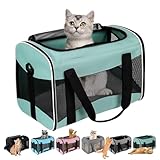
- [PRODUCT DIMENSIONS] Pet travel carrier size : 17x11x11 inches, recommended up to 15 lb pets, it is suitable for large, medium cats and small dogs. Please don't choose your airline cat carrying case based on weight, please refer to your pet's length and height when choosing a pet carrier size.
- [AIRLINE APPROVED] This cat carrier is designed with airline approved, it can fit comfortably under most flight seats, we can take our pets wherever we want. Dog travel carrier offers two attachment loop handles that can be used as a dual harness or as a luggage strap for balanced carry and secure transport.
- [EXCELLENT MATERIAL] Collapsible cat carrier is made of polyester fabric, supported by a steel ring, washable, wear-resistant and durable. The three sides and the top of this pet carrier are nylon mesh, scratch-resistant and not easy to damage, it can not only check your pet in real time, but also ensure enough air circulation.
- [SAFE AND COMFORTABLE] Dog travel bag has metal zippers on the top and side entrances, durable and not easy to deform, it allows your pets to enter and exit easily. The cat carrying case is equipped with an anti-escape safety buckle, which can effectively prevent pets from accidentally falling. It is suitable for car rides and vet rides.
- [PORTABLE AND FOLDABLE] Pet travel carrier comes with a detachable and hand washable wool pet bed, it can provide a comfortable sleeping space for your traveling pet. The cat travel case comes with an adjustable shoulder strap and handle for easy portability. When not in use, you can fold it up for storage.
Understand the box-count advice
For ordinary preparation, begin with a suitable box in the cat’s safe room and add locations based on the home and the cat’s response. ASPCA troubleshooting advice for litter-box problems recommends one box per cat plus one extra. That is problem-solving guidance, not a universal requirement that every new cat owner must purchase immediately.
Keep the box clean without harsh scents
Scoop solid waste at least once a day. Wash and refresh the box regularly, and avoid strongly scented cleaners that can make the area unpleasant to the cat. Use the cat’s response as feedback: a sudden refusal to use a previously accepted box warrants attention rather than repeated changes to the surrounding room.
If accidents begin
First check access, cleanliness and location. Add a box or move one to a quieter, easier-to-reach place if needed. If the problem continues, use the one-per-cat-plus-one troubleshooting arrangement and contact a veterinarian, especially when elimination behavior changes abruptly.
Scratching, play and enrichment
Choose a scratching surface that will not wobble
The ASPCA recommends a sturdy scratching post at least three feet high, stable enough not to wobble, and covered with a rough material such as sisal, burlap or tree bark. Some cats prefer a horizontal scratching pad. If you do not know the cat’s preference, offer one vertical option and one pad, then keep the option the cat actually uses.
Provide interactive toys
Interactive toys are on the core care checklist. Start with a small selection and use them to learn whether the cat prefers chasing, batting or another style of play. Rotate toys rather than filling the room with items the cat ignores, and inspect toys regularly so damaged pieces do not become hazards.
Recommended Free Tools
Also popular on Amazon

- High Quality Design:Sturdy steel cage structure and wooden support board maintain good spatial stability and shape. Breathable mesh windows on four sides,which can ensure good air circulation and views,make pets have a comfortable and safe travel.It can also be easy for you to check on your pets.There is a front pocket to store pet toys,treats,etc.
- Dimension and Weight:Made of durable tear-resistant fabric.Four easy entrances for pets. Dimensions: 17 inch x 11 inch x 11 inch (L*W*H), suitable for pets up to 16 lbs.Please don't choose your carrier based on weight only,consider your pet's length and height when choosing a carrier.
- Airline Approved & Safty:Can be placed under the seats of most airplanes(Four non-slip feet on the bottom to prevent movement), and comfortably on the seat next to you in a car or bus.It has a adjustable shoulder strap.Can also be fastened to the car seat with a safety belt or shoulder strap to keep your pet safe.
- Easy to Clean :You can clean the stains and dirt on the surface with a soft cloth.Soft mat inside the pet carrier is removable and washable.You can take it out and wash it easily to solve all stains.
- Easy to Collapsible & Lightweight:When not in use,fold it into a flat,space saving and easy to store.Only 2.2lbs,it's easier to carry around.It can also used as a toy of pet house,allowing pets to play in a safe space to relax and rest.
Grooming supplies by coat and tolerance
A brush and comb cover the basic grooming need, but the right combination depends on the coat. Regular brushing or combing helps keep the coat clean, reduces loose hair and can reduce hairballs. Begin gently and keep sessions short enough that the cat remains comfortable. If the cat resists a tool, do not force a prolonged session; ask a veterinary professional which approach suits the coat and the cat’s health.
Transport, identification and rest
Have the carrier ready before the first trip
A carrier is essential for bringing the cat home and for veterinary care. Make sure it is large enough for the cat to fit comfortably and stable enough to carry without tipping. Put it in the safe room before arrival so it is part of the familiar environment rather than appearing only when the cat must leave.
Use a safety collar with an ID tag
The ASPCA checklist includes a safety cat collar and ID tag. Fit the collar correctly and add current contact information. Identification complements, but does not replace, secure doors and windows and careful supervision during the settling-in period.
Offer a warm place to rest
A cat bed is not mandatory. The ASPCA also recommends a box with a warm blanket or towel. Offer the resting choice in a quiet area and let the cat decide whether to sleep there or use another safe surface.
Outdated Drivers Are Slowing You Down
One free scan finds every outdated or missing driver and matches the right update for your exact hardware.Free scan · exact hardware matchPC Slower Than It Used to Be?
A free scan shows the junk files, broken settings and background clutter dragging Windows down - then fixes them in one click.Free scan · Windows 10 & 11Health and age-specific preparation
Arrange veterinary care and ask about vaccines, diet and other care based on the cat’s age and health. Bring any records supplied by the shelter or previous caregiver, and tell the veterinarian what the cat has been eating and how it is using the litter box.
Also popular on Amazon
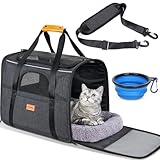
- 【 Spacious & Comfortable Cat Carrier 】The large cat carrier provides ample space for your feline friend to move, turn, and stretch during travel. Measuring 17.3 x 12.2 x 13.4 inches, it is wider and taller than most cat carriers, ensuring your pet feels comfortable and at ease while on the go.
- 【Balanced Mesh Design】Unlike other cat carrier hard, our cat carrier soft strikes the perfect balance with 40% mesh surface area. This ensures your pet can observe the surroundings and breathe easily while feeling safe and secure at the same time. The cat carrier large is suitable for pets in all kinds of situations.
- 【Built-in Dual-Sided Cushion】The detachable pad offers two distinct comforts: a cool side for summer and a super-soft, warm side for winter. You can easily flip it to match the season, providing the perfect temperature for your pet in any weather.
- 【Includes Foldable Bowl】Designed for on-the-go use, our foldable bowl carries 410g of food or 20oz of water. After use, simply collapse it and attach it directly to your pet's collar or leash, perfect for keeping your pet fueled and hydrated anywhere.
- 【Safe & Durable】Safety is our top priority, and the pet carrier for cat is equipped with a secure buckle to prevent your pet from escaping. The cat carrier soft is made of reinforced snow silk fabric and hard mesh material, ensuring durability and preventing any tearing during long-distance travel.
Kittens and smaller cats
Check that every item is appropriately sized and that the cat can reach food, water, litter and resting areas without difficulty. A veterinarian can explain the nutritional and preventive-care plan for a kitten.
Adult cats
Preserve familiar routines when possible, particularly the current food and litter, while you observe preferences. Adjust supplies if the cat’s size, activity or health makes a different setup more practical.
Older cats or cats with mobility limitations
Prioritize easy access, stable equipment and a short route between resting, feeding and toileting areas. Ask the veterinarian whether the cat’s health calls for any specific changes. Do not start medication or supplements without veterinary direction.
A practical setup sequence
- Before pickup: Choose a quiet room, secure cords, windows and doors, remove chewable hazards, check plants and install gates where needed.
- Set up the room: Put in the carrier, bed or box with a warm blanket, food dish, water bowl, litter box and scratching option.
- Buy the core supplies: Obtain the cat’s current food if possible, litter, interactive toys, brush and comb, and a safety collar with an ID tag.
- At arrival: Take the carrier into the prepared room, close the door and allow the cat to come out at its own pace.
- During the first days: Keep water fresh, wash the water bowl daily, scoop solid litter waste at least daily and monitor eating, drinking, elimination and comfort.
- After settling: Expand access gradually, add litter boxes on additional floors when appropriate and adjust scratching, grooming or feeding supplies according to the cat’s observed preferences.
- For health planning: Schedule veterinary care and discuss diet, vaccines and any age- or health-related needs.
Choices that deserve extra caution
- Food changes: Do not switch diets or set portions solely from a generic recommendation; involve a veterinarian.
- Medication: Never give medication without veterinary direction.
- Scratching equipment: Avoid posts that wobble or are too short for the cat to stretch; the ASPCA’s baseline is at least three feet high.
- Cleaning products: Avoid strongly scented cleaners around litter areas.
- Unsafe access: Do not assume a new cat will avoid an open window, unsecured door, cord or poisonous plant.
- Overbuying: The ASPCA guidance identifies categories and functional criteria, not a winning brand or model. Start with the essentials and adapt after learning what the cat accepts.
When a basic supply is not enough
Contact a veterinarian if the cat stops eating or drinking, develops a sudden litter-box change, or appears unwell. A supply checklist cannot diagnose illness. It can, however, make changes easier to notice because food, water, litter and daily routines are already organized.
The best new-cat setup is a safe room, dependable daily care and flexible choices. Begin with the core list, preserve familiar routines, and refine the setup according to the cat’s age, health, mobility and preferences.





Leave a Reply