
Do these 3 things before closing this tab:
1Fix the driver behind crashes, sound loss and screen glitches2Clear out junk files and repair common Windows errors3Scan for outdated or missing drivers - takes under a minuteSome links on this page are affiliate links: if you buy through them we may earn a commission, at no extra cost to you.
For a puppy’s first month, buy the basics that make eating, sleeping, toileting, identification, supervision and reward-based training safe: the food the puppy already eats, two bowls, a suitable resting area, identification and a leash, a few safe chews, treats and cleanup supplies. Add grooming tools, a carrier, potty pads or parasite prevention only when your puppy, home and veterinarian make them appropriate. Shopping is only half the preparation; puppy-proof reachable areas and arrange an early veterinary examination.
The first-month shopping list, in priority order
Use this list as a decision guide rather than a requirement to buy every item. A puppy in a small apartment may need different containment and transport equipment from one in a house with a fenced yard. The ASPCA, AKC and PetMD all emphasize adapting supplies to the dog and household.
As an Amazon Associate I earn from qualifying purchases.
Free tools Windows power users keep installed
One-click scans. No signup required.
| Priority | What to have | Why it matters | Household-dependent choices |
|---|---|---|---|
| Before arrival | Puppy food already being fed, food bowl, water bowl and fresh water | Prevents an abrupt diet change and gives the puppy dependable access to food and water | Food formulation may differ for large-breed growth or other individual needs |
| Before arrival | Correctly sized crate, or pen and gates, plus washable bedding | Creates a safe resting place and limits unsupervised access | A crate is not mandatory; layout, supervision and training style determine the setup |
| Before arrival | Adjustable collar, identification tag and leash | Supports safe handling and a way home if the puppy is lost | A harness may be more comfortable for some puppies or walking situations |
| Before arrival | Several puppy-appropriate chew toys and small training treats | Provides legal outlets for chewing and rewards early behaviors | Size, durability and chewing style determine which toys are safe |
| Before arrival | Poop bags, paper towels and an enzymatic cleaner | Makes routine toileting and accident cleanup manageable | Potty pads are optional and should match your toilet-training plan |
| Useful soon | Brush or comb and puppy-safe nail-care tools | Introduces handling before grooming becomes stressful | Coat type and your ability to perform home care affect what you need |
| Useful soon | Carrier | Can make transport safer, particularly for smaller puppies | Need depends on puppy size, vehicle use and local travel requirements |
| After veterinary advice | Flea and tick prevention | Prevention can be important, but products and eligibility are individual medical decisions | Do not select or dose a product from a generic checklist |
Food, bowls and a low-risk diet transition
Start with the puppy’s current food
Ask the breeder, rescue or previous caregiver for the exact food, feeding amount and schedule. Have that food at home before pickup. Keeping the first meals familiar reduces one avoidable change while the puppy is adapting to a new place. Provide fresh water at all times in a stable, easy-to-clean bowl.
Check that the food is complete for growth
PetMD advises choosing a food with a nutritional adequacy statement for growth and obtaining veterinary nutrition advice. Puppies have growth requirements that are not identical to adult dogs; some large-breed puppies need a formulation designed for large-breed growth. The label and the veterinarian, rather than marketing language alone, should guide the choice.
Popular on Amazon

- Cute and Essential Puppy Starter Kit: Our pink themed puppy essentials starter kit is beautifully designed to fulfil both functional needs and quaint aesthetics; The comprehensive package includes 1 felt storage basket, 12 chew toys, 1 training bag, 1 dog leash, 1 TPR finger brush with case, 2 stainless steel bowls, 1 soft cotton towel, 1 pink blanket, 1 pet pad and more, ideal for female dogs
- Properly Sized Accessories: our dog essentials for small dogs are mindfully sized to ensure your pup's comfort; The felt storage basket measures 14.17 x 9.84 x 9.06 inches, providing ample space for neatly organizing your puppy's tools and toys; For your dog's sanitary needs, we provide a 19.29 x 12.6 inches/ 49 x 32 cm pet pad; To keep your puppy warm and comfy, we include a 23.62 x 15.75 inches pink blanket and an 11.81 x 11.81 inches pink towel, making your puppy feel right at home
- Grooming Essentials and Interactive Toys: the dog essentials for puppies kit comes packed with 12 fun and engaging dog chew toys of varying materials, 6 double sided pet toothbrushes, a finger brush and a pet hair remover for grooming needs, and a bone shaped dog poop bag dispenser with 16 rolls of poop bags; This kit ensures your puppy's hygiene and dental health are taken care of while simultaneously providing an array of chew toys that will stimulate and entertain your pup
- Well Prepared Travel Pack: these puppy accessories for female dogs are more than just a home starter kit; It also doubles as your travel package with a convenient car seat belt for dogs, portable water dispenser, and lightweight yet durable training bag; With our pack, you need not fret about forgetting any of your puppy's essentials, making your travel experience more pleasant and worry free
- Ideal for Training and Adaptability: assisting your new puppy to get accustomed to its surroundings will be easier with our puppy starter kit for small dogs; The kit includes items like order bell for training purposes and an assortment of chew toys to help reduce anxiety levels; These features make the transition more manageable while fostering an interactive bond between you and your pup; Also included is a medium size dog leash, ideal for training sessions across various sports
If you plan to change food, ask the veterinarian how to do it and how much to feed. Efrem Hunter, DVM, MBA, quoted by PetMD, recommends nutritional counseling so a dog’s specific calorie and other nutritional needs are met. Do not assume a feeding chart fits every puppy’s age, size, activity or health status.
Choose practical bowls
- Use one bowl for food and one for water, sized so the puppy can reach without climbing into it.
- Choose a stable, washable material and keep both bowls clean.
- Put water where the puppy can reach it in the safe area, while keeping the resting space dry and comfortable.
Set up rest and safe containment
Size a crate correctly if you use one
The AKC stresses selecting the correct crate size. The puppy should be able to stand up, turn around and lie down comfortably, but an excessively large crate can make it easier to use one end as a toilet. A divider can allow the space to grow with the puppy when the crate design supports it.
Recommended Free Tools
A crate is a management and rest tool, not a substitute for exercise, interaction or toilet breaks. Introduce it gradually with the door open at first, comfortable bedding and rewards. Never use it as punishment.
Consider a pen and gates instead, or use them together
A pen can provide a larger safe zone for a puppy who needs room to move, and gates can block stairs, kitchens or rooms that have not been puppy-proofed. A crate inside a pen is one possible combination; a gated room may work better in another home. Base the choice on floor plan, how long the puppy may be unsupervised, and your training approach.
Prepare washable bedding and a quiet location
The ASPCA recommends a quiet resting spot with clean bedding. Have at least one washable bed or blanket available so an accident or chewing does not leave the puppy without a dry place to rest. Keep the area away from hazards, heavy foot traffic and direct drafts, while still allowing the puppy to be part of normal household life.
Also popular on Amazon

- Cute and Essential Puppy Kit: Our black themed puppy essentials kit is beautifully designed to fulfil both functional needs and quaint aesthetics; The comprehensive package includes 1 felt storage basket, 12 chew toys, 1 training bag, 1 dog leash, 1 TPR finger brush with case, 2 stainless steel bowls, 1 soft cotton towel, 1 black blanket, 1 pet pad and more, ideal for male dogs
- Properly Sized Accessories: our dog essentials for small dogs are mindfully sized to ensure your pup's comfort; The felt storage basket measures 14.17 x 9.84 x 9.06 inches, providing ample space for neatly organizing your puppy's tools and toys; For your dog's sanitary needs, we provide a 19.29 x 12.6 inches/ 49 x 32 cm pet pad; To keep your puppy warm and comfy, we include a 23.62 x 15.75 inches black blanket and an 11.81 x 11.81 inches black towel
- Grooming Essentials: the dog essentials for puppies kit comes packed with 12 fun and engaging chew toys of varying materials, 6 double sided pet toothbrushes, a finger brush and a pet hair remover for grooming needs, and a bone shaped dog poop dispenser with 16 rolls of poop bags; This kit ensures your puppy's hygiene and dental health are taken care of while simultaneously providing an array of chew toys that will stimulate and entertain your pup
- Well Prepared Travel Pack: these puppy accessories for male dogs are more than just a home kit; It also doubles as your travel package with a convenient car seat belt for dogs, portable water dispenser, and lightweight yet durable training bag; With our pack, you need not fret about forgetting any of your puppy's essentials, making your travel experience more pleasant and worry free
- Ideal for Training and Adaptability: assisting your new puppy to get accustomed to its surroundings will be easier with our puppy kit for small dogs; The kit includes items like order bell for training purposes and an assortment of chew toys to help reduce anxiety levels; These features make the transition more manageable while fostering an interactive bond between you and your pup; Also included is a medium size dog leash, ideal for training across various sports
Walking equipment and identification
Use a collar and visible identification
Buy an adjustable collar that fits securely without restricting breathing or swallowing. Attach an identification tag with current contact details, and check the fit frequently as the puppy grows. The ASPCA notes that a license, ID tag and microchip or tattoo can improve the chance of a lost dog being returned. Follow your local licensing rules; requirements differ by location.
What’s actually slowing this PC down?
Pick the symptom - the matching free tool is one click away.
Add a leash and decide whether a harness helps
A lightweight leash is useful for controlled movement, toilet trips and early handling practice. A harness may suit some puppies, particularly when the walking setup or the puppy’s comfort makes pressure on the neck undesirable. Fit either option carefully and supervise the puppy while learning to wear it. Even if a harness is used for walks, retain a collar and identification plan.
Check microchip records
Ask for existing microchip information and transfer or register it according to the registry’s process. A microchip is an additional identification layer, not a replacement for a visible tag or local license. Confirm that your phone number and address remain current.
Toys, treats and the first training routine
Buy a small, rotating selection of safe chews
Start with a few toys made for the puppy’s size and age instead of filling the house with untested items. The AKC warns against toys small enough for the puppy to swallow. Inspect every toy, remove damaged pieces and supervise chewing, especially during the first uses. A toy that is safe for one puppy may be unsuitable for another’s bite strength or play style.
Use treats as training equipment, not unlimited snacks
Choose small, soft treats that can be delivered quickly during name recognition, calm handling, coming when called and toilet-training rewards. PetMD states that treats should provide no more than 10% of daily calories; treat calories count alongside meals. You can also use part of the puppy’s regular food when appropriate.
Quick wins for a faster PC:
Fix the driver behind crashes, sound loss and screen glitchesFind Drivers →Clear out junk files and repair common Windows errorsFree Scan →Also popular on Amazon

- Complete Puppy Starter Kit: This 75-piece puppy starter kit is very comprehensive, eliminating the need for additional purchases. Our beautifully designed blue -themed puppy starter kit combines practicality and aesthetics. The kit includes a dog bed, blankets for both winter and summer, food storage containers, a toothbrush, various dog toys, a dog bowl, a leash, nail clippers, and everything else a puppy needs
- Properly Sized Accessories: all the dog supplies we offer for small dogs are carefully designed to ensure your little dog's comfort; The felt storage basket measures 14.17 x 9.84 x 9.06 inches, we offer a dog bed and a plush mat measuring 19.69 x 15.75 inches, a blue pad measuring 23.62 x 15.75 inches, a blue foot towel measuring 11.81 x 11.81 inches, and a bath towel measuring 16.91 x 12.6 inches, making your dog feel at home
- Essential Care and Interactive Toy Set for Puppies: this must-have set for young dogs includes 20 fun and durable chew toys of various materials, 8 double-sided pet toothbrushes, a finger brush, and a pet hair remover; It also meets care needs with a bone-shaped dog poop bag dispenser and comes with 20 rolls of poop bags; This set ensures your puppy stays clean and has healthy teeth while providing a variety of chew toys to stimulate and entertain your furry friend
- Well Prepared Travel Pack: these dog accessories for female dogs are not just a basic household toolkit for a family; They can also serve as your travel bag; It has a convenient car seat belt, a portable water dispenser, and a lightweight yet durable training bag; With our bag, you don't have to worry about forgetting any necessities for your dog during your trip, making your travel experience more enjoyable
- Ideal Training and Acclimation: our puppy starter kit helps your new puppy adjust to new surroundings more easily; This small dog tool kit includes a training bell and various chew toys to help relieve anxiety; These features make the transition easier and strengthen the bond between you and your puppy; The set also includes a medium-sized leash; The ideal training plan includes a variety of exercises
Reward promptly after the behavior you want. PetMD quotes trainer Chrissy Joy describing the process as rewarding a puppy soon after it offers a new behavior. Keep sessions brief, positive and frequent rather than demanding long concentration from a newly arrived puppy.
Decide whether a class is useful
A suitable puppy class or training resource can provide structure and coaching as the puppy settles in. Choose a program that uses reward-based methods and fits your veterinarian’s advice about safe participation and exposure. Training support is useful, but it is not a physical supply that every household must purchase immediately.
Cleanup and toilet-training supplies
Prepare for frequent, ordinary accidents
- Keep poop bags near the exit and in the walking kit.
- Store paper towels where an accident is most likely to happen.
- Use an enzymatic cleaner on appropriate surfaces so odor does not encourage repeat soiling.
- Keep a spare washable blanket or bed available.
Choose pads only if they fit your plan
Potty pads can be useful when outdoor access is limited, weather or mobility makes trips difficult, or a household has deliberately chosen an indoor toilet routine. They are not required for every puppy. Decide whether you want the puppy’s long-term toilet location to be indoors, outdoors or a carefully managed combination, then make the supplies and supervision consistent.
Grooming, transport and medical items: buy selectively
Introduce grooming tools gradually
A brush or comb suited to the coat and puppy-safe nail-care tools are useful soon, even if very little grooming is needed at first. Touch paws, ears and the body gently, pair handling with rewards, and stop before the puppy becomes distressed. The AKC recommends early familiarity with brushing and nail trims; the ASPCA’s broader dog checklist also includes a brush, comb and flea comb.
Use a carrier when transport calls for one
The ASPCA includes a carrier for smaller dogs. It may be unnecessary for a larger puppy who travels safely in another approved setup, but it can simplify veterinary visits and other transport. Select a size that allows comfortable posture and secure ventilation.
Also popular on Amazon

- Complete Puppy Starter Kit: This 72-piece puppy starter kit is very comprehensive, eliminating the need for additional purchases. Our beautifully designed pink-themed puppy starter kit combines practicality and aesthetics. The kit includes a dog bed, blankets for both winter and summer, food storage containers, a toothbrush, various dog toys, a dog bowl, a leash, nail clippers, and everything else a puppy needs
- Properly Sized Accessories: all the dog supplies we offer for small dogs are carefully designed to ensure your little dog's comfort; The felt storage basket measures 14.17 x 9.84 x 9.06 inches, we offer a dog bed and a plush mat measuring 19.69 x 15.75 inches, a pink ice pad measuring 23.62 x 15.75 inches, a pink foot towel measuring 11.81 x 11.81 inches, and a bath towel measuring 16.91 x 12.6 inches, making your dog feel at home
- Essential Care and Interactive Toy Set for Puppies: this must-have set for young dogs includes 20 fun and durable chew toys of various materials, 8 double-sided pet toothbrushes, a finger brush, and a pet hair remover; It also meets care needs with a bone-shaped dog poop bag dispenser and comes with 20 rolls of poop bags; This set ensures your puppy stays clean and has healthy teeth while providing a variety of chew toys to stimulate and entertain your furry friend
- Well Prepared Travel Pack: these dog accessories for female dogs are not just a basic household toolkit for a family; They can also serve as your travel bag; It has a convenient car seat belt, a portable water dispenser, and a lightweight yet durable training bag; With our bag, you don't have to worry about forgetting any necessities for your dog during your trip, making your travel experience more enjoyable
- Ideal Training and Acclimation: our puppy starter kit helps your new puppy adjust to new surroundings more easily; This small dog tool kit includes a training bell and various chew toys to help relieve anxiety; These features make the transition easier and strengthen the bond between you and your puppy; The set also includes a medium-sized leash; The ideal training plan includes a variety of exercises
Leave parasite products to the veterinarian
Flea and tick prevention depends on age, weight, health, geography, exposure and product labeling. The ASPCA says to discuss options with a veterinarian, and its guidance warns against giving medication that has not been prescribed by a veterinarian. Bring the puppy’s records to the first appointment and do not combine products without professional direction.
Puppy-proof the home before pickup
Shopping cannot make an unsafe room safe. Inspect the puppy’s reachable area from floor level, then restrict access until you can supervise reliably.
- Secure electrical cords, chargers, small objects, medicines, cleaning products and chemicals.
- Move toxic foods, plants and trash behind closed doors or high barriers.
- Block stairs, balconies, fireplaces, pools and gaps behind appliances where a puppy could fall or become trapped.
- Remove shoes, children’s toys and other chewable items from the floor.
- Check fences, gates and doors for openings and confirm that windows and screens are secure.
- Keep the crate, pen or gated area free of strings, loose fabric and anything the puppy could ingest.
The ASPCA’s home-preparation guidance and the AKC both recommend checking the home from the puppy’s perspective and limiting access to unsafe areas. A leash, gate or pen is useful management while you finish this work.
Outdated Drivers Are Slowing You Down
One free scan finds every outdated or missing driver and matches the right update for your exact hardware.Free scan · exact hardware matchWindows Errors? Fix Them Before They Spread
Repair common Windows errors and clear accumulated junk for a smoother, more stable PC - no reinstall needed.Free scan · no reinstallWhat to do during the first month
Before pickup
- Ask for feeding instructions, medical records, vaccination and deworming history, microchip details and any current medications.
- Set up the food and water station, resting area and containment barriers.
- Attach identification, prepare a leash and organize cleanup supplies.
- Remove hazards from the rooms the puppy will enter and decide where toileting will happen.
Arrival day and the first few days
- Take the puppy directly to the chosen toilet area, then show the water, resting and safe-play locations.
- Keep exploration limited and supervised rather than giving access to the entire home.
- Offer the familiar food on the established schedule and allow quiet rest.
- Introduce household members, handling and toys calmly; avoid overwhelming greetings and a crowded itinerary.
The first week: schedule a veterinary examination
Arrange an early examination and bring all records. PetMD recommends a prompt visit, while PetSafe’s first-month timeline places it within the first week; the exact timing may depend on the breeder or rescue agreement and the puppy’s condition. Ask the veterinarian to review nutrition, growth, parasite prevention, identification, exercise, socialization and the individualized preventive-care schedule.
Weeks two through four
Keep a predictable routine for meals, sleep, toilet trips, play and short training sessions. Continue gentle house-training and reward-based learning. Provide pleasant, age-appropriate experiences with people, handling, surfaces and sounds while following veterinary advice about health risks and safe exposure. PetSafe describes continuing vaccinations and deworming during the first month, but your veterinarian must set the actual schedule for your puppy and location.
Also popular on Amazon
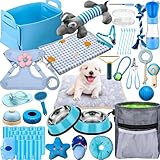
- Cute and Essential Puppy Starter Kit: Our blue themed puppy essentials starter kit is beautifully designed to fulfil both functional needs and quaint aesthetics; The comprehensive package includes 1 felt storage basket, 12 chew toys, 1 training bag, 1 dog leash, 1 TPR finger brush with case, 2 stainless steel bowls, 1 soft cotton towel, 1 blue blanket, 1 pet pad and more, ideal for male dogs
- Properly Sized Accessories: our dog essentials for small dogs are mindfully sized to ensure your pup's comfort; The felt storage basket measures 14.17 x 9.84 x 9.06 inches, providing ample space for neatly organizing your puppy's tools and toys; For your dog's sanitary needs, we provide a 19.29 x 12.6 inches/ 49 x 32 cm pet pad; To keep your puppy warm and comfy, we include a 23.62 x 15.75 inches blue blanket and an 11.81 x 11.81 inches blue towel, making your puppy feel right at home
- Grooming Essentials and Interactive Toys: the dog essentials for puppies kit comes packed with 12 fun and engaging dog chew toys of varying materials, 6 double sided pet toothbrushes, a finger brush and a pet hair remover for grooming needs, and a bone shaped dog poop bag dispenser with 16 rolls of poop bags; This kit ensures your puppy's hygiene and dental health are taken care of while simultaneously providing an array of chew toys that will stimulate and entertain your pup
- Well Prepared Travel Pack: these puppy accessories for male dogs are more than just a home starter kit; It also doubles as your travel package with a convenient car seat belt for dogs, portable water dispenser, and lightweight yet durable training bag; With our pack, you need not fret about forgetting any of your puppy's essentials, making your travel experience more pleasant and worry free
- Ideal for Training and Adaptability: assisting your new puppy to get accustomed to its surroundings will be easier with our puppy starter kit for small dogs; The kit includes items like order bell for training purposes and an assortment of chew toys to help reduce anxiety levels; These features make the transition more manageable while fostering an interactive bond between you and your pup; Also included is a medium size dog leash, ideal for training sessions across various sports
How to choose among common alternatives
Crate versus pen or gates
Choose a crate when you need a defined sleep and travel space and can introduce it positively. Choose a pen or gates when the puppy needs a larger managed area or your layout makes room-based confinement more practical. Many homes use both: a crate for rest inside a gated safe zone.
Collar versus harness
A collar is important for visible identification and license attachment. A harness can be preferable for some walking contexts or puppies. Fit, comfort, growth and supervision matter more than choosing one universal option.
The Tool Desk
Outbyte Driver Updater FREEScan for outdated or missing drivers - takes under a minuteDriver Scan →Outbyte PC Repair FREERepair Windows errors before they cause bigger problemsFix Now →Potty pads versus an outdoor routine
Pads may solve an access problem but can complicate a plan that ultimately requires outdoor toileting if the rules are inconsistent. Outdoor trips may be practical when the home allows frequent access and your veterinarian advises that the locations and exposure are appropriate. Pick one clear routine and supervise closely.
Food and chew choices
For food, prioritize a growth-appropriate nutritional adequacy statement and individual veterinary advice. For toys, prioritize age- and size-appropriate construction, inspect them often and remove any piece that can be swallowed. Neither the most expensive food nor the toughest-looking toy is automatically right for every puppy.
Common first-month mistakes to avoid
- Changing food abruptly without discussing the transition with a veterinarian.
- Buying a crate that is too large, too small or treated as punishment.
- Leaving a collar, harness, toy or bedding unsupervised when the puppy is chewing or tangled.
- Assuming a puppy is protected for unrestricted outdoor exposure without checking records and veterinary advice.
- Giving over-the-counter medication or parasite products without professional direction.
- Buying many toys and treats before you know the puppy’s size, preferences and chewing habits.
- Allowing full-house access before hazards, stairs, doors and toilet routines are under control.
A compact setup that is correctly fitted, washable, supervised and adjusted after the first veterinary visit is safer than a large pile of supplies chosen without regard to the individual puppy.





Leave a Reply