
Some links on this page are affiliate links: if you buy through them we may earn a commission, at no extra cost to you.
Keep the puppy warm, quiet and secure, then contact a veterinarian promptly. A newborn, cold, weak, lethargic or non-feeding puppy is an emergency because hypothermia, dehydration and low blood sugar can develop together. Do not give cow’s milk, human baby formula or food by mouth to a chilled puppy unless a veterinarian directs you.
First establish whether the mother is temporarily away or truly unable or unsafe to nurse. If nursing cannot resume, a veterinarian can help you choose a commercial canine milk replacer, bottle and feeding plan suited to the puppy’s age, weight and condition.
As an Amazon Associate I earn from qualifying purchases.
Free tools Windows power users keep installed
One-click scans. No signup required.
What to do in the first few minutes
- Move the puppy to a clean, dry, draft-free enclosure. Use soft, dry bedding and keep other pets and children away.
- Assess responsiveness and breathing. A puppy that is limp, struggling to breathe, very cold, pale, blue-tinged, repeatedly vomiting or unable to swallow needs emergency veterinary care.
- Provide controlled warmth. Place a safe heat source beside or beneath part of the enclosure, leaving an unheated area the puppy can reach. Do not place the puppy directly on a heating pad or against a hot water bottle.
- Call a veterinary clinic or emergency hospital. Tell them the puppy’s estimated age, temperature if you can obtain it safely, weight, last feeding, urine and stool output, and whether the mother is available.
- Do not force a feeding while the puppy is chilled or too weak to suck. Ask the veterinarian when and how to begin feeding.
Best Friends Animal Society recommends having an orphaned newborn examined before beginning a home-care routine. VCA Animal Hospitals also advises veterinary follow-up for orphaned puppies and examination of the mother and newborn litter within 48 hours of birth.
Determine whether the mother is temporarily absent
A mother may leave the nest briefly to urinate, eat, drink or avoid disturbance. If the puppy is warm, alert and otherwise stable, watch from a distance and contact the owner, breeder, shelter or rescue responsible for the litter. Do not repeatedly handle the puppy or move the nest unless it is unsafe.
Popular on Amazon

- PUPPY MILK REPLACEMENT-PetLac puppy milk replacement powder provides complete nutrition for proper growth and development for puppies, newborn to six weeks old
- COMPLETE, BALANCED NUTRITION-As a food source for orphaned, rejected, nursing, or weaning puppies, this formula provides vitamins, minerals & amino acids. It also supplies extra nutrition for thin or older dogs
- EASY TO DIGEST-PetLac is highly palatable and contains prebiotics and probiotics for easy digestion and improved gut health
- DIRECTIONS-Mix one tablespoon powder with two tablespoons warm water to make approximately 2-1/3 tablespoons (7 teaspoons/35mL) of liquid. Opened powder can be refrigerated for up to 3 months, or can be frozen for up to 6 months
- ABOUT US-PetAg is a trusted leader in pet wellness, with science-backed formulas in our milk replacers, health supplements, and grooming products helping pet owners to proactively enhance the lives of their pets, for more healthy years together
If the mother returns, allow supervised nursing and observe whether the puppy latches, swallows and settles afterward. Seek veterinary help if she rejects the puppy, cannot produce milk, is ill or painful, has mammary-gland swelling, or behaves aggressively toward the litter. A mother that is present but unable or unsafe to nurse requires the same veterinary-guided plan as an orphan.
Age and condition determine the urgency
Age cannot be diagnosed perfectly from appearance alone. A veterinarian can estimate it from weight, teeth, eyes, movement and development. Use the following distinctions only to decide how urgently to call.
| Situation | What it usually means | Immediate priority |
|---|---|---|
| Newborn or eyes closed | Unable to regulate body temperature well; may need assisted elimination and frequent feeds. | Warmth, emergency assessment if cold or weak, and a veterinary feeding plan. |
| Very young but alert and suckling | May be stable, but can deteriorate quickly if intake or warmth is inadequate. | Veterinary examination and accurate weight and intake records. |
| Older puppy eating independently | Has different nutritional and social needs. Merck Veterinary Manual says puppies can leave their mother at about 7–8 weeks when they can feed themselves. | Provide puppy food, water, safe housing and a veterinary check; do not assume an unexpectedly separated puppy is thriving. |
| Cold, weak, lethargic or unable to suck | Possible hypothermia, dehydration, low blood sugar or another illness. | Prompt veterinary or emergency care rather than a routine home feeding schedule. |
Warmth comes before routine feeding
Newborn puppies lose heat rapidly and cannot move away from danger as reliably as older animals. Use a clean enclosure with a controlled heat source and a cooler zone. Heat lamps, incubators and warm water bottles are examples described by VCA, but every setup must prevent burns, direct overheating and entrapment.
Also popular on Amazon

- PUPPY MILK REPLACEMENT — When mom can’t nourish them, Esbilac can. Scientifically the next best to mother’s milk, Esbilac provides all the nutritional elements necessary for puppies, newborn to six weeks old.
- COMPLETE, BALANCED NUTRITION — Our formula is closest to mother's milk in protein, fat, and carbohydrates. We’ve also added vitamins, minerals, and trace nutrients; plus prebiotics and probiotics to support healthy immunity and digestion.
- EASY TO DIGEST — Esbilac is highly palatable and formulated with a special fiber blend for easy digestion and improved gut health.
- EASY-TO-MIX FORMULA — Whisk or shake 1 part powdered Esbilac into 2 parts warm water. Do not mix more Esbilac than can be consumed in 24 hours. Do not use a blender. Must be kept refrigerated after reconstituting.
- ABOUT US — PetAg is a trusted leader in pet wellness, with science-backed formulas in our milk replacers, health supplements, and grooming products helping pet owners to proactively enhance the lives of their pets, for more healthy years together.
VCA gives these approximate environmental temperatures for orphaned puppies:
| Age | Approximate environmental temperature |
|---|---|
| First four days | 85–90°F (29.4–32.2°C) |
| Days 7–10 | About 80°F (26.7°C) |
| End of week four | About 72°F (22.2°C) |
These are general examples, not a substitute for veterinary advice. Litter size, bedding, humidity and the puppy’s health change the appropriate setup. A body temperature below 94°F (34.3°C) can be life-threatening, according to VCA. A chilled puppy should be rewarmed gradually over roughly 30–60 minutes under veterinary guidance; rapid heating can cause additional harm.
How to feed a puppy that cannot nurse
Choose a canine milk replacer
When maternal nursing is unavailable, use a commercial milk replacer formulated for canine puppies. VCA explains that cow’s milk has a different nutrient profile and is not an appropriate substitute. Do not use household milk, human baby formula or an improvised recipe as a long-term diet. Ask the veterinarian which product, concentration and volume fit the puppy’s age, weight and medical status.
Also popular on Amazon
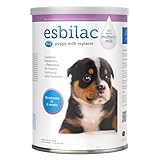
- PUPPY MILK REPLACEMENT — When mom can’t nourish them, Esbilac can. Scientifically the next best to mother’s milk, Esbilac provides all the nutritional elements necessary for puppies, newborn to six weeks old.
- COMPLETE, BALANCED NUTRITION — Our formula is closest to mother's milk in protein, fat, and carbohydrates. We’ve also added vitamins, minerals, and trace nutrients; plus prebiotics and probiotics to support healthy immunity and digestion.
- EASY TO DIGEST — Esbilac is highly palatable and formulated with a special fiber blend for easy digestion and improved gut health.
- EASY-TO-MIX FORMULA — Whisk or shake 1 part powdered Esbilac into 2 parts warm water. Do not mix more Esbilac than can be consumed in 24 hours. Do not use a blender. Must be kept refrigerated after reconstituting.
- ABOUT US — PetAg is a trusted leader in pet wellness, with science-backed formulas in our milk replacers, health supplements, and grooming products helping pet owners to proactively enhance the lives of their pets, for more healthy years together.
Understand feeding intervals without treating them as a prescription
VCA describes orphaned puppies as commonly being fed every 2–4 hours during the first week, then every 4–6 hours until weaning. The milk-replacer label and the veterinarian’s instructions take priority. Exact volume and frequency depend on body weight, age, formula concentration, ability to suck and whether the puppy is ill. Overfeeding can cause gastrointestinal problems, while underfeeding can lead to poor growth and low blood sugar.
| Care question | Safe approach |
|---|---|
| How often? | Use the veterinarian’s schedule and the product label; the broad VCA ranges are 2–4 hours in week one and 4–6 hours until weaning. |
| How much? | Do not guess from the puppy’s appearance. Confirm the volume for the puppy’s current weight and reassess it as weight changes. |
| What temperature? | Prepare and warm replacer exactly as directed. Test a drop before feeding and avoid overheating. |
| What if the puppy will not suck? | Stop and call a veterinarian. A weak puppy may need clinical support; forcing milk increases aspiration risk. |
Use a bottle safely
- Use a puppy or small-animal nursing bottle with an appropriately sized nipple.
- Check that milk drips slowly rather than streaming when the bottle is inverted. A hole that is too large can send milk into the lungs.
- Position the puppy horizontally with its head in a neutral, natural nursing position. Do not feed on the back like a human infant.
- Let the puppy suck at its own pace. Never squeeze the bottle to force a bolus of milk.
- Stop immediately if milk comes from the nose, breathing becomes noisy, the puppy coughs or the puppy cannot coordinate swallowing. Contact a veterinarian.
Tube feeding should be performed only after hands-on veterinary instruction. Incorrect placement can put milk into the lungs and cause aspiration pneumonia or death.
Help a very young puppy eliminate
VCA states that puppies generally cannot urinate or defecate independently until about three weeks old. After feeding, gently stroke the genital and anal area with a warm, moistened cotton ball or soft cloth. Use light, patient movements and ask a veterinarian to demonstrate the technique if you are uncertain.
Also popular on Amazon

- PUPPY MILK REPLACEMENT - When mom can’t nourish them, Esbilac can. Scientifically the next best to mother’s milk, Esbilac provides all the nutritional elements necessary for newborn puppies to 1 year old.
- COMPLETE, BALANCED NUTRITION - Our formula is closest to mother's milk in protein, fat, and carbohydrates. We’ve also added vitamins, minerals, and trace nutrients.
- EASY TO DIGEST - Esbilac is highly palatable and formulated with a special fiber blend for easy digestion and improved gut health.
- EASY-TO-USE FORMULA - Shake gently before use. Warm Esbilac to room or body temperature before serving. Portable, Tetra Pak container is resealable. Once opened, the container must be refrigerated and discarded after 72 hours.
- ABOUT US - PetAg offers solutions to enrich the lives of animals & their caregivers. From nutritional supplements to grooming products, all our products are science-backed, formulated with high-quality ingredients, and supported by quality control.
Record whether urine and stool are produced, along with their appearance. Persistent straining, a swollen abdomen, diarrhea, blood, no urine, or no stool despite repeated attempts warrants veterinary advice rather than stronger stimulation or home laxatives.
The Tool Desk
Outbyte PC Repair FREEClear out junk files and repair common Windows errorsFree Scan →Outbyte Driver Updater FREEScan for outdated or missing drivers - takes under a minuteDriver Scan →Keep feeding equipment and bedding clean
- Wash bottles and nipples after every use and sterilize them as veterinary guidance directs.
- Prepare no more replacer than can be used within 24 hours. Refrigerate prepared formula.
- Discard formula that has remained at room temperature for an hour, following VCA’s guidance.
- Replace wet or soiled bedding promptly and keep the enclosure dry.
- Wash your hands before handling the puppy, formula or equipment.
Track the puppy’s progress every day
Use a simple written or digital log. VCA recommends recording birth weight and daily weight during the first four weeks. Also note each feeding, urine and stool, activity, sleep, vomiting, coughing and developmental change. A small digital scale can make the record more consistent, but the numbers do not replace examination when the puppy looks unwell.
Call the veterinarian if weight is not increasing as expected, the puppy repeatedly misses feeds, becomes less active, develops diarrhea or vomiting, or has a change in breathing. Bring the log and the milk-replacer container to the appointment so the clinician can check the preparation and schedule.
Also popular on Amazon

- PUPPY MILK REPLACEMENT — When mom can’t nourish them, Esbilac can. Scientifically the next best to mother’s milk, Esbilac provides all the nutritional elements necessary for puppies, newborn to six weeks old.
- COMPLETE, BALANCED NUTRITION — Our formula is closest to mother's milk in protein, fat, and carbohydrates. We’ve also added vitamins, minerals, and trace nutrients; plus prebiotics and probiotics to support healthy immunity and digestion.
- EASY TO DIGEST — Esbilac is highly palatable and formulated with a special fiber blend for easy digestion and improved gut health.
- EASY-TO-MIX FORMULA — Whisk or shake 1 part powdered Esbilac into 2 parts warm water. Do not mix more Esbilac than can be consumed in 24 hours. Do not use a blender. Must be kept refrigerated after reconstituting.
- ABOUT US — PetAg is a trusted leader in pet wellness, with science-backed formulas in our milk replacers, health supplements, and grooming products helping pet owners to proactively enhance the lives of their pets, for more healthy years together.
Know when separation is an emergency
Seek urgent veterinary care for any puppy that is cold to the touch, limp, unusually quiet, unable to stay awake, not feeding, repeatedly vomiting, having diarrhea, coughing or choking during feeds, breathing abnormally, producing milk from the nose, or showing seizures or collapse. These signs can progress quickly in neonates.
Do not delay care while trying several home remedies. Do not force-feed a puppy that cannot swallow, give medications without veterinary direction, or put a chilled puppy directly against intense heat.
What’s actually slowing this PC down?
Pick the symptom - the matching free tool is one click away.
Transition from replacer to solid food
Milk replacer is temporary nutrition, not a permanent diet. VCA says weaning may begin at about 3–4 weeks, with a gradual transition to solid puppy food and completion around 5–6 weeks. The veterinarian should confirm timing and food, especially if the puppy is underweight, ill or developmentally delayed.
Merck Veterinary Manual describes about 7–8 weeks as the age when puppies can leave their mother and feed themselves. That is developmental guidance, not a universal legal minimum for every location. A puppy separated earlier than that needs an individualized plan for nutrition, medical care and social development.
Practical supplies to gather
- Commercial canine milk replacer selected with veterinary advice.
- A puppy nursing bottle and correctly sized nipple.
- A clean enclosure with dry bedding and a controllable heat source.
- A thermometer suitable for the environment and, if the veterinarian recommends it, one for the puppy.
- A small scale for daily weights.
- Soft cloths or cotton balls for elimination stimulation.
- Cleaning supplies for bottles, nipples and bedding.
- A written care log and the contact details for a daytime clinic and emergency hospital.
The safest plan is not simply to substitute a bottle for the mother. It combines controlled warmth, an appropriate canine diet, safe feeding mechanics, elimination support, hygiene, daily records and prompt veterinary supervision.





Leave a Reply