Photograph the snail, stop it and its eggs, plants, water, and equipment from moving, and contact your local aquatic-biosecurity or invasive-species authority. Do not release or flush anything from the aquarium. An unfamiliar snail cannot be declared invasive from a generic description, and the correct collection and disposal method depends on your location and the species involved.
First response: contain it and report it
Treat an unfamiliar aquarium snail as a possible biosecurity issue until it is identified. The priority is preventing a live snail or its eggs from reaching another tank, another person’s aquarium, a drain, or the outdoors.
As an Amazon Associate I earn from qualifying purchases.
- Take a clear photograph. Photograph the shell, body, size, color, and any egg mass without disturbing the animal. Record the date, exact place, and aquarium in which you found it. This information helps an authority identify the animal and trace a possible introduction route.
- Stop movement. Do not transfer the snail, eggs, plants, water, gravel, décor, nets, filters, or other equipment to another aquarium, another person, or an outdoor location while you are seeking advice. Eggs can remain attached to plant stems and leaves and hatch after a plant is moved.
- Contact the relevant local authority promptly. Depending on where you live, that may be an aquatic-biosecurity unit, wildlife agency, agriculture or plant-health office, or invasive-species program. Tell the official that the snail was found in an aquarium, provide your location and photographs, and ask exactly what to do next.
- Follow the authority’s collection instructions. Handling rules are not universal. Australia’s Department of Agriculture, Fisheries and Forestry (DAFF) advises, “If you think you’ve found an exotic snail: take a photo; wearing gloves, collect snails or eggs and place them in a sealed container.” That is jurisdiction-specific guidance, not a rule for every aquarium or species.
If the animal could be a giant African land snail, follow a different precaution: the U.S. Department of Agriculture’s Animal and Plant Health Inspection Service (USDA APHIS) says not to touch or pick it up. Photograph it, note the location, and immediately contact state or federal plant-health officials.
Why identification must come before treatment
Many aquarium snails are harmless or deliberately kept species, while others are regulated in particular regions. Shell shape, color, size, or a photograph found online is not enough to establish that an animal is invasive. The same common name can also refer to different species in different places, and legal restrictions vary by jurisdiction.
#1 Best Overall

- Medical-Grade 3.5 Mil - Supmedic nitrile gloves deliver exam grade barrier & tactile feel - provides 40% extra thickeness than typical food gloves, ideal for Cooking Cleaning and everyday task.
- Allerge Safe - 100% Powder-free & Latex-free gloves eliminates common allergies; skin-friendly material for worry-free wear on sensitive hands.
- Texture Grip - Micro-roughened fingertips plus smooth palms keep a confident hold on instruments, wet dishes or oily parts without sacrificing dexterity.
- Versatile Pack - 100 ambidextrous gloves dispense one-handed from the top-load box; perfect for clinics, dentistry, food prep, cleaning, auto repair, beauty salons, pet care and more.
- Supplier-Direct Value - Produced in Supmedic's facility and Prime-fulfilled for fastdelivery.
Useful clues, not a do-it-yourself diagnosis
Some species have recognizable features that can help an official triage a report. DAFF describes golden or channeled apple snails as freshwater snails that may lay pink egg clusters above the waterline. California guidance addresses channeled apple snails in that state. Those details are clues for those taxa, not a general test for every snail in an aquarium. Do not apply a species-specific response until a competent local authority confirms what you have.
Information to send with your report
- Clear photographs from several angles, including the shell opening and any egg masses.
- The aquarium’s location and the date you first noticed the snail.
- Where the snail was sitting: on glass, a plant, décor, substrate, or equipment.
- Whether new plants, animals, water, or used equipment entered the aquarium recently.
- Whether the aquarium is connected to, emptied into, or near any outdoor waterway.
Do not mail or carry a live specimen to an office unless officials tell you to do so. Ask whether they want photographs first, a sealed container, or another form of evidence.
How aquarium snails spread
Ornamental aquarium plants are a recognized pathway. A snail or a clutch of eggs can be hidden among leaves, roots, stems, or packaging. Eggs may hatch after the plant is moved into a previously unaffected tank. Moving a plant because it “looks clean” does not eliminate that risk; eggs can be small or positioned above the waterline.
Crashes, No Sound, or Screen Glitches?
Random freezes, missing sound and display glitches usually trace back to one bad driver. Find and replace yours safely.Free scan · under a minutePC Slower Than It Used to Be?
A free scan shows the junk files, broken settings and background clutter dragging Windows down - then fixes them in one click.Free scan · Windows 10 & 11Spread can also occur through shared nets, siphons, buckets, filter media, décor, substrate, and water. For that reason, containment means more than isolating the visible snail. Keep affected plants and aquarium materials in place until an authority tells you which items can be cleaned, discarded, or moved.
Rank #2

- ORIGINAL QUALITY – Tired of flimsy, low-quality gloves? Inspire Medical Nitrile Gloves bring back the durable, rip-resistant quality you remember. These premium black disposable exam gloves are powder-free, latex-free, and offer superior protection—far exceeding rubber, latex, and plastic gloves. Trusted by professionals, designed for performance and for a more sterile environment.
- TOUGH YET FLEXIBLE – Made from heavy-duty nitrile, Inspire gloves are puncture- and tear-resistant while maintaining excellent dexterity and tactile sensitivity. The snug fit allows for ease of movement, whether you're working in medical, food service, or industrial environments. Available in sizes Small through XXL.
- PROFESSIONAL-GRADE PERFORMANCE – These exam-grade nitrile gloves are trusted by medical personnel, first responders, and industry professionals. Whether you're a nurse, doctor, caregiver, or using them at home, Inspire gloves consistently deliver dependable protection. ISO 9001:2015. & ISO45001
- MULTIPURPOSE USE – FOOD SAFE & MORE – Safe for food handling, cleaning, medical use, tattoos, mechanics, and more. Inspire gloves feature textured fingertips for enhanced grip and are touchscreen compatible for convenience. Ideal as disposable cooking gloves, janitorial gloves, or food prep gloves.
What not to do while waiting
- Do not release the snail, eggs, plants, or aquarium water into a pond, stream, storm drain, sewer, garden, or other route to the environment.
- Do not give the snail or affected plants to a friend, pet store, school, club, or another aquarist.
- Do not move plants, gravel, décor, or water to a second tank, even if the second tank is in the same home.
- Do not assume that a dead-looking egg mass is harmless; obtain disposal instructions before removing it.
Collection and temporary containment
There is no single safe collection method for every suspected invasive snail. Use the method your local authority specifies, because the advice may depend on the species, the disease or pest risk, and the laws where you live.
When an authority tells you to collect
DAFF’s published instruction is to wear gloves, collect snails or eggs, and place them in a sealed container. Use a container that cannot leak or open accidentally, label it with the date and location, and keep it away from children and pets. Do not add aquarium water or transport the container beyond the destination officials authorize.
When the suspected animal may be a giant African land snail
USDA APHIS gives a contrasting instruction for suspected giant African land snails: do not touch or pick up the animal. Take a picture, note the location, and contact state or federal plant-health officials immediately. This difference illustrates why advice for one snail or country must not be generalized to another.
Free tools Windows power users keep installed
One-click scans. No signup required.
Protecting people and tank inhabitants
Wear disposable nitrile gloves only when the responsible authority says collection is appropriate. Gloves can reduce direct contact during an instructed collection, but they are not mandatory for every aquarium snail and do not replace reporting. Keep hands, tools, and containers away from food-preparation areas, and wash them according to local public-health advice after any authorized handling.
Rank #3
- ORIGINAL QUALITY – Tired of flimsy, low-quality gloves? Inspire Medical Nitrile Gloves bring back the durable, rip-resistant quality you remember. These premium black disposable exam gloves are powder-free, latex-free, and offer superior protection—far exceeding rubber, latex, and plastic gloves. Trusted by professionals, designed for performance and for a more sterile environment.
- TOUGH YET FLEXIBLE – Made from heavy-duty nitrile, Inspire gloves are puncture- and tear-resistant while maintaining excellent dexterity and tactile sensitivity. The snug fit allows for ease of movement, whether you're working in medical, food service, or industrial environments. Available in sizes Small through XXL.
- PROFESSIONAL-GRADE PERFORMANCE – These exam-grade nitrile gloves are trusted by medical personnel, first responders, and industry professionals. Whether you're a nurse, doctor, caregiver, or using them at home, Inspire gloves consistently deliver dependable protection. ISO 9001:2015. & ISO45001
- MULTIPURPOSE USE – FOOD SAFE & MORE – Safe for food handling, cleaning, medical use, tattoos, mechanics, and more. Inspire gloves feature textured fingertips for enhanced grip and are touchscreen compatible for convenience. Ideal as disposable cooking gloves, janitorial gloves, or food prep gloves.
- BUILT TO PERFORM – When the job demands reliable protection, count on Inspire Gloves. Each case includes 1,000 gloves (10 boxes of 100), Each Box contains 100 gloves (glove ct. by weight) providing food-grade, powder-free, and latex-free protection in bulk. Designed to perform and last in high-use environments.
Disposal: prevent release rather than improvise
Do not choose a disposal method simply because it is convenient. Rules differ by location and species, and an action that is acceptable in one program may be prohibited in another. Ask the reporting authority how to handle the specimen, eggs, affected plants, water, substrate, and disposable materials.
Queensland guidance warns against dumping or flushing aquarium contents. Northern Territory guidance likewise prohibits disposal routes that allow aquarium contents to enter the environment. A household drain, toilet, stormwater grate, compost pile, garden, or outdoor pond can all create an unintended pathway unless the local agency explicitly approves it.
Some programs provide species-specific procedures. California’s guidance for channeled apple snails says to preserve a specimen by freezing and contact its Invasive Species Program. That is an example for that program and taxon, not a universal instruction for every aquarium snail. Northern Territory authorities provide instructions for particular aquarium contents. Follow the directions you receive rather than combining methods from different jurisdictions.
Should you use a chemical treatment or snail trap?
Not as a substitute for identification and reporting. The official guidance available for suspected exotic aquarium snails emphasizes photographing, containment, prevention of spread, and agency-directed disposal; it does not establish one universal chemical treatment that is safe for every snail, fish, plant, filter, and invertebrate combination.
Rank #4
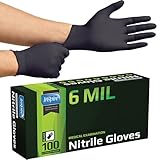
- These Inspire gloves are designed for BOTH medical and industrial use. Both exam-grade and durable 6-mil thickness, they are ideal for medical and industrial applications. These gloves are suitable for healthcare settings, laboratories, industrial environments, and household tasks.
- STRENGTH AND DEXTERITY: Inspire Nitrile Gloves provide strong protection every time. Rugged nitrile material is rip and puncture resistant, yet offers a secure fit, ease of movement, superior tactile control, and ultimate dexterity.
- TRUSTED BY PROFESSIONALS: The exam grade industrial glove trusted by industrial and medical professionals. Whether emergency services, doctors, nurses or food and household use, Inspire disposable gloves hold up to the job at hand.
- FOOD SAFE, JANITORIAL, TATTOO, MECHANICS AND MEDICAL: Multipurpose gloves with textured fingertips. Touch screen compatible. Latex free. Powder Free. ASTMD6319 & ISO9001:2015
- CONFIDENCE- GLOVES THAT HOLD UP TO THE JOB AT HAND: When your protection is on the line, you demand a glove that will hold up. Inspire Gloves give you the confidence to tackle all scenarios securely and safely. 100 gloves by weight per box. Don glove by the cuff for best application.
Copper-based or other mollusc-killing products can harm desirable snails, shrimp, fish, plants, and biological filtration, and a treatment may leave eggs or contaminated material behind. Applying a product before an authority identifies the animal can also destroy evidence needed for confirmation. A mechanical trap may collect a visible snail, but it has not been established as a replacement for reporting or as a complete solution to eggs and contaminated plants.
Do not use a product, salt treatment, temperature shock, or improvised poison unless a qualified local authority or veterinarian gives species- and tank-specific instructions. If officials do recommend a treatment, ask about its effects on fish, plants, invertebrates, filtration, and disposal of treated water before proceeding.
Independent reader supportYour contribution helps us test, update, and keep practical guides available for everyone.Preventing a future introduction
Inspect and rinse new plants
Before adding an ornamental plant, inspect leaves, stems, roots, packaging, and the area above the waterline for snails and egg masses. The Aquatic Invasive Management (AIM) guidance recommends rinsing plants in a bucket to remove excess material, animals, or eggs. Treat rinse water as potentially contaminated: do not pour it outdoors or into a drain unless local instructions say that route is safe.
Quarantine new animals
AIM recommends quarantining new animals in a separate filtered container. Quarantine gives you time to observe animals and associated materials before they share water or equipment with an established aquarium. Use separate nets, siphons, buckets, and maintenance tools during that period, and do not move water between systems.
Best Value

- MEDICAL EXAMINATION GLOVES: Powder-free nitrile exam gloves made for medical examinations and patient care. Ideal for home caregivers, home health visits, wound care and personal medical use, as well as for physicians and nurses. Non-sterile, single use only.
- LATEX FREE AND POWDER FREE: The ideal solution for individuals sensitive to natural rubber latex and donning powder. Nitrile is a synthetic material, so these gloves are not made with natural rubber latex and leave no powder residue on hands or skin.
- TEXTURED FINGERTIPS FOR CONTROL: Comfortable fit with textured fingertips for excellent tactile sensitivity, so you keep a secure grip and a precise feel during exams, treatments and everyday patient care.
- STRONG AND STRETCHY: Extraordinary strength, stretchable durability and puncture resistance with a premium iris blue color. The nitrile stretches to fit your hand comfortably during use.
- BEADED CUFF, BOX OF 100: Features a smooth external finish and beaded cuff for extra durability. Each box holds 100 ambidextrous gloves that fit either hand, available in Small, Medium, Large and X-Large.
Build a routine inspection
- Check plant leaves, stems, roots, and aquarium lids during every maintenance session.
- Look above the waterline, where some species place egg masses.
- Inspect used décor, substrate, filter parts, and nets before they enter a different aquarium.
- Keep a record of where plants and animals came from and when they were added.
- Ask the seller or donor about the source and prior aquarium systems rather than assuming a plant is pest-free.
Who to contact and what each agency may do
Start with the agency that handles aquatic introductions in your jurisdiction. If you are unsure, a wildlife, agriculture, plant-health, fisheries, or invasive-species office can redirect the report. Contacting the correct office matters because reporting channels and disposal rules are local.
| Situation | Published guidance | Handling implication |
|---|---|---|
| Suspected exotic snail in Australia | DAFF says to take a photo; wearing gloves, collect snails or eggs and place them in a sealed container. | Use this procedure only under the relevant Australian authority’s direction. |
| Introduced or unrecognized aquarium snail in Australia’s Northern Territory | The Aquatic Biosecurity Unit asks residents to report introduced or unrecognized snails. | Do not move affected plants or contents while seeking its instructions. |
| Suspected giant African land snail in the United States | USDA APHIS says not to touch or pick it up; photograph it, note the location, and contact state or federal plant-health officials. | Do not apply the glove-and-container procedure unless officials specifically authorize it. |
| Channeled apple snail in California | California guidance says to preserve a specimen by freezing and contact its Invasive Species Program. | This is a California, species-specific example, not a general aquarium disposal rule. |
| Aquarium contents in Queensland or the Northern Territory | Guidance warns against dumping or flushing contents in ways that let them enter the environment. | Obtain local directions for water, plants, substrate, and equipment. |
A practical decision guide
If you only have a photograph
Send the image, location, date, and aquarium details to the local authority. Keep the aquarium and all associated materials in place. Do not collect a specimen unless officials request it.
If the snail is still visible and officials have not replied
Prevent movement between tanks and prevent access to drains or outdoor areas. Follow any emergency instructions published by your local authority. Do not improvise chemical treatment or release the animal.
The Tool Desk
Outbyte Driver Updater FREEFix the driver behind crashes, sound loss and screen glitchesFind Drivers →Outbyte PC Repair FREEClear out junk files and repair common Windows errorsFree Scan →If officials authorize collection
Use their specified protective equipment and container, record where the specimen came from, and ask how to transport or surrender it. Keep the container sealed and do not transfer its contents to another vessel unless instructed.
If you already moved a plant or aquarium water
Tell the authority exactly what moved, when it moved, and where it went. Stop further transfers, identify every tank or person that received material, and wait for instructions on inspection, cleaning, and disposal. Accurate disclosure helps officials assess the possible spread.
What a responsible resolution looks like
The objective is not merely to remove a snail from the glass. A responsible resolution identifies the animal, prevents live snails and eggs from reaching new systems or the environment, protects people and aquarium inhabitants during any collection, and disposes of all affected materials through the local authority’s approved route. Until those points are addressed, a trap, a chemical, or moving the snail to a “temporary” tank can make the problem harder to contain.
Quick Recap
Product prices and availability are accurate as of the date/time indicated and are subject to change. Any price and availability information displayed on Amazon at the time of purchase will apply.
Quick wins for a faster PC:
Fix the driver behind crashes, sound loss and screen glitchesFind Drivers →Repair Windows errors before they cause bigger problemsFix Now →



