
Do these 3 things before closing this tab:
1Scan for outdated or missing drivers - takes under a minute2Repair Windows errors before they cause bigger problems3Fix the driver behind crashes, sound loss and screen glitchesSome links on this page are affiliate links: if you buy through them we may earn a commission, at no extra cost to you.
If your newly adopted dog panics when left alone, start by observing and recording the pattern, arrange a veterinary check, and keep practice absences shorter than the time it takes the dog to become distressed. Increase alone time only in small steps while the dog stays relaxed. Never punish the barking, destruction, house soiling, or escape attempts; these are distress behaviors, not spite. Severe, persistent, or medically unusual cases need a veterinarian and a qualified behavior professional.
Moving to a new guardian can be part of the context, but adoption alone does not prove clinical separation anxiety. A camera or audio recording can show what happens after you leave and gives your veterinarian or behavior professional useful information for planning treatment.
As an Amazon Associate I earn from qualifying purchases.
The Tool Desk
Outbyte Driver Updater FREEScan for outdated or missing drivers - takes under a minuteDriver Scan →Outbyte PC Repair FREERepair Windows errors before they cause bigger problemsFix Now →Why a newly adopted dog may struggle when alone
A dog may experience distress after being given to a new guardian or family. Traumatic separation, including being dropped at a shelter, can also increase the likelihood of problems when the dog is alone. Those factors explain why separation-related behavior may appear after adoption, but they do not establish that every newly adopted dog has separation anxiety. Some dogs need time to learn a new routine; others have a more serious, established fear response.
There is no evidence-based, universal number of days in which every adopted dog will “settle in.” The useful question is not how long the dog has lived with you, but whether a consistent pattern appears when separation occurs and whether the dog can remain below its distress threshold during training.
Popular on Amazon
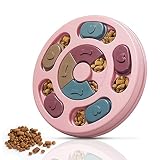
- 【Size】: L9.44" * W9.44"* H1.14" suitable for cats, puppies and small dogs.
- 【Interactive Dog Toys】This is a fun interactive puppy puzzle toy, which can easily become the closest companion and toy for your puppies and cats, and will release pressure for dogs. Find food by sliding parts to improve eating pleasure and IQ.
- 【Slow feeder】This slow feeder encourages pets to eat at a slower speed, helps to slow down the feeding time to help the dog digest, and can provide your dog with a variety of healthy snacks.
- 【Slow Feede toys】 Use this educational game toy to exercise the dog’s brain, which will help meet the dog’s instinct needs, train the pet’s sense of smell, and let the dog enjoy fun feeding when using the nose or paw to move the slider, while providing spirit stimulate.
- 【Dog toys】No toy is indestructible. Do not leave toys with unsupervised pets. Remove and replace toy if damaged.
Recognize a separation-linked pattern
Look for behavior that occurs before departure or while the dog is alone, rather than diagnosing from one chewed object or one accident. Possible signs include:
- vocalizing, such as barking, whining, or howling;
- pacing or other repetitive movement;
- destructive behavior;
- scratching, chewing, or other escape efforts;
- heavy salivation;
- urination or defecation when left; and
- distress that begins as you prepare to leave or shortly after you go.
These signs can have other causes, and a single incident is not enough to identify separation anxiety. Record the circumstances and arrange a veterinary assessment, especially when the behavior is intense, starts suddenly, or appears alongside changes in health.
What’s actually slowing this PC down?
Pick the symptom - the matching free tool is one click away.
What to record
- Which departure cues precede the reaction, such as picking up keys or putting on a coat.
- How long the dog remains settled after you leave.
- The first behavior that signals distress and how it changes over time.
- Whether the dog will eat during the absence.
- What happens when you return and how long recovery appears to take.
- Whether the behavior occurs only during separation or also when you are present.
Use a camera or audio recording when practical. Watching the recording can reveal distress that is not obvious from a neighbor’s report or from damage discovered after you return.
Also popular on Amazon

- 🐾 Designed for Medium & Large Dogs – Reduce Choking Risk Specifically designed for medium and large dogs weighing 15-55 lbs to minimize choking hazards. The ergonomic design makes it easy for your dog to hold while licking – a perfect dog lick toy and ice cream toy for aggressive chewers
- 🛡️ Indestructible & Heavy Duty – Built for Power Chewers Made from food-grade nylon and natural coffee wood fiber – BPA free, no harmful chemicals. This indestructible dog toy and heavy duty chew toy withstands power chewers and aggressive chewers. Long lasting and tough, yet safe for daily licking.
- ❄️ Freezable Liquid Treat Dispenser – No Demold, Easy Fill A true freezable liquid treat dog toy and frozen liquid snack toy. Mix peanut butter, yogurt, or liquid treats into the included two trays, freeze, then insert directly into the toy – no demold, easy fill, no waiting. Turns snack time into a treat dispensing dog toy that keeps dogs busy for hours.
- 🧠 Interactive Enrichment Toy – Boredom Buster & Anxiety Relief This interactive dog toy and dog enrichment toy provides mental stimulation and dog puzzle fun. A true boredom buster that reduces separation anxiety, destructive chewing, and keeps your dog happily occupied. The perfect dog busy toy for crate training and daily play.
- 🧼 Easy to Clean & Versatile – Dishwasher Safe Dishwasher safe for effortless cleaning – no hard-to-reach crevices. Versatile for indoor, outdoor, crate, or travel. A long lasting frozen lick toy that aggressive chewers love. Easy fill and easy clean save you time and effort.
Arrange a veterinary check before treating the problem as training alone
A veterinarian can examine the dog, consider medical explanations, and decide whether diagnostic testing or medication assessment is appropriate. Do not give a behavior medication without veterinary direction. A new or unusually intense behavior, especially when accompanied by other health changes, deserves particular attention.
Behavior treatment is often coordinated among professionals. Their roles are different:
| Professional | Primary role | How they may help with separation distress |
|---|---|---|
| Veterinarian | Medical examination and treatment decisions | Checks for health factors, considers diagnostic testing, and decides whether medication is appropriate. |
| Board-certified veterinary behaviorist | Veterinary behavior diagnosis and treatment | Can evaluate the behavior medically and design a behavior plan, including veterinary medication decisions. |
| Qualified behavior professional, such as a Certified Applied Animal Behaviorist | Behavior-plan support | Can guide desensitization and counterconditioning exercises and help you adjust the plan as the dog responds. |
The cited guidance is primarily U.S.-oriented, and professional titles, credentials, and access differ by region. Ask your veterinarian which qualified behavior services are available where you live.
Free tools Windows power users keep installed
One-click scans. No signup required.
Also popular on Amazon

- [Treat Distribution] Our food dispenser has differently sized spheres at both ends. As dogs push the toy, it moves within a fixed area, allowing dogs to continuously chase and play with it. During movement, food is dispensed from the food holes on both sides of the toy.
- [Adjustable Switch] Each of the two spheres with a food dispensing switch, making it suitable for various sizes and types of pet dry food or snack. The switch can be adjusted according to the different sizes of dog food. It also allows control over the amount of food dispensed, extending or shortening the time it takes for pets to obtain food. It is more conducive to a healthy dog diet.
- [Increase Pet Intelligence] This dog treat puzzle toy combines intellectual training with food rewards. When pets push this toy, it will not only be to get delicious food, but it will also stimulate their intelligence and hunting instinct. This design not only meets the needs of pets but also encourages them to learn and grow in the game.
- [Prolonged Play] The dog enrichment toy is designed to limit the amount of treats your dog gets while encouraging more extended playtime. This is intended for effective playtime for dogs and is NOT a chewed toy. It is also dog boredom buster toys and best dog gift to keep them busy when dogs are left home alone, relief anxiety.
- [Attract Dogs' Attention] With barbell shaped design and bright color, the dog puzzle toy ball can attract your dog's attention, stimulate their curiosity and drive them crazy to roll it. Size: 6.1*3.44*3.44in/15.5*8.7*8.7cm.
Build alone-time tolerance below the distress threshold
The central training rule is simple: make each planned absence shorter than the time it takes your dog to become upset. The dog’s response sets the pace. If anxiety appears, the previous step was too difficult for that individual at that moment; return to an easier duration and progress more slowly.
- Establish an easy baseline. Use your recordings to identify the longest absence that remains calm, then begin with an even shorter interval. Early practice may involve only brief out-of-sight moments inside the home before you work on leaving through the door.
- Practice departures that the dog can handle. Repeat the easy interval while the dog remains relaxed. Keep the exercise short enough that you do not regularly trigger barking, pacing, destruction, salivation, elimination, or escape efforts.
- Increase in small increments. Add time gradually rather than jumping from a few seconds to a long errand. ASPCA examples include increases of a few seconds during the early phase and larger increases only after the dog has sustained tolerance; those are illustrative treatment examples, not a guaranteed schedule.
- Watch the dog, not the clock. A duration that worked yesterday may be too hard today. Continue only when the dog’s body language and behavior remain settled, and use the recording to check what happens after you leave.
- Step back after distress. If the dog becomes anxious, shorten the next absence or return to an earlier training step. Repeating a duration that causes panic can make it harder to keep future absences under threshold.
- Generalize carefully. Once one type of short separation is easy, vary the context in small ways, such as a different departure cue or doorway, while preserving a duration the dog can tolerate. Do not change several difficult factors at once.
This process changes the dog’s emotional response through gradual exposure and positive associations. It is not a test of obedience and should not be run as a challenge to see how long the dog can endure distress.
Manage necessary absences while training is underway
Training works best when the dog is not repeatedly pushed into overwhelming absences. When you must be away longer than the dog can currently tolerate, plan supervision or alternate care where feasible. This is a practical management step inferred from the threshold-based approach, not a universal care rule for every household.
Also popular on Amazon

- Interactive Treat Dispensing Dog Toy, 3.9" x 2.5": Stuff with treats, kibble, peanut butter, or yogurt to encourage chewing, licking, rolling, and chasing while keeping small to medium dogs mentally engaged and occupied
- Enrichment Toy for Small to Medium Dogs: Helps reduce boredom and anxiety while providing mental stimulation and rewarding play for active dogs and teething puppies
- Supports Slow Feeding & Natural Foraging: Turn mealtime into a puzzle by filling with treats or food spreads; freeze up to 4 hours for longer-lasting enrichment and slower eating
- Mint-Scented for Fresher Breath: Infused with a natural mint scent to help freshen breath while dogs chew, lick, and play
- Made with Durable Orbee-Tuff Material: Crafted from tough yet flexible material designed for long-lasting interactive play and treat-seeking fun; made without BPA, lead, or phthalates
Use your log to plan errands and practice sessions separately. A necessary long absence is not a suitable training repetition. If your schedule makes it impossible to keep absences below the dog’s current threshold, tell the veterinarian or behavior professional; the plan may need additional management or medical support.
Outdated Drivers Are Slowing You Down
One free scan finds every outdated or missing driver and matches the right update for your exact hardware.Free scan · exact hardware matchWindows Errors? Fix Them Before They Spread
Repair common Windows errors and clear accumulated junk for a smoother, more stable PC - no reinstall needed.Free scan · no reinstallUse food toys and crates only when they suit this dog
Food-puzzle toys
For mild cases, ASPCA describes offering a food puzzle toy during departures, such as a stuffable toy filled with food. The purpose is to create a positive association with the owner leaving, not to distract a panicking dog indefinitely. A dog that is too distressed to eat needs a broader behavior plan; adding a toy alone is not a cure.
Introduce the toy while you are still home so you know the dog can use it safely and calmly. Treat it as an optional aid within below-threshold training, not as a substitute for recording, veterinary assessment, or gradual absences.
Also popular on Amazon

- 【Size】: L9.44" * W9.44"* H1.14" suitable for cats, puppies and small dogs.
- 【Interactive Dog Toys】This is a interactive puppy puzzle , which can easily become the closest companion and toy for your puppies and cats, and will release pressure for dogs. Find food by sliding parts to improve eating pleasure and IQ.
- 【Slow Feed Bowl】This encourages pets to eat at a slower speed, helps to slow down the feeding time to help the dog digest, and can provide your dog with a variety of healthy snacks.
- 【Slow Feede toys】 Use this educational game toy to exercise the dog’s brain, which will help meet the dog’s instinct needs, train the pet’s sense of smell, and let the dog enjoy feeding when using the nose or paw to move the slider, while providing spirit stimulate.
- 【Dog toys】No toy is indestructible. Do not leave toys with unsupervised pets. Remove and replace toy if damaged.
Crates
Crate training can help some dogs when the crate has become a genuinely safe place. Confinement is not automatically appropriate for every dog with separation distress. If a dog shows escape efforts or becomes more frantic when confined, discuss that response with a professional rather than assuming a crate will solve the problem.
What not to do
- Do not punish the behavior. ASPCA states: “Anxious behaviors are not the result of disobedience or spite.” Scolding after you return, correcting damage, or punishing vocalization can increase distress and worsen the problem.
- Do not use “cry it out.” Forcing a longer absence to see whether the dog eventually stops is the opposite of staying below the distress threshold.
- Do not diagnose from one symptom. Chewing, barking, or house soiling can signal separation distress, but the timing and pattern need to be documented and assessed.
- Do not assume exercise, a crate, a puzzle toy, or medication alone will resolve it. These may be parts of a plan for some dogs. The cited guidance centers behavior modification, and many severe cases need medication together with behavior work.
- Do not prescribe or share medication. A veterinarian must determine whether medication is suitable and how it should be used.
- Do not promise a fixed adjustment period. Dogs progress at different rates, and the available guidance does not establish a universal settling-in timetable.
When to escalate for professional help
Arrange help promptly when distress is severe, persistent, or too intense for you to conduct below-threshold practice. Escape attempts, heavy salivation, elimination, destructive behavior, or inability to eat during even very short absences are reasons to involve a veterinarian and a qualified behavior professional rather than increasing the duration on your own.
Medication may help some dogs tolerate isolation well enough for behavior treatment to proceed. It is not a stand-alone promise of resolution: the veterinarian decides whether it is appropriate, and behavior modification remains part of the treatment approach. A veterinary behaviorist can be especially useful when medical assessment and behavior planning need to be integrated.
Track progress without inventing a deadline
Keep one simple log for every planned practice session. Write down the duration, departure context, first sign of anxiety, whether food was taken, and recovery after you returned. Review the recordings and adjust the next session to the easiest duration that keeps the dog relaxed.
Progress is measured by the dog’s ability to remain calm and recover normally, not by reaching a particular number of minutes on a preset calendar. ASPCA’s example increments illustrate how gradual the process can be, but they are not population statistics or promises for an individual dog. If progress repeatedly stalls, bring the log and recordings to your veterinarian or behavior professional so the plan can be revised.
Quick Recap
A practical decision path
- See a separation-linked pattern? Record departures and the dog’s behavior instead of assuming the cause.
- Any new health change or intense reaction? Arrange a veterinary examination and ask whether testing or medication assessment is relevant.
- Can the dog stay relaxed for a brief absence? Start below that threshold, repeat easy sessions, and increase in small steps.
- Does distress appear? End the progression, reduce duration, and return to an earlier successful step.
- Are unavoidable absences longer than the dog can tolerate? Arrange supervision or alternate care where feasible while training continues.
- Is the problem severe or not progressing? Work with the veterinarian and a qualified behavior professional; discuss whether veterinary medication should accompany behavior treatment.





Leave a Reply