
Some links on this page are affiliate links: if you buy through them we may earn a commission, at no extra cost to you.
If a scanner does not find your pet’s microchip, ask a veterinary clinic or animal shelter to try a working universal, multi-frequency scanner and perform a careful scan of the entire body. A missed reading does not by itself prove that the chip is absent or defective. If a number is found, use the American Animal Hospital Association (AAHA) lookup tool to identify the registry, then contact that registry to verify or update your details. If repeated professional scans still find nothing, ask your veterinarian what examination or next step is appropriate.
Start with a professional rescanning plan
Work through these steps in order. They separate a scanner or technique problem from a record problem and avoid replacing a chip without veterinary advice.
As an Amazon Associate I earn from qualifying purchases.
Free tools Windows power users keep installed
One-click scans. No signup required.
- Ask which scanner was used. Find out whether it reads the frequencies used by your pet’s chip. A limited-frequency or older scanner may miss a chip that a universal scanner can detect. Ask the clinic or shelter to confirm that the device is functioning and adequately charged or powered.
- Request a complete body scan. Have the animal kept as still as is reasonably possible while the operator scans beyond the usual implant area. The team should check both sides and the rest of the body rather than making one pass over the shoulder blades. Matted hair, substantial fat deposits near the implant area, movement and a metal collar can complicate detection. These are possible interference factors, not a diagnosis of what happened to your pet.
- Ask staff to check existing records. Adoption paperwork, an implantation record or a previous veterinary record may contain the chip number or implant information. There is no single universal process for reviewing those records, so ask the clinic or shelter what documentation it has.
- Record any number exactly. Write the digits down while the scanner display is visible and compare the written number with the record before leaving. A single transposed digit can send a registry search in the wrong direction.
- Use the AAHA lookup tool. Enter the identifier without spaces or punctuation. The tool accepts 9-, 10- or 15-digit numbers and identifies participating registries associated with that number.
- Contact every registry the lookup directs you to. Ask the registry to confirm that the pet is attached to the number and that your telephone number, address and other contact details are current. If the lookup returns more than one registry, follow its instructions for contacting each one.
- Arrange veterinary follow-up when scans remain negative. If a universal scanner and a careful full-body scan still produce no number, ask your veterinarian which follow-up is justified for this individual animal. Do not implant another chip solely because one scan failed.
Why a microchip may not be detected
Scanner compatibility
Pet chips in the United States use more than one radio frequency. The American Veterinary Medical Association (AVMA) describes 134.2 kHz ISO-compliant chips and 125 kHz or, less commonly, 128 kHz non-ISO chips. A scanner designed for only one frequency can therefore miss a chip operating on another. AVMA says universal scanners are intended to detect the commonly used ISO and non-ISO frequencies.
Scanning conditions and technique
Detection depends on how the scan is performed as well as on the device. A frightened or moving animal is harder to scan methodically. Hair that has become matted, tissue around the site and metal on a collar may interfere with a reading. Ask the operator to slow down, keep the scanner close enough for the device’s instructions and cover the whole animal. The exact technique should be determined by the trained veterinary or shelter staff using their scanner.
Popular on Amazon

- 【Support Multipe Microchip Formats】Universal microchip scanner supports EMID / ISO11784 / ISO11785 / FDX-B(15 digit microchips). Please note, the microchip reader CAN NOT read Avid chips, and the 9-digit ID can not be recognized. Only the 15-digit international standard protocol can be recognized. Please check the format of the microchip before purchasing.
- 【Easy To Operate & Fast Scan】Our pet microchip scanner is easy to operate, one button to read. Our microchip scanner adopt advanced RFID technology, responsive and fast scanning, it can better improve the efficiency of work. Please note, if no label is scanned, the device will automatically turn off after 180 seconds, or you can press and hold the button for 3 seconds to turn off the device.
- 【 Large Data Storage】Our pet microchip scanner can save 128 animal chips. It can be transferred to a computer or mobile phone via a USB cable connection. Our pet chip scanner also features a data-erase function, refer to the user manual for instructions.
- 【Rechargeable Battery】Our pet chip scanner supports USB charging, eliminating the need for frequent battery replacements, it can last for more than one year after being fully charged.
- 【Easy To Carry】Our scanners are lightweight and compact, making them easy to carry and ideal for both indoor and outdoor use. The package includes one scanner, a USB cable, and a user manual.
Rare chip failure
A negative reading is not proof that the implant has failed. In its pet-owner FAQ, the AVMA states: “Only rarely will the microchip itself fail.” The same guidance notes that detection can be affected by scanning conditions and technique. Because the evidence does not establish a universal replacement threshold or a single confirmatory test, a veterinarian should decide what to do after repeated professional scans.
What the chip does—and what it cannot do
A microchip is a passive identifier. The scanner supplies the energy that activates it and reads its identification number; the chip does not contain a battery, transmit a live location or function as a GPS tracker. It also does not store your telephone number or address. Those details are held by a registry linked to the number.
Recommended Free Tools
That distinction matters during a lost-pet search. A shelter or clinic that reads the chip still needs the registry’s records to reach you. If your registry entry is out of date, a technically successful scan may not lead to a reunion.
Also popular on Amazon
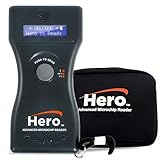
- UNIVERSAL MICROCHIP COMPATIBILITY: Reads all ISO microchips plus 9-, 10-, and 15-digit chips from any brand. Ideal for scanning horses, livestock, pets, and other animals in clinics, shelters, barns, or field settings.
- BLUETOOTH CONNECTIVITY FOR FAST, ACCURATE DATA TRANSFER: Easily sends scanned chip numbers to Bluetooth-enabled devices within a 25-foot range for quick syncing to computers, tablets, or shelter management software. Reduces manual data entry errors and speeds up check-in and intake processes—perfect for busy clinics or multi-pet facilities.
- BACKLIT LCD SCREEN WITH 15-MINUTE DISPLAY HOLD: Features a bright blue backlit LCD screen with bold white text displaying the full chip number on one line for easy reading—day or night. The 15-minute display hold gives ample time to record the scan without rushing, ideal for high-volume or field settings.
- RECHARGEABLE BATTERY WITH AUTO POWER-SAVE MODE: Includes a rechargeable 9V battery and charging unit for long-lasting performance. The auto shut-off function conserves power between uses—great for mobile vets, rescue teams, or animal control officers who need dependable scanning during long sessions.
- LIGHTWEIGHT, DURABLE DESIGN WITH PROTECTIVE CASE: This 7-inch handheld microchip scanner is compact, ergonomic, and easy to carry. Includes a protective carrying case to guard the reader during storage and transport. Built for dependable use in clinics, shelters, barns, or field settings.
Understanding frequencies and identifier formats
The following formats and frequencies are the technical context supplied by the AVMA and AAHA. They describe commonly encountered identifiers, not a guarantee that a particular scanner will read every chip.
| Item | What is commonly used | Why it matters when scanning |
|---|---|---|
| ISO frequency | 134.2 kHz | The international standard described by the AVMA and AAHA; a scanner must support this frequency to read an ISO chip. |
| Non-ISO frequencies | 125 kHz and, less commonly, 128 kHz | A scanner limited to 134.2 kHz may not detect a chip using one of these frequencies. |
| Identifier length | 9, 10 or 15 digits | The number must be copied accurately before using the AAHA lookup tool. |
| 15-digit format | Typically associated with a 134.2 kHz chip | This is the 15-digit format described as the international standard; it is still the registry, not the number itself, that holds owner information. |
AAHA’s guidance, last revised in November 2015, cautions that different frequencies exist and that no scanner is 100% effective at detecting all microchips. Scanner models and registry participation can change, so the clinic’s current equipment and the registry’s current instructions control what happens in a particular case.
How to use the AAHA lookup after a number is found
Enter the number exactly as displayed
Use the AAHA lookup with the complete 9-, 10- or 15-digit identifier and omit spaces and punctuation. Check every digit before submitting. The lookup is designed to identify registries that may have the record; it is not an owner directory.
What’s actually slowing this PC down?
Pick the symptom - the matching free tool is one click away.
Also popular on Amazon

- Stores lost pets chip numbers
- Alerts the user that a pet is missing
- Rechargeable by plugging into a pc
- Reads most microchips in pets, dogs, cats
Understand what the results mean
The tool does not display private owner contact information and does not let you edit the registry record. It tells you which participating registry or registries to contact. The registry, not AAHA’s lookup page, is where an owner confirms the pet’s record and requests changes.
Update more than one record when necessary
If the lookup identifies multiple registries, contact them as instructed. Confirm the pet’s name and identifying details, then verify every route by which the registry might reach you. Ask what documentation it requires if ownership, address or telephone information has changed.
What to bring and ask at the next appointment
- Bring adoption, implantation and prior veterinary paperwork, including any number you have found.
- Tell the team what scanner was used previously and where on the body it was used.
- Ask whether the clinic can scan with a universal device that covers 134.2, 125 and 128 kHz frequencies.
- Request that the animal be scanned while as calm and still as practical and that the entire body be checked.
- Ask the veterinarian to explain the follow-up plan if no number appears again, including whether another examination is warranted.
- Do not request a second implant as an automatic response to a single failed scan; the appropriate decision depends on the animal’s records and veterinary assessment.
Should you buy a scanner for home use?
Universal pet-chip scanners are available through veterinary retailers and some online stores, according to the AVMA. A device that covers multiple commonly used frequencies is more useful than one limited to a single frequency. However, a home scanner does not replace a professional scan: the operator still needs to know how to cover the animal safely and methodically, and a negative home reading cannot establish that a chip is absent or failed.
Also popular on Amazon

- Universal Compatibility & Fast Reading: Treamvp rechargeable micro chip reader works at 134.2KHz/125KHz, supports EMID, FDX-B (ISO 11784/11785) microchips; reads in <100ms with 0.5s interval, stable for glass tags and animal ear tags
- OLED Display & Clear Indication: The Pet Microchip Scanner Built-in 0.91-inch high-brightness OLED screen and buzzer; clearly shows data content and status even in strong outdoor/indoor light
- 128 Record Storage & Rechargeable: Save up to 128 tag information; easy data transfer to computer via USB cable for pet/livestock management and traceability. 800mAh rechargeable battery,charging and data uploading, a universal cable
- Portable & Durable Design: Compact size 6.89 x 3.46 x 1.38 inches, lightweight 0.24 lbs/3.99 oz; Easy to carry and ergonomic handle design for comfortable long-time holding and easy to carry; durable for various environments (indoor/outdoor, farms, vet clinics)
- Wide Temperature Range & Stable Performance: Operates from -10°C to 50°C, stores from -30°C to 70°C; reliable for farms, vet clinics, home and outdoor use
If you use a scanner at home, treat the result as a prompt to visit a clinic or shelter, not as a final diagnosis. Keep the animal still without forcing a painful or fearful position, and stop if handling becomes unsafe.
Preventing a future identification problem
Verify the chip at least annually
The AVMA recommends having the microchip scanned at least once a year to check its function and detectability. Pair that check with a routine veterinary visit when practical and ask the clinic to record the number in the medical file.
Keep registry information current
Update the registry whenever your address, telephone number, email address or emergency contact changes. If you acquire a pet from another owner or organization, confirm that the transfer has been completed rather than assuming the old record will change automatically.
Also popular on Amazon

- COMPACT, POCKET-SIZE READER: Lightweight and palm-sized, PocketHero fits easily in your hand or pocket, so you can carry it anywhere for quick, on-the-go scanning in clinics, shelters, grooming shops, rescues, or events.
- READS ISO 15-DIGIT MICROCHIPS FROM ANY BRAND OR COUNTRY – Engineered for broad compatibility, this reader supports all ISO-compliant 15-digit pet microchips regardless of brand or region, helping you confirm animal identity quickly and accurately.
- BRIGHT DISPLAY SHOWS FULL CHIP NUMBER ON ONE LINE: Features a clear, user-friendly viewing window that displays the entire chip number on a single line and is easy to read any time of day, helping reduce errors and speed up scanning during intake, recovery, or checkups.
- USB RECHARGEABLE FOR EASY POWER MANAGEMENT – Includes a USB charging cable, allowing you to recharge the internal battery from any standard USB port without replacing batteries. Always be ready to scan when needed.
- COMPACT, POCKET-SIZE READER + READY-TO-GO KIT: Lightweight and palm-sized, PocketHero fits easily in your hand or pocket for quick scanning anywhere, clinics, shelters, grooming shops, rescues, or events. Each reader also comes with a test chip fob to confirm it’s working properly and a protective microfiber carrying pouch to keep the scanner safe during storage and travel.
Keep a collar tag
A visible tag can help someone contact you without access to a scanner, while the microchip provides a permanent identifier if the collar is lost. Use both forms of identification.
Continue other lost-pet searches
A chip cannot show where an animal is. If your pet is missing, continue the practical search methods appropriate to your area—contacting shelters and veterinary practices, notifying local lost-pet services and checking likely locations—while asking professionals to scan any animal who may be yours.
A simple decision guide
| What happened | Most useful next action |
|---|---|
| A limited-frequency scanner found nothing | Ask a clinic or shelter for a working universal scanner and a complete body scan. |
| A universal scanner found a number | Copy the digits, run the AAHA lookup without spaces or punctuation and contact each identified registry. |
| The number belongs to a registry but your details are old | Ask that registry to verify the pet record and update your contact information. |
| Several professional scans found nothing | Discuss the animal’s records and appropriate follow-up with a veterinarian; do not assume the chip is absent or insert another one without that assessment. |
| Your pet is lost despite having a chip | Ask shelters and clinics to scan the pet, but continue non-chip search and identification methods because a chip is not a tracker. |
What the official guidance establishes
The AVMA’s pet-owner guidance identifies scanner compatibility, scanning conditions and technique as reasons a chip may not be detected and describes chip failure as rare. AAHA’s identification guidance distinguishes the several frequencies in circulation and warns that scanners are not universally effective. Together, those statements support rescanning with appropriate equipment and careful technique, followed by registry contact when a number is obtained.
They do not establish a universal diagnostic test, replacement deadline or outcome rate for an individual pet whose chip remains undetected. That is why persistent negative scans belong in a veterinarian’s assessment rather than an automatic recommendation to implant a second chip.





Leave a Reply