
Some links on this page are affiliate links: if you buy through them we may earn a commission, at no extra cost to you.
Stop treating the pulling as a contest of strength. Teach your dog that a loose leash makes good things happen: begin in a quiet area, reward even a few slack-leash steps, and stop or calmly change direction whenever the leash goes tight. Increase distance, duration and distractions in small increments. A well-fitted Y-shaped front-attachment harness, a sturdy 4–6-foot leash and small treats can make practice safer, but equipment manages the walk; it does not teach the behavior. If pulling includes fear, anxiety, aggression or hard lunging, have a veterinarian or veterinary behavior professional assess the dog rather than relying on ordinary leash drills.
Why large dogs pull
Leash pressure is rarely the real motivation. Forward movement gives a dog access to smells, people, dogs and interesting places. If the dog leans into a taut leash and still reaches the tree or greeting it wanted, pulling has been rewarded by its own outcome. Every successful surge can make the habit stronger.
As an Amazon Associate I earn from qualifying purchases.
Size adds a safety problem, not a different learning principle. A strong dog can tow a person into traffic, knock someone over or injure its own neck while straining. The useful response is to change the consequence of tension: forward travel pauses or changes direction, while slack reliably earns movement, food, praise or access to sniffing.
Loose-leash walking is not a formal heel. Your dog may walk ahead, beside you or to one side, provided the lead hangs in a soft curve and you can steer safely. The Wisconsin Humane Society explains that sniffing and exploration can remain part of a successful walk when the leash stays loose: Loose Leash Walking.
Popular on Amazon

- DUAL LEASH ATTACHMENT POINTS. Features an aluminum V-ring on the back and reinforced webbing at the chest. Gives you options for everyday walks or redirecting dogs that tend to pull, so you can enjoy more controlled and pleasant outings.
- FIND THE RIGHT FIT WITH EASE. Not sure which size to choose? Check out our sizing chart image and how-to-fit video to help you measure your dog correctly. A proper fit means more comfort, control, and confidence on every adventure.
- FOAM-PADDED CONSTRUCTION. Built with closed-cell foam padding in the chest and belly panels. This provides cushioned support that helps prevent chafing during extended wear, making it ideal for long walks, hikes, or all-day adventures.
- ADJUSTABLE FOR ALL DOG TYPES. Equipped with four points of adjustment and durable side-release buckles. Allows for a secure, dialed-in fit across a wide range of dog shapes and sizes, giving your pup freedom to move comfortably and naturally.
- REFLECTIVE AND LIGHT-READY. Includes reflective trim and a dedicated loop for our Beacon Light (sold separately). Enhances visibility in low-light conditions, helping your dog stand out at dawn or dusk.
Prepare a safe training setup
Choose a low-distraction starting place
Begin indoors, in a quiet yard or on a calm street where your dog can notice you. Start after the dog has had sufficient exercise, so excess energy is not competing with the lesson. Have small, easy-to-swallow treats in a pouch and allow enough time to stop without rushing.
Use equipment that protects the neck and gives you control
For a powerful dog that is still learning, Veterinary Partner recommends a harness that attaches at the chest. A Y-shaped front-attachment design can gently redirect the shoulders and avoid concentrating force on the throat when fitted correctly. The harness must permit free shoulder movement, sit securely without rubbing and be introduced gradually; a dog can still pull in one.
Do these 3 things before closing this tab:
1Fix the driver behind crashes, sound loss and screen glitches2Clear out junk files and repair common Windows errors3Scan for outdated or missing drivers - takes under a minuteCarry a sturdy lead long enough to form slack. Veterinary Partner gives 4–6 feet as a usual practical length; that is guidance, not a measured rule for every dog or environment. Inspect stitching, clips and the harness before each walk. A backup connection to a flat collar can add security for an escape-prone dog, but do not use a collar to apply corrections.
| Equipment | Potential benefit | Limits and cautions |
|---|---|---|
| Y-shaped front-attachment harness | Chest attachment can redirect the body and avoids direct neck pressure. | Requires careful fit and acclimation; it is a management aid, not a lesson. Some dogs continue to pull. |
| Head collar | Can provide strong directional control for a large dog. | Needs gradual acclimation and precise fitting. Some people mistake it for a muzzle; follow the maker’s or a qualified professional’s instructions and never use it to jerk the head. |
| Flat collar | Simple for identification and ordinary handling. | A dog can keep pulling against it, placing force on sensitive neck structures. It does not solve the behavior. |
| Choke or prong collar | May suppress movement through discomfort. | UC Davis cautions about misuse and neck trauma; prong devices work by causing pain. They are not a routine solution for teaching loose-leash skills. |
| Sturdy 4–6-foot leash | Provides a controllable working distance while leaving room for a soft curve. | Too much length can tangle in crowded places; too little can keep the line tight. Choose a material and clip rated for your dog’s strength. |
Tufts’ overview of collars and harnesses describes why fit and pressure distribution matter: Dog Collars and Harnesses. Veterinary Partner’s equipment and length guidance is at How to Stop Pulling.
Also popular on Amazon
](https://m.media-amazon.com/images/I/41ji4lsxEIL._SL160_.jpg)
- [UPDATED VESION, EASY TO PUT ON & TAKE OFF] This dog harness has 3 buckles( One is on the neck with Lockable, two are on the chest), NO NEED go through dog’s head. This will let your dog loves to wear harness!
- [NO PULL WITH 2 HOOK LOOPS] There are 2 sturdy metal hook loops for leash attachment. If you use the front hook on the chest, it will reduce the pulling a lot and make going for a walk more enjoyable. As usual, most people like to use the back hook.
- [REFLECTIVE MATERIAL] The reflective material will be really nice when it gets dark. Also, your dog will be saw easily. This reflective material can make drivers have long time to react, which ensure your dog’s safety!
- [USEFUL & SOFT HANDLES] You will like this handle on the back,it is helpful in controlling dogs a bit closer to you when they are trying to lunge at something. Also, it is convenient to assist dogs into the car.
- [100% BEST CUSTOMER SERVICE] If any products quality really exits, a refund or replacement will be available.
Teach loose-leash walking step by step
1. Reinforce the starting position
Stand still with the leash loose. The instant your dog looks toward you, shifts weight back, or creates any slack, mark the moment with a calm “yes” and deliver a treat near your leg. Do not wait for a perfect heel. A few successful steps are enough to begin.
2. Reward movement while the leash is slack
Take one or two steps. If the lead remains loose, praise and feed. Gradually ask for three steps, then five, varying the reward between food, verbal praise and permission to investigate a nearby scent. Deliver rewards before the dog reaches the end of the leash, so the dog learns that slack—not tension—makes progress happen.
What’s actually slowing this PC down?
Pick the symptom - the matching free tool is one click away.
3. Make tension pause the walk
When the leash tightens, stop your feet and keep your hands quiet. Do not pull backward, snap the lead or lecture. Wait for the dog to stop leaning and for a curve to reappear. Then call the dog back toward your side, praise or reward, and resume. The UC Davis School of Veterinary Medicine describes the same principle in its Loose Leash Walking guidance.
4. Use a calm turn when stopping is not enough
If your dog keeps loading the leash or the target is approaching too quickly, turn and walk the other way without dragging the dog. As soon as the lead slackens, reward and continue in the new direction. Practice turns when the dog is calm so the maneuver is familiar before you need it near a distraction.
Also popular on Amazon
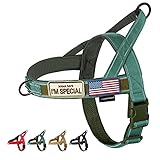
- [Premium No Pull Dog Harness] The wider soft padded inner is comfortable and friendly for dog's neck without dog's fur hurting. The back strap and chest strap inner is made of soft and breathable material that is comfortable for the dogs. And the front strap is better to prevent the dog from rushing forward. This design is maintain a long-time comfortable for walking,jogging,running,training,etc.
- [Reflective Strip] Reflective stitching along polyester webbing is not only add a sense of design to the safe for walking dog harness,but also increase a better visibility at dark under the light that it can keep the dog safe while walking.
- [Two Rings Design] The O-ring and D-ring is convenient and flexible to hang,they not only can connect well with dog leash,but also can hang ID tags,key,poop bag,etc.
- [Choose the Suitable Dog Harness] The no pull dog harness have FIVE sizes,XS is design 1 inch wide / S M L XL are design 1.5 inches wide for the small & medium and large dogs. PLEASE measure the size of the dog and refer the dimension chart to select the right one before buying.
- [Come with TWO Patches] There has a velcro area on the dog walking harness,and come with 2 patches, you can put the patches "MAMA SAY I'M SPECIAL" or the flag on the dog harness velcro area to make your dog unique.
5. Add distractions in layers
Increase only one challenge at a time: first the number of steps, then the distance from home, then mild sights or sounds, and finally busy paths. If the dog begins pulling repeatedly, the setting is too difficult. Move farther from the trigger, return to an easier location or shorten the session. Consistency across family members matters; everyone should stop or turn on tension and reward slack.
6. Keep exploration as a reward
After a stretch of loose walking, use a cue such as “go sniff” and allow your dog to investigate while you maintain slack. This meets a normal behavioral need without teaching that forging ahead earns access. End while the dog is still succeeding, not after repeated battles at the end of a long walk.
Recommended Free Tools
A practical progression for real walks
- Before leaving: Check harness fit, clip security and leash condition. Bring high-value treats and choose a route with an easy escape from crowded areas.
- First minutes: Walk only where your dog can respond. Pay frequently for glances, soft body language and a curved leash.
- At the first pull: Stop. Wait for slack, reconnect at your side and reward; turn away if the dog cannot disengage.
- During the walk: Alternate short training stretches with sniffing breaks. Keep the lead loose through both.
- When the environment gets harder: Increase distance from dogs, people, bicycles or traffic before asking for more steps. Return home or to a quiet area if your dog stops taking food or repeatedly lunges.
- Afterward: Note which locations and distances produced success so the next session can begin at an achievable level.
Common mistakes and how to correct them
Moving forward while the leash is tight
Reaching the smell or greeting while the dog is pulling is an accidental reward. Turn that access into payment for slack instead: stop, wait, then proceed only after the line relaxes.
Expecting the harness to do the training
Front attachment changes leverage and can make handling safer, but it does not tell the dog what behavior earns movement. Pair every equipment change with the reinforcement procedure above.
Also popular on Amazon

- No Pull & No Choke: 2 sturdy metal leash attachment points with reinforced webbing, front clip for discouraging pulling and back for relaxed walks. Ergonomic design, pulling pressure is evenly distributed to the body to prevent Choking.
- Scratch-Resistant oxford material outer layer which is super easy to clean. Quick-dry and soft breathable non-toxic mesh padded, keep optimal comfort while exercising.
- Padded & comfortable handle for Easy Seat Belt Attachment, soft filling makes for a handle that feels good in the hand for extra control to guide your dog. Reflective stitching for night use providing added visibility.
- 4 ways adjustable straps, gets a customized fit with room for growth. Lightweight and durable, designed with minimum bulk for maximum dexterity.
- All Day Comfort: The high-end harness is perfect for daily walking, running, hiking, training, hunting, outdoor adventure and more!
Using forceful corrections
UC Davis warns that excessive force, particularly with a choke chain, can cause neck trauma and says its program does not recommend positive punishment because it can damage the human–animal bond. Pain can also make a worried dog more defensive. Use distance, stopping and reinforcement instead.
Raising difficulty too quickly
A dog that walks beautifully in a quiet yard may pull near a dog park. That is a training-stage difference, not stubbornness. Reduce distraction, reward more often and build back gradually.
Quick wins for a faster PC:
Clear out junk files and repair common Windows errorsFree Scan →Scan for outdated or missing drivers - takes under a minuteDriver Scan →Repair Windows errors before they cause bigger problemsFix Now →Holding the leash permanently tight
A constantly taut line gives the dog no opportunity to discover the correct behavior. Keep your hands steady, create a small safety buffer and let the leash form a visible curve whenever conditions allow.
Independent reader supportYour contribution helps us test, update, and keep practical guides available for everyone.When pulling signals a bigger problem
Ordinary loose-leash exercises are not a complete treatment for fear, anxiety or aggression. Watch for cowering, frantic scanning, barking and retreating, growling, snapping, redirected bites or lunges that you cannot safely interrupt. A dog that is too distressed to eat or respond at a workable distance needs an individualized plan.
Also popular on Amazon

- NEW VERSION, SUPER EASY TO USE: This no pull dog harness has 2 easy buckles on belly straps and 1 more lockable Quick-snap buckle on neckline for easy on and off, no need to slip over dog’s head and adjust the straps every time.
- NO PULL AND CHOKE FREE: Our front lead dog harness has two sturdy metal leash attachment points with reinforced webbing, front clip for discouraging pulling and back for relaxed walks. The pet harness is soft breathable non-toxic mesh padded, pulling pressure is evenly distributed to the body to prevent Choking. This easy dog harness is perfect for daily walking, running, hiking, training, hunting, outdoor adventure and more!
- ENJOY A COSY FIT: This dog reflective harness has dual elastic construction on belly straps, provides stretchability for more comfort and help absorb jerks, reduce strain and the risk of getting Hurt.
- DESIGNED FOR MAXIMUM COMFORT, SAFETY AND ADJUSTABILITY: Padded & comfortable handle, soft filling makes for a handle that feels good in the hand for extra control to guide your dog. It also work as seat bell loop. Large area reflective stitching for night use providing added visibility. Lightweight and durable, designed with minimum bulk for maximum dexterity. 4 ways adjustable straps, gets a customized fit with room for growth.
- 100% SATISFIED GUARANTEE: We are committed to providing customer high quality products and the best shopping experiences. If you meet any problem or dissatisfied in any way, just send email to us and we will provide the best solution, all problems will be solved within 24 hours.
Contact your veterinarian for a physical and behavioral assessment and ask for referral to a veterinary behavior professional when available. Medical pain, sensory changes and emotional disorders can all affect walking behavior. A humane training class can provide structured practice for ordinary leash skills, but a class is not a substitute for private behavior care when safety is at stake. The American Veterinary Society of Animal Behavior discusses leash-pulling cases and head collars in Leading by the Head: Addressing Leash Pulling.
Safety checklist for handlers of strong dogs
- Use a secure, properly fitted harness or collar system your dog cannot back out of.
- Check clips, seams and the walking surface before setting out.
- Keep both hands available near the leash, but never wrap the leash around your wrist or hand.
- Choose routes with room to turn and avoid forcing close passes with triggers.
- Do not allow greetings while the dog is surging toward a person or animal.
- Stop the session if you lose physical control, your dog shows distress or the environment becomes unsafe.
- Have another adult handle practice until you can reliably manage the dog without being pulled off balance.
What success looks like
Progress is a leash that stays loose more often, faster recovery after a distraction and a dog that checks in with you before moving toward something interesting. Expect uneven days: weather, fatigue, pain and a novel route can change performance. Measure improvement by the behavior your dog can repeat safely, not by demanding a rigid heel for an entire outing.
John Gardiner of the UC Davis School of Veterinary Medicine captures the reinforcement principle this way: “For all training, you should reward the dog when it is doing something you want, instead of just telling it what you don’t want.” Apply that idea to every step, turn and sniffing break, and the large dog learns that cooperation—not pulling—is what makes the walk continue.





Leave a Reply