
Some links on this page are affiliate links: if you buy through them we may earn a commission, at no extra cost to you.
Adopting a dog whose history is incomplete means beginning with unanswered questions, not with a prediction. You may not know the dog’s previous home, training, medical care, socialization, or triggers. That uncertainty does not prove the dog is dangerous, and it does not guarantee an easy adjustment. Plan for a quiet transition, arrange veterinary care soon, supervise every interaction with children and animals, and let the dog’s behavior unfold gradually. The most useful information will come from confirmed records, careful observation in your home, and professional assessment when health or safety concerns appear.
What does “unknown past” mean?
An unknown past means the shelter or rescue has missing, incomplete, or unverified information about the dog’s life before intake. You may have no reliable account of previous households, house-training, medical treatment, sterilization, vaccination, socialization, bite incidents, or reactions to particular people and situations.
As an Amazon Associate I earn from qualifying purchases.
Ask the organization to separate three kinds of information:
| Information type | What it can tell you | What it cannot establish |
|---|---|---|
| Confirmed records | Documented vaccines, treatments, intake dates, identification, or an owner’s written report | How the dog will behave in your home months later |
| Direct shelter observation | How the dog responded during a particular handling session, walk, feeding event, or meeting | A permanent temperament or guaranteed response in a different setting |
| Second-hand history | Possible clues about previous routines, fears, or incidents | Facts that were never verified by the organization |
| Unknowns | Questions to monitor safely and discuss with a veterinarian | Evidence that the dog was abused, neglected, or problem-free |
The ASPCA’s position statement on shelter dog behavior assessments cautions that “Behavior assessments have not proven highly accurate or precise when used to predict aggression after adoption.” A shelter test is a snapshot taken under unusual conditions. Pain, unfamiliar handling, procedures, confinement, and the stress of intake can all influence a response. Treat observations as useful clues for management, not as a guarantee.
Popular on Amazon

- [Worry-Free Safety]: Our expandable dog gate is great for doorways and blocking off other indoor spaces to keep your pet safe and secure. This durable puppy gate is made of strong, appealing fieldstone gray plastic with adorable paw print accents.
- [Convenient and Portable]: This gate for dogs is 23" tall, fits a variety of openings 26" - 40" wide. Please measure carefully: it will not work in a wider doorway. It is easy to take down and install - which means you can use it anywhere you need it!
- [Perfect for Modern Homes]: Our portable, adjustable pet gate features rubber bumpers that protect your walls and are positioned higher than other gates to accommodate up to 4" molding. It's an ideal indoor dog gate.
- [Easy and Comfortable to Use]: The sturdy, curved handle allows for a firm grip, which makes mounting and disassembling a breeze!
- [Proud USA-Owned Company]: Our rigorously tested gates & yards bring peace of mind to your family. We stand for the highest safety & quality standards while creating the ideal products for your furry friends. This item is proudly made in the USA!
How long does an adopted dog take to settle in?
Adjustment varies by individual. The ASPCA’s “3-3-3 Guideline” offers a loose orientation: the first three days may involve nervousness and sensory overload; during roughly the next three weeks, a dog may decompress and begin showing more of its ordinary routines; over the first three months, trust and household integration may continue to develop. These are not deadlines, diagnostic stages, or promises. Some dogs move faster, some need considerably longer, and progress can be uneven.
During the first three days
Expect a dog to sleep more than usual, pace, hide, avoid eye contact, eat cautiously, or appear unusually quiet. Another dog may seek constant contact or seem cheerful while still being stressed. Keep the environment boring and predictable. Offer water, regular meals, short toilet opportunities, and a comfortable place to retreat. Do not require visitors, extended petting, or a tour of every room.
During the first three weeks
As the dog learns your schedule, you may see new behaviors: barking at sounds, guarding food or toys, testing boundaries, or becoming more affectionate. Record what happens before and after each incident rather than assigning a label. Calm direction, consistent routines, and opportunities to rest help you distinguish a temporary adjustment from a persistent problem.
During the first three months
Trust develops through repeated, safe experiences. Continue supervision and gradual exposure even when the dog appears settled. A relaxed week does not erase the need to manage doors, visitors, food, children, or resident pets. If behavior becomes more intense, unpredictable, or dangerous, seek veterinary advice rather than waiting for a calendar milestone.
How should you prepare your house?
Set up the environment before bringing the dog home so that the first hours require as few decisions as possible.
Also popular on Amazon

- WORRY FREE SAFETY: Our expandable dog gate is great for doorways and blocking off other indoor spaces to keep your pet safe and secure. This durable puppy gate is made of strong, appealing light gray plastic with adorable paw print accents.
- CONVENIENT AND PORTABLE: This gate for dogs is 23" tall, fits a variety of openings 26" - 40" wide. Please measure carefully: it will not work in a wider doorway. It is easy to take down and install - which means you can use it anywhere you need it!
- PERFECT FOR MODERN HOMES: Our portable, adjustable pet gate features rubber bumpers that protect your walls and are positioned higher than other gates to accommodate up to 4" molding. It's an ideal indoor dog gate.
- EASY AND COMFORTABLE TO USE: The sturdy, curved handle allows for a firm grip, which makes mounting and disassembling a breeze!
- PROUDLY MADE IN THE USA: Our rigorously tested gates, yards & pens bring peace of mind to the entire family. We stand for the highest safety, quality and operational standards while creating the ideal collection of products for your furry friends. This item is proudly made in the USA!
- Create a quiet retreat. Choose a low-traffic area with a bed or other comfortable surface, water, and room for the dog to leave social contact. A crate can be one possible safe space if the dog already tolerates it; it is not a universal requirement, and it should never become forced confinement.
- Control access. Check doors, windows, fencing, balconies, and gates. An adjustable indoor dog gate can temporarily limit access to parts of the home while you learn the dog’s habits.
- Remove hazards. Secure electrical cords, medicines, chemicals, small chewable objects, unstable bins, and foods that are unsafe for dogs. Keep tempting items out of reach rather than relying on a new dog to understand household rules.
- Prepare basic supplies. Have food and water bowls, an appropriate leash and collar or harness, identification, waste bags, and a few durable toys ready. Keep resident pets’ prized toys and resting places separate at first.
- Plan the first route. Decide where the dog will enter, toilet, sleep, and eat. Keep the arrival route quiet and avoid stopping for social visits on the way home.
Tell everyone in the household that retreating is a request for space. No one should reach into the dog’s safe area, corner it, or wake it for affection.
What’s actually slowing this PC down?
Pick the symptom - the matching free tool is one click away.
What should the first week look like?
Use a simple, repeatable pattern: toilet break, food and water, rest, a short calm walk if the dog is comfortable, and another rest period. Feed at consistent times and keep early walks close to home so the dog can learn familiar smells and exits. Avoid crowded parks, off-leash areas, grooming appointments, and large gatherings until you know how the dog handles them.
Keep a factual log. Note appetite, stool, sleep, coughing, limping, scratching, elimination accidents, interactions, and possible triggers. Record the setting and distance, not just “bad” or “good.” This information gives your veterinarian or behavior professional something concrete to evaluate.
Do not force the dog to greet you. Sit sideways at a comfortable distance, speak normally, toss a treat if the dog can eat, and allow approach or retreat. If the dog will not eat, keeps hiding, or seems overwhelmed, reduce stimulation and try again later.
Should you take the dog to a veterinarian right away?
Arrange a veterinary examination soon after adoption, even when the dog appears well. Bring every available vaccine, deworming, medication, sterilization, microchip, and intake record. The American Veterinary Medical Association’s guidance on selecting a dog explains that a veterinarian can individualize advice on immunization, parasite control, nutrition, sterilization, socialization, training, grooming, and other care.
Also popular on Amazon

- Auto-Close Baby Gate: Designed with an intelligent self-closing system, this dog gate automatically swings shut at angle under 90°, providing reliable protection against accidental openings
- Dual-Lock Safety: This baby gate for stairs features a secure dual-lock mechanism, ensuring curious children and pets stay safely contained while allowing adults to open it effortlessly with one hand. Parents can pass through the baby gates for doorways with ease even while carrying groceries or a baby
- Tool-Free Installation: The pressure-mounted dog gate indoor provides a secure hold while protecting your walls or furniture from damage, ideal for renters and hassle-free setups. The dog gates for doorways offer a quick, temporary solution that's both safe and convenient. The attached sticky pads are provided to keep the wall cups in place, so you don't need to drill
- Stroller-Friendly Baby Gate for Stairs: Features an anti-stumble pedal, ensuring a seamless transition between the pet gate and the floor. This design reduces the risk of tripping and allows strollers to roll through the child gate effortlessly, making the pressure mounted baby gate ideal for families with elderly members and young children
- Adjustable Pet Gate Indoor: With an adjustable width from 29 to 40 inches, the baby gate with door fits most standard doorways and stair openings, creating a safety environment for your little ones and furry friends while giving you peace of mind. Please measure the width of the openings you want to place the child gate before installation
At a first visit, the veterinarian will usually take a history and perform a physical examination. Depending on findings, age, location, records, and risk factors, they may discuss stool testing, blood work, parasite treatment, dental care, or follow-up. The VCA first-visit guide describes these possibilities, but no single test list or vaccine schedule applies to every dog. Follow the clinician’s plan and local legal requirements.
Tell the veterinarian about fear, guarding, coughing, vomiting, diarrhea, pain, limping, sleep changes, and any incident involving a snap or bite. Medical problems can alter behavior. The AVMA’s dog-bite prevention brochure states, “Dogs in pain are more likely to bite.” That observation is part of a broader safety message, not a claim that pain explains every bite.
What should you do if the dog hides, growls, or acts afraid?
Increase distance and preserve an escape route. A dog that hides should not be dragged out, and a growling dog should not be punished for warning you. Stop the interaction, move children and visitors away, and identify what happened immediately beforehand: reaching over the dog, touching a body area, approaching food, a loud noise, a doorway, or another animal.
Safe response in the moment
- Stand or sit sideways instead of looming over the dog.
- Keep hands away from the retreating dog and avoid blocking its path.
- Use a calm voice and let the dog choose whether to approach.
- Separate the dog from visitors, children, food, and other pets when stress rises.
- Write down the trigger, distance, body language, and recovery time.
Do not diagnose abuse or trauma from fear, slow approach, or hiding. Those behaviors have many possible causes, including unfamiliar surroundings, genetics, pain, or lack of experience. If fear or aggression is persistent, intense, apparently unprovoked, or potentially dangerous, contact a veterinarian. The VCA behavior-consultation guidance describes an assessment of history, triggers, body language, health, and household context, with referral to a veterinary behaviorist or another qualified behavior professional when appropriate.
Recommended Free Tools
How do you keep children safe?
Always supervise young children with a newly adopted dog. Supervision means an attentive adult is close enough to intervene, not merely that people are in the same house. Teach children not to hug, climb on, chase, corner, or disturb the dog while it is eating, sleeping, chewing, or resting in its retreat. Children should ask an adult before touching the dog and should walk away when the dog moves away.
Also popular on Amazon
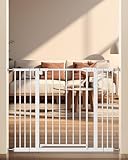
- 【Extra wide】Expands to fit openings between 29"-42.5" width with 4.5" and 6.9" extension kits (Note: not fit openings between 31.8-33.4 Inch and 38.7-40.3 Inch! !), please be sure measure your opening before purchase to ensure proper fit. This baby gate is perfect for stairs, kitchen, hallway and doorways
- 【Safe for kids and pets】No worry about the dog gate being pushed down and hurting your children with an all-steel construction. Double lock design is tough for babies or dogs to release and open, creating a safety environment for your curious crawlers and pets
- 【Auto-close】 This easy walk through baby gate is equipped with an auto-close function. The door can be automatically closed when opened less than 90°, reducing the potential danger for dogs and babies of forgetting to close the door. The door can swing in two directions, and can be easily opened by one-handed operation.
- 【Easy to install】This pressure-mounted baby gate requires no hardware or tools to install, and one person can finish installation in 5-10 mintues, perfect for stairs, doorways and banister. Baby gate can be removed quickly from one occasion to another
- 【Reliable】This dog gate is made of high quality steel material, durable and sturdy, great for family with kids and dogs. keny values our customer experience as the highest priority. If you have any questions about baby gate, please contact us for quick assistance
Do not use a child as the dog’s test subject. Introduce one calm person at a time, keep sessions short, and end while the dog is still comfortable. Visitors should ignore a retreating dog rather than coaxing it out. The AVMA bite-prevention brochure provides additional guidance on recognizing situations in which a bite is more likely.
How do you introduce an adopted dog to a resident dog?
Use gradual, controlled contact and watch both dogs’ body language. If either dog stiffens, freezes, repeatedly turns away, hides, growls, guards a person or object, or cannot disengage, increase distance and separate them.
- Start in a neutral, low-pressure area if possible, with two handlers and secure equipment.
- Allow parallel movement at a distance instead of forcing a face-to-face greeting.
- Keep the first interaction brief and return each dog to a separate area for rest.
- Repeat only when both dogs remain loose and able to respond to their handlers.
- At home, use gates or separate rooms so either dog can retreat.
- Feed separately and remove high-value chews or toys until you understand their resource-related behavior.
The VCA guide to introducing a new dog describes these management principles. That page was edited in 2019, so treat it as general guidance and seek individualized help for a known bite history, severe fear, or repeated conflict.
What records and questions should you request from the shelter?
Ask for copies of all available veterinary records, microchip details, medication instructions, vaccination dates, sterilization status, parasite treatments, and the organization’s written behavior notes. Ask which observations were made repeatedly and which occurred only once. Clarify whether a behavior was directly witnessed, reported by a previous caretaker, or inferred.
Useful questions include:
- Has the dog lived with children, cats, or other dogs, and how was that determined?
- Has the dog shown guarding around food, toys, resting places, or people?
- Were there any known bites, and what circumstances surrounded them?
- What handling, grooming, leash, crate, and car experiences have been observed?
- What signs of illness, pain, coughing, diarrhea, or lameness were noted?
An incomplete answer is still useful if it is clearly labeled as unknown. Do not fill gaps with assumptions.
Also popular on Amazon

- WOODEN BABY GATE: Playtime is made safer in the blink of an eye with our wood baby gate. The wooden gate keeps babies and toddlers safely contained. Our child gate is the perfect solution for creating child-safe zones around the home.
- ADJUSTABLE SAFETY GATE: This wooden safety gate for toddlers is adjustable, fits openings 26.5 to 42 inches wide, and is 23 inches tall. It is designed to be difficult for kids to climb. Our baby gate is perfect for doorways, hallways, and more.
- EASY TO INSTALL: Our pressure mounted baby gate comes completely assembled and can be installed in a matter of seconds. No tools needed! Simply expand the gate to fit your space and press down on the sturdy locking bar to secure it.
- BUILT FOR EVERYDAY USE: The tension baby gate is made of durable American hardwood and rigid diamond mesh that stands up to daily wear while keeping your child safe and secure. The no-marking rubber bumpers keep the gate in place without marking walls.
- MADE IN USA: Our Baby Safety Alliance-certified baby gate brings peace of mind to the entire family. We stand for the highest safety, quality, and operational standards while creating the ideal collection of products for babies ages 6-24 months. Proudly made in the USA!
When is professional help urgent?
Contact a veterinarian promptly for trouble breathing, repeated vomiting or diarrhea, collapse, severe lethargy, suspected poisoning, inability to urinate, significant wounds, or obvious pain. Seek immediate safety help after a bite that breaks skin or when a dog cannot be safely separated.
For behavior, arrange veterinary assessment when fear or aggression is escalating, occurs without an identifiable trigger, prevents basic care, or creates a realistic risk to a person or animal. Until assessed, use physical separation, closed doors, gates, leashes handled by adults, and strict visitor management. Do not attempt punishment-based corrections or deliberately expose the dog to a feared trigger to “test” it.
Do these 3 things before closing this tab:
1Repair Windows errors before they cause bigger problems2Scan for outdated or missing drivers - takes under a minute3Clear out junk files and repair common Windows errorsFrequently asked questions
Can a quiet shelter dog become more active or vocal at home?
Yes. A shelter is an unusual, stressful environment, and behavior can change as the dog relaxes. Plan management around what you observe at home rather than treating shelter quietness as proof of permanent calm.
Should you change food immediately?
Ask the shelter what the dog has been eating and discuss any change with your veterinarian. A gradual transition may reduce digestive upset, but medical needs, allergies, age, and body condition determine the appropriate diet.
Is pet insurance worth considering?
It is an optional financial decision, not a substitute for veterinary care. Policies can have waiting periods and exclusions for pre-existing conditions; read current terms carefully and confirm availability and rules in your region before enrolling.
What if the dog refuses food on the first day?
Stress can reduce appetite temporarily. Offer fresh water and a quiet meal area, and monitor closely. Contact a veterinarian if the dog will not drink, has other symptoms, appears painful, or the refusal persists.
Free tools Windows power users keep installed
One-click scans. No signup required.
Can you leave the dog alone while you work?
Begin with short absences only after the dog has a secure area and you know it can remain safe. Arrange a trusted caregiver or gradual alone-time plan if the dog panics, attempts escape, or damages itself or the home.
Does a difficult first week mean the adoption will fail?
No. Early behavior reflects stress, unfamiliarity, health, learning history, and individual temperament. Safety limits, veterinary evaluation, and qualified behavior support can clarify whether the household can meet this particular dog’s needs.





Leave a Reply