
Some links on this page are affiliate links: if you buy through them we may earn a commission, at no extra cost to you.
The best diet for a rescue beagle is not a particular brand or a breed-branded formula. Start by finding out what the dog is eating now, have a veterinarian assess its age, health, weight, body condition, muscle condition and activity, then choose a complete-and-balanced food for the appropriate life stage and measure an amount that maintains a healthy condition.
Beagles are listed by the American Animal Hospital Association (AAHA) among breeds predisposed to weight gain, so measured portions, controlled treats and regular reassessment matter. Keep the current food stable at first when that is practical and medically appropriate; a move to a new home alone does not prove an immediate diet change is needed.
As an Amazon Associate I earn from qualifying purchases.
The Tool Desk
Outbyte Driver Updater FREEFix the driver behind crashes, sound loss and screen glitchesFind Drivers →Outbyte PC Repair FREERepair Windows errors before they cause bigger problemsFix Now →Start with the rescue’s feeding history
Before buying a new food, ask the rescue, foster caregiver or shelter for a written account of the dog’s current routine. Take it to the first veterinary appointment. Ask specifically:
- Which food, flavor and formula is being fed, and how much is offered at each meal?
- How many meals are given, at what times, and is food left out for free-choice eating?
- What treats, table food, supplements, chews or training rewards does the dog receive?
- Is food used to give medication?
- Has the appetite changed, and has the dog gained or lost weight?
- Are there known diagnoses, vomiting, diarrhea, itching, ear problems or reactions to a food?
- What foods has the dog refused or tolerated well?
AAHA’s nutrition-screening guidance says the assessment should cover the whole diet and feeding environment, not only the main bag of food. Its screening framework is available at AAHA’s nutrition and weight-management screening guidance. If the dog is eating, passing normal stools and has no urgent medical issue, keeping the familiar diet for a short settling-in period can make it easier to distinguish stress from a food reaction. If the rescue reports a medical diet or the dog is unwell, follow the veterinarian’s direction instead.
Popular on Amazon

- 2 Levels in 1 Toy: start your pups off with a level 1 puzzle, add some treats in the base compartments and watch your dogs get their tasty reward by nudging the lids. For dogs who have mastered level 1, for added challenge in level 2, just put some treats in the top compartments, teach your dogs to press the top cover to dispense treats down into the base compartments and finally enjoy their reward
- Slow Feeder: The large capacity top transparent granary saves you the hassle to refill dog food frequently. The product can also be used as a slow feeder utensil for your dogs, which promotes healthy ingestion by slowing down eating speed by over 10x. Great for large and small dogs
- Not Easy to Tip Over: 4 non-slip rubber mats and weighted base hold the dog puzzle toy firmly in place when dogs eat and nudge and prevent the toy from tipping over
- We Prioritize Safety: the dog puzzle toys are designed with your pet’s health in mind, made of durable food-grade PP materials. Non-removeable parts make it safe and easy to clean. And you can give puzzles toy to your dog or directly out of the box, just no assembly!!
- Trains Dog’s Intelligence: interactive treat puzzle game challenges your puppies to get their reward of treats, works your dog's mind while reducing boredom and destructive behavior like chewing, digging and excessive barking. Size: 4.2 inch height
Do not abruptly replace a food simply because it is inexpensive, unfamiliar or not marketed for beagles. The relevant question is whether the diet, amount and feeding method suit this individual dog.
Have a veterinarian establish the starting point
At the first examination, ask for a nutrition assessment rather than relying on appearance or the feeding chart on a package. AAHA recommends screening at every visit for diet history, environment, activity, body weight, body condition score (BCS) and muscle condition score (MCS), with a more detailed assessment when risk factors appear. See the organization’s nutritional-assessment guidance.
Windows Errors? Fix Them Before They Spread
Repair common Windows errors and clear accumulated junk for a smoother, more stable PC - no reinstall needed.Free scan · no reinstallOutdated Drivers Are Slowing You Down
One free scan finds every outdated or missing driver and matches the right update for your exact hardware.Free scan · exact hardware matchBody condition is different from body weight
Weight tells you how heavy the dog is; BCS estimates fat stores. MCS separately evaluates muscle, which can be reduced by illness, inactivity or aging. A beagle can carry excess fat while losing muscle, so a single number on a scale is not enough to set a feeding plan. The World Small Animal Veterinary Association (WSAVA) nutrition resources include body- and muscle-condition tools that can help you discuss the findings with your veterinarian.
Also popular on Amazon

- SLOW FEEDER FOR FAST EATERS — Narrow the food flow, and a 30-second gulp stretches into a 5-to-60-minute meal.
- SPIN TO EAT — Your dog spins the clear top with a paw, kibble drops into the center bowl, and every bite is earned.
- YOU SET THE DIFFICULTY — Open the outlet for beginners, narrow it for pros. One bowl your dog never outgrows.
- HOLDS A FULL MEAL, 4 CUPS — Room for a Lab's dinner, not a handful of treats, so it replaces the everyday bowl.
- SMALL, MEDIUM, AND LARGE DOGS — Wider than a dinner plate and low to the floor, it feeds Chihuahuas to Great Danes.
Bring the factors that change calorie needs
Tell the veterinarian the dog’s estimated age, sex and reproductive status, activity level, medical history, medications and every edible item in the household. Ask whether the target should be based on current weight or an ideal weight if the dog is too thin or too heavy. The veterinarian can then set an initial daily amount and adjust it as the dog’s condition changes. No rescue-beagle calorie target or number of cups can be prescribed safely without those facts.
AAHA’s 2019 nutritional-assessment page reports that 56% of dogs in the United States were overweight or obese, citing studies available at that time. That dated statistic is a reminder to monitor condition, not a diagnosis of your dog.
Choose food by nutritional adequacy and life stage
For a generally healthy dog, begin with the food’s nutritional adequacy statement. It should say the product is complete and balanced for long-term feeding to the relevant life stage. AAHA explains that this statement indicates whether a commercial food supplies required nutrients in the necessary amounts and ratios for the specified stage. A treat, topper or supplement is not a substitute for a complete diet.
Also popular on Amazon
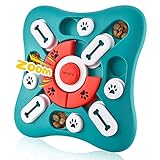
- 【PRODUCT SIZE】10 inch*10 inch*1.3 inch.
- 【3 WAYS TO PLAY, UPGRADE SLOW FEEDER】Our dog mental stimulation toys have a unique squeak button in the middle, which make it easier to attract the attention of dogs and cats. Three different difficulty designs and the 16-hole dog treat dispenser design maximize slow feeding time, even beyond 20 minutes.
- 【FUNNY STIMULATING TOYS】All kinds of dogs and cats love the puzzle game of Spin & Slide and the Seek & Hide with their smell sense and paw skills to find food. Combining circular orbit sliding game and linear orbit sliding game, smart dog and cat must move the slider correctly to get the food reward hidden in the maze.
- 【NON-REMOVABLE PARTS DOG PUZZLE】Our dog treat puzzle is made of non-toxic materials, very durable and suitable for pets to play for a long time. This dog toy has no removable parts because the design has built-in play parts that fold tightly and won't fall off easily.
- 【ANTI-SLIP & EASY TO CLEAN】: The four corners of the bottom are equipped with four anti-skid pads, which can be well fixed during the dog's slow food process; It is easy to clean, also dishwasher safe.
Compare the options that actually differ
| Question | What to verify | Why it matters |
|---|---|---|
| Is it complete and balanced? | Read the nutritional adequacy statement and the life stage named there. | It establishes whether the food is intended to provide all required nutrients for long-term feeding. |
| Does the life stage fit? | Choose growth food for a puppy and adult-maintenance food for a mature dog unless a veterinarian specifies otherwise. | Nutrient needs change with growth, adulthood and medical conditions. |
| How calorie-dense is it? | Check calories per measured cup, can or other stated amount, then use the veterinarian’s target amount. | Two foods can have very different calories in the same volume. |
| Is there a diagnosed disease? | Ask whether a veterinary therapeutic diet is required. | A medical condition can make an ordinary retail diet inappropriate. |
| Will this dog tolerate and eat it? | Consider stool quality, appetite, skin signs and acceptance after a proper transition. | A nutritionally adequate food still has to be suitable for the individual dog. |
| Can the manufacturer answer quality questions? | Ask who formulates the diet, what quality-control measures are used and whether nutrient information is available. | AAHA recommends considering the manufacturer’s nutrition and quality-control responses, not relying on front-label claims. |
“Beagle,” “natural,” “grain-free” and “senior” on the front of a package do not, by themselves, establish suitability. AAHA’s age-specific and breed-specific diet guidance emphasizes the individual pet and the diet’s nutrient profile.
Puppies and young dogs
Select a food labeled complete and balanced for growth when the dog is still growing. AAHA notes that small- and medium-sized dogs typically remain on growth diets until approximately one year, although maturity varies. Ask the veterinarian when this particular dog should move to an adult formula rather than changing solely on a birthday.
Adult dogs
A healthy adult that maintains an appropriate condition can generally remain on a complete-and-balanced adult-maintenance food. The bag does not need to say “beagle.” The food should change if the dog’s condition, tolerance, activity or medical needs call for it.
Also popular on Amazon

- Medium slow feeder dog bowl – helps slow down eating up to 10X; this SLOWEST level feeder is best for very fast eaters and small to medium dog breeds
- Holds 2 cups of dry or wet dog food – this very deep dog bowl has our most challenging puzzle feeder maze design and can fit a full meal for medium-sized dogs
- Mindful mealtime – encourages slower eating and longer engagement, helping pups enjoy every bite while making mealtime more fun and interactive
- Multiple sizes, maze patterns, and 3 SLOW levels to choose from – Slow, Slower, or Slowest – to slow your dog down as much as needed; pick the perfect size and design for your unique pet
- Non-slip, food-safe, and easy to clean – our puzzle feeders are top-rack dishwasher-safe and made without BPAs, PVCs, lead, or phthalates
Older dogs
There is no automatic requirement to move a thriving older dog to a product labeled “senior.” If the dog is doing well on complete-and-balanced adult food, a change should have a reason, such as a veterinarian-identified health or nutrient need. Age-related changes in muscle, weight or disease risk are reasons for reassessment, not a license to prescribe a formula without an examination.
Quick wins for a faster PC:
Repair Windows errors before they cause bigger problemsFix Now →Scan for outdated or missing drivers - takes under a minuteDriver Scan →Clear out junk files and repair common Windows errorsFree Scan →Set portions from the dog’s condition, not the package alone
Package feeding charts are starting references for a general population. They are not individualized prescriptions. Use the veterinarian’s target amount, measure every meal, and reassess the dog’s weight, BCS and MCS. The amount may need adjustment when activity, age, reproductive status or health changes.
Count every calorie source
Daily intake includes the main food plus treats, table food, training rewards, supplements, chews and food used to deliver medication. AAHA advises keeping these additional items to no more than 10% of total daily calories so they do not displace the nutrient balance of the primary diet. If you use part of the regular food for training, measure it from the day’s allotment rather than adding uncounted rewards.
Also popular on Amazon

- Dog Friendly Materials: Not Suitable for Aggressive Chewers. Treat dispensing dog toys are made of ABS and nylon material. It is a sturdy, safe food container that resists pet damage, provides a long-lasting and safe play experience. You can give your dog confidently use interactive dog toys. At the same time, in order to make the dog puzzles for smart dogs quieter when rolling, the material of the dog enrichment toys for large dogs roller is made of rubber, less noise
- Food Adjustment Distribution: Mental enrichment toys for dogs have two adjustable switches, you can control the amount of food by adjusting the size of the dog puzzles for large dogs switch to extend the feeding time. Dog toys to keep them busy are also designed with a special spiral structure to make the dog puzzle feeder more challenging. If you want to give a birthday gift to your furry friend, these large dog puzzle toy are good choice, it will like this dog treat dispenser toy
- Improve Intelligence & IQ Training: Dog treat toy is an interactive chase toy that combines puzzles and treat dispensing, pets learn the process of rolling the dog treat puzzle to make treats fall and get treats, which helps to improve intelligence and stimulate the brain, Mental stimulation for dogs will relieve anxiety and reduce boredom, best dog toys to keep them busy for hours. Our dog food puzzle feeders, like other interactive dog toys for boredom are best played under supervision
- Slower Feeding: BoYoYo dog stimulation toys to keep them busy and food puzzles for dogs that reduces your dog's eating speed, cultivate slow eating habits in dogs to promote digestion, allowing your dog to enjoy a more enjoyable mealtime. It is a great alternative to dog slow feeder toy, lick pad for dog, and snuffle mat for dog. These are multi-functional dog puzzles for large dogs
- Attracting Dog Attention: Put your dog's favorite dog food or snacks inside the dog mental stimulation toys to better attract your dog's attention! Keep your dog engaged and active, puzzle treat toys for dogs can divert attention from destructive behavior to positive play, one of the best interactive dog toys for large dogs to keep your dog busy. This interactive dog toy is suitable for medium and large pet, can also be used as a cat puzzle toy and cat treat puzzle
Prevent accidental overfeeding
- Use a consistent measuring method for every meal; do not alternate casually between cups, handfuls and heaped scoops.
- Store the day’s measured food where every household member can see what remains.
- Tell children and visitors not to feed from the table unless that food has been included in the plan.
- If several pets compete, feed them separately and remove bowls after the planned meal.
- Ask before adding oils, vitamins, joint products or other supplements; “more” is not automatically safer or healthier.
A food-dispensing toy can slow access and help manage food competition, but it does not replace a measured daily target or veterinary assessment. Introduce one only if the dog can use it safely and calmly.
Independent reader supportYour contribution helps us test, update, and keep practical guides available for everyone.Change foods over 4–7 days when a change is appropriate
AAHA says that adjusting a diet over four to seven days may reduce negative gastrointestinal responses. It is a practical approach, not a guarantee and not proof that one transition schedule is superior for every dog. Ask the veterinarian for the exact plan if the dog has a suspected food reaction, chronic gastrointestinal disease or a prescribed medical diet.
- Confirm the reason for changing and record the old food, amount and stool quality.
- Choose a complete-and-balanced food for the veterinarian-approved life stage and purpose.
- Blend the old and new diets in gradually changing proportions over four to seven days, following the veterinarian’s instructions.
- Keep treats, chews and supplements unchanged while the main food is being introduced so you can identify the cause of a problem.
- Watch appetite, vomiting, diarrhea, itching and energy. Contact the veterinarian about abnormalities rather than independently switching through multiple foods.
If the dog refuses food, vomits repeatedly, develops persistent diarrhea, has marked itching or was already losing weight, seek veterinary advice promptly. A rescue dog with an identified disease may need a therapeutic diet and a different transition plan.
Monitor the plan after the bowl is filled
Record the food and amount, treats, appetite, stool quality and any changes in activity. At veterinary visits, ask for weight, BCS and MCS to be recorded separately. Recheck the feeding amount whenever exercise, age, reproductive status or health changes. A dog can look “fine” while slowly gaining fat, and a dog losing weight can lose muscle as well.
Signs the plan needs review
- Steady weight gain or loss without an intentional plan.
- Ribs and other landmarks becoming difficult to assess because of increasing fat cover, or a pronounced loss of muscle.
- Persistent vomiting, diarrhea, constipation, poor appetite or excessive hunger.
- New itching, recurrent ear or skin problems, or a suspected food reaction.
- Reduced energy, exercise intolerance or a change in drinking or urination.
These signs do not identify a specific food as the cause. They are reasons to contact the veterinary team before making major diet changes.
A practical decision sequence for a rescue beagle
- Document the current routine. Get the food, amount, schedule, extras, medications and known reactions from the rescue or foster caregiver.
- Keep it stable initially when appropriate. Avoid adding several new foods during the first days unless medical advice requires immediate action.
- Book an examination. Have age, health, weight, BCS, MCS and activity considered together.
- Select by adequacy and life stage. Confirm the complete-and-balanced statement and whether any disease requires a therapeutic diet.
- Measure the veterinarian-approved amount. Include every treat, supplement, chew and medication food in the daily total, keeping extras at or below 10% of calories.
- Transition over four to seven days if changing. Monitor tolerance and call about abnormal signs.
- Reassess. Adjust portions as the dog’s condition, activity, age, reproductive status or health changes.
This process answers “What should I feed my rescue beagle?” without pretending that an unknown dog has a universal portion, calorie target or required brand. The healthiest choice is the complete-and-balanced diet that fits the dog’s assessed life stage and medical needs, is accepted and tolerated, and is fed in an amount that preserves appropriate fat and muscle condition.
What’s actually slowing this PC down?
Pick the symptom - the matching free tool is one click away.





Leave a Reply