
What’s actually slowing this PC down?
Pick the symptom - the matching free tool is one click away.
Some links on this page are affiliate links: if you buy through them we may earn a commission, at no extra cost to you.
A Labrador Retriever–Flat-Coated Retriever mix is an individual mixed-breed dog, not a standardized breed with a predictable adult blueprint. The parents are both sporting retrievers, so an active lifestyle and early, reward-based training are sensible starting points. However, the mix’s eventual size, coat, shedding, energy level, sociability, and health needs must be assessed from the actual dog, its parents and its veterinary records—not inferred from a formula.
What is a Labrador Retriever–Flat-Coated Retriever mix?
This cross combines a Labrador Retriever with a Flat-Coated Retriever. It may be described informally as a Lab–Flat-Coat mix, but the reviewed breed-club and veterinary guidance does not establish a standardized name, breed standard or reliable mix-specific trait profile. There is no authoritative equation that predicts how much Labrador or Flat-Coated Retriever appearance and behavior a particular puppy will inherit.
As an Amazon Associate I earn from qualifying purchases.
Recommended Free Tools
That matters when you are choosing a puppy, identifying an adult dog or planning care. Parent-breed descriptions provide useful context: both breeds were developed as sporting retrievers, and both can be active, biddable companions. They do not guarantee that an individual cross will mature to a particular height, weight, coat type or temperament. Treat the dog in front of you as the primary evidence.
What the parent breeds can—and cannot—tell you
| Parent | Established reference points | How to use that information |
|---|---|---|
| Labrador Retriever | The American Kennel Club describes the Labrador as a friendly, outgoing, high-spirited, medium-to-large companion. Its listed adult range is 21.5–24.5 inches at the shoulder and 55–80 pounds. The breed has a short, dense, water-repellent double coat that sheds, and needs plenty of daily exercise, early socialization and puppy training. | Use these as Labrador breed context only. They are not a size, coat or behavior guarantee for a cross. |
| Labrador Retriever working standard | The Labrador Retriever Club describes a working-condition weight of 65–80 pounds for males and 55–70 pounds for females. Its ideal disposition is “a kindly, outgoing, tractable nature; eager to please and non-aggressive towards man or animal.” | This is a breed-standard reference, not a forecast for a mixed-breed dog’s adult weight or personality. |
| Flat-Coated Retriever | The American Kennel Club presents the Flat-Coated Retriever as a sporting gundog that is happy, self-assured and willing to please. | It supports planning for an active sporting-dog context, but supplies no cross-specific prediction. |
Even within a single litter, puppies can differ substantially. A puppy that looks strongly Labrador-like may still develop a different coat or activity pattern from its littermates. Conversely, a dog with a Flat-Coat-like head or feathering may not share every behavior associated with that parent. Genetics, early experience, health, age and training all shape the adult dog.
Popular on Amazon

- Engineered for Ultimate Strength: Constructed from 1/2 inch diameter rock climbing rope, this heavy duty dog leash is distinctively durable and strong. It is designed to withstand the strongest pulls from large and energetic dogs, giving you peace of mind that your pup won't break free during walks
- Comfortable Padded Handle: Say goodbye to rope burn. Our soft, cushioned foam handle provides an amazing grip and protects your hands from sudden tugs. Enjoy longer walks and extended training sessions with total comfort, even if your dog is a puller
- Maximum Nighttime Visibility: Highly reflective threads are woven through the entire length of the rope (not just painted on), keeping you and your fur baby visible to passing cars and cyclists during early morning jogs or late-night strolls. Perfect for urban streets and low-light environments
- Tangle-Free 360° Swivel: Featuring a heavy-duty metal clasp that rotates 360 degrees, this ensures the rope never gets twisted or tangled, no matter how much your dog moves around. The zinc alloy hook is rust-proof and easy to clip onto any dog collar or harness in seconds
- Versatile for Any Activity: Park walks, trail hikes, or yard training. Offers ideal balance of freedom and control. Comes in 4ft, 5ft, 6ft lengths and 12 colors. 3/8" diameter suits small to medium dogs – lightweight and non-bulky. For medium and large dogs, choose 1/2" diameter
How big will a Labrador–Flat-Coated Retriever mix get?
There is no established adult size range for this exact cross. The Labrador figures above show the scale of one parent, but they cannot be averaged into a dependable mix prediction. A puppy’s expected adult size is better estimated from its sex, current growth, parents’ actual measurements and veterinary assessment.
For a puppy
- Ask for the adult weights and heights of both parents, not just their breed labels.
- Record weight and body condition at veterinary visits. A growth trajectory is more informative than a single puppy weight.
- Feed for steady, healthy growth under veterinary guidance rather than trying to make a large-breed puppy grow as fast as possible.
- Use body condition, muscle and mobility—not a target number borrowed from the Labrador standard—to judge whether the dog is thriving.
For an adult or adolescent dog
Measure height at the shoulder and observe body condition, but also plan around the dog’s practical footprint: crate dimensions, vehicle space, exercise endurance and ability to settle indoors. A dog that is heavier or lighter than a Labrador reference range is not automatically unhealthy. Your veterinarian can distinguish normal individual variation from excess weight or a medical problem.
What might the coat and shedding be like?
The Labrador parent has a short, dense, weather-resistant double coat that sheds. The available information does not establish which coat a Labrador–Flat-Coated Retriever cross will inherit, nor does it provide a reliable brushing schedule, shedding level or grooming burden for the mix. Do not assume that the cross will be low-shedding or that one particular brush will suit every dog.
Also popular on Amazon

- 【Professional Retractable Dog Leash】 The ultimate combination: 16 ft strong nylon reflective tape, impact-resistant ABS housing, and a stainless steel anti-chew cable. This design greatly reduces the risk of being bitten through, extending the leash’s lifespan. Augwind’s retractable leash is specifically designed for small to medium dogs under 50 lbs, offering the best value on the market
- 【Safe & Effective】16 ft Strong Reflective nylon webbing; Over 100,000 retraction times; Max anti-jerk tensile strength: 350 lbs; . Whether day or night, on the street or lawn, the Augwind retractable leash makes every walk safe and easy
- 【Quick Lock System】 Operate the pause, lock, and unlock buttons with a single thumb. Enjoy smooth braking and instant response. The Augwind retractable dog leash ensures the safety of both you and your pet on every outing
- 【2026 Equipment Upgrades】1. Reflective webbing 2. Chrome-plated, rust-proof 360° rotating clasp 3. Ergonomic soft silicone handle 4. Reserved slot for poop bag holder 5. Stainless steel anti-chew cable
- 【2-Year Warranty】 We are a professional pet products company committed to bringing the safest, most practical, and affordable pet products to pets and their owners. We promise to solve any quality issues within 2 years. We provide 24/7 after-sales service. If you have any questions, please feel free to contact us
Choose grooming care from the individual coat
- Look at the adult or puppy’s coat in person, including length, density, feathering on the legs and tail, and how easily it mats.
- Start with a gentle brush that reaches the coat without scraping the skin. Ask a groomer or veterinarian to demonstrate technique if the coat is dense or feathered.
- Check ears, paws, tail furnishings and areas under a collar or harness regularly, because friction and moisture can hide tangles or skin irritation.
- Bathe when the dog is dirty or your veterinarian recommends it, using a dog-formulated product and drying the coat thoroughly.
- Keep nails at a comfortable length and introduce handling gradually with food rewards.
Shedding is a management issue rather than a character flaw. Vacuuming, washable bedding and routine brushing can help, but the frequency should follow what the dog’s coat actually does.
What temperament and energy should you expect?
Both parent breeds are sporting retrievers, and the Labrador is specifically described as energetic and in need of plenty of daily exercise. The Flat-Coated Retriever is described as happy, self-assured and willing to please. Those descriptions support preparing for an active, people-oriented dog that may enjoy retrieving and learning. They do not establish that every cross will be outgoing, easy to tire or comfortable in every social setting.
Assess the dog rather than relying on a label
- Energy: How quickly does the dog become active, and how long does it take to relax afterward?
- Settling: Can the dog rest on a mat or in a crate after exercise, or does it remain constantly restless?
- Sociability: Does it approach people willingly, pause and recover from surprises, or show sustained fear?
- Trainability: Does it engage with food, toys or praise and recover when a task becomes difficult?
- Handling: Can you touch paws, ears and the mouth safely, using gradual reward-based conditioning?
- Retrieving and play: Does the dog enjoy carrying objects, swimming or scent games, and can play stop without conflict?
Behavior changes with age, pain, sleep, environment and previous experience. A shelter dog’s first-day behavior may not represent its behavior after decompression, while a breeder’s highly managed puppy environment may not reveal how the dog responds to a busy household.
Do these 3 things before closing this tab:
1Fix the driver behind crashes, sound loss and screen glitches2Repair Windows errors before they cause bigger problems3Scan for outdated or missing drivers - takes under a minuteAlso popular on Amazon
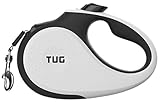
- Small Retractable Dog Leash is Suitable for Dogs Under 35 lbs; Medium For Dogs Under 55 lbs; Large For Dogs Under 110 lbs; Retractable Leashes Not Suitable For Chewing
- 16 ft Tape Retractable Dog Leash With Easy-Adjust Retraction; 360 Degree Tangle-Free Inlet
- Quick Lock And Unlock Feature - Easy Roll-On and Roll-Off With Your Thumb
- Super Comfortable Grip For Those Long Walks! Ergonomic Anti-Slip Handle
- Heavy Duty Internal Coil For Consistent Retraction and Recoil
Exercise and training: a practical starting plan
Plan for daily physical activity and mental work, then adjust the amount for age, health, weather and the dog’s observed recovery. Puppies need short, age-appropriate play and exploration rather than forced distance running or repetitive jumping. Adolescents may appear tireless while still developing physically. Adults can need substantial activity, but a good plan includes rest and the ability to settle.
Build the first weeks around habits
- Establish a routine. Use consistent times for sleep, meals, toileting, play, walks and quiet periods.
- Teach household skills. Reward attention to you, name response, coming when called, walking without pulling, leaving objects and relaxing on a mat.
- Socialize thoughtfully. Introduce people, surfaces, sounds, handling, vehicles and calm, healthy dogs at a pace that keeps the puppy comfortable. Socialization is not forcing greetings.
- Use reward-based training. Food, toys and access to valued activities can reinforce behavior. Avoid methods that rely on fear or pain.
- Provide outlets. Retrieve games, scent searches, food puzzles and short training sessions can exercise the brain without excessive impact on growing joints.
- Measure recovery. If the dog remains frantic, sore, lame or unusually fatigued, reduce intensity and consult a veterinarian.
Early puppy classes can be useful when they are run safely and use reward-based methods. Training is not only about obedience: it helps an energetic dog live safely around visitors, children, other animals, doors, food and vehicles.
Health questions to ask before adoption or purchase
No cross-specific disease rate or complete screening protocol has been established for Labrador–Flat-Coated Retriever mixes. Do not claim that mixed ancestry guarantees better health, and do not assign this cross a known risk percentage. Instead, investigate the individual dog and its parents.
Also popular on Amazon

- ENHANCED NIGHT VISIBILITY: Keep your dog safe during early morning or evening walks. The upgraded double-sided reflective stitching catches streetlights and car headlights brightly, ensuring you both remain highly visible to traffic in low-light conditions
- CUSHIONED ANTI-BURN HANDLE: A savior for hands when walking active dogs that pull. The soft, thick interior padding prevents painful rope burn and strain, providing a secure, comfortable grip for better control when your furry friend lunges. Includes a sturdy metal D-ring for clipping poop bag dispensers
- PERFECT 6FT BALANCE: The ideal length for urban walks, offering your dog enough freedom to sniff around while keeping them close enough for easy command in busy areas. Choose the 3/4'' width for small breeds, or the robust 1.0'' width for powerful medium to large dogs
- HEAVY-DUTY TANGLE-FREE CLASP: Features a strong metal spinning snap that allows 360° movement, preventing frustrating leash tangles so your dog can move freely around you. Built with high-density nylon webbing for reliable daily strength. NOTE: While tough for pulling, this nylon material is NOT chew-proof. Don't leave unattended with chewers
- COMPLETE THE LOOK: Available in vibrant colors tailored to match your dog's style. For the ultimate coordinated walking set, pair this leash with our matching Joytale reflective nylon collar
Labrador-specific screening context
The American Kennel Club says responsible Labrador breeders screen for hip and elbow dysplasia, heart disorders, hereditary myopathy and eye conditions. It also notes that DNA testing can identify carriers of exercise-induced collapse. These are Labrador-specific recommendations, not verified requirements for every Labrador–Flat-Coated Retriever cross.
Questions for a breeder, rescue or foster carer
- What veterinary records, vaccination history and medication information belong to this individual dog?
- Have the parents had hip, elbow, heart or eye evaluations, and can you see the actual results rather than a verbal claim?
- Is DNA testing available for exercise-induced collapse in the Labrador parent or the dog?
- Has the dog shown lameness, exercise intolerance, fainting, repeated ear or skin problems, seizures or unusual reactions to anesthesia?
- What diet, exercise level and weight history has the dog had?
- What behavior has been observed around children, cats, dogs, strangers, handling, crates, car travel and being left alone?
Arrange an independent veterinary examination soon after bringing the dog home. Bring all records, ask which preventive care is due and discuss an appropriate plan for joints, weight, dental care, parasite control and any symptoms you have observed. A veterinarian can decide which tests are warranted; a parent-breed checklist should not replace an examination.
Independent reader supportYour contribution helps us test, update, and keep practical guides available for everyone.How to compare two individual dogs
If you are choosing between puppies, adults or rescue candidates, compare observable evidence rather than trying to rank one percentage of parentage against another.
Also popular on Amazon

- Upgrade: The product has been modified to use nylon thread directly sewing, very strong.All handles was sewn onto the leash instead of the cord ties.Package includes: frosted zipper bag,two handles dog leash.
- MAXIMUM TOUGHNESS AND DURABILITY: Nearly 2X thicker and stronger than standard dog leashes. 3mm thick and 1” wide with tightly webbed nylon for enhanced rugged construction.
- DUAL HANDLES FOR TOTAL CONTROL: Soft Neoprene and padded handle, comfortable than ever ;Equipped with an extra traffic handle for amazing control. Use the standard handle for those casual dog walks or quickly grab the built in traffic handle to guide your pup through crowded areas with ease.
- 360° Rotating Clasp: Swivel clasp prevents the leash from twisting and dog getting tangled. Heavy-duty metal clasp makes our training leashes last longer than most ones. Premium components for maximum strength
- BE SAFE AND VISIBLE AT NIGHT: Luminous reflective threading keeps you both safe and visible on your late-evening walks. Enjoy a large 2” heavy duty clip for added safety and thick D-ring to attach your favorite dog training clicker or dog poop bag holder.Packaging details:Frosted zipper bag,Dog leash with D ring
| Comparison axis | What to observe or document | Why it affects your decision |
|---|---|---|
| Energy and recovery | Activity level during play, ability to rest, and recovery after a walk or training session | Shows whether the dog’s daily needs fit your schedule and home. |
| Growth or adult size | Current measurements, body condition and the parents’ actual size | Helps with housing, transport, equipment and future exercise planning. |
| Coat and shedding | Length, density, feathering, matting and hair released during handling | Determines grooming time and household tolerance for shedding. |
| Sociability and trainability | Response to people, novel situations, food, toys and gentle handling | Indicates what support and training environment may be needed. |
| Health history | Veterinary records, parental screening results and any symptoms | Provides more useful evidence than assumptions about mixed-breed health. |
For a rescue dog, ask for repeated observations from foster care when possible. For a puppy, meet the mother, see where the litter is raised and observe how the breeder handles health and temperament questions. No single brief meeting can predict an entire adult life.
Preparing your home and budget
Start with equipment sized for the dog you have now and replace it as the puppy grows. A standard leash, secure collar or harness, identification, food and water bowls, a crate or safe rest area, washable bedding, waste bags and reward-sized treats cover basic daily management. A leash is useful for controlled walks and gradual exposure to the outside world; there is no evidence here that this cross requires a specialized model.
Outdated Drivers Are Slowing You Down
One free scan finds every outdated or missing driver and matches the right update for your exact hardware.Free scan · exact hardware matchPC Slower Than It Used to Be?
A free scan shows the junk files, broken settings and background clutter dragging Windows down - then fixes them in one click.Free scan · Windows 10 & 11Budget for routine veterinary care, vaccinations, parasite prevention, training classes, grooming supplies and replacement equipment during growth. Keep an emergency reserve because no parent-breed description predicts an individual dog’s future medical costs. Pet insurance or a dedicated savings plan can be discussed with a veterinarian or financial adviser, but coverage terms vary and should be read before enrollment.
Safety details that matter for retriever-type dogs
- Use secure fencing or a leash until recall is reliable; enthusiasm for movement or retrieving can carry a dog farther than expected.
- Introduce swimming gradually and supervise around water. Retrieving instinct does not make every dog a safe swimmer.
- Prevent access to toxic foods, medications, chemicals and small objects that can be swallowed.
- Manage jumping, rough play and slippery floors while joints are developing.
- Provide shade, water and rest during warm weather, and stop exercise if the dog shows distress.
Common mistakes to avoid
- Promising a fixed adult size. A Labrador range is parent context, not a crossbreed guarantee.
- Assuming a predictable coat. The Labrador’s short double coat does not prove that a cross will be short-coated, low-maintenance or lightly shedding.
- Equating friendliness with universal sociability. Social behavior still needs careful observation and training.
- Over-exercising a growing puppy. Increase activity gradually and seek veterinary advice for lameness or persistent fatigue.
- Using “hybrid vigor” as a health guarantee. Mixed ancestry does not establish freedom from inherited disease.
- Accepting certificates without records. Ask to see named results, dates and the dog or parents to which they apply.
- Choosing on appearance alone. Energy, settling ability, health history and compatibility with your household are more consequential than a particular head shape or coat pattern.
The bottom line for prospective owners
Prepare for an active retriever-type companion, but make decisions from the individual dog’s evidence. Observe energy and settling, inspect the actual coat, document growth or adult size, use early reward-based training and socialization, and obtain a veterinary review of health records and screening. The Labrador and Flat-Coated Retriever descriptions can help you plan; they cannot tell you exactly what this cross will become.





Leave a Reply