What’s actually slowing this PC down?
Pick the symptom - the matching free tool is one click away.
A large black-and-yellow spider in a round web may be a yellow garden spider, Argiope aurantia. It is generally nonaggressive and considered relatively harmless; if its web is not in a busy spot, leaving it alone is usually a sensible choice.
“Garden spider” is a common name, not a precise species label. This guide focuses on A. aurantia, but other Argiope species may share the name, and local species vary. If a reliable identification matters, use a clear photo and location or contact a county extension office.
How to identify a yellow garden spider
Adult females are the conspicuous spiders people most often notice. UF/IFAS Extension describes these features:
- Yellow-and-black markings: the female has a large abdomen with yellow and black markings.
- Silver hairs: the front body section, or carapace, has silver hairs.
- A large orb web: the spider builds a round web, commonly attached to vegetation.
- A zigzag silk decoration: a thick zigzag in the web is called a stabilimentum, though it may not always be present.
UF/IFAS Extension reports adult female body lengths of 14–24 mm (about 1/2–1 inch) and males under 6 mm. The account attributes these measurements to Levi (1968); they are source-reported figures, not a universal field rule. Males are brown and much smaller than females, so a less colorful spider near a web need not be a different species.
#1 Best Overall

- 36 x 24 inch Poster
- Ships in a sturdy tube
- Product is Easy to frame
- Great Wall Décor
- Brightens up a room
Do not identify a spider by its common name or web alone. Florida, for example, has several Argiope species. If species-level identification matters, photograph the spider clearly, note where it was found, and ask a county extension office or other regional expert.
Garden spider look-alikes
The banded garden spider, Argiope trifasciata, is another species that may be called a garden spider. Other Argiope species occur in some regions. A photo and location can help an expert distinguish them; a common name by itself cannot.
Where garden spiders live
UF/IFAS Extension describes Argiope aurantia as occurring in Central and North America and being most common in the eastern part of its range. It is found in gardens, roadsides, farms, and other edge habitats. The species commonly attaches its orb web to vegetation.
People may notice these spiders and their egg sacs in fall, but seasonal timing depends on local conditions. SDSU Extension describes females producing egg sacs in fall, eggs surviving winter, and spiderlings emerging in spring; that seasonal account should not be treated as an exact calendar promise for every region.
Rank #2

- PEST IDENTIFICATION GUIDE: Features illustrated examples of 12 common garden pests, including aphids, whiteflies, spider mites, thrips, beetles, caterpillars, slugs, scale insects, leafhoppers, and mealybugs.
- QUICK VISUAL REFERENCE: Organized illustrations and labels make it easy to compare common pest names, shapes, colors, and identifying features at a glance.
- 13X19 GLOSSY POSTER PRINT: Printed on glossy paper for crisp detail, earthy botanical color, and clear typography in a vertical format.
- GARDEN EDUCATION DECOR: Useful for home gardens, greenhouses, potting sheds, horticulture classrooms, garden rooms, and plant-care workspaces.
- READY TO FRAME OR DISPLAY: Lightweight unframed poster fits standard 13x19 frames, poster rails, bulletin boards, or simple wall display setups.
What does a garden spider eat?
Garden spiders catch insects in their orb webs, then wrap and consume them. Extension sources describe them as beneficial garden predators. They are not a targeted pest-control service, and one spider should not be expected to eliminate a particular garden pest.
What is the white zigzag in the web?
The thick zigzag silk in the web is called a stabilimentum, or web decoration. Its function is not settled. UF/IFAS recounts possible defensive roles, but no single explanation is established as the answer in every situation.
How garden spiders build their webs
Argiope aurantia builds an orb web, commonly attached to vegetation, and uses it to catch insects. The spider may retreat when disturbed. Give it space rather than trying to handle it or its web.
Garden spider eggs, spiderlings, and lifespan
The conspicuous silk structure near a female’s web may be an egg sac. SDSU Extension describes the female producing an egg sac in fall; eggs survive winter, and spiderlings emerge in spring. The sac protects the eggs, so leave it in place when possible.
Quick wins for a faster PC:
Fix the driver behind crashes, sound loss and screen glitchesFind Drivers →Repair Windows errors before they cause bigger problemsFix Now →Scan for outdated or missing drivers - takes under a minuteDriver Scan →Rank #3

- All posters measure 24" x 36".
- This standard size fits inexpensive, off the shelf frames if you wish to frame this poster.
SDSU Extension says adult spiders generally die after the first hard frost. Timing varies with local conditions, so these seasonal patterns are not exact promises for every climate.
Are garden spiders dangerous to people, dogs, or cats?
They are generally nonaggressive and considered relatively harmless. UF/IFAS Extension says the species will generally flee rather than attack when disturbed. SDSU Extension notes that a bite can be painful but is not considered dangerous. Do not handle the spider, and remember that individual reactions can vary.
Keep children and pets from touching or mouthing the spider. If someone has a suspected spider bite, the National Pesticide Information Center (NPIC) advises keeping the person calm and contacting Poison Control at 1-800-222-1222. Seek medical advice for unusual or concerning symptoms; do not try to identify the spider from a skin reaction alone. For a pet with concerning symptoms after possible contact, contact a veterinarian.
Should you remove a garden spider?
Usually, no—if the web is outdoors and away from high-traffic areas. Extension sources describe the spider as beneficial and nonaggressive. If it is in a busy spot, the appropriate response depends on the location and whether the identification is reliable.
Rank #4
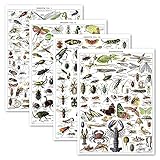
- Set of 4 Posters
- Posters are 18" x 24” in size
- High-quality 3 MIL lamination for added durability
- Tear Resistant
- Keep people and pets away. Do not touch, trap, or provoke the spider.
- Identify it before choosing a control method. NPIC recommends identifying the spider before deciding what to do.
- For an outdoor spider in a high-traffic spot, consider relocation. SDSU Extension suggests using a large container to catch and move it. Avoid direct contact.
- If a web is on a plant or yard item, consider a firm spray of water. NPIC describes this as an option for removing spiders and webs outdoors.
- For indoor spiders, webs, or egg cases, vacuuming is an option. NPIC also recommends sealing gaps around doors and windows and reducing clutter to discourage indoor spiders.
- Ask a local extension office for help if identification is uncertain or you are unsure how to handle an egg sac.
How to observe one safely
Observe from a distance and do not pick up the spider or egg sac. If identification matters, take a clear photo and note the location. A county extension office can help with regional species and advice.
Independent reader supportYour contribution helps us test, update, and keep practical guides available for everyone.FAQ
Is a garden spider the same as a black-and-yellow garden spider?
Not always. “Garden spider” is a common name that can refer to different species. The yellow or black-and-yellow garden spider is Argiope aurantia, but other Argiope species may share the name.
Why does a garden spider make a zigzag in its web?
The thick zigzag is called a stabilimentum. Its function is not settled, so no single proposed explanation should be treated as established fact.
Can a garden spider bite my dog or cat?
A garden spider is generally nonaggressive, but avoid letting pets touch or mouth it. If your pet develops concerning symptoms after possible contact, call a veterinarian.
The Tool Desk
Outbyte PC Repair FREEClear out junk files and repair common Windows errorsFree Scan →Outbyte Driver Updater FREEFix the driver behind crashes, sound loss and screen glitchesFind Drivers →Best Value

- Two Size Options – Available in 8x12 inch and 12x16 inch sizes, this aluminum wall art gives you flexible options for decorating small corners, gallery walls, entryways, bedrooms, kitchens, offices, and larger wall spaces.
- Decorative Aluminum Wall Art – Designed with a clear printed artwork and stylish decorative look, this metal wall decor adds personality, color, and charm to your home, office, porch, farmhouse, cafe, bar, or cozy wall space.
- Lightweight Aluminum Material – Made from aluminum metal, this wall decor piece is lightweight, sturdy, and easy to display. The smooth metal surface gives the artwork a clean, modern, and decorative finish.
- Easy to Hang and Display – This aluminum wall art is simple to place on a wall, shelf, door, entryway, hallway, or decorative display area. It can be used alone or mixed with other wall art pieces for a personalized look.
- Thoughtful Gift Choice – A great wall decor gift for friends, family, coworkers, housewarming parties, birthdays, holidays, Christmas, Mother’s Day, Father’s Day, or anyone who enjoys unique home decorations.
What should I do if I find a garden spider egg sac?
Leave it in place when possible. Eggs overwinter and spiderlings emerge in spring according to SDSU Extension’s seasonal account. For an unavoidable location, keep people and pets away and ask a local extension office for guidance.
What should I do if I think a spider bit me?
Do not identify the spider from the skin reaction alone. NPIC advises keeping the person calm and contacting Poison Control at 1-800-222-1222; seek medical advice for unusual or concerning symptoms.
The Bottom Line
A large female with yellow-and-black markings and silver hairs in an orb web may be Argiope aurantia, but common names and local species vary. The spider is generally nonaggressive and considered relatively harmless. Leave an outdoor web alone when it is not in a busy spot; if action is needed, avoid direct contact and use reliable identification and region-appropriate guidance.
Quick Recap
Product prices and availability are accurate as of the date/time indicated and are subject to change. Any price and availability information displayed on Amazon at the time of purchase will apply.
Free tools Windows power users keep installed
One-click scans. No signup required.




