
Some links on this page are affiliate links: if you buy through them we may earn a commission, at no extra cost to you.
For ordinary rehoming, keep puppies with their mother and littermates until at least 8 weeks old, fully weaned, healthy and developing normally. Cornell University’s Riney Canine Health Center describes 8–12 weeks as the ideal window for moving to a new home, while noting that individual circumstances matter. Earlier separation is a veterinary-care exception, not a shortcut for routine weaning.
“Separated” can mean two different things: a mother taking increasingly long breaks as puppies grow, or permanent removal for sale, adoption or hand-rearing. Normal breaks are part of weaning. Permanent separation should wait until the welfare and developmental criteria below are met, unless a veterinarian directs otherwise.
As an Amazon Associate I earn from qualifying purchases.
Recommended Free Tools
The practical minimum: eight weeks, with weaning and health checks complete
The American Animal Hospital Association states: “Puppies should not be separated from their littermates and dam until at least 8 wk of age.” AAHA’s canine behavior guidance links the recommendation to social and behavioral development.
Cornell’s current guidance gives a broader target: puppies usually do best going to a new home between 8 and 12 weeks, with eight weeks treated as a sound minimum by many veterinarians and responsible breeders. The best week within that range depends on the litter’s health, development, weaning progress, the dam’s condition and the rules where you live. A puppy that is exactly eight weeks old but still nursing heavily, underweight or showing abnormal development is not automatically ready.
Popular on Amazon
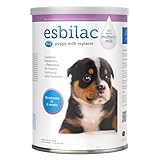
- PUPPY MILK REPLACEMENT — When mom can’t nourish them, Esbilac can. Scientifically the next best to mother’s milk, Esbilac provides all the nutritional elements necessary for puppies, newborn to six weeks old.
- COMPLETE, BALANCED NUTRITION — Our formula is closest to mother's milk in protein, fat, and carbohydrates. We’ve also added vitamins, minerals, and trace nutrients; plus prebiotics and probiotics to support healthy immunity and digestion.
- EASY TO DIGEST — Esbilac is highly palatable and formulated with a special fiber blend for easy digestion and improved gut health.
- EASY-TO-MIX FORMULA — Whisk or shake 1 part powdered Esbilac into 2 parts warm water. Do not mix more Esbilac than can be consumed in 24 hours. Do not use a blender. Must be kept refrigerated after reconstituting.
- ABOUT US — PetAg is a trusted leader in pet wellness, with science-backed formulas in our milk replacers, health supplements, and grooming products helping pet owners to proactively enhance the lives of their pets, for more healthy years together.
Before permanent placement, confirm that each puppy:
- eats an age-appropriate solid diet without relying on the dam for nutrition;
- maintains weight and hydration and has no untreated illness;
- moves, sleeps, eliminates and interacts normally for its age;
- has continued contact with its mother and littermates; and
- can legally be sold, supplied or transferred in your jurisdiction.
Those checks are more useful than treating a single birthday as a guarantee of readiness.
Quick wins for a faster PC:
Fix the driver behind crashes, sound loss and screen glitchesFind Drivers →Repair Windows errors before they cause bigger problemsFix Now →What “separation” means as puppies grow
Normal maternal breaks are not the same as rehoming
As puppies become mobile and begin eating, the dam naturally spends less time in the nest. She may stand up, move away, or limit nursing while still allowing access for rest and suckling. This gradual reduction in contact is expected. It should not be confused with permanently removing the litter.
Permanent separation
Permanent separation means the puppy will no longer live with or routinely nurse from its mother, such as when it goes to a new owner, shelter, foster home or breeder. For a normally developing litter, plan this transition after eight weeks and after complete weaning, rather than at the first point that puppies can lap food.
How weaning and development progress
| Age or stage | What commonly happens | What it means for separation |
|---|---|---|
| Birth to about 3 weeks | Puppies depend heavily on the dam for milk, warmth, elimination and protection. | They should remain with her unless urgent veterinary care makes that impossible. |
| About 3–4 weeks | Interest in the environment increases. Puppies can begin exploring soft, suitable solid food while continuing to nurse. New Zealand’s Ministry for Primary Industries describes this as the start of gradual weaning. | Food introduction is not permission to remove puppies. Nursing and maternal contact continue. |
| About 4–6 weeks | Solid food becomes more important, but the dam still provides milk, correction, comfort and social learning. The New Zealand code says puppies should not be permanently removed for weaning before four weeks and should have access to suckling until six weeks. | Keep the litter together and let nursing taper naturally under veterinary guidance. |
| About 6–7 weeks | New Zealand’s code recommends complete weaning by six to seven weeks. Puppies should be eating and drinking independently before placement. | Even a fully weaned puppy generally benefits from remaining with its dam and littermates until at least eight weeks. |
| 8–12 weeks | Cornell identifies this as the ideal new-home window. VCA veterinarians describe around eight to ten weeks as suitable for most puppies when weaning and social development are on track. | Evaluate health, behavior, development and local law before transfer; there is no universal requirement to choose exactly eight weeks over ten or twelve. |
Sources: Cornell University College of Veterinary Medicine, New Zealand Ministry for Primary Industries Code of Welfare: Dogs, and VCA Animal Hospitals.
Why staying with the dam and littermates matters
Behavioral learning
Interactions with the mother and siblings give puppies repeated opportunities to learn how hard to bite, how to respond when another dog ends play, how to settle after excitement and how to cope with ordinary handling and movement. These lessons are not a guarantee against future behavior problems, but removing a puppy early removes part of its normal learning environment.
AAHA’s guidance reports that dogs separated at 30–40 days had a greater incidence of later problems than dogs separated at 56 days. The listed problems included excessive barking, fearfulness on walks, reactivity to noises, toy or food possessiveness, attention-seeking and destructive behavior. This is a group-level comparison, not a prediction that every early-separated puppy will develop one of these behaviors.
Gradual independence
Weaning teaches a puppy to shift from milk to solid food while maternal contact decreases in stages. A gradual change lets the puppy practice eating, resting away from the dam and interacting with littermates without losing support abruptly.
Physical and emotional support
The dam provides milk, warmth and hygiene early in life, then becomes an important source of comfort and feedback. Littermates provide safe, age-appropriate play. Keeping these relationships intact through the minimum period reduces the need for a human to replace functions that a healthy mother and litter can provide naturally.
How to decide whether a puppy is ready for a new home
Use this check shortly before the planned move, ideally with a veterinarian who has examined the litter:
What’s actually slowing this PC down?
Pick the symptom - the matching free tool is one click away.
- Confirm age. Count from the puppy’s actual birth date, not the date it first began eating food.
- Check weaning. The puppy should eat and drink independently and no longer depend on nursing for adequate nutrition. Weaning should have been gradual.
- Assess growth and health. Look for steady growth, normal alertness, clean eyes and nose, normal breathing, formed stools and comfortable movement. Any concern warrants veterinary assessment rather than a rushed transfer.
- Verify ongoing social contact. Until departure, the puppy should have regular, safe contact with its dam and littermates.
- Review the receiving home. The new caretaker should know the puppy’s diet, routine, medical records and how to arrange veterinary care after arrival.
- Check the law. Determine whether your local rule sets a minimum age for separation, sale, supply or all three.
VCA’s Ryan Llera, DVM, and Ernest Ward, DVM, summarize the usual placement timing as follows: “To allow for proper weaning and to begin social development, you can place most puppies in their new homes at around eight to ten weeks.” Their guidance also cautions that earlier separation may increase susceptibility to later behavior problems.
When earlier separation is medically necessary
Do not wait for an age milestone if a puppy is not being fed, becoming weak, or is exposed to immediate danger. Contact a veterinarian promptly when the dam:
- is too ill, injured or sedated to nurse;
- cannot produce enough milk for the litter;
- rejects or persistently injures a puppy; or
- shows aggression that makes contact unsafe.
A puppy may also need urgent care for failure to gain weight, dehydration, persistent vomiting or diarrhea, breathing difficulty, collapse or an inability to suckle. These signs require professional assessment; they are not situations to solve by simply moving the entire litter or choosing a commercial product without advice.
Hand-rearing and milk replacer
When maternal feeding is unavailable or insufficient, a veterinarian can recommend a feeding plan and a milk replacer formulated for puppies and kittens. Do not use puppy milk replacer as routine supplementation for a normally nursing litter, and do not assume that cow’s milk or an improvised recipe meets a newborn’s needs.
Free tools Windows power users keep installed
One-click scans. No signup required.
Also popular on Amazon

- MILK REPLACER WITH PROBIOTICS: Suitable for up to 9 young animal species including puppies, kittens, calves, lambs, goats, foals, piglets, llamas, and crias; providing probiotics and balanced nutrition to support healthy growth and development.
- MADE WITH PROTEIN AND FAT: Contains 24% protein and 24% fat; supporting fast, healthy growth, strong muscle development, and overall vitality for young animals during critical early stages of life.
- ALL MILK FORMULA WITH PROBIOTICS: Made with high-quality all-milk protein; supporting healthy growth, proper development, and overall performance for young animals during critical early stages of life.
- SUPPORTS HEALTHY DIGESTION FOR YOUNG ANIMALS: Powered by Opti-Gut probiotics; promoting gut health, nutrient absorption, and digestive balance to support overall growth, vitality, and wellbeing for young animals.
- EASY TO MIX FORMULA: Designed for quick and convenient preparation; ensuring fast mixing, effortless feeding, and optimal consumption so young animals receive balanced nutrition efficiently for healthy growth and development.
European Union Regulation (EU) 2026/1818, which applies within its stated regulatory scope to dogs kept in establishments, allows earlier separation for medical reasons supported by written veterinary advice. It also requires gradual introduction of solid feed over at least seven days and says weaning must not be completed before six weeks. Those provisions do not create a worldwide rule; your veterinarian and local authority determine what applies where you live. The regulation is available through EUR-Lex.
If the dam recovers, ask the veterinarian whether and when supervised reunification is safe. If permanent hand-rearing is necessary, the puppies still need age-appropriate warmth, elimination support, hygiene, feeding technique and social contact; obtain those instructions directly from the veterinary team.
Independent reader supportYour contribution helps us test, update, and keep practical guides available for everyone.Legal minimums differ by location
Eight weeks is a widely supported welfare benchmark, but it is not a single worldwide law. Rules may regulate different events:
- Separation: when a puppy may be removed from its mother.
- Sale or transfer: when it may be sold, given away or supplied to another person.
- Premises and establishments: additional requirements may apply to breeders, shelters or commercial facilities.
For example, Agriculture Victoria’s Code of Practice for the Private Keeping of Dogs says puppies must not be separated from the mother before seven weeks and must not be sold or given away until eight weeks or older. Those are Victorian requirements, not a global standard.
The Australian Veterinary Association recommends keeping puppies and kittens with their mother and littermates until at least eight weeks and notes that the earliest recommended age is written into regulations in some Australian states and territories. Its policy is a professional recommendation, so consult the specific law for your state or territory: AVA’s socialisation and habituation policy.
The EU Platform on Animal Welfare’s supplementary guidance says puppies must stay with their litter and mothers until fully weaned and at least eight weeks old unless veterinary advice says otherwise. It was endorsed on 30 June 2022 and is guidance rather than a universal legal rule: EU Platform supplementary guidance.
Before advertising or arranging a transfer, check the current animal-welfare agency or legislation for your jurisdiction. A rule about sale may allow a different age from a rule about physical separation.
Common mistakes and what to do instead
“They are eating mush, so they can leave.”
Food exploration around three to four weeks is the beginning of weaning, not its endpoint. Continue maternal contact and transition gradually until the puppy eats independently and reaches the minimum placement age.
Crashes, No Sound, or Screen Glitches?
Random freezes, missing sound and display glitches usually trace back to one bad driver. Find and replace yours safely.Free scan · under a minutePC Slower Than It Used to Be?
A free scan shows the junk files, broken settings and background clutter dragging Windows down - then fixes them in one click.Free scan · Windows 10 & 11“Eight weeks is always the perfect day.”
Eight weeks is a general minimum, not a promise that every puppy should move that day. A healthy, fully weaned puppy may leave between eight and twelve weeks; a sick or poorly developing puppy may need to stay longer or receive veterinary care.
“The mother is avoiding them, so she must be rejecting them.”
Increasing time away is normal as puppies mature. Treat it as a welfare problem only when puppies are not fed, are being injured, or the dam is ill or dangerously aggressive.
“A commercial replacer makes early removal safe.”
Milk replacer can support a medically orphaned or underfed litter, but it does not recreate all maternal care or sibling learning. Use it only with veterinary direction and address warmth, hygiene, elimination and social needs as well as calories.
A simple decision rule
If the litter is healthy and the dam is caring for it: keep puppies together with her until at least eight weeks, complete weaning, and normal development; an eight-to-twelve-week placement is generally consistent with veterinary guidance.
If there is illness, inadequate milk or dangerous behavior: call a veterinarian immediately rather than waiting for eight weeks. Follow written veterinary instructions for any earlier separation and feeding plan.
If the move is otherwise routine: confirm the legal minimum for your location, document each puppy’s health and feeding status, and transfer only when the receiving home can continue appropriate care.





Leave a Reply