What’s actually slowing this PC down?
Pick the symptom - the matching free tool is one click away.
A dog’s head tilt, stare, or comic-looking expression does not have one fixed translation. A tilt may help a dog orient to a sound, process a meaningful cue, or change its visual perspective; a stare may request attention or play, but a hard stare with a tense body can signal discomfort or guarding. The reliable way to interpret any gesture is to read the whole dog, the immediate situation, and whether the behavior is brief and context-linked or persistent and unexplained.
Why dogs tilt their heads
“Little is known about head-tilts in dogs,” wrote Andrea Sommese and colleagues in the opening sentence of their Animal Cognition study. Several explanations are plausible, but no single cause has been established for every dog or every tilt.
As an Amazon Associate I earn from qualifying purchases.
They may be orienting to a sound
A dog can angle its head while trying to locate or distinguish a sound. The movement may accompany close listening when you speak, when a familiar noise occurs, or when something arrives from an unexpected direction. A short tilt that disappears once the sound ends is generally a context-linked attention behavior, not proof of a particular emotion.
They may be processing a meaningful word or cue
Dogs often react differently to words connected with food, walks, people, toys, or trained behaviors. A tilt during a familiar request may occur while the dog is sorting out what the sound means and what action is expected. That does not establish that the dog is confused, nor does a tilt by itself prove that the dog understood every word.
#1 Best Overall

- 2 Pack XL Dog Rope Toy: Design for large dogs and aggressive chewers, consists of 2 durable XL rope toys, 27 inches of 4 knots and 20 inches of 5 knots
- Durable and Safe Material: Washable 100% natural cotton ropes, safe and durable
- Teeth Cleaning: Tasteless natural material can safely clean the teeth of dogs, the fibers can floss in between dog’s teeth for deep cleaning, prevent the accumulation of dental plaque and gum disease, keep the dog's teeth clean
- Tug of War Interactive Dog Toys: Suit aggressive chewers for tug of war game, you can play with the dog by ropes
- Dog's Gift: These dog rope set toys are perfect as a dog gift for a birthday, adoption anniversary or any holiday
They may be changing their visual perspective
The muzzle and ears can obstruct part of a dog’s view, especially when it is looking at a person’s face. Angling the head may change what the dog can see or help it combine visual information with sound. This is a proposed mechanism, not a universal explanation demonstrated in all dogs.
Your reaction can reinforce the gesture
If a tilt reliably produces laughter, praise, petting, a treat, or an exciting activity, the dog may repeat it in similar situations. Reinforcement does not mean the original tilt was fake; it means the consequence can increase the chance that the behavior appears again. Avoid assuming that every repeated tilt has the same motivation.
What the named-toy study actually found
Sommese and colleagues conducted an exploratory study involving 40 dogs: seven “gifted word learners” and 33 typical dogs. In the first experiment, the dogs heard requests to retrieve named toys. The gifted word learners tilted their heads in 43% of trials, compared with 2% of trials for the typical dogs.
Outdated Drivers Are Slowing You Down
One free scan finds every outdated or missing driver and matches the right update for your exact hardware.Free scan · exact hardware matchWindows Errors? Fix Them Before They Spread
Repair common Windows errors and clear accumulated junk for a smoother, more stable PC - no reinstall needed.Free scan · no reinstallRank #2

- INDESTRUCTIBLE DOG TOYS FOR AGGRESSIVE CHEWERS MEDIUM TO LARGE BREED: XL sized strong dog toys set are popular combination of rope dog chew toys, contains 27 inches of 5 knots dog rope toys for aggressive chewers, round rope ball dog toys, multi knots cotton rope dog chew toys and tug of war rope ball
- HEAVY DUTY ROPE TOYS FOR AGGRESSIVE CHEWERS: The durable dog toys are made of high quality nature cotton that wear-resistant, tightly woven twist and sturdy knots make large dog toys stand up for aggressive chewing
- HUGE VALUE INTERACTIVE DOG TOYS FOR BOREDOM: 9 bundle dog toys large breed are worthier than only one dog rope toy. Plus, more ropes more fun options for your aggressive fur friend, enjoy chewing and tug of war dog toy games
- SAFE COTTON ROPE FOR DOG TEETH CLEANING: The cotton ropes are safe for cleaning teeth and as puppy toys for teething, because the fibers can gently floss in between dog’s teeth for deeply cleaning
- GREAT DOG TOYS FOR LARGE DOGS: The pet toys for dogs are great as dog birthday toy or festival surprise set for dogs and dog owners. The nearly indestructible dog rope toy long lasting for aggressive chewers, If your dogs are extremely aggressive chewers, please only play under supervision
| Finding | What it means | Important limit |
|---|---|---|
| 43% versus 2% | The percentage of trials in which a tilt occurred during that named-toy task. | It is not the percentage of dogs that tilt, and it does not describe ordinary conversation. |
| 40 dogs total | The sample included seven gifted word learners and 33 typical dogs. | The small gifted-word-learner group limits broad conclusions. |
| Meaningful toy names | The authors proposed that tilting may relate to processing a meaningful stimulus. | The result does not show that tilting proves understanding, confusion, or a breed difference. |
| Individual tilt direction | The study reported stable individual preferences for which side a dog tilted toward. | A preferred side is not a diagnostic sign by itself. |
The study was published online on October 26, 2021, in volume 25 of Animal Cognition (pages 701–705, 2022). Its task was narrow, and the authors cautioned against generalizing the result to all breeds or all situations. Jill Goldman, Ph.D., told the American Kennel Club that “more research needs to be done to tease out what exactly is going on.”
What a dog’s stare can mean
Eye contact is communication, but its meaning depends on what the rest of the body is doing. Consider the dog’s muscle tension, movement, ears, mouth, tail, the object or person nearby, and whether the dog approaches or holds its ground.
Attention, anticipation, or a request
A dog may watch you to predict what happens next, obtain attention, ask for food or access, or monitor a routine. Looking toward the leash, food area, door, or a person who usually starts a game can be part of that learned communication. A soft body and easy movement make a benign request more likely, although no single cue is conclusive.
Rank #3
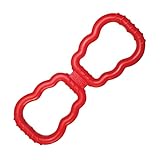
- Tug Toy for Dogs: This unique natural rubber dog toy encourages interactive play sessions; perfect for indoor and outdoor playtime
- Natural KONG Rubber: This rubber dog toy springs back into shape during a game of tug, making it a must-have addition to pet supplies
- KONG Toy with Comfortable Grip Design: The KONG Tug Toy makes it easy to hold during on-going tug games with your dog
- Made in the USA: Globally sourced materials. KONG has been innovating since 1976 to enrich the lives of pets with the highest quality pet toys and treats. Covered by KONG's Satisfaction Guarantee
- KONG: Since not all toys are created equal, it’s always best to supervise your dog during play. Supervised play will help toys last longer and keep your dog safe. No dog toy is truly indestructible, so always remove the toy from playtime if damaged
An invitation to play
PetMD describes a play bow or walking toward the leash as possible follow-up signals when a stare is communicative and playful. A dog that looks at you, shifts into a loose play bow, and bounces toward a toy is offering interaction rather than demanding that you approach a guarded resource. If you choose to respond, a familiar game such as tug or fetch is appropriate only when the dog remains relaxed and the game is safe for that individual.
Do these 3 things before closing this tab:
1Scan for outdated or missing drivers - takes under a minute2Clear out junk files and repair common Windows errors3Fix the driver behind crashes, sound loss and screen glitchesDiscomfort, distance, or guarding
A direct, hard stare paired with a stiff or tense posture has a different meaning. The dog may be uncomfortable and asking you to increase distance. One possible context is resource guarding. The American Veterinary Society of Animal Behavior (AVSAB) describes “whale eye”—visible whites of the eyes while the dog looks toward a valued resource—as a possible guarding signal.
Do not diagnose emotion from eye contact or a wagging tail alone. A tail can move during arousal of many kinds, and a dog can look directly at someone while relaxed, excited, worried, or defensive. The combination and the situation matter more than one isolated feature.
Rank #4

- Tug of War Dog Toy: One Chuckit! Ultra Ball is attached to the end of a durable two-ply nylon cord handle to specifically designed to take fetch and tug of war to the next level. Not a chew toy; always supervise your dog when playing with this toy
- Easy to Throw and Clean: Nylon Strap makes the Ultra Tug dog toy easy to toss. Also compatible with Chuckit! Dog Ball Launcher models ending in "M". Bright blue & orange colors are easy to spot in tall grass, beaches & parks
- Sizing matters: Size medium measures 2.5" in diameter and is best suited for dogs weighing 20-60lbs. Dog balls should be small enough for your dog to carry, but large enough that the ball can't completely fit in their mouth. When in doubt, buy a size up
- MAKE FETCH HAPPEN: Chuckit! toys make great gifts for pet lovers. The Ultra Tug is one of many indoor and outdoor toys we offer, including tumblers and tennis balls. As the #1 stocking stuffer, Chuckit! has something for every pet.
- Chuckit! Fetch Pet Toys: Chuckit! makes indoor and outdoor dog toys that enrich the human-animal bond and helps dogs and puppies stay engaged. Try our full line of ball launchers, puppy toys, flying discs, tennis balls for dogs, dog chew toys, and more
| Observed pattern | More likely interpretation | Safer response |
|---|---|---|
| Soft eyes, loose muscles, easy movement, approaches or offers a play bow | Attention seeking or play invitation | Invite a familiar activity if the dog stays relaxed. |
| Hard stare, still or stiff body, closed mouth, fixed position | Discomfort, a request for space, or possible guarding | Stop advancing, avoid direct eye contact, and give the dog room. |
| Visible eye whites while looking toward food, a toy, or another valued item | Possible resource-guarding tension | Do not reach for the item; manage distance and seek qualified help if it recurs. |
How to read other “funny” gestures
Dogs communicate through combinations of face, ears, mouth, posture, tail, and movement. A gesture that looks amusing in a relaxed setting can carry a warning in a different setting.
Face, eyes, and mouth
AVSAB describes relaxed dogs as often having softer, almond-shaped or slightly squinted eyes and an open mouth. Nervous or defensive dogs may close the mouth, show rounder eyes, or change ear position. These are tendencies rather than a universal dictionary. A dog can pant from heat or exercise, for example, so an open mouth alone does not establish relaxation.
Quick wins for a faster PC:
Clear out junk files and repair common Windows errorsFree Scan →Scan for outdated or missing drivers - takes under a minuteDriver Scan →Repair Windows errors before they cause bigger problemsFix Now →Head and body position
A dog lowering its head over a chew while showing whale eye is not communicating the same thing as a loose, wiggly dog lowering its front end into a play bow. A dog that freezes over food, leans forward, or blocks access is giving different information from one that curves its body, moves freely, and repeatedly re-initiates play.
Best Value

- Strong and durable material: The rope is made of cotton material, thick in quality and can be used for cleaning, safe and durable; It can chew on the rope to help reduce wear and tear on furniture
- 5 in 1 Complete Toy Set: This set includes 2 durable rope toys for tug-of-war and chewing, 2 dog bags and 1 convenient dispenser. The ropes are moderate size for comfortable gripping and provide hours of fun for your dog
- Any pull and no tear easily: The rope toys have a good quality which can be any dog pulling, chasing, long-term use and not easy to tear, the broken rope is not easy to loose and it is the puppy chew toys for teething
- Interact with your dog: The rope can alleviate the dog's anxiety, and let the dog play games with their owner and friends together, which is suitable for the dog tug of war, satisfies the dog's entertainment demand and keep the dog from getting unexciting
- Beautiful rope for gifts: The rope is well-made and colorful, you can give the toys as festival surpise set to your dog for birthday, Christmas, anniversary
Use four context checks
- Assess tension and movement. Is the dog loose and able to move away, or rigid, frozen, leaning forward, or holding its ground?
- Look at the face and ears together. Note the eye shape, visible whites, mouth, ear position, and whether those features change as the situation changes.
- Identify what is happening nearby. Food, a chew, toy, leash, unfamiliar person, loud sound, handling, or a doorway can change the meaning of the same gesture.
- Watch the dog’s choice. A playful dog often approaches, retreats, and re-approaches. A worried or guarding dog may avoid, freeze, block access, or ask for distance.
Record short videos from a safe distance if a pattern is difficult to describe to a professional. Include what happened immediately before the gesture and what the dog did afterward; the sequence is often more informative than a single frame.
When a head tilt may be a medical problem
A brief tilt linked to an audible or social cue differs from a consistent tilt that appears without an obvious trigger. VCA Animal Hospitals advises that a persistent tilt unrelated to communication can indicate a medical problem, including an ear infection or vestibular disease.
Contact a veterinarian promptly when
- The tilt persists, keeps returning without an obvious sound or cue, or is becoming more pronounced.
- The dog circles, stumbles, has difficulty walking, drools, or vomits.
- There are signs of ear pain, discharge, reduced hearing, unusual eye movements, or sudden balance changes.
- The behavior began abruptly or occurs with other changes in appetite, alertness, or coordination.
PetMD likewise advises contacting a veterinarian for a persistent tilt or a tilt accompanied by circling, stumbling, difficulty walking, drooling, or vomiting. Do not try to correct a possible balance or ear disorder with training alone, and do not put drops or objects into the ear unless your veterinarian directs you.
What to do in the moment
If the dog is loose and inviting interaction
- Pause and check that the body remains relaxed rather than merely wagging.
- Offer a familiar activity, such as a short game of fetch or tug, if the dog has a safe history with that game.
- Stop if the dog stiffens, guards the toy, avoids contact, or shows escalating arousal.
If the dog gives a hard stare or guards something
- Stop moving toward the dog or the guarded item.
- Turn your gaze away rather than forcing eye contact.
- Create distance without shouting, cornering, reaching, or grabbing the resource.
- Keep children and other animals away from the area.
- Arrange help from a qualified trainer experienced with aggression cases or a veterinary behavior professional if the pattern repeats.
Punishment can increase fear or conflict and does not explain why the gesture occurred. Management, distance, and professional assessment are safer than testing how close you can get.
What these gestures do not prove
A head tilt does not prove that a dog is confused, understands a sentence, or belongs to a particular breed. A stare does not prove affection, dominance, or aggression without the surrounding body language and context. Even the 43% versus 2% named-toy result came from a specific task and a small exploratory sample. Treat these behaviors as information to investigate, not as automatic diagnoses.
The most useful question is not “What does this one gesture always mean?” but “What changed just before it, what is the dog’s whole body saying, and does the behavior stop when the situation changes?” That approach helps you enjoy harmless quirks while noticing the cases that need veterinary or behavioral support.
Quick Recap
Product prices and availability are accurate as of the date/time indicated and are subject to change. Any price and availability information displayed on Amazon at the time of purchase will apply.




