
Some links on this page are affiliate links: if you buy through them we may earn a commission, at no extra cost to you.
Dogs often stay close because their owner is a familiar, rewarding source of company. Following can reflect a social bond, comfort, or a learned expectation of attention, food, play, or another routine. Breed tendencies and an individual dog’s history may also influence the habit.
Proximity alone does not prove separation anxiety. The important distinction is whether the dog can settle and function normally, especially when the owner is busy or absent, or whether following is paired with clear distress around departures and reunions.
As an Amazon Associate I earn from qualifying purchases.
Recommended Free Tools
What a dog’s following usually means
When a dog walks from room to room behind one person, waits outside a bathroom door, or lies beside a chair, the behavior is best interpreted as information about that dog’s relationship and expectations—not as a diagnosis. Several explanations can operate at the same time.
Social connection with a familiar person
Dogs are social animals, and proximity is one way they maintain contact. In controlled attachment tests, dogs have shown more proximity and contact behavior toward familiar owners or handlers than toward unfamiliar people. A dog may therefore choose the owner’s location simply because that person is the most familiar and socially significant individual in the home.
Popular on Amazon
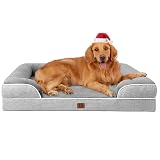
- Polyurethane Foam: The EHEYCIGA orthopedic dog bed features memory foam and egg crate foam to provide even support and pressure relief. It offers a good balance of softness and support, making it particularly suitable for elderly dogs to alleviate joint pressure.
- SOFA BED DESIGN: This bolster dog bed is designed with 3-sided bolsters to offer additional support for your pet’s neck and head, promoting restful sleep. The surrounding sides encourage your dog to snuggle in and enjoy a comfortable night's rest.
- WATERPROOF COVER: A waterproof film is positioned between the fleece surface and the bottom fabric, ensuring the dog bed remains dry. However, the sides are not waterproof.
- EXTREME COMFORT & MULTIPLE SIZES: The sleeping surface is covered with cozy fleece, creating a soft and inviting sleeping area for your pet. Whatever the size of your dog, we have a dog bed suitable for medium, large, and extra-large breeds.
- CARE INSTRUCTIONS: Remove foam, machine wash cover separately in cold water only, on a delicate cycle.Do not bleach, tumble dry low, and reshape as needed. Do not machine wash or dry the foam core. Allow the bed to expand for 24-48 hours after unpacking.
This does not mean every close-following dog is unusually dependent. A dog can prefer company while remaining emotionally steady when the person is occupied or out of sight.
Comfort and predictability
The owner’s presence may make the dog’s surroundings feel predictable. Staying nearby lets the dog remain close to a known person while household activities change. Waiting at the owner’s feet, beside a desk, or near a frequently used doorway can be a low-effort way to remain connected without demanding active interaction.
Quick wins for a faster PC:
Fix the driver behind crashes, sound loss and screen glitchesFind Drivers →Repair Windows errors before they cause bigger problemsFix Now →Learned expectations
Following can also be reinforced by what happens next. If walking after a person often precedes a meal, walk, game, greeting, treat, or invitation onto furniture, the dog may learn that trailing the person is useful. Attention itself can reinforce the pattern: eye contact, talking, petting, or laughing may reward the dog even when no food is involved.
Learned following is not necessarily a problem. It becomes troublesome only when the dog cannot disengage, settle, or cope with ordinary separation.
Individual and breed-related tendencies
Some dogs are naturally more oriented toward people than others. Breed-related tendencies may contribute, but they cannot explain every individual case. Early experiences, household routines, previous reinforcement, age, and temperament all shape what a particular dog does. There is no reliable population statistic establishing how many dogs follow their owners, so claims that the behavior is universal or typical of a specific percentage are not supported here.
Also popular on Amazon

- Luxurious Padding Support - Filled with 3-1/2" premium polypropylene fiber through 6 keyhole fixation, excellent elasticity supporting and long-lasting recovery ability, effectively comforts dogs with strong supports to bony and joint areas, pressure relief, relieve joint pain, body aches, arthritis.
- Ultra Soft Rose Velvet - Adopt heavy weight deluxe plush material make it super soft, cozy and not easy to shedding, full stuffing to ensure your little furry friend surrounded by love & warmth, helps them to calm down faster, ease anxiety, and sleep well.
- Non-Slip Pad Design - This KSIIA dog crate bed equipped with ANTI-SLIP & ANTI-SCRATCH bottom, prevents your dog kennel pad from moving when your pet steps on or off, they will feel secure and happy.
- Machine Washable - Thanks to the 6 keyhole fixation and high quality filling, our kennel pad can be fully washed by hand or washing machine and can remain shape after times wash. Easy care: wash gentle with cold, then tumble dry low. Let your pets enjoy a breathable, clean and hygienic crate bed.
- Multi-Purpose Dog Bed - This durable dog crate mat measures 35"L x 23"W x 3-1/2"H, for dogs up to 60 lbs, it can be used as a crate bed, dog pillow, kennel bed, cage bed, crate pad even as a dog travel bed in a car or truck. It arrives as a vacuum packed bed in a box, so pat it or let it inflate for about 24 hours before your dog use it!
Why a dog may wait in one particular place
“Waiting” can look different from active following. The location and timing provide useful context.
Near a work area or couch
A dog that settles near a desk, sofa, or kitchen while the owner remains there may be choosing social proximity without needing constant contact. If the dog can sleep, chew an appropriate toy, or move away voluntarily, the behavior is generally more consistent with a preference for company than with acute distress.
Outside a closed door
Waiting outside a bathroom or bedroom can reflect a learned household routine: the dog has discovered that the person usually reappears. The behavior deserves closer attention if the dog becomes agitated whenever a barrier appears, cannot relax for a short interval, or shows other signs of distress.
At the door before an outing
Dogs quickly associate locations and human actions with predictable events. Standing near an exit may simply anticipate a walk or another enjoyable activity. It is different from anxiety about being left: the surrounding body language and what happens when the owner actually departs matter more than the dog’s position by the door.
In every room, all day
Constant movement behind a person can still be harmless if the dog pauses, rests, and tolerates the owner’s attention being elsewhere. A pattern that is sudden, escalating, or accompanied by distress should be discussed with a veterinarian, particularly if the dog’s behavior has changed from its previous baseline.
Outdated Drivers Are Slowing You Down
One free scan finds every outdated or missing driver and matches the right update for your exact hardware.Free scan · exact hardware matchWindows Errors? Fix Them Before They Spread
Repair common Windows errors and clear accumulated junk for a smoother, more stable PC - no reinstall needed.Free scan · no reinstallAlso popular on Amazon
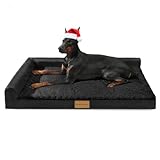
- Orthopedic Dog Bed for All Life Stages: Designed to provide pressure and pain relief for dogs with arthritis, joint pain, hip dysplasia, or mobility issues, this supportive dog bed features egg crate foam that helps distribute weight evenly and reduce pressure on joints
- 2-Sided Bolsters: Designed with supportive 2-sided bolsters, this dog sofa bed gently cradles your dog's neck and head, creating a comfortable resting position from multiple angles, helping relieve pressure and promoting deeper, more restful sleep
- Designed for Modern Pet Homes: Ideal for busy pet parents in apartment living or family-friendly homes this calming dog bed creates a secure space for dogs who love curling up including senior or anxious pets. Features safer materials easy-clean surfaces for muddy paws while blending seamlessly with minimalist decor
- Available in Multiple Sizes: 30”x20” for small dogs up to 25 lbs Chihuahua Toy Poodle, 36”x24” for medium dogs up to 42 lbs Beagle Cocker Spaniel, 42”x28” for large dogs up to 70 lbs Border Collie Bulldog, and 48”x30” for extra large dogs up to 100 lbs Golden Retriever German Shepherd, 56”x40” fits almost all pets. Ideal for senior dogs, puppies, and adult dogs in living rooms, bedrooms, crates, and kennels for all seasons
- Care Instructions: The removable cover of the dog bed is machine washable just simply machine wash and tumble dry; please note that the egg crate foam is not washable; as the foam is compressed it will take about seventy-two hours to expand
Following is not the same as separation anxiety
The fact that a dog stays close while its owner is home does not, by itself, establish separation anxiety. Parthasarathy and Crowell-Davis reported this distinction in a 2006 study of 75 pet dogs: 32 had owner-reported separation anxiety and 43 did not. During an attachment test, the groups did not differ significantly in the amount of time they spent near or in contact with their owners.
That result does not mean separation anxiety never involves following. It means owner proximity during that test could not, on its own, separate dogs with reported separation anxiety from dogs without it. The study also does not prove that every form of following is harmless, nor does it represent every dog, household, or clinical presentation.
A more useful question is what happens around separation. A dog that follows but can relax when the owner is busy, rest in another room, and remain settled during ordinary absences may simply value company. A dog that becomes distressed at departure cues, cannot settle, behaves disruptively while alone, or greets with unusually intense excitement presents a different concern.
How to interpret the behavior at home
The following comparison is an observation framework, not a diagnostic test. Look for patterns across several days rather than drawing a conclusion from one episode.
| Situation | What to note | What it may suggest | Practical response |
|---|---|---|---|
| Owner is sitting or working | Can the dog lie down, sleep, or occupy itself? | Relaxed proximity is more consistent with a social preference. | Allow a comfortable resting option and observe whether the dog can disengage. |
| Owner moves between rooms | Does the dog follow calmly or appear unable to pause? | Calm movement may reflect routine or learned expectations; frantic persistence warrants more attention. | Record when it occurs and what normally follows the movement. |
| Departure cues appear | Watch the dog’s response to actions that precede leaving. | Anxiety linked to departure cues is more clinically relevant than simply standing nearby. | Discuss persistent or escalating reactions with a veterinarian. |
| Owner is absent | Consider whether the dog remains settled or shows disruptive behavior. | Behavior during absence helps distinguish ordinary closeness from a separation-related problem. | Use veterinary guidance rather than trying to label the behavior from following alone. |
| Owner returns | Is the greeting ordinary or unusually intense and difficult to interrupt? | Excessive greeting can be one clue clinicians consider alongside other signs. | Report the full pattern, including what happened before and during the absence. |
When close following deserves professional attention
Contact a veterinarian when following is persistent and accompanied by visible distress, especially if the pattern is new or worsening. The most relevant combination is not “the dog is nearby,” but “the dog reacts badly to separation or cannot function independently.”
Also popular on Amazon

- VET-RECOMMENDED ORTHOPEDIC SUPPORT: Does your large or senior dog seem stiff after long rest? Veterinarian-recommended high-density orthopedic egg-crate foam distributes weight evenly. It cushions pressure points on joints and spine—from a 15 lb dachshund to a 90 lb lab.
- 32-TIME RECOGNIZED & CERTIFIED SAFE: Need a senior dog bed trusted by experts? Recognized across 32 awards, magazine features, and TV appearances; OEKO-TEX (24.HCN.46956) certified fabric + CertiPUR-US certified foam—zero harmful chemicals. 9 sizes from 20" to 52" fit puppies to giant breeds up to 150 lbs. Give your pet the safe, supported rest they deserve.
- ORIGINAL SOFA-SHAPE BOLSTER DESIGN: Tired of dog beds for large sized dogs that imitate the look but miss the comfort? As the original creator of the sofa-style pet bed, our 4-sided bolster design surrounds your pet with security and neck support; lowered front entry lets senior or stiff pets climb in and out with ease. Owners say it looks like a mini sofa that fits right into the living room.
- UNZIP-AND-WASH COVER: Hate beds where the main cushion insert gets soaked and clumps in the wash? Our washable cover unzips from the egg-crate base insert—just remove it, machine-wash the cover with bolsters on gentle cycle, and zip back on. The one-piece egg-crate base insert stays in place—no shifting, no clumping.
- PREMIUM FLANNEL FLEECE & NON-SKID BASE: Every size gets the same premium comfort. In size Small/Medium, the soft flannel fleece is especially gentle on flat-faced and short-nosed breeds; the non-skid dot-grip bottom stays put on hardwood or tile.
- Extreme following that leaves the dog unable to settle when the owner is occupied.
- Anxiety triggered by departure cues such as preparing to leave.
- Disruptive behavior during the owner’s absence.
- Excessively intense greetings after even brief separations.
- A sudden change in attachment-related behavior alongside other changes in health or routine.
These signs are clinical clues, not a home checklist that confirms a disorder. A veterinarian can consider medical causes, the dog’s history, and the full pattern of behavior, then recommend qualified behavior support when appropriate.
A calm settling setup you can offer
A designated resting place can give a dog another option besides shadowing a person. One veterinary-facing explainer suggests placing a dog bed with toys or treats nearby so the dog has a place to settle. This is an optional environmental aid, not a proven treatment for separation anxiety and not a guarantee that following will stop.
Make the option available, not compulsory
Place the bed where the dog can remain part of household activity without blocking walkways. Let the dog choose whether to use it. The goal is to provide a predictable resting location, not to force isolation.
Do these 3 things before closing this tab:
1Repair Windows errors before they cause bigger problems2Scan for outdated or missing drivers - takes under a minute3Clear out junk files and repair common Windows errorsObserve what actually changes
Notice whether the dog can remain on the bed while the owner reads, works, or moves briefly around the home. Record the circumstances under which the dog leaves the bed and follows. Those observations are more useful to a veterinarian than a label such as “clingy.”
Do not overpromise food toys
Treats or a food-dispensing toy may make a resting area more appealing in some situations, but the available evidence does not establish either item as a way to prevent or treat separation anxiety. If the dog is distressed when alone, professional assessment is the appropriate next step.
Also popular on Amazon

- Oprah Daily Award-Winning Comfort:Recognized by Oprah Daily as the perfect donut dog bed for curl-up sleepers, this round calming pet bed is loved for its extra-fluffy faux fur, raised rim for furry heads, and cozy design that blends seamlessly into any home. Petite sizes (XS–M) are fully machine washable for added ease.
- Donut Design for Calming Rest:The signature donut dog bed shape provides a soothing, secure space for pets, while the raised edge supports the head and neck. Its plush filling ensures long-lasting comfort, making this calming dog bed ideal for curl-up sleepers and anxious pets alike.
- Sweet Daydreams, Sounder Nights:From lazy afternoon naps to overnight snoozes, this calming dog bed surrounds your pet in soft, supportive comfort. The round bed design helps them feel safe and secure, encouraging deeper, more restful sleep around the clock.
- Pet-Safe & Thoughtful Details:Crafted with Standard 100 by OEKO-TEX(24.HCN.46956) certified materials, this calming dog bed is made from tested-safe fabrics gentle on pets. The sturdy, non-slip base keeps the round pet bed in place, so your furry friend can hop in and out with comfort.
- Machine Washable:Designed to look as good as it feels, this donut pet bed comes in a range of neutral hues that blend seamlessly into any space. Smaller sizes (XS–M,XL) are fully washable, while larger sizes (L) feature a removable, machine-washable cover for easy cleaning with minimal effort.
What the available studies show
| Evidence | Participants or setting | Main finding | How to use it |
|---|---|---|---|
| Parthasarathy and Crowell-Davis (2006), Journal of Veterinary Behavior | 32 dogs with owner-reported separation anxiety and 43 without | No significant difference in time spent near or in contact with owners during the attachment test | Do not treat proximity alone as proof of separation anxiety or “hyperattachment.” |
| Attachment behavior study recorded in PubMed | 60 adult shelter dogs living at rescue centers | Handled dogs showed more contact-seeking toward a familiar handler than toward an unfamiliar person in the reported test | Familiarity can influence contact seeking, even in dogs living outside a permanent home. |
| 2019 Strange Situation research in Frontiers in Behavioral Neuroscience | Domestic dogs and their owners | Physiological and behavioral indicators were examined in an attachment-test context | Attachment is a measurable relationship, not simply a synonym for anxiety. |
| Case-control research on separation anxiety | Dogs assessed for behaviors associated with separation problems | Extreme following, departure-cue anxiety, and excessive greeting were highlighted as possible distinguishing behaviors | Clinicians consider the cluster and context, not one isolated habit. |
Each study has limits. Attachment tests are structured situations, owner reports are not the same as a clinical diagnosis, and findings from shelter dogs do not automatically describe dogs in private homes. The evidence supports careful interpretation rather than a single universal explanation.
Common misconceptions to avoid
“My dog follows me, so it has separation anxiety.”
That conclusion goes beyond the evidence. Proximity and separation anxiety can occur together, but they are not interchangeable. The 2006 attachment study specifically found no significant group difference in owner proximity between dogs with and without reported separation anxiety during its test.
Free tools Windows power users keep installed
One-click scans. No signup required.
“A dog that follows is being manipulative.”
Following can be maintained by ordinary learning: attention, treats, play, or access to a routine may follow the behavior. Describing the pattern as learned does not require assuming bad intent.
“A bed or toy will cure the problem.”
A bed with toys or treats may provide a useful settling option, but it has not been established as a treatment for anxiety. Persistent distress during absences calls for veterinary or qualified behavior guidance.
“Breed explains everything.”
Breed-related tendencies may influence sociability, yet individual history and reinforcement matter too. Avoid predicting a dog’s emotional state from breed label alone.
Questions to answer before seeking help
Write down when the following happens, what the dog does when you stop moving, how it reacts to departure cues, and what occurs during the absence and reunion. Include recent changes in schedule, household, health, or environment. A concise timeline helps a veterinarian distinguish a stable preference for company from a developing separation-related pattern.
Most importantly, judge the behavior by the dog’s ability to relax and cope, not by distance alone. A dog may choose to be beside its owner all day and still be comfortable; another may follow only occasionally but become highly distressed when the owner leaves. Context, intensity, and recovery are the details that determine what the behavior means.
Bottom line
Dogs wait near and follow owners for several plausible reasons: social attachment, comfort, predictable routines, and learned rewards. Following is not a diagnosis of separation anxiety. If the dog remains able to settle, the behavior may simply express a preference for company. Extreme following paired with departure-cue anxiety, disruptive behavior during absences, or unusually intense greetings merits a veterinary assessment and, when needed, qualified behavior support.





Leave a Reply