The Galápagos penguin is Endangered because a naturally small, geographically restricted population is exposed to repeated shocks in both the ocean and its nesting habitat. El Niño and warming water can reduce the small fish it needs, while introduced predators, nest erosion, extreme tides, disease risk, pollution, and fishing hazards further reduce survival and breeding success.
A small population facing shocks from both ocean and land
The Galápagos penguin’s danger is best understood as a compounding problem. It has a small global population, lives in a restricted part of the Galápagos Archipelago, depends on unusually cold and productive water, and nests in a limited supply of coastal lava cavities. A single poor feeding season can reduce breeding, while predators, nest erosion, disease risk, pollution, and fishing hazards continue to affect survival.
As an Amazon Associate I earn from qualifying purchases.
That combination leaves the species with little room to absorb repeated losses. Protecting the penguin therefore requires both healthy marine conditions and safe places to raise chicks.
What is the Galápagos penguin’s conservation status?
The Galápagos penguin (Spheniscus mendiculus) is classified as Endangered under the IUCN Red List framework. BirdLife International also identifies it as an Endangered penguin species.
#1 Best Overall
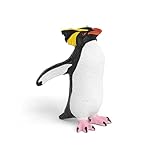
- SO REALISTIC, THEY MIGHT JUST MOVE - From feathers to fur, claws to paws - every schleich WILD LIFE figurine is crafted with precise details to spark curiosity and inspire play
- BIG ADVENTURES THROUGH FREE PLAY The world is your kid's playground! Free play sparks creativity, boosts problem-solving, and fuels imagination, so they can learn through endless fun!
- EDUCATIONAL SCHLEICH FIGURES TURN FACTS INTO FUN - Make learning fun and transform your home or classroom into any habitat. From the African savanna to the Amazon rainforest - no passport required!
- STEP INTO THE WILD SIDE OF WILD LIFE - Swing through the jungle with monkeys, spot lions on safari, or hear the howl of the wolf! Our playsets bring grasslands, forest, and wild creatures to life.
- IMAGINATION WITHOUT LIMITS - Schleich toys come in all shapes and sizes to bring stories to life. We value sustainability which is why we created worlds of durable toys that can be treasured for generations to come
It is endemic to the Galápagos Islands, meaning it occurs naturally nowhere else. Most penguins are concentrated around Isabela and Fernandina, particularly in the cooler western part of the archipelago. Birds have been recorded around other islands, but the species’ principal breeding and monitoring areas cover a relatively small geographic range.
How many Galápagos penguins are left?
There is no single current headcount that should be treated as an exact, live total. Population estimates differ because researchers survey different areas, use different correction factors and methods, and publish results from different years.
- A 2020 monitoring estimate from the Charles Darwin Foundation and the Galápagos National Park Directorate counted approximately 1,940 penguins in the surveyed population.
- A Charles Darwin Foundation article dated April 24, 2025, described the total population more broadly as approximately 2,000–3,000 individuals.
- An older BirdLife account cited an estimate of roughly 1,200 penguins.
These numbers are not necessarily contradictory. They should be identified by their date, source, survey area, and method rather than presented as three simultaneous exact counts. The important conservation fact is that the Galápagos penguin remains rare, geographically concentrated, and vulnerable to a disturbance that affects a large share of its range.
Why cold water is essential to the penguin’s survival
Galápagos penguins live near the equator, but they depend on marine conditions more typical of cooler regions. The Equatorial Undercurrent and local upwelling bring nutrient-rich water toward the surface around parts of the islands. Those nutrients support the plankton and small fish that form the base of the penguin’s food supply.
This creates a narrow ecological dependency. The penguin is not simply looking for water in which to swim; it needs sufficiently cold, productive water close enough to its nesting areas for adults to find food efficiently and return to their chicks. When the ocean becomes warmer or upwelling weakens, the effects can move through the entire food web.
Threat 1: El Niño and warming oceans
El Niño is an acute, recurring shock. During El Niño conditions, water around the Galápagos can warm and the winds and upwelling processes that normally bring nutrients to the surface can weaken. Lower productivity can mean fewer small fish and less food for penguins and other marine predators.
NOAA reports that major El Niño events, including those of 1982–1983 and 1997–1998, were followed by steep declines in Galápagos penguin numbers. Scientific modelling using historical census data found population declines of more than 60% after those two events. At the time of that study, the population had not fully recovered from those losses.
Quick wins for a faster PC:
Repair Windows errors before they cause bigger problemsFix Now →Fix the driver behind crashes, sound loss and screen glitchesFind Drivers →Clear out junk files and repair common Windows errorsFree Scan →Climate change is a longer-term underlying pressure. A warming ocean can increase concern about the frequency or severity of marine heat stress and food-web disruption. It can also interact with local threats, leaving fewer successful breeding opportunities after a poor feeding season. That does not mean climate change alone explains every annual population change or single-handedly caused the species to become Endangered. The risk comes from climate pressures interacting with the penguin’s small population, restricted range, predators, nest loss, and marine hazards.
Threat 2: food shortages and breeding failure
Food availability affects nearly every stage of the penguin’s life. Adults need enough prey to maintain body condition, survive, reproduce, and make repeated trips between feeding areas and nests. Parents also need reliable food supplies while raising chicks.
Rank #2

- SO REALISTIC, THEY MIGHT JUST MOVE - From feathers to fur, claws to paws - every schleich WILD LIFE figurine is crafted with precise details to spark curiosity and inspire play
- HEALTHY IMAGINATIVE PLAY. The Emperor Penguin from Schleich is carefully designed to inspire safe and creative pretend play for children as both a single toy or part of a larger collection.
- PART OF A GROWING PLAY WORLD. The Emperor Penguin is part of the Wild Life collection of figurines and playsets from Schleich. Great for gifting, this figurine can stand alone or fit into a larger, modular play world.
- STEP INTO THE WILD SIDE OF WILD LIFE - Adventure awaits! Swing through the jungle with the monkeys, spot the lions on safari, hear the howl of the wolf through the trees. Our Wild Life play sets include grassland, woodland, forest creatures and more.
- IMAGINATION WITHOUT LIMITATION - Schleich toys come in all shapes and sizes to bring every story to life. We value sustainability which is why we have created diverse worlds of durable toys built-to-last that can be treasured for generations to come.
When warm or unproductive conditions reduce prey, penguins may lose body condition, delay breeding, produce fewer chicks, or fail to raise chicks successfully. A nest can be physically available and free of predators, yet still produce no surviving young if the adults cannot obtain enough food.
This is why conservation monitoring measures more than the number of birds seen. Researchers track reproduction, nest occupancy, mortality, survival, body condition, and juvenile recruitment—the addition of young birds to the population. Those measurements help distinguish a temporary food shortage from a broader problem affecting survival or breeding habitat.
Do these 3 things before closing this tab:
1Scan for outdated or missing drivers - takes under a minute2Clear out junk files and repair common Windows errors3Fix the driver behind crashes, sound loss and screen glitchesThreat 3: introduced cats, dogs, and rats
Introduced mammals can kill penguin eggs, chicks, and adults. Cats, dogs, and rats have spread along parts of the coasts of Isabela, Floreana, and other islands, reducing the number of places where penguins can nest safely.
The penguins’ nesting strategy makes this threat particularly important. Rather than gathering in large, exposed colonies, they commonly use shaded lava tunnels and crevices. These cavities protect eggs and chicks from intense equatorial heat, but an introduced predator may also be able to enter them.
Predator control at priority nesting sites can therefore provide a direct conservation benefit. It must be carried out by park authorities and trained conservation teams, however. Removing animals, setting traps, or handling nests is not an appropriate activity for visitors or private individuals.
Threat 4: loss of coastal nesting habitat
Galápagos penguins need cool, shaded cavities in coastal lava. Those nesting places can be lost or degraded through natural erosion, unstable volcanic rock, and extreme high tides.
The Tool Desk
Outbyte PC Repair FREERepair Windows errors before they cause bigger problemsFix Now →Outbyte Driver Updater FREEFix the driver behind crashes, sound loss and screen glitchesFind Drivers →Research on the Mariela Islands estimated that approximately half of the natural nest sites studied in the 1970s had been lost to erosion or extreme high tides by the period covered in the report. Losing cavities matters even when the surrounding ocean remains productive: without a secure nest, a pair may have fewer opportunities to lay eggs and protect chicks.
Artificial nests can help—but they are not a complete solution
Conservation teams have built artificial nest sites in important breeding areas where natural cavities are scarce. Galápagos Conservancy reports that 120 constructed nest sites were built and monitored in priority areas. In some years, constructed nests have accounted for a substantial share of observed breeding activity.
Park rangers repair and monitor these structures. They can improve reproductive opportunities when food is available, but they cannot compensate for a collapsing marine food supply, eliminate erosion, or replace wider habitat protection. Artificial nests are a practical short- to medium-term intervention, not a substitute for addressing the causes of habitat and population decline.
Rank #3

- Waddle around town with the Penguin Family
- Set includes two adult penguins and four penguin chicks
- Young animal lovers will have a blast with this hands-on animal set
- Encourages children to explore and learn while having fun
- Children can play with this set on its own, or combine with other PLAYMOBIL sets for hours of fun
Threat 5: disease and introduced mosquitoes
Diseases transmitted by introduced mosquitoes are recognized as a potential threat to Galápagos penguins. The population-level impact is difficult to quantify because researchers need continued information about transmission, prevalence, susceptibility, and mortality.
Recommended Free Tools
For that reason, disease should be described as a serious conservation concern rather than as a precisely measured dominant cause of decline. The Charles Darwin Foundation’s marine-bird work includes health, genetic, population, and reproductive monitoring to improve understanding of these risks and guide management.
Threat 6: plastic, oil, and fishing-net entanglement
Galápagos Conservancy identifies oil pollution, plastic waste, and nylon fishing nets among the hazards facing the species. Penguins spend much of their lives at sea, feeding and moving through nearshore marine habitat where discarded materials and fishing gear can cause injury, entanglement, or impaired movement.
These are documented risks, but available public sources do not establish that plastic or entanglement is currently the single dominant driver of population change. The responsible conclusion is more precise: reducing marine debris, preventing oil pollution, and improving fishing practices are sensible measures that remove avoidable hazards from an already pressured environment.
How conservation organizations are helping
1. Recurring population and nest monitoring
The Charles Darwin Foundation and the Galápagos National Park Directorate conduct recurring surveys of Galápagos penguins and flightless cormorants. Field teams count birds, check nests, mark individuals, record survival and mortality, and document reproduction and health-related observations.
Free tools Windows power users keep installed
One-click scans. No signup required.
These data are supplied to park authorities and help determine where conservation resources are most urgently needed. Monitoring is especially important for a species whose numbers can change sharply after an El Niño event and whose small population makes local losses significant.
2. Constructed nesting sites
Artificial cavities provide additional breeding opportunities in places where natural lava nests have been lost or are insufficient. Rangers and researchers monitor and repair them, while breeding results show whether the intervention is working under current food conditions.
3. Marine and nesting protection
A marine protected area was created around Mariela Island, a high-density breeding area. Protecting surrounding waters can safeguard feeding and breeding habitat for penguins while also benefiting fish, marine mammals, and other seabirds.
4. Targeted predator control
Conservation teams control introduced predators at important nesting sites. Because invasive-species management is complex and can affect other animals, it requires site-specific planning, trained personnel, and oversight from the Galápagos National Park authorities.
Rank #4

- Hand-Carved Wooden Emperor Penguin Figurine – Crafted from natural wood, this miniature emperor penguin sculpture showcases intricate carving details and a smooth, polished finish. A charming wildlife-inspired decor piece for home, office, or aquarium settings.
- Miniature Arctic Bird Art & Collectible Statue – Measuring approximately 2 inches, this wooden polar penguin carving is ideal for collectors of wildlife figurines, nature lovers, and rustic home decor enthusiasts. A perfect addition to ocean, arctic, or coastal-themed interiors.
- Rustic Home, Office & Aquarium Decoration – Whether displayed on a desk, bookshelf, mantel, or aquarium setting, this handcrafted wooden emperor penguin statue adds a touch of polar charm to any space. Complements beach, nautical, and marine-themed decor styles.
- Perfect Gift for Penguin & Wildlife Lovers – This carved wooden emperor penguin figurine makes a thoughtful gift for bird watchers, Arctic animal enthusiasts, and collectors of handcrafted wooden sculptures. A meaningful and one-of-a-kind keepsake.
- Authentic Wildlife Carving & Premium Craftsmanship – Every Selsela emperor penguin figurine is hand-painted and individually carved, ensuring a unique wooden bird sculpture that highlights traditional wood craftsmanship and nature’s beauty.
5. Collaboration and public education
Current work involves the Charles Darwin Foundation, Galápagos National Park Directorate, Galápagos Conservancy, University of Washington researchers, the Global Penguin Society, and other partners. Their efforts combine field monitoring, nest construction, predator management, marine protection, research, and education.
Independent reader supportYour contribution helps us test, update, and keep practical guides available for everyone.How you can help Galápagos penguins
Support qualified conservation organizations
Donations or symbolic adoption programs from established organizations such as the Charles Darwin Foundation and Galápagos Conservancy can support monitoring, habitat protection, research, nest construction, predator management, and related field work. Before giving, check the organization’s current donation or adoption page and read how funds may be used.
A symbolic adoption is a contribution to conservation, not ownership of a particular penguin. No responsible organization should promise that one gift guarantees a specific nest, bird, or measurable increase in the population. Readers who want to support Galápagos penguin conservation through the Charles Darwin Foundation should verify the current program and whether it is directed to penguin work. Galápagos Conservancy also documents penguin-specific projects for people who want to help endangered Galápagos penguins, including monitoring, artificial nests, predator control, and protected habitat.
Reduce climate pollution
Because warming oceans and El Niño-related food shortages are major pressures, climate action is relevant to the penguin’s long-term future. Practical steps include reducing unnecessary fossil-fuel use, improving household energy efficiency, and supporting credible climate and marine-conservation policies.
What’s actually slowing this PC down?
Pick the symptom - the matching free tool is one click away.
The connection is systemic rather than immediate. A single household action will not directly rescue a particular penguin, but collective emissions reductions can address an underlying pressure on the ocean conditions the species needs.
Prevent plastic and fishing-line pollution
Avoid single-use items where practical, dispose of fishing line and other waste responsibly, and join shoreline or marine-debris programs when they are properly organized. Never leave waste behind near a beach, boat ramp, or coastal habitat. Fishing gear should be secured, retrieved when possible, and disposed of through an appropriate collection system.
Travel responsibly in the Galápagos
Tourism is not automatically beneficial to conservation. It can support local economies and public awareness when it is regulated and conducted responsibly, but poorly managed visits can disturb wildlife and introduce invasive organisms.
Visitors should:
- Follow Galápagos National Park rules and stay with authorized guides.
- Remain on designated routes and keep the required distance from wildlife.
- Never touch, feed, chase, or pose closely beside a penguin.
- Keep voices low and avoid blocking an animal’s route between its nest and the sea.
- Never leave food, plastic, fishing line, or other waste behind.
- Follow current biosecurity requirements and do not transport organisms, seeds, food, or other materials that could introduce invasive species.
A Galápagos bird field guide can help travelers and birders identify penguins and other species without approaching them. It is an educational tool, not a substitute for park rules or a contribution to conservation, unless a particular listing clearly documents such a contribution.
Windows Errors? Fix Them Before They Spread
Repair common Windows errors and clear accumulated junk for a smoother, more stable PC - no reinstall needed.Free scan · no reinstallCrashes, No Sound, or Screen Glitches?
Random freezes, missing sound and display glitches usually trace back to one bad driver. Find and replace yours safely.Free scan · under a minuteDo not try to rescue or manage a penguin yourself
Do not approach a nest, handle a bird, provide food, build a nest, remove a predator, collect an egg, or attempt to move an animal. A well-intentioned intervention can expose a bird to additional stress, spread disease, damage habitat, or interfere with trained monitoring.
Best Value

- What you get: 24 pieces penguin animal playset, enough for daily use
- Material: arctic penguin playset are made by high quality durable pvc, non-toxic paint and odorless. Varieties of animal figures are worth to be collected, decorating bookcase, desk and room
- Emulational detail design: animal figures are made by hand painted with high realistically detailed appearance, Their uniquely molded textures and richly painted details make the animals vivid
- Educational figures: mini animal figures will help to improve concentration and outsight, develop and train imagination and creativity
- Gifts: it's an ideal birthday gift or prize, also it would be a good idea to use them as the cake toppers and make a penguin themed cake, can be used in theme party, people would love that so much
If you find an injured or distressed penguin during a visit, keep your distance and report the location to an authorized guide or park official. Direct interventions belong to the Galápagos National Park and qualified conservation teams.
Use education to build informed support
For families, students, and teachers, a Galápagos conservation book such as DK’s Galápagos can provide an accessible introduction to the islands’ wildlife and conservation challenges. A book about the archipelago can encourage responsible observation and better decisions, but it should be treated as an educational purchase—not as a donation to penguin conservation unless the seller explicitly documents that connection.
What not to believe about helping
- A generic penguin product is not automatically a conservation donation. A plush toy or collectible supports Galápagos penguins only if the seller documents a specific contribution to relevant conservation work.
- One donation cannot guarantee one outcome. Conservation programs manage populations and habitats; they generally cannot promise a particular nest, penguin, or population increase from an individual gift.
- The population figures are not one exact headcount. The figures of 1,200, 1,940, and 2,000–3,000 come from different dates and assessment approaches.
- Climate change is not the only threat. The Endangered status reflects interacting pressures, including small population size, restricted range, food shortages, introduced predators, nesting-site loss, disease risk, pollution, and fishing hazards.
- Tourism does not automatically help. Only regulated, biosecure, low-disturbance tourism should be considered compatible with wildlife protection.
Source and date note
The conservation classification is based on the IUCN Red List framework and BirdLife International reporting. Population figures come from sources published in different years, including 2020 monitoring by the Charles Darwin Foundation and Galápagos National Park Directorate and a Charles Darwin Foundation article dated April 24, 2025. Threat and conservation descriptions draw on reporting from NOAA, the Charles Darwin Foundation, Galápagos Conservancy, and scientific monitoring and modelling work. Population estimates, El Niño conditions, conservation projects, and donation-program details can change, so current figures and program pages should be checked before publication or donation.
Frequently Asked Questions
How many Galápagos penguins are left?
The best-supported recent broad estimate located for this article is approximately 2,000–3,000 individuals, from a Charles Darwin Foundation article dated April 24, 2025. A 2020 monitoring estimate counted about 1,940 birds in the surveyed population, while an older BirdLife account cited roughly 1,200. These are different dated estimates and methods, not one exact simultaneous census.
Is climate change the only reason Galápagos penguins are endangered?
No. Climate change and warming oceans are major underlying pressures, while El Niño can create acute food shortages and population shocks. The Endangered status also reflects the penguin’s small population and restricted range, introduced predators, nesting-site loss, disease risk, pollution, and fishing-related hazards.
Can I help an injured Galápagos penguin myself?
No. Do not approach nests, handle birds, provide food, build nests, remove predators, collect eggs, or attempt to move an animal. Keep your distance and report an injured or distressed penguin to an authorized guide or Galápagos National Park official.
Does visiting the Galápagos help penguin conservation?
Tourism can support local economies and conservation awareness when it is regulated and responsible, but it is not automatically beneficial. Visitors should follow park rules, use authorized guides, keep their distance, stay on designated routes, avoid touching or feeding wildlife, and follow biosecurity requirements.
Windows Errors? Fix Them Before They Spread
Repair common Windows errors and clear accumulated junk for a smoother, more stable PC - no reinstall needed.Free scan · no reinstallOutdated Drivers Are Slowing You Down
One free scan finds every outdated or missing driver and matches the right update for your exact hardware.Free scan · exact hardware matchThe Bottom Line
The Galápagos penguin is endangered because a small, concentrated population depends on cold, food-rich seas and a limited supply of safe coastal nests while facing repeated El Niño and warming-ocean events, introduced predators, erosion, disease risk, pollution, and fishing hazards. The most useful public actions are to support qualified conservation programs, reduce climate and marine pollution, follow strict wildlife and biosecurity rules when visiting, and leave hands-on intervention to trained authorities.
Quick Recap
Product prices and availability are accurate as of the date/time indicated and are subject to change. Any price and availability information displayed on Amazon at the time of purchase will apply.




