
Free tools Windows power users keep installed
One-click scans. No signup required.
A mother dog may suddenly guard her puppies because maternal care includes protecting dependent newborns from anything she perceives as a threat. Vigilance, blocking access, growling, or a warning snap can occur even in a dog that was previously friendly with family members. Mild, situation-specific defensiveness can be normal; repeated lunging, biting, injury, inability to handle the litter safely, or aggression toward the puppies is not a behavior to manage casually. Pain and postpartum illness can also intensify irritability, so the safest response combines quiet management with veterinary assessment when the change is severe, unusual, or accompanied by physical symptoms.
Why a mother dog becomes protective
Protection is part of maternal care
Newborn puppies cannot regulate their own body temperature, find food, or escape danger. Their mother provides warmth, licking, nursing, close contact, and protection. A 2024 review of canine maternal behavior describes aggression toward intruders as part of that broader care pattern, with the apparent function of preventing injury to vulnerable young. You can read the review in Frontiers in Veterinary Science.
As an Amazon Associate I earn from qualifying purchases.
That protective response is usually tied to the litter and nesting area rather than evidence that the dog has become generally aggressive. The ASPCA notes that a dog that has never shown aggression toward strangers may begin doing so after having puppies. Family members can therefore become targets simply because they approach the nest, reach toward a puppy, or arrive when the mother is tired and highly vigilant.
What’s actually slowing this PC down?
Pick the symptom - the matching free tool is one click away.
Hormones and nursing change the context
Pregnancy, birth, nursing, and the eventual transition to weaning alter the mother’s hormonal state. Veterinary references associate maternal aggression with that state and expect it to ease as hormones normalize and/or puppies are weaned. Hormones are not a complete diagnosis, however: the exact contribution varies between individuals, and pain or disease can make any dog more reactive. Merck’s general behavior guidance discusses medical causes alongside behavioral ones in its overview of dog behavior problems.
#1 Best Overall

- Extra Includes Puppy Whelping Supplies - Pig Rail *1, 50*50in washable puppy mat *1, puppy collars *12 and growth charts *3.
- Indispensable Pig Rail - Over 15% of newborn puppies suffer from suffocation accidents due to being crushed by the mother dog. Pig Rail can greatly reduce such problems.
- Sturdy & Easy Install - Roslaemic welping box is made of Pet-friendly plastic. The 19-inch-tall dog whelping pen has internal dimensions of 48 x 48 inches. Installation takes only five minutes and no tools are required.
- Step Design - Different heights of entrances and exits can be set up to make it easy for the mother dog to enter and exit and to prevent the puppy from climbing out.
- Easy to Clean - The dog birthing box can be cleaned by wiping. Maintaining a clean and hygienic rearing cage regularly has a great impact on the development of puppies.
Disturbance can raise defensiveness
A delivery area that is noisy, unfamiliar, or frequently visited can make maternal behavior less settled. Merck recommends a familiar place where the mother will not be disturbed in its guidance on managing reproduction in dogs. A designated whelping box may help establish that area, but no evidence shows that buying a particular box prevents or treats maternal aggression.
What is normal protection, and what is too much?
Behaviors that can fit normal maternal guarding
- Watching a person or animal closely when it comes near the puppies.
- Moving between an approaching person and the litter.
- Low growling, barking, retreating with the puppies, or refusing handling when the nest is disturbed.
- Briefly stiffening or air-snapping as a warning, then settling when distance is restored.
- Being more defensive during the early nursing period or around weaning.
Merck defines maternal aggression as “excessive aggression by a mother dog toward people, other dogs, or her puppies.” The same source says a small amount can be normal, particularly around weaning, while high levels can harm puppies. The relevant distinction is not whether the mother ever warns; it is how intense, repeated, and controllable the response is.
Signs that require a safety plan and veterinary advice
- Repeated lunging, chasing, snapping, or attempted bites when someone approaches.
- Any bite, puncture, injury, or situation in which a person cannot safely provide food, water, cleaning, or necessary puppy care.
- Escalation from warning signals to contact aggression, or defensive behavior spreading well beyond the nesting area.
- Growling, biting, or rough handling directed at the puppies themselves.
- A sudden, extreme change in a dog whose behavior had been settled after birth.
Do not diagnose the cause from one incident. Note the trigger, distance, target, intensity, recovery time, and physical signs, then share that pattern with a veterinarian. Punishing growling or forcing a confrontation can remove warning signals while leaving the underlying fear, pain, or guarding response in place.
How long will the protective behavior last?
There is no reliable day-by-day timetable for an individual mother dog. The 2024 review reports that nursing, licking, and time spent close to puppies generally decline as the postpartum period progresses. Merck states that maternal aggression should resolve as the hormonal state returns to normal and/or the puppies are weaned. Those are broad patterns, not a promise that every dog will be calm by a particular week.
Rank #2

- MULTIFUNCTIONAL Whelping Box: This versatile whelping box provides a cozy space for dog breeding litters and serves as an entertaining playground for your pets. It can also be used as a raised garden bed. With its adaptable design suitable for both indoor and outdoor use, it offers flexibility and convenience that works best for you and your furry friends
- SPACIOUS & SECURE: With dimensions of 48x48x18 inches, (including caps and posts when measuring), this puppy playpen is roomy enough for doggie families to cuddle up. These high walls not only enhance safety but also prevent any potential escape attempts by energetic puppies, keeping them snug and secure inside
- SAFE & DURABLE: Constructed from pet-safe and durable PVC material, this whelping box for dogs not only provides waterproof and rustproof properties but also boasts a stable structure that ensures longevity. Your beloved pets will be well-protected in their reliable sanctuary, providing you with peace of mind
- EASY ASSEMBLY & MAINTENANCE: With its lightweight and portable design, this whelping box for puppies can be effortlessly relocated. Assembling is hassle-free, no tools required. The smooth PVC surface is easy to clean—simply rinse with water or wipe with a damp rag, which provides convenience for busy pet owners
- FLEXIBLE DOOR OPTIONS: Tailor your preferences with our multipurpose door options for the whelping pen. Choose the doorless design for enhanced security, perfect for recovering or pregnant dogs. Alternatively, opt for the convenient door feature, removing dividers to grant easy access for dogs to enter and exit as they please
For context, the review describes a typical canine gestation of approximately 62–65 days and an average litter size of five to six puppies. Those figures describe reproductive biology; they do not predict how protective a particular dog will be. A mother with a small litter may still guard intensely, while another with a larger litter may remain relaxed.
Behavior should gradually become easier to manage as puppies mature and spend less time nursing. If aggression is intensifying, persists at a dangerous level, or is accompanied by illness signs, do not wait for weaning to seek help.
What to do when she guards the litter
1. Make the nesting area predictable
- Keep the mother and puppies in a familiar, low-traffic room.
- Limit visitors, children, noise, sudden movements, and unnecessary handling during the early postpartum period.
- Place food and water where the mother can reach them without leaving the puppies exposed or passing through a busy area.
- Use barriers, a closed door, or a pen so other pets cannot wander into the nest.
These steps follow Merck’s recommendation for a familiar delivery area that is not disturbed. They reduce opportunities for conflict; they do not replace treatment if aggression is severe.
Quick wins for a faster PC:
Clear out junk files and repair common Windows errorsFree Scan →Fix the driver behind crashes, sound loss and screen glitchesFind Drivers →Repair Windows errors before they cause bigger problemsFix Now →2. Approach in a way that preserves choice
- Pause at a distance and watch her body language before entering.
- Turn sideways, move slowly, and speak quietly rather than leaning over the puppies.
- If she stiffens, hard-stares, growls, blocks you, or stops eating, back away and restore distance.
- Do not pick up puppies merely to test whether she will object.
- Have one calm, experienced caregiver perform essential checks instead of allowing many people to handle the litter.
Never force a person or another animal to approach because the mother “needs to get used to it.” Controlled separation is safer than a confrontation that could injure a puppy or person.
Rank #3

- WARM AND COMFORTABLE - The dog whelping box is made of polyester, the fabric is soft and breathable, providing a safe birthing environment for the mother dog, a comfortable living environment for the puppies, and convenient centralized management.
- EASY TO INSTALL - The whelping box comes with instructions, no tools are required, and it can be installed in a short time. It is easy to disassemble and carry, and can be used indoors and outdoors.
- STURDY AND STABLE - The dimensions of the whelping pen are 36 x 36 x 19 inches, and the diameter of the bottom suction cup is 6.2 cm, which ensures good grip. The birthing box is not easy to move or overturn, and it is stable and safe.(Please note: This size may not be suitable for larger dog breeds.)
- EASY TO CLEAN - The whelping box for dogs comes with a urine pad, which is highly absorbent and can keep the inside of the birthing box clean and tidy. It can be reused many times after cleaning to keep the floor dry.
- INTIMATE DESIGN - It comes with a puppy collar to distinguish puppies, and there is a zipper door on one side. The zipper is smooth and easy to open and close, making it easy for dogs to enter and exit.
3. Manage children and other animals
Children should not enter the nesting area without direct adult control, and they should never hug, corner, or reach over the mother. Keep unfamiliar dogs and resident pets physically separated unless a veterinarian or qualified behavior professional has designed a safe introduction. A warning around the litter is information that more distance is needed, not an invitation to punish her.
4. Monitor without provoking
Record when the behavior occurs, who approaches, how close they are, what the mother does, and how quickly she relaxes once the trigger leaves. Also record appetite, drinking, nursing, urination, defecation, sleep, and interest in the puppies. This helps a veterinarian distinguish context-specific guarding from pain, illness, generalized anxiety, or another aggression pattern.
Independent reader supportYour contribution helps us test, update, and keep practical guides available for everyone.When postpartum aggression is an emergency
Contact a veterinarian promptly if defensive behavior is high, escalating, or preventing safe care. Arrange urgent assessment when aggression occurs with signs that may indicate a postpartum complication, including:
Recommended Free Tools
- continued straining after delivery;
- fever or marked depression;
- excessive bleeding;
- abnormal or persistent vaginal discharge;
- obvious pain, weakness, collapse, or refusal to care for the puppies.
Merck lists continued straining, vaginal discharge, fever, depression, and excessive bleeding among postpartum concerns in its reproductive-management guidance. If a person has been bitten, separate the dog and puppies safely, obtain medical care for the person, and call the veterinary practice for instructions rather than attempting a risky examination at home.
Rank #4
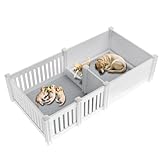
- Dual-space design,large dog playpen indoor includes 8 post,8 post cap,4 rail connector,4 rail connector clamp,9 long panel,6 short panel,4 round rail,36 picket, 4 short rail,4 long rail,1 screwdriver,4 screws.the size after assembly is 76''x39''x18''.
- Dog whelping box fexible adjustable door panel and entrance,height-adjustable door panel supports 1/3, 2/3, or fully closed positions, allowing easy access for mother dogs while preventing puppies from climbing out,step-style entrance with optional height settings to fit the mother dog's body type.
- Whelping supplies provides a comfortable space for mother dogs to give birth and rest, while ensuring puppies have ample room to move around.Features anti-crushing pig rails, which effectively prevent puppies from being accidentally crushed by the mother dog.High fences keep puppies from escaping, making centralized care easy and convenient.
- dog birthing box crafted from waterproof PVC material, the smooth surface can be cleaned in a single wipe. It’s durable and resistant to deformation even with long-term use. Comes with a free pee pad that offers stronger absorbency, reducing the frequency of replacements and keeping the area dry and hygienic.
- Assembles in just 5-10 minutes without extra tools; joints fit snugly with zero gaps. Note: The assembled product is not recommended to be moved despite its lightweight PVC construction.
How a veterinarian evaluates the change
History and behavior pattern
The clinician will want to know when the aggression began, whether it occurs only near the puppies, which people or animals trigger it, whether there has been contact or injury, and whether the behavior is improving or worsening. Bring your written observations or a video taken from a safe distance; do not stage an encounter to obtain footage.
Physical examination and medical causes
Pain, discomfort, infection, mammary problems, or another disease can lower a dog’s threshold for aggression. A physical examination and any indicated tests help separate normal maternal guarding from a medical problem. Treating pain or illness may reduce irritability, but a dog that has rehearsed dangerous aggression may still need behavior management.
Behavior support
Merck describes aggression treatment as complex and ideally designed with specialist input. Depending on the findings, your veterinarian may recommend strict environmental management, a veterinary behaviorist, or another qualified professional. Do not give sedatives, supplements, or human medication without veterinary direction, especially while the mother is nursing.
Windows Errors? Fix Them Before They Spread
Repair common Windows errors and clear accumulated junk for a smoother, more stable PC - no reinstall needed.Free scan · no reinstallOutdated Drivers Are Slowing You Down
One free scan finds every outdated or missing driver and matches the right update for your exact hardware.Free scan · exact hardware matchUse these five questions to judge the situation
| Question | Lower-risk pattern | Higher-risk pattern |
|---|---|---|
| Where does it happen? | Only at the nest or when a puppy is approached. | In multiple rooms or when no puppy is present. |
| What is the intensity? | Brief warning followed by relaxation when distance increases. | Repeated lunging, pursuit, bite attempts, or injury. |
| Who is targeted? | Approaching people or animals. | Family members during routine care, or the puppies themselves. |
| What is the course? | Stable or gradually easing as the puppies mature. | Rapidly escalating, unpredictable, or not improving. |
| Are there physical signs? | No other unusual signs. | Fever, depression, straining, bleeding, discharge, pain, or weakness. |
This comparison is a triage aid, not a diagnosis. Any bite or inability to handle the litter safely warrants professional advice regardless of where the behavior occurs.
Common mistakes to avoid
- Assuming it is “just hormones.” Maternal hormones can be involved, but pain and illness must also be considered.
- Inviting a crowd to meet the puppies. More visitors increase disturbance and opportunities for guarding.
- Taking puppies away to test her. Repeated forced separations can increase stress and create a bite risk.
- Punishing warnings. Suppressing growls can make the next response less predictable.
- Waiting through dangerous escalation. The expected improvement with maturation does not justify exposing people or puppies to injury.
- Relying on a product as treatment. A whelping box can organize a familiar space, but no product has been established as a treatment for maternal protectiveness.
A practical daily checklist
- Confirm that the mother can eat, drink, rest, eliminate, and nurse without being cornered.
- Keep the room calm and restrict access by visitors, children, and other pets.
- Approach only for necessary care, using slow movements and an escape route.
- Check puppies for warmth, nursing, and injury without provoking the mother.
- Write down triggers, intensity, recovery, and any physical symptoms.
- Call the veterinarian for severe, escalating, unusual, or medically accompanied aggression.
Bottom line
Protectiveness after birth usually reflects a mother dog’s drive to guard dependent puppies, not a permanent change in her personality. Keep the nest familiar and quiet, respect warning signals, and let the behavior ease as nursing and maternal care decline. Because high aggression can injure people or puppies and medical problems can look behavioral, obtain veterinary help whenever the response is intense, worsening, directed at the puppies, or paired with postpartum illness signs.
Quick Recap
Product prices and availability are accurate as of the date/time indicated and are subject to change. Any price and availability information displayed on Amazon at the time of purchase will apply.





Leave a Reply