
Free tools Windows power users keep installed
One-click scans. No signup required.
Scientists are releasing mosquitoes into Hawaiʻi’s forests to help save endangered birds—not to increase the mosquito population. The insects are laboratory-reared male southern house mosquitoes carrying a different strain of the naturally occurring bacterium Wolbachia. When these males mate with wild females carrying another strain, the resulting eggs fail to hatch.
This technique, called Incompatible Insect Technique, is designed to suppress the invasive mosquito that transmits avian malaria. The first documented field releases began on East Maui in November 2023, with recurring deliveries of capsules containing thousands of males. The effort is intended to buy time for Hawaiian forest birds as warming temperatures push mosquitoes into their last high-elevation refuges.
As an Amazon Associate I earn from qualifying purchases.
Scientists are releasing mosquitoes into Hawaiʻi’s forests to reduce the mosquito population that spreads avian malaria. The released insects are laboratory-reared male southern house mosquitoes (Culex quinquefasciatus) carrying a strain of the naturally occurring bacterium Wolbachia that is incompatible with the strain carried by wild females. When the two mate, their eggs fail to hatch.
Because male mosquitoes do not bite, the release is intended to act like population-level birth control—not to add more biting insects to the forest. The goal is sustained suppression of an invasive disease vector so endangered Hawaiian forest birds can keep using the high-elevation habitat where they survived for generations.
#1 Best Overall

- Dual Function Bug Zapper: This TIENBE Flying Insect Trap not only attracts and catches flying pests like mosquitoes and fruit flies with its UV light and glue boards but also doubles as a gentle night light. Perfect for creating a pest-free environment while you sleep.
- Super Grabber: This sticky glue trap quickly captures pests and insects for easy monitoring and removal. The package includes 1 White trap and 6 adhesive sheets that can be replaced at any time. You can use this indoor insect catcher in living rooms, kitchens, bedrooms, dining rooms, bathrooms, and yards.
- EFFECTIVE UV FLY TRAP: This fly trap from TIENBE utilizes dual wavelengths of 365nm and 395nm to increase mosquito and fruit fly capture rates by 80%. Its clever design increases the phototropism of insects, attracting them to the glue board.
- Silent Mosquito Killing Device: Unlike traditional zappers, this TIENBE Bug Zapper utilizes glue boards to capture flying insects without any odors. It's safe, noise-free, and comes with prolonged use. Protect your eyes and sleep peacefully without the buzz of mosquitoes.
- Smart Night Light Mode: With two LED beads, this Flying Insect Trap offers smart and night light modes for versatile use. The device automatically detects ambient light levels in smart mode, while the night mode provides continuous illumination. Ideal for keeping your room insect-free and well-lit during nighttime hours.
The apparent paradox: releasing mosquitoes to save birds
The headline sounds self-defeating. Mosquitoes transmit the disease threatening Hawaiʻi’s native birds, so why release more of them?
The answer is that the released males are not being added to strengthen the wild population. They are being used as reproductive decoys. They seek wild female southern house mosquitoes, mate with them, and leave behind eggs that do not hatch. Repeated deliveries can reduce the number of viable mosquitoes entering the next generation.
That distinction matters. The program is not an indiscriminate statewide release, and it is not designed to eliminate every mosquito in Hawaiʻi. It is a targeted conservation intervention aimed at an invasive species in forest-bird habitat.
What is being released?
| Question | Answer |
|---|---|
| Species | The southern house mosquito, Culex quinquefasciatus |
| Sex | Males only are intended for release |
| Biological tool | An incompatible strain of the naturally occurring bacterium Wolbachia |
| Purpose | Prevent wild females from producing viable offspring |
| Primary target | The invasive mosquito that transmits avian malaria |
| Conservation goal | Reduce disease pressure on native Hawaiian forest birds |
How the mosquito “birth control” technique works
The method is called Incompatible Insect Technique, or IIT. It uses the normal reproductive biology of mosquitoes rather than a gene drive or a genetically engineered trait.
- Researchers rear the target species in a laboratory. The mosquitoes are produced under controlled conditions and the males carry a particular strain of Wolbachia.
- The males are released into the forest. They search for wild female southern house mosquitoes in the release area.
- The Wolbachia strains are incompatible. When a released male mates with a wild female carrying a different strain, the resulting eggs fail to hatch.
- Repeated releases reduce recruitment. With fewer viable eggs becoming larvae and adults, the local wild population can decline—provided releases continue and enough incompatible males remain present.
The practical analogy is birth control: mating still occurs, but the pairing does not produce the next generation. It is more precise than simply describing the insects as “sterile,” because the effect depends on the Wolbachia combination carried by the male and female.
These are not genetically modified mosquitoes
One common misunderstanding is that Hawaiʻi is releasing mosquitoes genetically engineered to spread a new trait through the wild population. That is not the approach described for this project.
Hawaiʻi’s Department of Land and Natural Resources describes the intervention as non-genetic. The project does not alter mosquito gene sequences or Wolbachia gene sequences. The incompatible bacterium is the biological mechanism that makes particular matings unsuccessful; it is not a genetic modification designed to propagate through every mosquito population.
Rank #2

- Dual Attraction Technology: The fan and blue light work together in this portable bug trap to attract and trap mosquitoes, fruit flies and house flies
- Powerful Fly & Mosquito Trap: Perfect for areas of your home where insects are present, this bug catcher quietly controls pests so you can enjoy a peaceful space
- Customizable Settings: Use the touch display to select your ideal fan speed and set a timer for 3, 8, or 12 hours, or opt for continuous 24/7 operation
- Indoor Pest Control: Includes 5 mess-free glue traps and a 6-foot cord, offering portability for easy setup in your home or enclosed patio
- How It Works: Flying insects are attracted by the discreet UV light, while the quiet fan pulls them into the device where pests are captured on the sticky glue trap; Replace glue card when full
The sex of the insects is also important. Male mosquitoes do not bite people or birds. They feed on plant sugars, while female mosquitoes are the ones that seek blood meals. Releasing males therefore uses mosquito mating behavior without intentionally adding more biting females to the forest.
Why Hawaiian forest birds need this intervention
Hawaiian honeycreepers evolved on islands where mosquitoes and the diseases they carry were absent. Many of these birds consequently have little natural resistance to avian malaria, a disease caused by the parasite Plasmodium relictum.
USGS material reports that mortality can exceed 90 percent in susceptible birds. Avian malaria is not the same disease context as human malaria, but it is devastating to vulnerable Hawaiian birds. A mosquito can acquire the parasite from an infected bird and transmit it when feeding on another bird.
The birds threatened by this pressure include species such as:
- ʻIʻiwi
- Maui ʻalauahio
- Hawaiʻi ʻamakihi
- ʻApapane
- Kiwikiu
- ʻĀkohekohe
The broader honeycreeper decline is extraordinary. A National Park Service conservation overview describes a group that once included more than 50 species, with only 17 remaining in that account. Some surviving species number fewer than 500 individuals. Population estimates are snapshots and can change, so individual species counts should always be tied to a date rather than treated as permanent figures.
A field guide can make the conservation story more tangible
Readers who want to recognize the birds at the center of this story may find a finch field guide useful. The Stokes Guide to Finches of the United States and Canada includes profiles of Hawaiian honeycreepers along with information about identification, habitat, distribution, vocalizations, and conservation. It is a bird-identification resource—not a guide to Wolbachia, permits, or current mosquito-release operations—and availability should be checked with the reader’s preferred bookseller.
Why warming temperatures make the problem worse
For many years, Hawaiʻi’s cooler, higher-elevation forests provided a partial refuge. Mosquitoes reproduce less successfully in colder conditions, and malaria transmission is limited when temperatures are too low. That refuge helped some forest birds persist in mountain habitats after mosquitoes spread through the islands.
Rank #3

- Enhanced LED Attraction: This Bug Zapper is equipped with dual-color LED lights emitting both 365nm and 395nm wavelengths. The dual-color LED system increases insect attraction by 30%, making it especially effective in low-light or nocturnal environments.
- High-Efficiency Instant Electric Shock Tech: Experience enhanced efficiency with our upgraded electric grid, capable of delivering a powerful electric shock in just 0.01 seconds. This quick action swiftly immobilizes and eliminates a variety of insects, including mosquitoes, flies, moths, fruit flies, and culex, ensuring these pesky flyers have no chance to escape.
- Long-Lasting & Cost-Saving: No need for frequent bulb replacements. The durable UV-LED tubes feature a 25,000~50,000 hours lifespan—10 times longer than traditional glass tubes—providing a long-lasting solution that saves maintenance time and costs. (Bulbs are replaceable.)
- Wide Coverage for Outdoor & Indoor: Including a 1.7m/5.6ft cord, it can protect up to 1/2 acre for outdoor or 2,100 sq. ft. area for indoor, which makes the insect killer ideal for outdoor and indoor use. Great for gardens, backyards, patios, balconies, garages, and homes.
- User-Friendly & Safe: This outdoor mosquito killer has a safely protective grid. It is equipped with a dead insect collection tray at the bottom and a cleaning brush for user convenience.
Climate change is shrinking that advantage. The National Park Service reports that warming is allowing mosquitoes carrying avian malaria to move upslope into the last strongholds of Hawaiʻi’s forest birds. USGS modeling likewise indicates that future temperature and rainfall patterns are likely to support larger mosquito populations and expansion into higher elevations.
Recommended Free Tools
This is why the intervention is not simply about reducing an unpleasant insect. It is an attempt to prevent a disease vector from following endangered birds into the final areas where they can survive. On Maui and Kauaʻi in particular, the loss of high-elevation refuge has intensified the conservation emergency.
Where and when did the releases begin?
The best-documented initial deployment is on East Maui, including forest-bird habitat associated with Haleakalā National Park. The project crosses more than one land jurisdiction: federal parkland, state parcels, and private lands are covered through the relevant reviews and approvals.
- March 15, 2023: The federal environmental review concluded with a Finding of No Significant Impact for the project.
- Later in March 2023: Hawaiʻi DLNR approved the project for relevant state and private parcels covered by separate approvals.
- November 2023: The National Park Service reported that the first field releases began.
The operational plan described recurring deliveries by drone or helicopter. The mosquitoes are transported in biodegradable capsules containing thousands of male insects, which are distributed across the forest rather than released from one single point.
“Thousands” is therefore directionally accurate but can be misleading if it suggests one fixed total. This is a recurring, landscape-scale intervention, and official project documents describe continuous or repeated releases. A single number should not be presented as the current program total without checking the newest agency report.
Is the project happening across all of Hawaiʻi?
No. Hawaiʻi has multiple mosquito species and many different islands and ecosystems, but this conservation effort is focused on the invasive southern house mosquito associated with avian malaria and on habitat used by threatened forest birds.
East Maui is the clearest initial field example. Conservation agencies and partners are also developing or applying related mosquito-suppression work in other forest-bird habitats, including Kauaʻi, where endemic birds have suffered severe declines. The exact island-by-island operational status can change, so it is safer to describe Maui as the best-documented initial deployment and to verify the latest agency announcement before claiming that releases are active in a particular additional location.
Rank #4
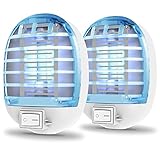
- Bug Zapper Indoor: Upgraded protective cover has ultra high light transmittance. It attracts bugs with emitting high-intensity light and can be placed indoors, such as balcony, bedroom, parlor, kitchen, bathroom, garage, etc
- Safely Bug Zappers: The narrow housing interval (less than 0.22 in) of mosquito zapper can effectively prevent fingers from high-voltage power grid by accident
- No Harm to Human & Pets: Made of high-quality material. Get rid of mosquitoes fast without sticky, messy poisons or sprays. Use natural physical method gets rid of flies. Great for places where pesticides can't be sprayed like kitchens and hospitals. Completely harmless to human and pets.Gnat traps for house indoor
- Easy to Clean: To clean dead mosquitoes, ensure the unit is unplugged from an electrical outlet and then use a screwdriver to touch the metal plate for static electricity release. Use the tissue or small brush to get the dead bugs out
- Easy to Use: Plug it in and wait. For better results, please put your fly traps in areas where flying insects are frequent activity(Est NO:99436-CHN-1)
Why the project is targeted rather than indiscriminate
The conservation logic has several layers:
- It targets a particular vector. The focus is Culex quinquefasciatus, not every mosquito species in Hawaiʻi.
- It targets a particular sex. Only males are intended for release, and males do not bite.
- It targets particular places. Releases are directed toward forest-bird habitat, not carried out as a blanket statewide treatment.
- It targets reproduction. The aim is to reduce the next generation of wild mosquitoes rather than simply remove individual adults temporarily.
The federal environmental review’s Finding of No Significant Impact is an agency conclusion about the reviewed action and its expected environmental effects. It should not be confused with a claim that every ecological question has disappeared or that the project carries zero uncertainty. Like any large conservation intervention, it is being monitored as it is implemented.
What the mosquito releases can—and cannot—do
What they may accomplish
If sustained IIT releases reduce the abundance of compatible wild mosquitoes, they may reduce the frequency of avian-malaria transmission. That could give surviving birds access to more of their former range and buy time for captive breeding, habitat protection, predator control, and other recovery measures to work.
Windows Errors? Fix Them Before They Spread
Repair common Windows errors and clear accumulated junk for a smoother, more stable PC - no reinstall needed.Free scan · no reinstallCrashes, No Sound, or Screen Glitches?
Random freezes, missing sound and display glitches usually trace back to one bad driver. Find and replace yours safely.Free scan · under a minuteThe most meaningful measures of success are not simply how many mosquitoes were released. Conservation teams need to track mosquito abundance, the presence of the incompatible strain, malaria transmission, bird survival, and whether birds are able to use habitat that was previously too dangerous.
What they cannot accomplish by themselves
IIT does not:
- restore habitat that has already been lost;
- remove rats, feral cats, or other invasive predators;
- control invasive plants;
- eliminate avian pox or other diseases;
- reverse warming temperatures; or
- replace species-specific recovery programs.
It is also not permanent eradication. If releases stop, the wild population can recover through reproduction and immigration from nearby areas. The technique requires continuity and landscape-level planning, particularly because birds and mosquitoes do not follow park or property boundaries.
Who is behind the effort?
This is a partnership rather than a single-agency experiment. Participants and conservation partners identified in project materials include:
- Haleakalā National Park;
- the Hawaiʻi Department of Land and Natural Resources and its Division of Forestry and Wildlife;
- the U.S. Fish and Wildlife Service;
- the U.S. Geological Survey;
- The Nature Conservancy of Hawaiʻi;
- American Bird Conservancy;
- Bishop Museum;
- the Maui Forest Bird Recovery Project; and
- the Kauaʻi Forest Bird Recovery Project.
The partnership structure reflects the problem’s geography. The birds’ ranges cross federal, state, private, and conservation lands, so protecting them cannot be handled entirely inside one park or by one land manager. The “Birds, Not Mosquitoes” effort is the public-facing expression of that broader forest-bird conservation collaboration.
What’s actually slowing this PC down?
Pick the symptom - the matching free tool is one click away.
Four questions readers often have
Will the released mosquitoes bite people or birds?
The program is designed to release males, and male mosquitoes do not take blood meals. The released males are intended to mate with wild females, not to feed on people or birds. That does not mean the surrounding wild mosquito population instantly disappears; the point of the intervention is to suppress it over repeated releases.
Best Value
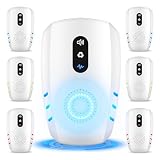
- 【Advanced Ultrasonic Technology】This ultrasonic pest repeller uses multi-frequency ultrasonic waves within a frequency range of 10kHz-65kHz to help create an uncomfortable environment for common indoor pests. As a pest repellent ultrasonic plug in, it supports daily pest control needs for mice, roaches, ants, spiders, mosquitoes, and more. It is a practical choice for customers looking for a mouse repellent, rodent repellent, or ultrasonic rodent repeller for indoor spaces.
- 【Safe Indoor Use & No Mess】Compared with traditional mouse traps indoor for home or chemical sprays for mice, spiders, ants, mosquitoes, and other indoor pests, this mouse repellent ultrasonic plug in helps support a cleaner home without bait, sticky boards, harsh odors, or messy cleanup. Designed for bedrooms, kitchens, living rooms, hallways, and other enclosed areas, it offers a more reassuring choice for everyday indoor use around people and pets.
- 【3 Ultrasonic Modes – Frequency & Target Pest Coverage】Easy plug-in and one-button operation. 3 professional frequency modes for precise pest repelling: Blue Mode (25-45 kHz) for mosquitoes, gnats, fruit flies; Yellow Mode (18-35 kHz) for ants, cockroaches, spiders; Red Mode (10-25 kHz) for rats, mice, large bugs. Red mode may make slight noise, use when no people/pets are indoors. No mess, full room pest protection.
- 【Wide Indoor Coverage】This mice repellent indoor device is suitable for indoor areas up to 1600 sq ft in open space. For better performance, place one unit in each room because ultrasonic waves may be blocked by walls and large furniture. It can be widely used in most indoor environments, whether at home, in the workplace, garages, basements, attics, warehouses, or other enclosed areas, helping provide effective support for a cleaner and more comfortable space.
- 【Energy-saving & 24/7 Automatic Protection】This plug-in ultrasonic device only consumes 3-5W power, saving more electricity than a desk lamp. No batteries required. Simply plug it in, and it works 24/7 all year round with no extra attention needed. It acts as an effective mice repellent and roach repellent indoor, providing steady low-power operation and reliable whole-house pest control for long-term home defense.
Are these mosquitoes genetically engineered?
Not according to the Hawaiʻi DLNR description of this project. The technique is non-genetic IIT. The males carry a Wolbachia strain that is incompatible with the strain in wild females, causing their eggs to fail to hatch. The project does not alter mosquito or Wolbachia gene sequences.
Will this eliminate mosquitoes from Hawaiʻi?
No. The stated goal is suppression of the invasive disease vector and interruption of avian-malaria transmission in important bird habitat. Because mosquitoes can reproduce and move in from surrounding areas, ongoing releases are required. “Population control” or “mosquito suppression” is more accurate than “eradication.”
Has the project already saved a honeycreeper species?
That conclusion should not be made without a current population-response study. The program is intended to reduce a major source of mortality and buy time for endangered birds, but it is one part of a larger recovery effort. A reduction in mosquito abundance would be an important intermediate result; species recovery would take longer and would depend on habitat, predators, climate, and other diseases as well.
Quick wins for a faster PC:
Scan for outdated or missing drivers - takes under a minuteDriver Scan →Clear out junk files and repair common Windows errorsFree Scan →The real reason, in plain language
Scientists are releasing thousands of male mosquitoes because the dangerous mosquitoes are reproducing faster than conservationists can protect the birds from them. The released males are incompatible mates: they do not bite, they do not produce viable offspring with the target wild females, and they are meant to make the next generation of disease-carrying mosquitoes smaller.
Hawaiʻi’s endangered forest birds evolved without mosquito-borne disease, and climate warming is eroding the high-elevation refuge that once protected them. IIT cannot solve the entire conservation crisis, but it may reduce one especially severe pressure long enough for the birds and the rest of their recovery programs to have a chance.
Frequently Asked Questions
Why are scientists releasing mosquitoes in Hawaiʻi?
The program releases laboratory-reared male southern house mosquitoes carrying a Wolbachia strain that is incompatible with the strain in wild females. Their matings produce eggs that fail to hatch, reducing the next generation of mosquitoes.
Are the released mosquitoes genetically modified?
No. Hawaiʻi DLNR describes the project as a non-genetic Incompatible Insect Technique. The mosquitoes and Wolbachia are not being genetically altered for this intervention.
The Tool Desk
Outbyte Driver Updater FREEScan for outdated or missing drivers - takes under a minuteDriver Scan →Outbyte PC Repair FREERepair Windows errors before they cause bigger problemsFix Now →Can the released mosquitoes bite people or birds?
The intended releases contain males, and male mosquitoes do not bite. They are released to mate with wild females, while the larger goal is to reduce the population of the invasive mosquito that spreads avian malaria.
Will the project eradicate mosquitoes from Hawaiʻi?
No. The program is intended to suppress the southern house mosquito and reduce disease transmission in forest-bird habitat. Repeated releases are necessary because the wild population can recover through reproduction and immigration.
The Bottom Line
Bottom line: Hawaiʻi’s mosquito releases are a targeted, non-genetic population-control strategy. Laboratory-reared males carrying an incompatible Wolbachia strain are released so wild female mosquitoes produce eggs that do not hatch. The objective is to reduce avian-malaria transmission and buy time for endangered Hawaiian forest birds—not to increase mosquitoes, create genetically modified wildlife, or permanently eradicate the species.
Quick Recap
Product prices and availability are accurate as of the date/time indicated and are subject to change. Any price and availability information displayed on Amazon at the time of purchase will apply.
Do these 3 things before closing this tab:
1Clear out junk files and repair common Windows errors2Scan for outdated or missing drivers - takes under a minute3Repair Windows errors before they cause bigger problems




Leave a Reply