
Some links on this page are affiliate links: if you buy through them we may earn a commission, at no extra cost to you.
Most cats follow people for ordinary reasons: they want attention, company, play, food, access to a room or resource, or simply a closer look at what is happening. Some cats are naturally more attached than others. The important question is not whether your cat follows you, but whether the behavior is normal for that individual or represents a sudden, substantial change.
A cat that has become markedly clingier, especially alongside changes in eating, drinking, toileting, sleep, vocalization, activity, or social behavior, should be discussed with a veterinarian. Following you through a doorway or meowing when you leave is not enough, by itself, to diagnose separation anxiety.
As an Amazon Associate I earn from qualifying purchases.
What your cat may be communicating by following you
Following is a behavior, not a diagnosis. The same action can have different explanations in different cats, and several motivations can operate at once. A cat may trail you because it expects interaction, because your movement predicts something useful, or because being near you is part of its normal social routine.
Attention and interaction
Some cats follow a person because they have learned that proximity brings conversation, petting, play, grooming, or another form of attention. A cat may walk behind you, wait outside a room, or appear whenever you sit down because those situations have become reliable opportunities for contact.
Popular on Amazon
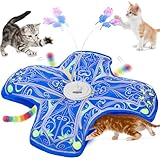
- Top-Tier Dual Interactive Fun: Qraxond's new indoor cat toy has dual motors, controlling random rotation of butterfly and plush tail swing rod accessories, bringing fun, exciting play for kittens and adult cats. Hide-and-Seek: The animal tail-shaped plush hides under the cover cloth, rotating irregularly to appear/disappear, creating a hide-and-seek game. It mimics real prey, bringing unpredictable chases to stimulate the cat's brain and senses. Irregular Rotating Butterfly: The top has an auto-rotating butterfly that rotates, pauses or swings to simulate real flight, keeping the cat engaged. Various interactions ensure the cat gets enough exercise to avoid obesity
- 3 Adjustable Speed Modes: Customize the excitement with separate buttons for the butterfly and tail. Choose from 3 settings: Steady (Blue Light), Active (Purple Light), and Random (Yellow Light). Suitable for high-energy cats to burn off steam or for calm cats to enjoy gentle play. Keep your feline entertained and prevent boredom, especially when they are home alone
- Touch-Sensitive Activation: Your Cat's in Control! With smart touch-sensor technology, just tap the device to fire up the fun mode, it will kick off a 5-minute automatic play session instantly. Right after the play session ends, it switches directly to touch-sensitive standby mode, where the purple indicator light flashes every 20 seconds. Simply tap again to reactivate it for another 5-minute cycle. This smart loop ensures your cat gets sufficient exercise and prevents overstimulation
- Large Rechargeable Battery: Enjoy long-lasting play with the built-in 2500mAh battery. It charges fully in just 2.5 hours via the included USB cable (use a 5V adapter only). The efficient auto on/off cycle extends battery life, making it convenient for busy pet owners while ensuring your cat gets healthy, moderate exercise
- Realistic Bird Chirping: Elevate the hunt with lifelike sound. The built-in speaker emits authentic bird chirps to attract your cat's attention and stimulate their prey drive. Combined with the random motions of the butterfly and tail, it creates an irresistible and engaging play experience that keeps your cat happily chasing even when they're by themselves
Companionship
Cats vary in how much social contact they seek. One may spend most of the day nearby while another prefers brief visits and long periods alone. A close-following cat may simply prefer shared space. Cats Protection describes some cats as more attached or “clingy” than others; that difference in temperament is not, on its own, evidence of a problem.
Curiosity and access
Your movement changes the environment. Opening a cupboard, turning on a tap, preparing food, or entering a previously closed room can all be interesting. Your cat may also follow because you are heading toward a favorite window, sleeping place, food station, or play area. In these cases, the target may be the activity or location rather than constant physical contact.
The Tool Desk
Outbyte PC Repair FREEClear out junk files and repair common Windows errorsFree Scan →Outbyte Driver Updater FREEFix the driver behind crashes, sound loss and screen glitchesFind Drivers →A predictable routine
Cats are attentive to patterns. If you usually feed, play, or settle down after a particular activity, your cat may begin following at that point in the sequence. The behavior can look like an all-day attachment when it is actually a response to familiar cues.
Age and individual temperament
Cats Protection says following is more common in older cats than younger cats, but it gives no numerical difference. Treat that as qualitative guidance, not a prevalence estimate. Age-related changes in confidence, sensory ability, comfort, or social needs can alter how a cat uses its person as a familiar reference point, so a new pattern in a senior cat deserves attention.
Also popular on Amazon

- A NEW CHOICE FOR INDOOR ENTERTAINMENT: Endless fun for your cat! Designed for indoor environments, this interactive toy ball rolls quickly across the carpet and emits an appealing cat-attracting chittering sound. Not only does it stimulate your cat's hunting instincts, it also allows them to enjoy outdoor chasing indoors while reducing the risk of furniture scratching
- INTELLIGENT INTERACTION AND FUN: This automatic cat toy is your pet's new playmate. It has two modes: ① Normal mode (green light), which runs for five minutes and then automatically shuts off. ② Intelligent mode (blue light), after running for five minutes the exercise ball automatically enters the dormant mode, when your cat touches it again, the exerciser will interact with your cat again. So whether it's a long game or a short interaction, this interactive cat ball meets the needs of both you and your pet, allowing your pet to entertain itself while you're busy
- TWO SPEEDS FREELY SWITCHING: The BABORUI interactive cat toy offers two speeds, fast and slow, which can be freely switched at any time. Even if your cat is cute and short-legged, it can still keep up with the pace of the exercise ball
- TRIPLE FUN, TRIPLE HAPPINESS: This cat toys for indoor cats comes with three fun tails that provide your cat with triple the fun. They can have endless fun chasing and catching the ball, while the sound of the bells on the tails will further stimulate their curiosity and desire to chase
- SAFE MATERIAL, LASTING AND DURABLE: We understand that your pet's safety is of utmost importance to you. The shell of this kitten toys is made of safe silicone material, so you don't need to worry even if your pet chews it. The durable design means it can withstand daily wear and tear, providing long-lasting companionship for you and your pet
Why cats follow people into the bathroom or other rooms
The bathroom scenario is common because it combines several attractive features: a door that may close, a small space that changes your availability, running water, unusual smells, and a predictable pause in your activity. Your cat may be investigating the room, objecting to a closed door, seeking company, or anticipating interaction. None of those possibilities can be selected confidently from the doorway behavior alone.
Look at what happens after your cat catches up. Does it settle nearby, rub against you, vocalize, play, inspect the room, or immediately leave? The follow-up behavior gives you a more useful description for your veterinarian than the fact of following by itself.
Stable following versus a new or intensified pattern
Compare the current behavior with your cat’s established baseline. The following table is a practical way to organize observations; it does not identify a diagnosis.
| Observation | More consistent with a familiar pattern | More concerning as a change |
|---|---|---|
| Timing | Your cat has always trailed you or does so at predictable routine points. | The behavior began recently or increased sharply over days or weeks. |
| Where it happens | Following occurs in many ordinary situations without obvious distress. | It is concentrated around a new trigger, such as a person leaving, or occurs almost continuously when that was not typical. |
| What the cat does | The cat settles, explores, sleeps, or engages normally once nearby. | The cat appears persistently agitated, unusually vocal, unable to settle, or markedly different in social behavior. |
| Other body and routine changes | Eating, drinking, toileting, sleep, energy, and interaction remain typical. | Any of those areas also change, even if the change seems modest. |
| Best next step | Continue observing the pattern and provide appropriate activity and choice. | Arrange a veterinary conversation; describe the timing and accompanying changes. |
Does following you mean separation anxiety?
Not necessarily. Cats Protection states that “True separation anxiety in cats is thought to be very uncommon” in its organization advice article Can cats get separation anxiety?, published September 5, 2026. A cat following you through a doorway, waiting outside a room, or meowing as you leave does not establish that condition.
Also popular on Amazon

- [Trending Interactive Entertainment]: Potaroma's new indoor cat toys provide an engaging, stimulating play experience for kittens and older cats alike. This automated toy features a rotating butterfly on the top, a removable cover, an enticing feather wand hidden under the cover, consisting a hide-and-seek game. This interactive toy is a great birthday gift for enriching your pet's daily life. Even when left at home alone, your cat can play by itself independently like having a party
- [Advanced Electronic Irregular Motion]: Powered by a smart motorized system, this electric cat toys deliver irregular movements to keep your cat entertained. The play experience includes spinning, chasing, and hunting elements that mimic real-life prey, especially the chasing feather that pops out unpredictably, stimulating your kitty's brain and senses
- [Multi Modes for Indoor Fun]: Features a range of captivating movement modes that stimulate cat's natural instincts to chase, pounce, and play. 3 rotating modes of chasing feather; Simultaneous or seperate working of chasing feather and spinning butterlfy; What's more, the cover can be removed to expose the chasing feather completely for more fun. The diverse play options ensure your cat gets the mental and physical stimulation and enough exercise to eliminate boredom
- [Durable]: Built to withstand even the most aggressive play sessions, thanks to its durable design and high-quality materials. The motors inside the toy are designed to move smoothly and resist wear and tear. Whether your cat loves to chew, scratch, or paw at their toys, Potaroma's cat toy can handle it all. Experience the magic of Potaroma's interactive cat toy, making it a must-have for cat owners seeking a durable and entertaining option for their pets
- [Rechargeable & Large Capacity Battery]: Provide hours of fun for your furry friend. With a built-in rechargeable battery that offers a long-lasting charge, your kitten can enjoy uninterrupted self playtime for up to several days. No need for frequent recharging, making it a convenient choice for busy pet owners. Keep your cat entertained and happy with our innovative cat toys, featuring a battery that's as powerful as your cat's curiosity
Several less specific explanations can produce the same departure-related behavior. A changed schedule, boredom, frustration, meal timing, or a closed door may make your departure salient without the cat experiencing a clinical anxiety disorder. The key question is whether there is intense, repeatable distress specifically associated with separation and whether the pattern is new or escalating.
If your cat appears intensely distressed whenever a particular person leaves, seek veterinary guidance and ask for help from a suitably qualified cat behaviorist. A behaviorist can assess the whole sequence, including what happens before departure, during the absence, and after the person returns. Do not label the behavior as separation anxiety based on following alone.
When sudden clinginess can signal a medical problem
A significant behavior change can be an early sign of pain, illness, or degenerative disease. Cats often hide physical problems, so a new need to stay close may be one of the first visible differences. Cats Protection advises contacting a veterinarian if a cat becomes much clingier than usual. VCA likewise lists following or clinging among social-behavior changes that can occur in senior pets and recommends taking behavior changes seriously.
Changes worth reporting
- Eating more or less than usual, or showing a changed interest in food.
- Drinking more or less than usual.
- Changes in urination, defecation, litter-box use, or toileting accidents.
- Sleeping at different times, sleeping much more, or appearing unable to settle.
- New or increased meowing, crying, growling, or other vocalization.
- Lower or unusual activity, reluctance to move, or a different level of play.
- Changes in how the cat seeks, accepts, or avoids social interaction.
These signs do not tell you which condition is present. They tell you that a professional assessment is appropriate, particularly when several appear together or the change is marked.
Also popular on Amazon

- 🐱 Trigger Natural Hunting Instincts - Concealed feather wand mimics real prey with unpredictable pop-up motion + realistic mouse squeak. Satisfies your cat's predator drive even when you're away
- 🤖 3 Smart Modes for Every Personality - Normal/Active/Interactive modes adapt to lazy loungers or energy balls. Motion sensor auto-activates on touch; auto-sleep saves battery
- Beat Boredom & Anxiety - Mental stimulation + physical exercise in one. Reduces destructive scratching, over-grooming, and midnight zoomies. Perfect for solo play while you work
- ⚡ 2-Hour Charge = Weeks of Fun - Built-in 1200mAh battery eliminates disposable battery costs. USB-C charging (cable included) - eco-friendly & travel-ready
- 🛡️ Built for Rough Play - Thickened padded mat withstands pouncing & clawing. Replaceable feather wand extends toy lifespan. Rounded edges protect paws
How to prepare for a veterinary conversation
A short record can make a vague concern more concrete. Note the date you first noticed the change, how often following occurs, what situations trigger it, and whether the intensity is increasing. Record appetite, water intake, litter-box behavior, sleep, vocalization, movement, and interactions with people or other animals.
Describe the behavior in observable terms. “She follows me to the kitchen, cries when I close the door, and has eaten half her normal amount for three days” is more useful than “She seems anxious.” If possible, take a brief video at home showing the behavior and the surrounding context. Bring the cat’s age, known medical history, medications, and any recent household or routine changes to the appointment.
Recommended Free Tools
What to provide when your cat spends time alone
Enrichment can give a cat activity, choice, and opportunities to use normal behaviors while you are away. It is supportive care, not a treatment for illness or intense distress.
Make food more engaging
A puzzle feeder or another method that makes the cat work gradually for food can turn a routine meal into an activity. Introduce any feeding change while you are present so you can see whether the cat understands it and continues to eat an appropriate amount.
Also popular on Amazon

- Ball Cat Toy: Multi-level cat toy with 3 tiers and 6 spinning balls—keeps indoor cats active, curious, and entertained
- Enrichment: Encourages batting, swatting, and chasing to satisfy hunting instincts and enhance everyday enrichment
- Durable & Safe: Sturdy, non-slip base and a secure safety bar for hours of safe independent play
- Feline Favorite: Designed for older kittens and adult cats alike; great for multi-cat homes or gifting; not recommended for kittens under 12 weeks
- Expandable: Enjoy on its own or pair with Catstages Topper Toys (sold separately) for even more interactive chaos
Offer interactive play
Interactive play before a predictable absence can provide an outlet for movement and predatory play. Use safe toys and remove anything that could be swallowed, become tangled, or break into dangerous pieces when the cat is unsupervised.
Create places to scratch, climb, hide, and sleep
Scratching posts, climbing structures, comfortable hiding places, and several sleeping options let the cat choose how to spend time. Place resources so the cat can use them without being forced into a single exposed location.
PC Slower Than It Used to Be?
A free scan shows the junk files, broken settings and background clutter dragging Windows down - then fixes them in one click.Free scan · Windows 10 & 11Crashes, No Sound, or Screen Glitches?
Random freezes, missing sound and display glitches usually trace back to one bad driver. Find and replace yours safely.Free scan · under a minuteProvide safe visual access
A secure window perch or other safe window access can add visual stimulation. Check that the window and screen are secure and that the location does not expose the cat to a fall or other hazard.
These options may reduce boredom and increase choice, but a cat that has become suddenly clingy still needs the underlying behavior change assessed rather than being managed only with toys or feeders.
A practical decision path for owners
- Establish the baseline. Ask whether following is longstanding, intermittent, and otherwise calm, or whether it is clearly new or much more intense.
- Check the context. Note whether it happens throughout the day, mainly around meals or closed doors, or specifically when someone leaves.
- Check for companion changes. Review eating, drinking, toileting, sleep, vocalization, energy, movement, and sociability.
- Contact your veterinarian for a new or significant change. Explain the timeline and provide your observations rather than trying to assign a diagnosis.
- Add enrichment for ordinary alone-time needs. Use play, puzzle feeding, scratching, climbing, hiding, sleeping choices, safe toys, and safe window access as appropriate.
- Seek behaviorist support for intense departure-specific distress. Keep veterinary assessment in the plan, because behavior and health can overlap.
What not to conclude from following alone
- It does not always mean your cat is showing affection, although companionship may be part of the explanation.
- It does not prove hunger; the cat may be following a routine cue or seeking another resource.
- It does not prove anxiety or separation anxiety.
- It does not prove illness when the pattern is longstanding and the cat is otherwise normal.
- It does not provide a reliable percentage-based prediction about your cat or about cats in general; no named prevalence figure is established for this behavior.
The useful interpretation comes from the combination of baseline, context, intensity, and accompanying changes. A familiar, relaxed pattern can simply be part of your cat’s temperament. A marked departure from that pattern deserves a veterinary conversation, and intense distress linked specifically to separation may warrant a qualified behaviorist as well.





Leave a Reply