
Crashes, No Sound, or Screen Glitches?
Random freezes, missing sound and display glitches usually trace back to one bad driver. Find and replace yours safely.Free scan · under a minuteWindows Errors? Fix Them Before They Spread
Repair common Windows errors and clear accumulated junk for a smoother, more stable PC - no reinstall needed.Free scan · no reinstallA newborn puppy that cannot nurse needs prompt, careful help. If the mother’s milk or a healthy foster mother is unavailable, feed a commercial canine milk replacer with a puppy nursing bottle, keeping the puppy warm, on its stomach, and allowing only a slow, controlled flow. A puppy that is chilled, weak, refusing to suckle, struggling to breathe, or failing to keep feeds down needs veterinary advice urgently; newborns can deteriorate quickly. This is general care information, not an individualized feeding prescription. A veterinarian should confirm the puppy’s condition, formula, quantity, and schedule.
First decide whether bottle-feeding is safe right now
Bottle-feeding is appropriate only when a puppy is alert enough to suck and swallow. Before preparing a feed, look at the puppy’s warmth, breathing, responsiveness, and ability to latch.
As an Amazon Associate I earn from qualifying purchases.
- Get veterinary help immediately if the puppy is cold, limp, unusually sleepy, unable to suck, repeatedly refuses feeds, has obvious feeding difficulty, or seems ill.
- Do not keep retrying a failing feed. A newborn can worsen during a short period of missed nutrition, dehydration, or low body temperature.
- Never improvise tube feeding. A puppy that cannot suckle may need tube feeding, but the equipment, tube placement, volume, and technique must be taught and supervised by a veterinary professional. Incorrect placement or excessive flow can send milk into the lungs.
Call a veterinary clinic or emergency service while keeping the puppy safely warm. Describe the puppy’s age, weight if known, temperature if measured, last successful feed, and any coughing, weakness, or milk from the nose.
The Tool Desk
Outbyte Driver Updater FREEScan for outdated or missing drivers - takes under a minuteDriver Scan →Outbyte PC Repair FREERepair Windows errors before they cause bigger problemsFix Now →Choose the right milk source
Mother’s milk or a foster mother comes first
When possible, a puppy should nurse from its own mother. Her milk supplies appropriate nutrition, and colostrum in the first milk provides important early immune support. If she is absent, ill, rejecting the litter, or producing too little milk, ask a veterinarian, shelter, or experienced breeder whether a suitable lactating foster dog is available. Introducing a puppy to another litter carries infection and compatibility risks, so obtain professional guidance rather than placing it with an unknown dog.
#1 Best Overall
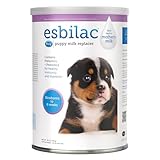
- PUPPY MILK REPLACEMENT — When mom can’t nourish them, Esbilac can. Scientifically the next best to mother’s milk, Esbilac provides all the nutritional elements necessary for puppies, newborn to six weeks old.
- COMPLETE, BALANCED NUTRITION — Our formula is closest to mother's milk in protein, fat, and carbohydrates. We’ve also added vitamins, minerals, and trace nutrients; plus prebiotics and probiotics to support healthy immunity and digestion.
- EASY TO DIGEST — Esbilac is highly palatable and formulated with a special fiber blend for easy digestion and improved gut health.
- EASY-TO-MIX FORMULA — Whisk or shake 1 part powdered Esbilac into 2 parts warm water. Do not mix more Esbilac than can be consumed in 24 hours. Do not use a blender. Must be kept refrigerated after reconstituting.
- ABOUT US — PetAg is a trusted leader in pet wellness, with science-backed formulas in our milk replacers, health supplements, and grooming products helping pet owners to proactively enhance the lives of their pets, for more healthy years together.
Use a commercial canine milk replacer
If nursing from a mother or foster is not possible, select a commercial puppy milk replacer formulated for dogs. Follow that product’s mixing and feeding directions exactly. These products are designed to provide a more appropriate balance of energy, protein, fat, vitamins, and minerals than household milk.
VCA Animal Hospitals cautions that cow’s milk and goat’s milk are inadequate sources of nutrition for newborn orphaned puppies. Do not use either as a complete diet, and do not rely on an improvised homemade mixture as the puppy’s regular feeding plan. If a commercial replacer is temporarily unavailable, call a veterinarian for an emergency plan rather than guessing at ingredients or proportions.
Gather and prepare the equipment
Use a puppy nursing bottle with a slow-flow nipple
Use a bottle and nipple made for puppies, not a human baby bottle with an unverified flow rate. The opening must restrict milk so the puppy can draw it out by suckling. VCA’s orphan-puppy guidance describes a flow of about one drop at a time; another VCA guide says the formula should drip with minimal squeezing and warns that a nipple that freely drips may be too large.
Do these 3 things before closing this tab:
1Fix the driver behind crashes, sound loss and screen glitches2Repair Windows errors before they cause bigger problems3Scan for outdated or missing drivers - takes under a minuteThe practical rule is slow and controlled: when the bottle is inverted, milk should not stream out. Never squeeze the bottle to flood the puppy’s mouth. Do not cut, enlarge, or otherwise modify the nipple unless a veterinarian has shown you how to test the resulting flow. A hole that is too small can frustrate the puppy, but a hole that is too large can overwhelm its weak gag reflex and cause aspiration.
Prepare clean, measured formula
- Wash your hands and clean the work surface.
- Mix the replacer using the product’s stated powder-to-water ratio. Do not concentrate it or dilute it to change the amount the puppy receives.
- Prepare only what can be used safely. VCA advises making no more than will be used within 24 hours.
- Warm the prepared formula to approximately 95–100°F (35–37.8°C). VCA also rounds the target to about 100°F (38°C). Warm the container in a water bath or with the method recommended on the product label; avoid overheating and hot spots.
- Check the temperature immediately before feeding with a clean thermometer or a drop on the inside of your wrist. It should feel warm, not hot.
Formula that is too cold can be poorly tolerated, especially by a chilled puppy. Formula that is too hot can burn the mouth and damage nutrients. If you are unsure of the temperature or mixing instructions, pause and call a veterinary clinic or the manufacturer listed on the label.
Position the puppy correctly for every bottle
Lay the puppy on its belly or stomach, with its legs beneath or slightly to the sides and its head level or gently neutral, as it would be while nursing from its mother. VCA states: “When feeding, hold the puppy in a horizontal, head-neutral position as it would be when feeding from its mother.”
Support the puppy’s body on a towel or your hand so it does not roll onto its back. Keep the muzzle aligned with the bottle rather than tipping the head upward. Feeding on the back, like a human infant, allows milk to pool in the mouth and increases the chance that it will enter the airway.
Step-by-step: bottle-feed a newborn puppy
- Warm the puppy gradually if it is chilled. A cold puppy may not digest or suck effectively. Do not attempt a full feed while the puppy is cold; contact a veterinarian for the safest rewarming and feeding plan.
- Check the bottle’s flow. With the bottle inverted, confirm that the nipple releases only a slow drop rather than a stream. Recheck the flow whenever the nipple is replaced.
- Place the puppy belly-down. Keep the head level or neutral and the neck in a natural line.
- Offer the nipple at the lips. Touch it gently to the mouth and allow the puppy to latch and begin sucking. Do not push it deep into the mouth.
- Let the puppy set the pace. Hold the bottle at an angle that keeps the nipple filled with formula, but do not squeeze it. Watch the jaw and swallowing rhythm.
- Pause for problems. Stop immediately if the puppy coughs, chokes, struggles, becomes unusually limp, or milk appears around the nose. Keep the puppy upright enough to breathe normally and contact a veterinarian; do not resume repeated attempts if the problem continues.
- Stop when the puppy finishes or the prescribed amount is reached. Never force extra formula because the puppy seems small or because a littermate drank more. The correct volume depends on the puppy’s weight, age, health, and the specific replacer.
- Clean the puppy and equipment. Wipe formula from the muzzle and coat, then wash and sterilize the bottle and nipple according to veterinary or product instructions.
A newborn’s gag reflex is weak. Fast flow, squeezing the bottle, an oversized nipple, or an incorrect posture can allow formula into the lungs. Aspiration can cause severe harm, so calm, patient feeding is safer than trying to make a reluctant puppy finish quickly.
Rank #2

- NUTRITIONAL SUPPLEMENT - Esbilac Healthy Development supports healthy growth and development with high-quality protein for dogs weaning to 6 years.
- SUPPORTS COGNITIVE DEVELOPMENT – With DHA (Omega 3 fatty acids) and Vitamin E, our formula supports visual & cognitive development.
- CONTAINS OMEGA 6 FATTY ACIDS - Our powder contains Omega 6 fatty acids to support a healthy skin and coat.
- GREAT TASTE - Esbilac Healthy Development is formulated with a great taste dogs love. Supports transition to solid foods for weaning puppies.
- ABOUT US − PetAg is a trusted leader in pet wellness, with science-backed formulas in our milk replacers, health supplements, and grooming products helping pet owners to proactively enhance the lives of their pets, for more healthy years together.
How often should a newborn puppy eat?
Newborns need frequent feeds around the clock, but the exact interval is not identical for every puppy. The formula label and a veterinarian’s instructions take priority over a generic timetable.
| Guidance | Interval stated | How to use it |
|---|---|---|
| VCA Animal Hospitals, Feeding Orphaned Puppies (updated February 19, 2025) | Every 2–4 hours during the first week | Use the puppy’s age, weight, health, and formula directions to choose the appropriate end of the range with veterinary advice. |
| Best Friends Animal Society, Orphaned Newborn Puppy Care | Every 2–3 hours around the clock for newborn puppies | Expect overnight feeds; do not assume a newborn can safely sleep through the night. |
These are care recommendations, not population statistics or a substitute for an examination. A premature, underweight, dehydrated, or sick puppy may need a different plan. Set alarms, record each feed, and weigh the puppy on a schedule your veterinarian recommends so that changes are visible early.
How much formula should go in each bottle?
There is no safe universal bottle volume for every newborn puppy. The amount must be calculated from the puppy’s current weight, age, condition, and the energy density and instructions of the chosen replacer. Use the product label as the starting point and have a veterinarian confirm the daily total and number of feeds.
- Weigh the puppy on a reliable scale and record the result with the date and time.
- Measure formula accurately; do not estimate by filling the bottle to a familiar line.
- Divide the veterinarian-approved daily amount across the prescribed feeds.
- Never force the last drops if the puppy is full, tired, or no longer swallowing normally.
- Report poor weight gain, weight loss, persistent diarrhea, vomiting, bloating, or refusal to eat promptly.
More formula is not automatically better. Overfeeding can cause digestive problems and increases the volume that could be aspirated if the puppy is struggling. Underfeeding can lead to inadequate growth and weakness. Only an individualized plan can balance those risks.
Keep the puppy warm without overheating
Newborn puppies have limited temperature control. The Merck Veterinary Manual notes that puppies and kittens lack mature thermoregulatory mechanisms until about four weeks of age. Hypothermia can impair nursing and digestion and can increase aspiration risk.
- Provide a draft-free nest with dry bedding and a safe, indirect heat source.
- Leave space for the puppy to move away from the heat; never place it directly on a heating pad, hot-water bottle, or uncovered heat lamp.
- Check the puppy’s temperature and behavior as directed by a veterinarian rather than relying on a warm room alone.
- If the puppy is chilled, rewarm it slowly and seek veterinary advice before offering a substantial feed.
Overheating is also dangerous. Panting, restlessness, hot skin, or a puppy that continually moves away from the heat means the environment needs assessment. Ask a veterinarian for a safe temperature range for the puppy’s age and nesting setup.
After every feed: elimination and hygiene
Stimulate urination and defecation
During the early weeks, orphaned puppies usually cannot eliminate without stimulation. After feeding, gently rub the genital and anal area with a warm, moist cloth or cotton ball until the puppy urinates and, when needed, defecates. Use a clean section of cloth for each puppy and wash your hands afterward. Continue this care until a veterinarian confirms that the puppy is developing the ability to eliminate independently.
Keep a written care log
| Record | Why it matters |
|---|---|
| Time and amount of every feed | Shows whether the puppy is receiving the planned schedule and helps the veterinarian adjust it. |
| Body weight | Reveals growth or concerning loss that may not be obvious by looking. |
| Urination and stool | Helps identify missed elimination, diarrhea, constipation, or other changes. |
| Alertness, suck strength, coughing, and breathing | Creates an early record of deterioration or possible aspiration. |
Store formula and clean bottles safely
Prepared replacer supports bacterial growth if it is left warm or handled repeatedly. Best Friends Animal Society advises refrigerating unused formula and discarding it after 24 hours. VCA likewise recommends refrigeration, using prepared formula within 24 hours, and discarding formula that has remained at room temperature for one hour.
Rank #3

- MILK REPLACER WITH PROBIOTICS: Suitable for up to 9 young animal species including puppies, kittens, calves, lambs, goats, foals, piglets, llamas, and crias; providing probiotics and balanced nutrition to support healthy growth and development.
- MADE WITH PROTEIN AND FAT: Contains 24% protein and 24% fat; supporting fast, healthy growth, strong muscle development, and overall vitality for young animals during critical early stages of life.
- ALL MILK FORMULA WITH PROBIOTICS: Made with high-quality all-milk protein; supporting healthy growth, proper development, and overall performance for young animals during critical early stages of life.
- SUPPORTS HEALTHY DIGESTION FOR YOUNG ANIMALS: Powered by Opti-Gut probiotics; promoting gut health, nutrient absorption, and digestive balance to support overall growth, vitality, and wellbeing for young animals.
- EASY TO MIX FORMULA: Designed for quick and convenient preparation; ensuring fast mixing, effortless feeding, and optimal consumption so young animals receive balanced nutrition efficiently for healthy growth and development.
- Refrigerate unused prepared formula promptly in a clean, covered container.
- Write the preparation time on the container so the 24-hour limit is clear.
- Discard any formula that has been at room temperature for an hour, even if it looks and smells normal.
- Do not pour leftover formula from a used bottle back into the refrigerated container.
- Wash, rinse, and sterilize bottles and nipples between uses according to the product directions and your veterinarian’s guidance.
When a feed goes wrong
Milk flows too quickly
Stop, remove the bottle, and check the nipple. A freely dripping nipple may be too large. Replace it with a properly sized slow-flow nipple rather than trying to compensate by holding the bottle differently or squeezing less. If you cannot obtain a controlled flow, ask a veterinarian or veterinary nurse to demonstrate a safe setup.
The puppy coughs, chokes, or has milk at the nose
Stop feeding immediately and allow the puppy to breathe. These signs can indicate that formula entered the airway. Contact a veterinarian promptly, even if the puppy appears to recover, because aspiration can become serious.
The puppy will not latch or repeatedly refuses feeds
Do not force the nipple into the mouth and do not squirt formula in. Check whether the puppy is chilled, then seek veterinary help. Weakness, low body temperature, infection, dehydration, birth defects, and other problems can all make a newborn unable to nurse; correcting the underlying problem is more important than repeated bottle attempts.
Free tools Windows power users keep installed
One-click scans. No signup required.
The puppy is bloated, vomiting, or has persistent diarrhea
Stop changing recipes or increasing and decreasing volumes on your own. Record what was fed and when, preserve the product label, and call a veterinarian for a tailored adjustment and examination.
Why tube feeding must be taught by a veterinarian
A puppy that is too weak to suck may still need nutrition, but tube feeding is not a do-it-yourself substitute for a bottle. The tube must be the correct type and length, placed in the esophagus rather than the airway, and used with a volume and speed the puppy can tolerate. A mistake can cause aspiration, trauma, or death. Have a veterinary professional demonstrate the procedure in person and tell you when to stop and return for care.
When can the puppy start weaning?
Formula may be the puppy’s sole nutrition until approximately 3–4 weeks of age. VCA identifies this period as when weaning may begin. Weaning is gradual: a veterinarian can recommend an appropriate puppy food, texture, and transition schedule while continuing the needed milk replacer. Do not abruptly replace bottles or withhold formula because the puppy has begun licking food. Continue monitoring weight, hydration, stools, and energy throughout the change.
A practical 24-hour safety checklist
- Confirm that the puppy is warm and responsive enough to suck before each feed.
- Use only the selected commercial canine milk replacer, mixed exactly as labeled.
- Warm formula to about 95–100°F (35–37.8°C) and test it before offering it.
- Check that the puppy nursing bottle releases a slow, controlled drop, not a stream.
- Feed with the puppy belly-down and the head level or neutral.
- Let the puppy suckle; never squeeze formula into the mouth or feed on the back.
- Follow the veterinarian’s individualized volume and the product’s schedule; expect feeds every 2–4 hours in the first week, with some guidance calling for every 2–3 hours around the clock.
- Stimulate elimination after feeds during the early weeks.
- Refrigerate prepared formula, use it within 24 hours, and discard room-temperature formula after one hour.
- Record feeds, weight, elimination, alertness, and any coughing or breathing change.
- Call a veterinarian without delay for chilling, weakness, refusal to suckle, repeated feeding difficulty, vomiting, persistent diarrhea, or possible aspiration.
Safe bottle-feeding is a coordinated routine of warmth, the correct replacer, controlled flow, natural posture, frequent monitoring, and prompt veterinary support. If any part of that routine is not working, the safest next step is professional help rather than a stronger formula, a faster nipple, or a forced feed.
Recommended Free Tools
Quick Recap
Product prices and availability are accurate as of the date/time indicated and are subject to change. Any price and availability information displayed on Amazon at the time of purchase will apply.





Leave a Reply