
For freshwater angelfish (*Pterophyllum*), you usually cannot tell male from female reliably by looking at body shape alone. A breeding papilla near the vent can offer a clue when visible, but observing spawning is the clearest confirmation: the fish laying eggs is female, and a fish fertilizing them is male. Eggs by themselves do not prove a male is present, because a female can lay unfertilized eggs.
First, make sure you mean freshwater angelfish
This guidance is for freshwater angelfish in the genus Pterophyllum, not marine angelfish. Despite sharing a common name, marine angelfish are a different group of fish, and their sexing guidance should not automatically be applied to freshwater angelfish. Aquarium Co-Op’s freshwater angelfish guide covers Pterophyllum.
As an Amazon Associate I earn from qualifying purchases.
Can you tell a male from a female by appearance?
Usually, not with confidence. Some mature males may have a rounder forehead and be somewhat larger, while females may have a flatter underside, but these are tendencies—not reliable identifying features. The Freshwater Aquaculture Extension publication on Pterophyllum scalare cautions that body-shape distinctions are virtually useless for young adults; its reproduction guide says angelfish are not easily sexed.
The Tool Desk
Outbyte Driver Updater FREEFix the driver behind crashes, sound loss and screen glitchesFind Drivers →Outbyte PC Repair FREEClear out junk files and repair common Windows errorsFree Scan →Size and silhouette can prompt a guess, but they cannot establish an individual fish’s sex. Sexing can remain difficult outside breeding condition, and a side-on view or photograph may not show enough to make a dependable call.
#1 Best Overall

- VIBRANT RED COLORATION – Starfire Red Angelfish showcase brilliant red tones that stand out beautifully in freshwater aquariums, creating a striking centerpiece that attracts attention from every angle.
- ELEGANT FLOWING FINS – Known for their graceful body shape and elongated finnage, these angelfish add sophistication, movement, and beauty to planted tanks and community displays.
- PEACEFUL COMMUNITY FAVORITE – Well suited for freshwater community aquariums with compatible tank mates, offering an excellent combination of personality, activity, and visual appeal.
- POPULAR TROPICAL CICHLID – One of the most sought-after angelfish varieties among hobbyists due to its impressive coloration, graceful swimming style, and captivating presence.
- HEALTHY LIVE SPECIMEN – Carefully selected Starfire Red Angelfish measuring approximately 1–1.5 inches, professionally packed and prepared for safe transport and acclimation.
How to check the breeding papilla
When an angelfish is in breeding condition, look near the vent, between the ventral and anal fins, for a small projection called the genital or breeding papilla. Hobbyist guidance reproduced in The Angelfish Society’s November 2011 newsletter describes the female’s papilla as generally larger and blunter, and the male’s as slimmer and more pointed.
This is a clue, not a guarantee. The fish’s laterally compressed body can make the area hard to see, and the difference may not be obvious unless the fish is close to spawning. Avoid stressing or handling a fish just to inspect it.
Rank #2

- 3 Pack - You will get 3 Beautiful Angelfish
- Size is dime sized to quarter depending on current stock
What eggs and spawning behavior can tell you
If you see one fish laying eggs, you have identified a female. If you observe another fish fertilizing those eggs, that fish is male. This is stronger evidence than body shape or a suspected papilla difference.
Eggs alone do not confirm that a male is present or that fertilization occurred. Female angelfish can lay eggs without a male, and those eggs will be unfertilized. Both sexes may guard eggs, so guarding behavior by itself does not identify which parent is male or female. See the Aquarium Co-Op guide on egg laying and the National Aquarium’s freshwater angelfish profile on parental care.
Rank #3

- Beautiful Variety Pack: Includes 2 Black, 2 Gold, and 2 Koi Angelfish — a balanced mix of colors and patterns to bring life and diversity to your aquarium.
- Peaceful Community Fish: Ideal for planted or community setups; compatible with tetras, gouramis, corydoras, and other calm freshwater species.
- Tank-Raised & Healthy: Professionally bred in stable conditions for strong, disease-free, and easy-to-acclimate fish.
- Perfect Aquarium Size: Shipped at approximately 1.5–2 inches, allowing them to grow and adapt easily to their new environment.
Which approach should you use?
| Approach | What it can tell you | When it is useful |
|---|---|---|
| Judge body or head shape | Low-confidence suggestion only; shape differences are especially unreliable in young adults (Freshwater Aquaculture Extension, AS-489). | At most, a tentative guess about a mature fish. |
| Look for the breeding papilla | A larger, blunter papilla suggests female; a slimmer, more pointed one suggests male (The Angelfish Society, November 2011, newsletter). | When a fish is in breeding condition and the area is visible. |
| Observe spawning | The egg-layer is female; a fish seen fertilizing the eggs is male. | The clearest way to identify the sexes in a spawning event. |
| Raise a group and let a pair form | A pair can be recognized after breeding, rather than guessed from juvenile appearance. | For keepers seeking a breeding pair who can accommodate several fish while they mature. |
For the last approach, Aquarium Co-Op recommends raising a group of at least six juveniles and allowing them to pair naturally. This is keeper guidance, not a guaranteed route to a pair; it also means maintaining multiple fish until pairing and breeding make identification possible.
Independent reader supportYour contribution helps us test, update, and keep practical guides available for everyone.Why marine angelfish advice may not apply
“Angelfish” can also mean marine species. The OATA care sheet titled “Angelfish” concerns marine angelfish, notes that sex can be difficult to identify in some species outside breeding condition, and emphasizes that differences vary by species. It is not a substitute for guidance on freshwater Pterophyllum. OATA’s care sheet is useful only if the fish in question is marine.
Quick Recap
Best Value

- Elegant Appearance: Bright golden coloration and flowing fins add a natural centerpiece to any aquarium.
- Peaceful Nature: Compatible with most freshwater community fish and planted environments.
- Hardy & Adaptable: Thrives in stable, clean water and adjusts well to a variety of tank setups.
- Tank Setup: Prefers vertical structures, plants, and gentle filtration in aquariums of 30 gallons or more.
Rank #4
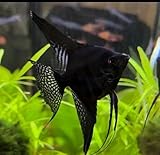
- Elegant Long-Fin Variety – Stunning black angelfish with flowing fins that add sophistication to any aquarium.
- Perfect for Community Tanks – Peaceful temperament makes them ideal for well-balanced freshwater setups.
- Ideal Size (2–2.5” Body) – Juvenile size perfect for acclimation and long-term growth in your tank.
- Striking Solid Black Coloration – Deep, rich tones create a bold centerpiece in planted aquascapes.
- Hardy & Easy to Maintain – Adaptable species suitable for hobbyists with proper water conditions.
Product prices and availability are accurate as of the date/time indicated and are subject to change. Any price and availability information displayed on Amazon at the time of purchase will apply.





Leave a Reply