
The Tool Desk
Outbyte PC Repair FREERepair Windows errors before they cause bigger problemsFix Now →Outbyte Driver Updater FREEFix the driver behind crashes, sound loss and screen glitchesFind Drivers →A snake collected in Ethiopia in the late 1980s and kept in captivity until 2006 has become the holotype of Boaedon broadleyi, a species formally described in 2025. Researchers recognized it not because it was newly found in a tank, but because modern DNA analysis, physical examination, and distribution data showed that it belonged to a previously unrecognized species.
A snake collected in Ethiopia in the late 1980s and kept in captivity until 2006 has become the holotype of Boaedon broadleyi, a species formally described in 2025. Researchers recognized it not because it was newly found in a tank, but because modern DNA analysis, physical examination, and distribution data showed that it belonged to a previously unrecognized species.
As an Amazon Associate I earn from qualifying purchases.
The featured specimen is an adult female measuring 1,196 millimeters from snout to vent—about 1.2 meters, or 3.9 feet, before the tail is included. That makes the “4-foot predator” headline a reasonable approximation for this individual, but not a confirmed maximum size for the species.
Quick wins for a faster PC:
Repair Windows errors before they cause bigger problemsFix Now →Fix the driver behind crashes, sound loss and screen glitchesFind Drivers →The snake behind the headline
Boaedon broadleyi is an African house snake in the genus Boaedon and the family Lamprophiidae. The species was formally described by Hallermann and Hawlitschek in a taxonomic paper published on January 13, 2025.
#1 Best Overall

- [𝐑𝐢𝐯𝐞𝐭-𝐍𝐮𝐭 𝐑𝐞𝐢𝐧𝐟𝐨𝐫𝐜𝐞𝐝] The Head is reinforced with rivets, which will not fall off under strong tension;
- [𝐌𝐮𝐥𝐭𝐢-𝐬𝐞𝐜𝐭𝐢𝐨𝐧 𝐋𝐨𝐜𝐤] Consists of 5 sections,each section can be individually locked, extends from 16'' to 61'';
- [𝐏𝐨𝐫𝐭𝐚𝐛𝐥𝐞 𝐚𝐧𝐝 𝐍𝐨𝐧-𝐬𝐥𝐢𝐩] Telescopic pole made in stainless steel with rubber handle, lightweight and easy to carry;
- [𝐈𝐝𝐞𝐚𝐫 𝐇𝐚𝐧𝐝𝐢𝐧𝐠 𝐇𝐨𝐨𝐤] Ideal for moving catching small snakes, collecting snakes in the wild, indispensable tool for reptile enthusiasts;
- [𝐋𝐢𝐠𝐡𝐭𝐰𝐞𝐢𝐠𝐡𝐭 𝐈𝐧𝐟𝐨𝐫𝐦] When fully extended, do not exceed a load of 2 pounds.
Its name honors Donald George Broadley, a British-born herpetologist who served as curator of Zimbabwe’s Natural History Museum and made extensive contributions to the study of African reptiles, including house snakes.
“Newly discovered” is understandable shorthand, but “newly described” is more precise. The snake had already been collected, kept by a private owner, and eventually placed in a museum. What was new in 2025 was its formal scientific identity.
How a captive snake became a new species
- Collection in Ethiopia: The specimen was collected during the late 1980s. The available record does not provide a precise collection date.
- Years in captivity: It remained with a private keeper until 2006. Calling this “20 years” is a rounded description, not an exact documented interval.
- Donation to a museum: The snake was then donated to the Zoological Museum Hamburg.
- Modern taxonomic investigation: Researchers later revisited the East African Boaedon group using DNA sequences, morphology, and geographic distribution.
- Formal recognition: The Hamburg specimen was designated the holotype of Boaedon broadleyi, catalogued as ZMH R08485.
This history is an excellent example of why natural-history collections matter. A preserved specimen can retain physical evidence for decades. When scientists gain broader comparisons, better genetic tools, or a reason to reexamine an old identification, a museum specimen may reveal information that was not available when it was first collected.
What evidence identified Boaedon broadleyi?
The research was not based on a single unusual marking. The team analyzed 112 mitochondrial 16S rRNA sequences and recovered 20 monophyletic, species-level groups across Africa, including five groups in East and Northeast Africa.
They then compared the genetic groupings with external anatomy and geography. This combined approach matters because closely related house snakes can look similar, and older specimens may have been assigned to a broader species concept that later research showed contained multiple lineages.
The study’s evidence included:
- mitochondrial DNA differences;
- midbody dorsal scale-row counts;
- ventral and subcaudal scale counts, analyzed by sex;
- head-scale arrangements, including supralabials touching the eye; and
- the relationship between the preocular and frontal scales, along with geographic distribution.
In other words, the species was separated through a repeatable combination of genetic and anatomical characters rather than color alone.
Rank #2

- Stainless Hook: 61 inch snake hook, high-strength stainless steel, non-slip rubber handle, all-metal hook, ready for handling snakes of various sizes
- Telescopic Length: Telescopes from 16" to 61" with 4 secure locking sections, offering flexible use for handling of snakes. Easily adapts to various handling situations
- Rounded Tip: Features a smooth, rounded metal Snake Hook designed to securely hold snakes
- Compact Storage: Collapses down to 16 inches for convenient storage and transport. All-metal frame can be wiped clean after use
- Wide Application: Suitable for reptile enthusiasts, camping, hiking, farm work, and wildlife observation. Also functions as a versatile tool for high-shelf retrieval
What does the new house snake look like?
The formal description gives the ground color as beige, light brown, reddish, or olive brown. One of its more noticeable features is a pair of short white stripes on the sides of the head.
Free tools Windows power users keep installed
One-click scans. No signup required.
Those markings do not continue into long, pale body bands of the kind seen in some related species. That distinction helps separate B. broadleyi from other members of the group, but reliable identification still requires more than looking at a photograph. Scale counts, head structure, locality, and—in difficult cases—genetic analysis are important.
| Feature | Documented information |
|---|---|
| Holotype | Adult female, Zoological Museum Hamburg specimen ZMH R08485 |
| Holotype snout-to-vent length | 1,196 mm, or approximately 3.9 feet |
| Color | Beige, light brown, reddish, or olive brown |
| Head pattern | Two short white stripes on the sides of the head |
| Midbody dorsal scale rows | 27–33, with a reported mean of 29.1 |
| Known country | Ethiopia |
| Known elevation range | Approximately 750–3,000 meters above sea level |
Is it really a 4-foot snake?
The holotype measured 1,196 mm from the tip of its snout to the vent. That is nearly four feet, but snout-to-vent length excludes the tail. The complete length would therefore be greater than 1,196 mm.
There are two important qualifications:
- The four-foot figure describes the featured specimen, not necessarily every adult of the species.
- The paper does not establish a confirmed maximum total length for B. broadleyi.
The careful version is: the featured specimen was nearly four feet from snout to vent, making the headline’s size description plausible, but scientists have not established the species’ maximum overall length.
Where is Boaedon broadleyi found?
Known records place the species in several parts of Ethiopia, including Afar, Oromia, Somali, and the Southern Nations, Nationalities, and Peoples’ National Regional State areas. Recorded elevations range from roughly 750 to 3,000 meters above sea level.
The specimens examined in the study came from savannas, grasslands, and woodlands. In the available records, the species was absent from arid or semi-arid habitats. Northern Somaliland is considered a probable range extension, but it should not be described as a confirmed part of the species’ distribution unless later records verify it.
Rank #3
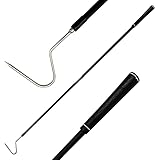
- Snake catcher hook is made of Carbon material with polished finish. Lightweight, Strong and Sturdy. Ideal for handling snakes.
- This compact helpful snake hook is suitable for mountaineering, hiking, picnic, snake lovers, camping, removing pet reptiles, catching handing separating snakes,snake catcher,snake grabber etc.
- A secure snake catcher hook rubber handle, light weight and hook geometry allow you to safely catch, control or move reptiles with Dutypro snake grabber tool.
- Very sturdy duckbilled shape snake stick allows you to control or move reptiles more easily and safely And will not hurt the snake.
- Snake tongs Handling - such as Rattlesnakes Python Copperhead corn snakes, king snakes, rosy boas, ball pythons, green snakes, garter snakes and other dangerous snake
Because the species was only formally described in 2025, its known range may not represent its complete range. It may also turn out that some older museum specimens currently assigned to another Boaedon species need reassessment.
Is this snake a predator?
Yes, in the broad biological sense: snakes are carnivores and occupy predatory roles in food webs. However, the formal description of B. broadleyi does not provide a detailed, species-specific diet.
General descriptions of African house snakes discuss prey such as rodents, small lizards, and birds, but those descriptions may refer to a broader or older species concept. Since the 2025 research split previously grouped lineages, it is not scientifically careful to assume that every general house-snake feeding claim has been demonstrated for B. broadleyi.
There is also no basis in the available description for stating this species’ lifespan, population size, conservation category, or confirmed venom status. Those omissions do not mean the snake has unusual properties; they mean that the cited species description did not establish them.
The same study described another new species
Boaedon broadleyi was not the only taxonomic result. The same paper described Boaedon subniger from Somaliland.
B. subniger is described as dark brown to black-brown and lacks the light head stripes characteristic of B. broadleyi. It also differs in average midbody scale-row counts and in aspects of head-scale arrangement.
Rank #4

- Durable Construction: The 61" Snake Hook Reptile Catcher Stick Pole features a head reinforced with rivets, ensuring it remains secure under strong tension for optimal snake handling.
- Telescopic Design: This innovative Snake Hook Reptile Catcher Stick Pole consists of 5 sections that can be individually locked, extending from 16'' to a maximum of 61'', providing versatility for various situations.
- Lightweight and Portable: Crafted from stainless steel with a rubber handle, this Snake Hook Reptile Catcher Stick Pole is lightweight and easy to carry, making it an ideal companion for reptile enthusiasts on the go.
- Perfect for Snake Removal: Whether you're dealing with rattlesnakes, pythons, or copperheads, this specialized tool kit is designed for efficient snake catching and removal in the wild.
- Essential Tool for Reptile Enthusiasts: The Snake Hook Reptile Catcher Stick Pole is an indispensable tool for anyone interested in reptile collection, ensuring handling and transport of snakes while minimizing risk.
The study additionally elevated Boaedon fuliginosus arabicus to full species status and revised the distribution map for the regional group. The significance of the work is therefore broader than adding one name to a catalog: it changes how scientists understand diversity among East African house snakes.
Could a pet owner identify this snake at home?
Not reliably. A brownish snake with pale markings may resemble several related species, and the traits used in the scientific diagnosis include scale counts and head characters that are difficult to assess safely or accurately from a casual photograph.
Anyone who encounters a suspected Boaedon broadleyi should avoid handling it for identification. Record the location, take photographs from a safe distance if practical, and contact a qualified local herpetologist, museum, wildlife authority, or regional biodiversity database. A captive snake should not be released based on an uncertain identification.
Readers interested in learning how taxonomists compare reptiles may find a broader regional reference useful. The Field Guide to East African Reptiles, second edition, is described by its publisher as a 624-page identification guide with photographs, range maps, and accounts of approximately 500 reptile species. Its listed geographic coverage is Kenya, Uganda, Tanzania, Rwanda, and Burundi, so it should be treated as a general East African reference—not as a dedicated guide to the Ethiopian B. broadleyi.
Independent reader supportYour contribution helps us test, update, and keep practical guides available for everyone.Why this discovery matters
The story is not simply that a snake lived in a container for two decades and suddenly became new. Its importance lies in the chain of evidence:
Do these 3 things before closing this tab:
1Scan for outdated or missing drivers - takes under a minute2Repair Windows errors before they cause bigger problems3Fix the driver behind crashes, sound loss and screen glitches- a field-collected specimen preserved a physical record;
- its museum history made the specimen traceable;
- DNA analysis exposed distinct evolutionary groupings;
- morphological characters supported those groupings; and
- geographic information helped place the lineages in context.
That combination shows how species discovery often works in practice. “Discovery” may mean recognizing a hidden species boundary in material that has been available for years, rather than finding an entirely unknown animal in the wild.
Best Value
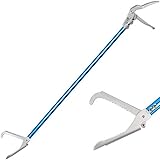
- High quality professional snake tongs, rattlesnake catcher & grabber, can also be used as a tool for handling reptile pets, camping, fishing.
- 60 inch is a professional length for a snake grabber, it's long enough for safety catching and handling snakes confidently. Ensures you keep a safe distance away to mange it.
- Unlike other snake tongs with sharp jaws that do not easily catch snakes and can easily hurt them, this snake catcher tool has wide thick jaws to accurately catch snakes without hurting them, also works on small snakes.
- Professional high quality aluminum alloy with blue oxidation coating ensures simple appearance. lighter than stainless steel, makes it work easier.
- Unlock Instruction: Hold the handle firmly before turning the lock buckle. Just hold the handle firmly and turn the lock buckle, and it unlocks.The handle lock makes the snake tongs easy to store.
Boaedon broadleyi is therefore both a new Ethiopian snake species and a reminder that museum collections are active scientific resources. A specimen can wait decades for the right question, the right comparison set, or the right technology to reveal what it has been carrying all along.
Frequently Asked Questions
What is Boaedon broadleyi?
Boaedon broadleyi is a newly described African house snake from Ethiopia. It belongs to the genus Boaedon and the family Lamprophiidae.
Was the snake really kept in captivity for exactly 20 years?
Not exactly. The specimen was collected in the late 1980s and kept in captivity until 2006, so “20 years” is an approximation because the precise collection date is not provided.
Windows Errors? Fix Them Before They Spread
Repair common Windows errors and clear accumulated junk for a smoother, more stable PC - no reinstall needed.Free scan · no reinstallCrashes, No Sound, or Screen Glitches?
Random freezes, missing sound and display glitches usually trace back to one bad driver. Find and replace yours safely.Free scan · under a minuteHow long is Boaedon broadleyi?
The holotype measured 1,196 mm, or about 3.9 feet, from snout to vent. That measurement excludes the tail and does not establish the species’ maximum total length.
What does Boaedon broadleyi eat?
The available species description does not establish a detailed diet, lifespan, population estimate, conservation category, or confirmed maximum total length. General house-snake feeding information should not automatically be treated as specific evidence for this newly separated species.
Where does Boaedon broadleyi live?
The species is known from Ethiopian areas including Afar, Oromia, Somali, and the Southern Nations, Nationalities, and Peoples’ National Regional State areas. Records cover approximately 750 to 3,000 meters in elevation and include savannas, grasslands, and woodlands.
The Bottom Line
Bottom line: Boaedon broadleyi is a house-snake species from Ethiopia formally described in 2025 after researchers combined mitochondrial DNA, morphology, and distribution data. Its holotype spent years in captivity and measured nearly four feet from snout to vent, but “20 years” and “4-foot predator” are rounded headline descriptions—not evidence of an exact captivity period, a species-wide maximum size, or a fully documented diet.
Recommended Free Tools
Quick Recap
Product prices and availability are accurate as of the date/time indicated and are subject to change. Any price and availability information displayed on Amazon at the time of purchase will apply.





Leave a Reply